


Yogurt Strainers
In the industrial dairy processing sector, the production of concentrated yogurt products—such as Greek yogurt, Labneh, and Icelandic skyr—relies heavily on the efficient separation of liquid whey from the yogurt solids. This process, known as straining, requires specialized equipment capable of handling high-viscosity fluids while maintaining strict hygiene standards. Industrial yogurt strainers are not merely kitchen tools scaled up; they are precision-engineered components designed to integrate into complex production lines. For engineers and procurement managers, selecting the right Strainers & Baskets is critical to ensuring product consistency, yield, and regulatory compliance.
This article examines the technical specifications, engineering considerations, and material requirements for industrial yogurt strainers, providing a professional framework for selection and implementation in food-grade environments.
The Mechanics of Industrial Yogurt Straining
The primary function of a yogurt strainer is to provide a physical barrier that allows whey (a thin, watery byproduct) to pass through while retaining the milk solids and fats. In an industrial context, this is achieved through either gravity-fed batch systems or pressurized inline systems.
Gravity-Fed Batch Straining
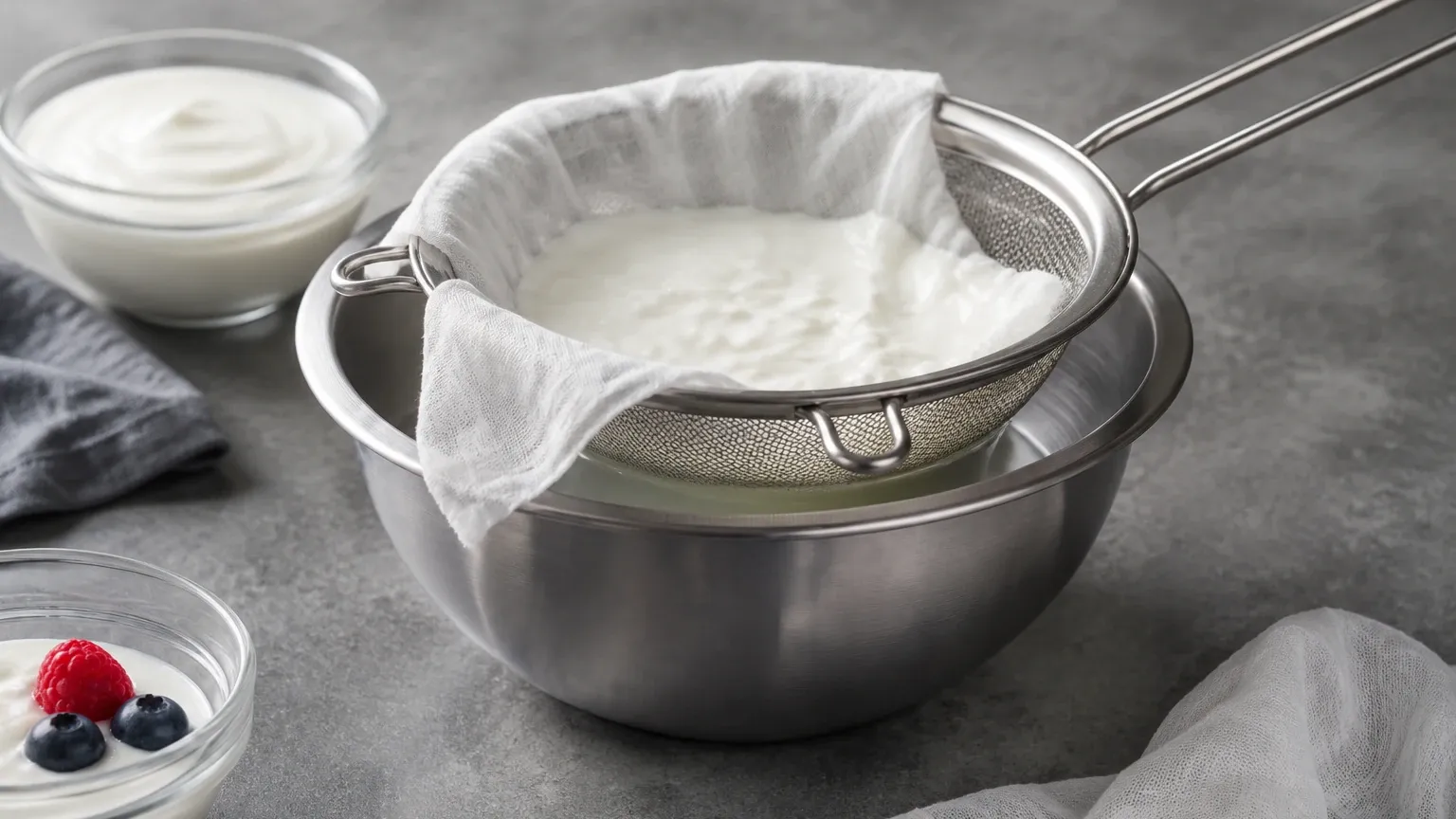
In smaller-scale or artisanal industrial setups, yogurt is placed into large stainless steel baskets lined with fine wire mesh. Gravity pulls the whey through the mesh over several hours. This method is gentle on the product structure but requires significant floor space and longer processing times. The design of these baskets must account for the total weight of the product, necessitating reinforced frames to prevent mesh deformation.
Pressurized and Centrifugal Separation
Modern high-volume facilities often use mechanical separation or pressurized filtration. In these systems, yogurt strainers act as secondary filters or safety screens to ensure no large coagulates or foreign particulates enter the final packaging stage. Here, the strainers must withstand higher differential pressures without bypassing or failing.
Material Integrity: Why Stainless Steel is Mandatory
When dealing with dairy products, material selection is non-negotiable. Yogurt is a living product containing active cultures and lactic acid, which can be corrosive to inferior metals over time.
Stainless Steel 304 vs. 316L
Most industrial yogurt strainers are manufactured from Stainless Steel 304 or 316L.
* SS304: Suitable for standard dairy applications where cleaning agents are moderately aggressive.
* SS316L: Preferred for high-acid environments or when using heavy-duty chlorine-based sanitizers. The "L" (low carbon) designation is crucial for components that require welding, as it prevents intergranular corrosion in the heat-affected zones of the basket joins.
Surface Finish and Ra Values
In the food and beverage industry, the smoothness of the filter surface is as important as the material itself. Industrial strainers must adhere to 3-A Sanitary Standards or similar global benchmarks. This typically requires a surface roughness (Ra) of less than 0.8 μm. A polished, burr-free surface ensures that proteins and fats do not adhere to the mesh, which would otherwise facilitate bacterial growth and make Clean-in-Place (CIP) cycles ineffective.
Technical Specifications: Mesh and Micron Ratings
The "tightness" of the weave in yogurt strainers determines the final texture of the product. If the mesh is too coarse, valuable milk solids are lost in the whey, reducing yield. If the mesh is too fine, the straining process slows down significantly, and the filter may clog (blind) prematurely.
Micron Selection for Different Textures
* Standard Concentrated Yogurt: Typically requires mesh openings in the range of 100 to 150 microns.
* Ultra-Thick Labneh: May require finer filtration, sometimes down to 40 or 50 microns, depending on the initial moisture content and the desired final viscosity.
* Pre-Filtration: Before reaching the final straining stage, Strainers & Baskets with 500-micron perforations may be used to remove large clumps or fruit inclusions in flavored varieties.
Weave Types
For yogurt applications, Plain Dutch Weave or Twill Dutch Weave are often preferred over simple square mesh. These weaves provide a three-dimensional filtration path that is more resistant to blinding and easier to clean using back-pulsing or high-pressure spray balls.
Engineering Considerations for Custom Yogurt Strainers
Off-the-shelf solutions rarely meet the specific needs of a high-output dairy line. Engineering teams must evaluate several variables when specifying custom yogurt strainers.
Flow Rate and Viscosity
Yogurt is a non-Newtonian, shear-thinning fluid. Its viscosity changes based on temperature and the amount of physical agitation it receives. A strainer designed for warm, freshly inoculated milk will perform differently than one designed for chilled yogurt. Engineers must calculate the effective filtration area (EFA) to ensure that the flow rate does not drop below the required threshold as the yogurt thickens.
Structural Reinforcement
Because yogurt is heavy and viscous, it exerts significant force on the filter media. Industrial baskets often feature a dual-layer design: an outer perforated metal cylinder that provides structural rigidity and an inner fine-mesh liner that performs the actual filtration. This "basket-within-a-basket" approach prevents the fine mesh from tearing under the weight of several hundred kilograms of product.
Connection Types
To maintain a closed, sanitary system, yogurt strainers must feature hygienic connections. Common options include:
* Tri-Clamp (Clover): The industry standard for quick disassembly and cleaning.
* DIN 11851: Common in European dairy processing.
* SMS Unions: Used for permanent or semi-permanent piping installations.
Operational Challenges: Clogging and Sanitation
The high protein and fat content of yogurt makes it prone to "blinding" the filter. Blinding occurs when particles become lodged in the mesh openings, rapidly increasing the differential pressure across the strainer.
Preventing Blinding
To mitigate this, many industrial yogurt strainers incorporate mechanical scrapers or automated backwash systems. In manual systems, the choice of a "wedge wire" design can be beneficial. Wedge wire features a V-shaped profile that only has two contact points with particles, making it significantly easier to clean than traditional woven wire mesh.
Sanitation Protocols (CIP/SIP)
In a B2B environment, downtime is the enemy of profitability. Yogurt strainers must be compatible with Clean-in-Place (CIP) systems. This means the design must be free of "dead zones" where product can stagnate. Welds must be full-penetration and ground smooth. Furthermore, if the process requires Sterilization-in-Place (SIP), the strainer must be able to withstand saturated steam at temperatures exceeding 121°C without losing structural integrity or seal tension.
Evaluating Total Cost of Ownership (TCO)
When purchasing Strainers & Baskets for yogurt production, the initial purchase price is only one component of the total cost. Technical buyers should consider:
1. Durability: A high-quality stainless steel strainer can last for years, whereas cheaper, poorly welded alternatives may fail within months due to fatigue or corrosion.
2. Yield Optimization: A precision-engineered mesh that retains 1% more milk solids can result in thousands of dollars in additional revenue over the course of a year.
3. Cleaning Efficiency: Strainers that are easier to clean reduce chemical usage and shorten the time between production batches.
4. Replacement Parts: Ensure that the manufacturer provides standardized replacement mesh liners or gaskets to avoid long lead times during maintenance windows.
Conclusion: Selecting the Right Partner
Industrial yogurt straining is a balance of biology, chemistry, and mechanical engineering. The transition from a liquid milk base to a thick, creamy yogurt requires a filtration solution that is both delicate enough to preserve product texture and robust enough to handle industrial throughput.
By focusing on high-grade materials like SS316L, precise micron ratings, and sanitary design principles, dairy processors can optimize their production lines for maximum efficiency. Whether you are designing a new facility or retrofitting an existing line, consulting with a manufacturer that specializes in custom stainless steel Strainers & Baskets ensures that your equipment meets the rigorous demands of the modern food industry. Confirmation of Ra values, weld certifications, and material mill reports should be the final step for any engineer before finalizing a purchase to ensure long-term operational success.
