


7 Wedge
In the field of industrial separation and filtration, the selection of the correct wire profile is a critical engineering decision that dictates the efficiency, durability, and maintenance requirements of a system. Among the various specifications available, the 7 wedge profile—often referring to a specific wire width or profile designation within the broader category of Wedge Wire Screens—represents a versatile solution for medium-to-heavy-duty applications. Engineers and procurement professionals must understand the technical nuances of this profile to ensure that the chosen filtration media can withstand mechanical stresses while maintaining the necessary open area for fluid dynamics.
Wedge wire technology is defined by its unique V-shaped profile, which provides a non-clogging surface. Unlike traditional woven wire mesh, where particles can become wedged between intersecting wires, the V-shape of a 7 wedge profile ensures that only two points of contact exist for any particle. If a particle passes through the narrowest point at the surface (the slot), it enters an expanding area, allowing it to flow through freely. This article explores the technical specifications, engineering considerations, and industrial applications of these specialized filtration components.
Technical Specifications of the 7 Wedge Profile
The "7" designation in a 7 wedge profile typically refers to the width of the top surface of the wire, measured in millimeters (1.8mm to 2.0mm depending on the manufacturer's specific numbering system) or as a gauge reference. In industrial filtration, the dimensions of the profile wire—specifically the width, height, and the angle of the V-shape—determine the screen's resistance to abrasion and its structural load-bearing capacity.
Profile Geometry and Slot Precision
When specifying Wedge Wire Screens, the interaction between the profile wire and the slot width is the primary concern. A 7 wedge profile provides a wider surface area compared to finer wires like the 47 or 63 profiles. This increased width offers several mechanical advantages:
1. Increased Wear Life: In abrasive environments, such as mining or aggregate processing, the surface of the wire is gradually worn down. A thicker profile like the 7 wedge allows for a greater sacrificial wear layer before the structural integrity of the screen is compromised.
2. Higher Load Capacity: The cross-sectional area of the wire directly correlates with its ability to handle high pressure or heavy material loads. This makes it suitable for vibrating screens and heavy-duty centrifuge baskets.
3. Slot Stability: Larger profiles are less prone to lateral movement or deformation during high-pressure backwashing cycles, ensuring that the slot width remains consistent over the life of the filter.
Material Composition
For most industrial applications, stainless steel is the standard material due to its mechanical strength and corrosion resistance. Kaifil utilizes high-grade alloys to meet specific environmental demands:
* Grade 304: Suitable for general industrial use where moderate corrosion resistance is required.
* Grade 316L: Preferred for chemical processing and marine environments due to its superior resistance to pitting and crevice corrosion, particularly in the presence of chlorides.
* Duplex Stainless Steels: Used in extreme conditions where both high mechanical strength and exceptional corrosion resistance are required.
Engineering Considerations for Implementation
When integrating a 7 wedge profile into a filtration system, engineers must balance the need for structural robustness with the requirement for a specific flow rate. The "Open Area" calculation is the most important metric in this regard.
Calculating Open Area
The open area is the percentage of the total screen surface that allows fluid to pass. It is calculated using the formula:
Open Area (%) = (Slot Width / (Slot Width + Wire Width)) x 100
Because the 7 wedge profile is wider than smaller wires, achieving a high open area requires a wider slot width. If a fine filtration (e.g., 50 microns) is required, using a 7 wedge wire would result in a very low open area, significantly increasing the pressure drop across the screen. Conversely, for applications requiring slot widths of 1mm or larger, the 7 wedge profile provides an excellent balance of flow and strength.
Pressure Drop and Flow Velocity
Engineers must evaluate the total pressure drop (ΔP) across the screen. A wider wire profile can create more turbulence on the downstream side of the screen if not properly designed. However, the smooth V-shape of the 7 wedge profile minimizes this effect compared to square or round wire profiles. Proper orientation of the wire—with the flat side facing the flow for filtration or the sharp side facing the flow for certain separation tasks—is essential for optimizing hydraulic performance.
Structural Integrity and Support Rods
A 7 wedge screen is not merely a collection of wires; it is a precision-welded assembly. The profile wires are resistance-welded at every intersection with support rods. The choice of support rod is just as critical as the profile wire itself.
Support Rod Shapes
Support rods come in various shapes, including round, rectangular, and specialized wedge shapes. For a 7 wedge profile, heavy-duty rectangular support rods are often used to provide maximum rigidity. The spacing between these support rods (the "pitch") determines the collapse strength of the screen. In high-pressure hydraulic applications, a tighter support rod pitch is necessary to prevent the profile wires from bowing under load.
Welding Integrity
The quality of the resistance weld is paramount. A poor weld can lead to "wire stripping," where the profile wire detaches from the support rod under mechanical stress or thermal expansion. Kaifil employs advanced welding technology to ensure deep penetration and consistent bond strength across the entire screen surface, which is vital for components used in rotating machinery or high-vibration environments.
Industrial Applications of 7 Wedge Screens
The durability of the 7 wedge profile makes it a preferred choice across several demanding sectors. Its ability to maintain slot precision under load is particularly valued in the following applications:
1. Mining and Mineral Processing
In coal and mineral dewatering, screens are subjected to constant abrasion and high-impact loads. The 7 wedge profile is frequently used in sieve bends and vibratory deck screens. The thick wire profile resists the abrasive action of ores and slurries, extending the interval between replacements and reducing downtime.
2. Pulp and Paper Industry
Pressure screens in paper mills require media that can withstand significant pressure differentials while removing contaminants from fiber slurries. The structural rigidity of the 7 wedge profile ensures that the slots do not widen under the pulsing pressure of the rotor, which is essential for maintaining pulp quality.
3. Water Intake and Treatment
Large-scale water intake screens, such as those used in power plants or desalination facilities, utilize 7 wedge profiles to prevent debris and aquatic life from entering the system. These screens must withstand the force of moving water and potential impacts from large debris. The 7 wedge wire provides the necessary mechanical strength for these large-span structures.
4. Food and Beverage Processing
In the brewing industry, specifically in lauter tun bottoms, wedge wire screens are used to separate the wort from the grain. The 7 wedge profile is often chosen for its ability to support the heavy weight of the grain bed (the "mash") without deforming, while the V-shape prevents the grain husks from clogging the openings.
Customization and OEM Capabilities
Every industrial process has unique requirements, and a "one-size-fits-all" approach to filtration often leads to inefficiency. Kaifil specializes in the custom manufacturing of filtration components, allowing engineers to specify the exact parameters of their 7 wedge assemblies.
Tailored Designs
Customization options include:
* Variable Slot Widths: Slots can be adjusted to sub-millimeter precision to meet specific particle retention targets.
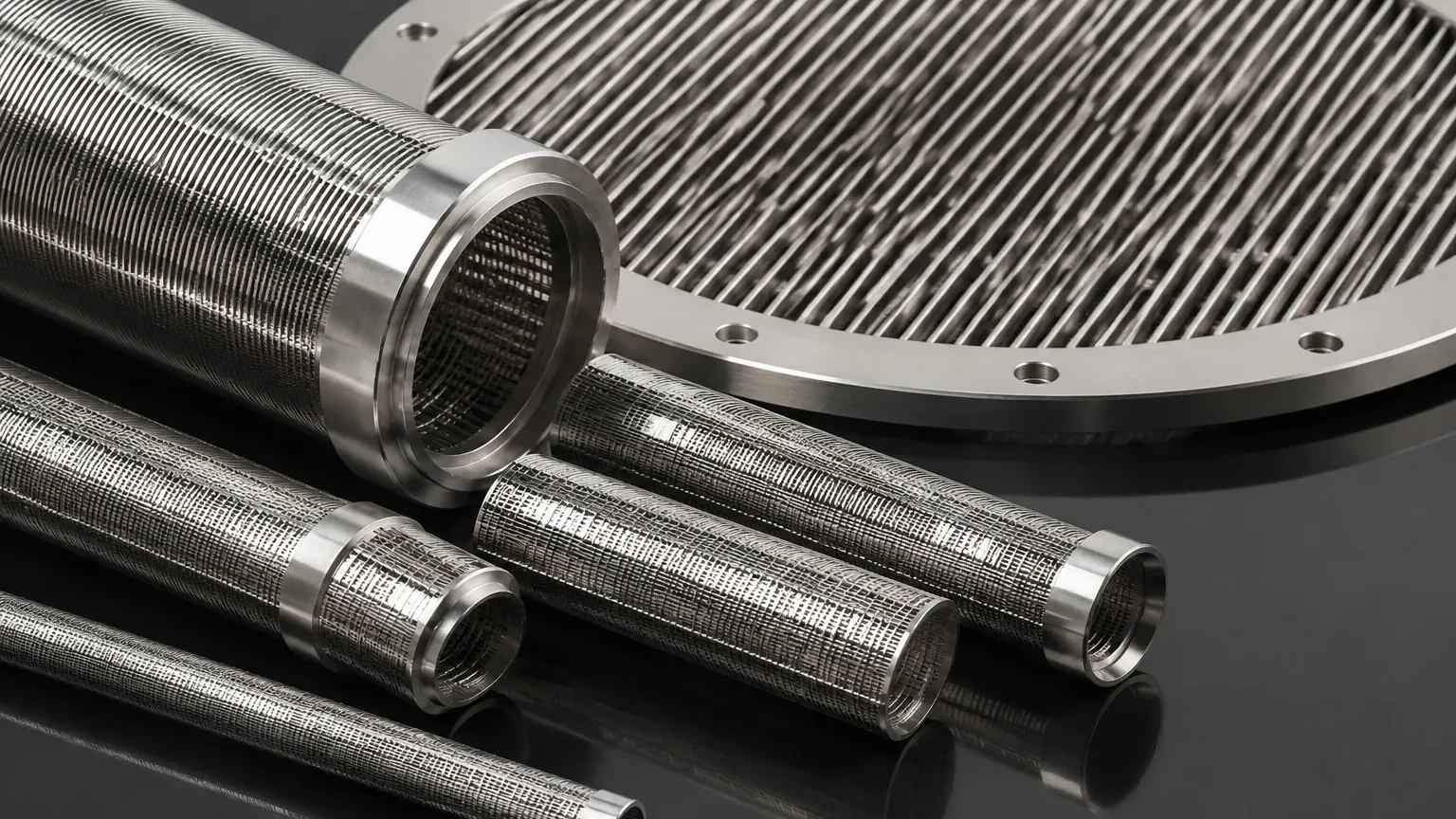
* Custom Shapes: Beyond flat panels, 7 wedge profiles can be formed into cylinders (internally or externally fed), cones, and baskets.
* Surface Treatments: Electropolishing can be applied to improve corrosion resistance and reduce the adhesion of sticky substances, which is particularly useful in food and pharmaceutical applications.
Engineering Support
When partnering with an OEM like Kaifil, customers benefit from technical consultation regarding material selection and structural design. For instance, if an application involves thermal cycling, engineers must account for the coefficient of thermal expansion of the stainless steel to prevent warping. Providing detailed application data—including fluid chemistry, temperature ranges, and flow rates—allows for the development of a more reliable filtration solution.
Maintenance and Total Cost of Ownership
While the initial cost of a 7 wedge screen may be higher than that of disposable media or woven mesh, the total cost of ownership (TCO) is significantly lower in industrial settings. The longevity of the product reduces the frequency of procurement cycles and the labor costs associated with screen replacement.
Cleaning and Longevity
The self-cleaning nature of the wedge wire V-profile simplifies maintenance. Most systems can be cleaned in situ using backwashing or CIP (Clean-In-Place) systems. Because the 7 wedge profile is robust, it can withstand higher backwash pressures than thinner wires, allowing for more effective removal of stubborn filter cakes.
Inspection Protocols
To maximize the lifespan of the screen, regular inspection for wear and slot erosion is recommended. In abrasive applications, measuring the wire height over time can help predict when a screen will reach its end-of-life, allowing for scheduled maintenance rather than emergency shutdowns.
Conclusion: Selecting the Right Solution
The 7 wedge profile is a cornerstone of heavy-duty industrial filtration, offering a level of durability and precision that other media cannot match. By understanding the relationship between wire geometry, material science, and hydraulic performance, engineers can optimize their separation processes for maximum efficiency.
Whether the goal is to improve the dewatering of minerals, ensure the purity of a chemical batch, or protect downstream equipment in a water treatment plant, the choice of profile wire is fundamental. For those seeking high-performance, customized filtration components, exploring the full range of Wedge Wire Screens is the first step toward a more reliable and cost-effective operation. Kaifil remains committed to providing the engineering expertise and manufacturing precision required to meet the most demanding filtration challenges in the global industrial market.
