


Passive Wedge Wire Screens
In industrial water intake and filtration, the transition from active, mechanical screening to passive systems represents a significant shift toward operational reliability and environmental compliance. Passive wedge wire screens are specialized intake components designed to extract large volumes of water from lakes, rivers, and oceans while minimizing the impact on aquatic life and reducing the frequency of mechanical maintenance. Unlike traveling water screens or drum screens, these units have no moving parts, relying instead on high-precision engineering and hydraulic principles to achieve efficient filtration.
For engineers and procurement teams, selecting the correct Wedge Wire Screens involves understanding the interplay between slot geometry, material science, and fluid dynamics. As a professional manufacturer, Kaifil provides customized stainless steel filtration solutions that address the rigorous demands of industrial water treatment, power generation, and chemical processing facilities.
Technical Fundamentals of Passive Intake Systems
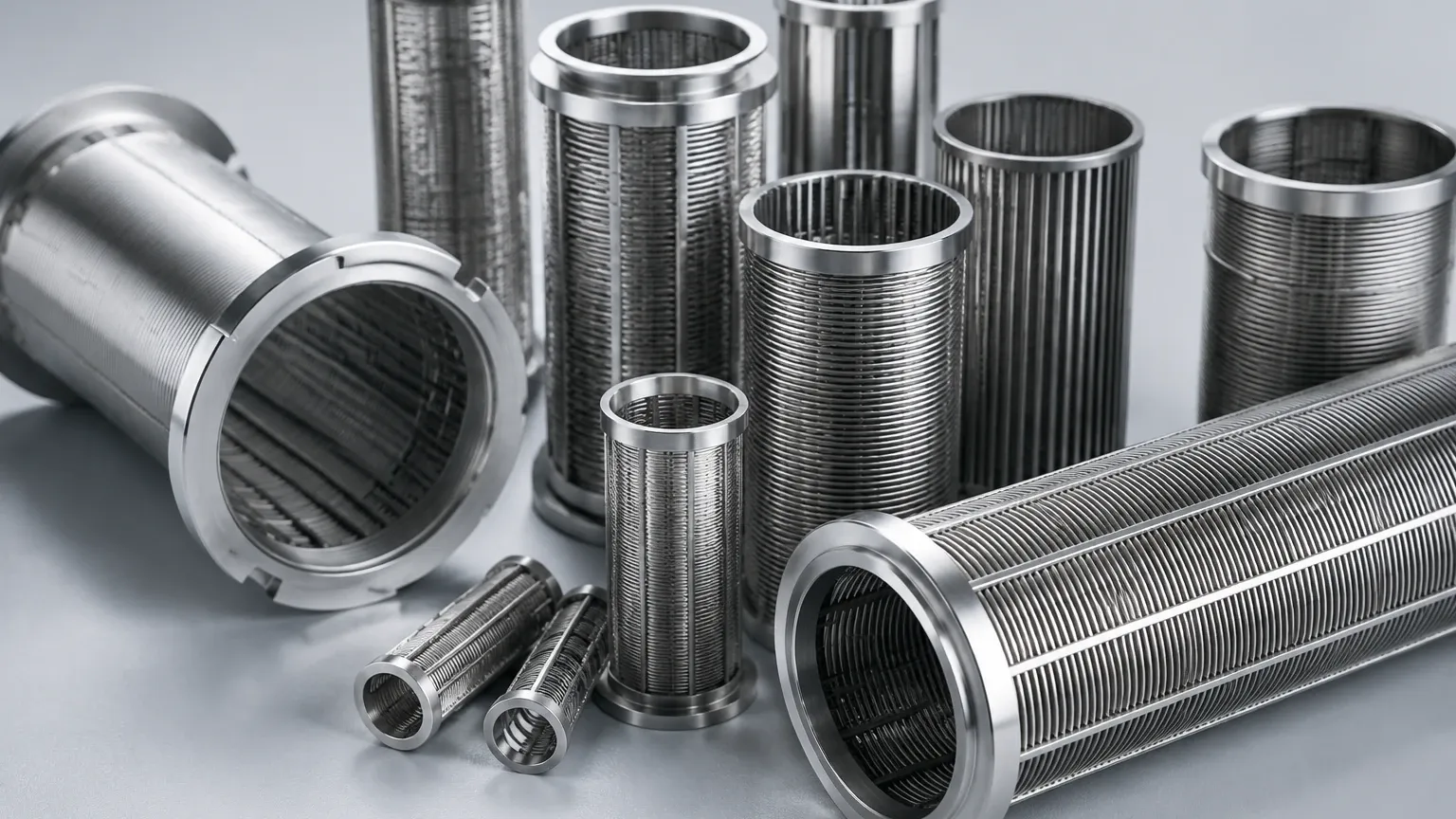
The core of any passive intake system is the wedge wire—a V-shaped profile wire welded onto support rods at every intersection. This construction creates a continuous slot that widens inwardly. In the context of passive wedge wire screens, this geometry is critical. Because the slot is narrower at the exterior surface and wider toward the interior, particles that pass through the initial opening are unlikely to become wedged or "blind" the screen.
Passive screens are typically cylindrical or T-shaped. They are submerged in a water body where the natural ambient current helps carry debris past the screen surface. The "passive" designation refers to the lack of internal motors or rotating parts. Instead, the system utilizes the pressure differential created by pumps located onshore or at a distance to draw water through the screen. This design drastically reduces the risk of mechanical failure, which is a common pain point in active filtration systems operating in harsh or remote environments.
Engineering for Environmental Compliance and Aquatic Protection
One of the primary drivers for implementing passive wedge wire screens is regulatory compliance, specifically regarding the protection of aquatic organisms. In the United States, Section 316(b) of the Clean Water Act mandates that cooling water intake structures reflect the Best Technology Available (BTA) for minimizing adverse environmental impact.
Passive screens achieve this through controlled "through-slot velocity." By maximizing the open area of the screen, engineers can ensure that the velocity of the water as it passes through the slots remains extremely low—typically less than 0.15 meters per second (0.5 feet per second). This low velocity allows fish and other mobile aquatic organisms to swim away from the intake flow, effectively eliminating impingement (trapping organisms against the screen). Furthermore, the narrow slot widths, often ranging from 1mm to 10mm depending on the application, prevent the entrainment of smaller organisms and debris into the industrial process.
Material Selection and Corrosion Resistance
Industrial filtration environments are often chemically aggressive or biologically active. Therefore, the material integrity of passive wedge wire screens is paramount to their service life. At Kaifil, we focus on high-grade stainless steel alloys to ensure durability under diverse conditions.
1. AISI 304/304L Stainless Steel: Suitable for freshwater applications where corrosion risks are moderate. It provides excellent structural strength and cost-effectiveness.
2. AISI 316L Stainless Steel: The standard for brackish water and many chemical processing applications. The addition of molybdenum enhances resistance to pitting and crevice corrosion, particularly in environments with higher chloride concentrations.
3. Duplex and Super Duplex Steels: For seawater intakes or highly acidic environments, Duplex stainless steels offer superior yield strength and exceptional resistance to stress corrosion cracking.
Beyond alloy selection, surface treatments such as passivating or electropolishing can be applied to further enhance the protective oxide layer of the steel, reducing the rate of biofouling and mineral scaling.
Hydraulic Performance and Flow Distribution
A common engineering challenge with large-scale passive screens is ensuring uniform flow across the entire surface area. Without proper internal design, the area of the screen closest to the outlet pipe may experience significantly higher velocities than the distal end. This "unbalanced" flow can lead to localized debris accumulation and higher-than-permitted impingement velocities.
To counter this, high-performance passive wedge wire screens often incorporate an internal flow modifier or a dual-pipe system. These internal components create a secondary pressure drop that forces the water to be drawn equally from all sections of the screen cylinder. This uniform distribution ensures that the entire surface area of the Wedge Wire Screens is utilized efficiently, extending the intervals between cleaning cycles and maintaining compliance with environmental velocity limits.
Maintenance Strategies: The Air Burst System
While passive screens are designed to be low-maintenance, they are not "maintenance-free." Silt, algae, and floating debris can eventually accumulate on the screen surface. Because the screens are submerged, manual cleaning is often impractical and expensive, requiring divers or ROVs.
The industry-standard solution for maintaining passive screens is the Hydroburst or Air Burst system. This system involves a high-pressure air tank located onshore connected to a distribution pipe inside the submerged screen. At scheduled intervals or when a pressure sensors detect a head loss, a rapid burst of compressed air is released. This creates a high-energy "scrubbing" effect as the air expands through the slots, forcing debris away from the screen surface.
When specifying a system, engineers must confirm the air volume and pressure requirements based on the depth of the screen and the nature of the local debris. A properly designed air burst system can keep a passive wedge wire screen operational for years without requiring physical intervention.
Customization and OEM Considerations
Every industrial site has unique geographic and hydraulic constraints. Standard off-the-shelf solutions rarely meet the specific needs of a large-scale water intake project. Customization is often required in several areas:
* Slot Opening Precision: Depending on the local biota and the sensitivity of downstream equipment (such as heat exchangers or fine membrane filters), slot openings must be manufactured to tight tolerances.
* Structural Reinforcement: In areas with high current velocities or heavy debris loads (such as river flooding), the screen must be reinforced with internal rings and heavy-duty support rods to prevent collapse or deformation.
* End Cap and Mounting Design: Whether the screen is mounted on a concrete intake structure, a seabed plinth, or suspended from a floating barge, the mounting flanges and end caps must be engineered for the specific installation method.
Kaifil’s manufacturing process allows for the integration of these custom requirements into the OEM production cycle, ensuring that the final filtration component aligns perfectly with the broader project infrastructure.
Evaluating Total Cost of Ownership (TCO)
When comparing passive wedge wire screens to traditional mechanical screening, the initial capital expenditure (CAPEX) for the stainless steel units and the associated air burst piping may be higher. However, the Total Cost of Ownership (TCO) is typically lower due to several factors:
* Elimination of Power Consumption: Passive screens do not require motors to operate continuously.
* Reduced Labor Costs: No daily monitoring or mechanical lubrication is required.
* Longevity: High-grade stainless steel construction in a static environment can last decades, whereas moving parts in water are prone to wear and frequent replacement.
* Regulatory Assurance: Avoiding fines and legal complications related to environmental non-compliance is a significant, albeit indirect, cost saving.
Conclusion
Passive wedge wire screens represent a mature and highly reliable technology for industrial water intake. By leveraging the inherent strengths of the V-wire profile and the principles of low-velocity hydraulics, these systems provide a robust solution for protecting both industrial equipment and aquatic ecosystems. For engineers, the key to a successful installation lies in the precise specification of materials, slot widths, and internal flow distribution mechanisms.
As a specialist in custom stainless steel filtration, Kaifil supports global industrial projects by delivering precision-engineered components that meet these rigorous standards. Whether for chemical processing, power plant cooling, or municipal water treatment, our focus on quality manufacturing ensures that every screen provides dependable performance in the most demanding environments. For detailed technical specifications and customization options, engineers are encouraged to review available product configurations and consult with manufacturing experts to optimize their filtration strategy.
