


Q Wedges
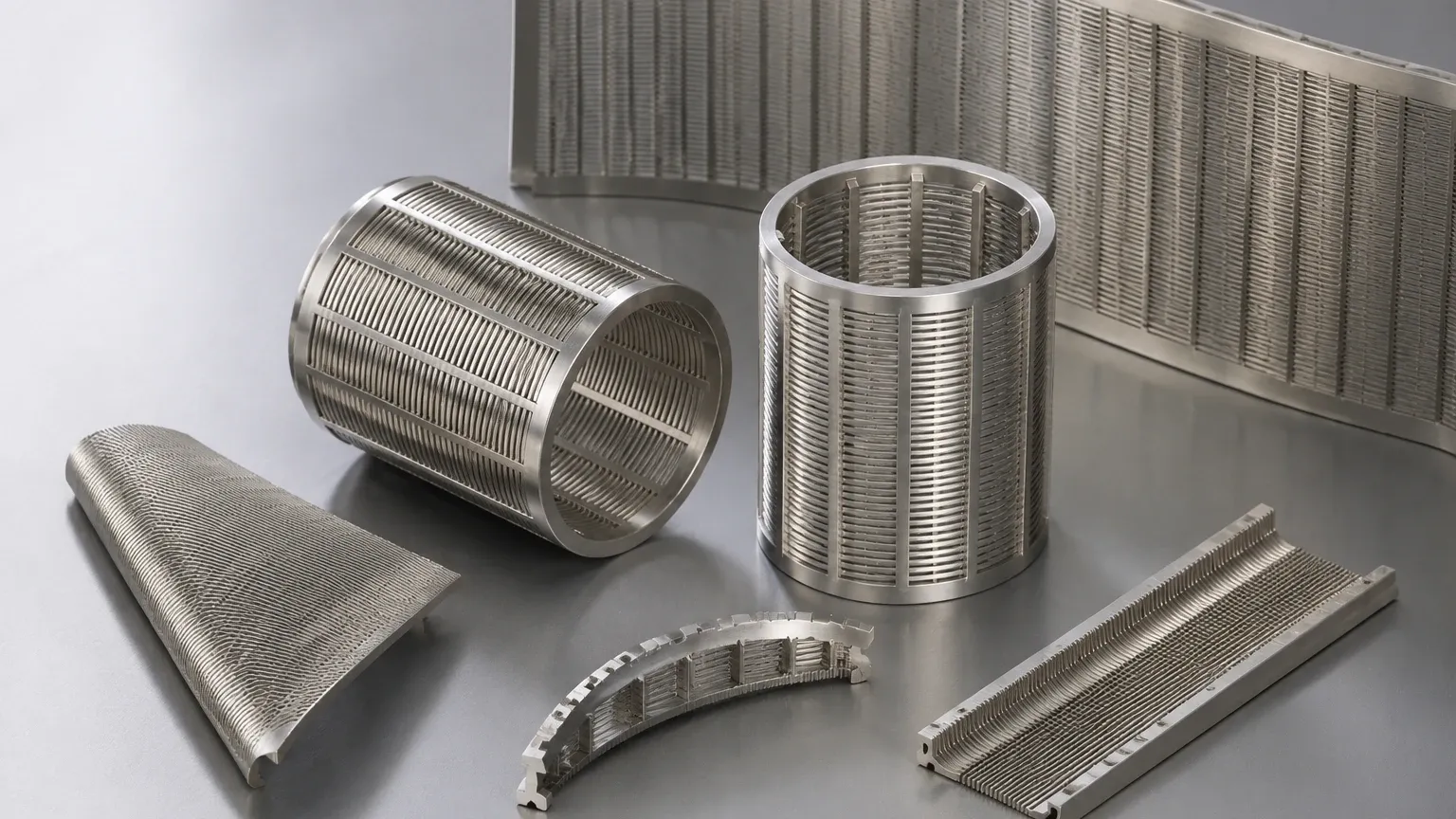
In the field of industrial liquid-solid separation, the efficiency of a filtration system is often determined by the minute details of its component geometry. Among the most critical components in high-performance filtration systems are the profile wires used to construct Wedge Wire Screens. Specifically, the "Q" series profile wires, commonly referred to as q wedges, represent a standard in precision engineering for demanding industrial environments. These V-shaped wires are designed to optimize flow rates while minimizing the risk of clogging, a common failure point in traditional mesh or perforated plate systems.
Understanding the technical nuances of q wedges is essential for engineers and procurement professionals tasked with selecting filtration media for chemical processing, water treatment, or food and beverage production. This guide examines the structural characteristics, material considerations, and application-specific advantages of these components within the broader context of industrial filtration technology.
The Geometry and Functionality of Q Wedges
The fundamental advantage of q wedges lies in their unique geometric profile. Unlike standard round or square wires, q wedges feature a distinct V-shape or wedge-shaped cross-section. This design is not merely aesthetic; it serves a critical mechanical function during the filtration process.
When these wires are resistance-welded onto support rods to form a screen, the narrowest part of the wedge faces the incoming flow. As particles pass through the slot, the distance between the wires increases immediately behind the leading edge. This creates a "relief angle" that ensures any particle capable of passing through the surface aperture will continue through the screen without becoming wedged or trapped.
In industrial terms, this is known as a non-clogging surface. For applications involving fibrous materials or irregularly shaped solids—such as those found in pulp and paper processing or wastewater treatment—the use of q wedges significantly reduces downtime caused by blinding. The precision of the "Q" profile allows for extremely tight slot tolerances, often down to 20 microns, providing a level of filtration accuracy that rivals synthetic membranes but with the structural durability of stainless steel.
Material Selection for Industrial Durability
Because q wedges are frequently deployed in corrosive or high-temperature environments, material selection is a primary engineering consideration. As a specialized manufacturer, Kaifil utilizes high-grade alloys to ensure that the structural integrity of the wedge wire is maintained over long operational cycles.
1. AISI 304 Stainless Steel: The standard choice for general industrial applications. It offers excellent mechanical properties and good resistance to atmospheric corrosion. It is widely used in food processing and architectural applications where chemical exposure is moderate.
2. AISI 316L Stainless Steel: For applications involving chlorides or acidic environments, 316L is the preferred material. The addition of molybdenum enhances pitting resistance, making it ideal for marine environments, pharmaceutical production, and chemical processing plants.
3. Duplex Stainless Steels: In high-stress environments where both corrosion resistance and high yield strength are required, duplex alloys provide a robust solution. These are often used in deep-well oil and gas applications or heavy-duty mineral processing.
The choice of material directly impacts the total cost of ownership. While 316L or exotic alloys may have a higher initial procurement cost, their resistance to degradation ensures a longer service life and fewer replacement intervals, which is a critical factor for facilities operating on a 24/7 production schedule.
Engineering Advantages in High-Pressure Applications
One of the most significant challenges in industrial filtration is maintaining the structural integrity of the filter medium under high differential pressure. Traditional wire mesh can deform or shift under heavy loads, leading to inconsistent filtration results or catastrophic failure.
Q wedges, when integrated into Wedge Wire Screens, offer a rigid and self-supporting structure. The resistance welding process creates a fusion bond at every intersection of the profile wire and the support rod. This creates a high-strength grid that can withstand significant mechanical stress.
For engineers, this means that q wedges can be used in high-pressure backwashing systems. In these setups, the flow is periodically reversed to clear the screen surface. The inherent strength of the wedge wire prevents the slots from widening or the wires from vibrating, ensuring that the filtration accuracy remains constant throughout the life of the component. Furthermore, the smooth surface of the q wedge profile minimizes friction, allowing for a more efficient flow of fluids and reducing the energy requirements for pumping systems.
Customization Options and Technical Specifications
No two industrial filtration requirements are identical. The versatility of q wedges allows for extensive customization to meet specific process parameters. When specifying these components, several variables must be confirmed to ensure optimal performance:
* Slot Opening (Aperture): This is the distance between the top edges of the q wedges. It defines the filtration rating. Precision manufacturing allows for consistent slot widths across the entire surface of the screen.
* Profile Wire Size: The height and width of the "Q" profile itself can be adjusted. Larger profiles offer greater wear life in abrasive applications, such as mining or aggregate washing, while smaller profiles maximize the open area for high-flow liquid applications.
* Support Rod Configuration: The spacing and shape of the support rods (which can be round, rectangular, or even another wedge profile) determine the burst strength and collapse pressure of the final screen assembly.
* Surface Treatments: Depending on the application, q wedges can be electropolished to reduce surface roughness, which is particularly important in the pharmaceutical and food industries to prevent bacterial growth and facilitate cleaning.
By adjusting these parameters, Kaifil can engineer a filtration solution that balances flow capacity, particle retention, and mechanical longevity.
Maintenance and Longevity in Demanding Environments
The operational life of a filter is as much a function of its maintenance as its design. Q wedges are favored in many industries because they are remarkably easy to clean compared to other filter media. The smooth, hard surface of the stainless steel resists the adhesion of biofilms and mineral scales.
In many automated systems, cleaning is achieved through mechanical scraping or back-pulsing. Because the q wedges are welded securely, they can withstand the abrasive force of a scraper blade without losing their alignment. This allows for continuous filtration in processes where high solids loading would quickly overwhelm a standard filter cartridge.
When evaluating replacement cycles, engineers should monitor the "wear land" on the top of the wedge. In abrasive slurries, the leading edge of the wedge will eventually wear down. However, because the V-shape continues through the depth of the wire, the slot width remains relatively stable even as the wire height decreases, providing a more predictable performance curve than perforated plates, where wear can rapidly increase the hole diameter.
Total Cost of Ownership and Selection Criteria
When purchasing industrial filtration components, the initial price is only one part of the economic equation. The total cost of ownership (TCO) includes installation, energy consumption, maintenance labor, and the cost of production downtime.
Q wedges provide a favorable TCO due to their durability and efficiency. The high open area percentage of a wedge wire screen allows for lower pressure drops across the filter, which translates directly into reduced energy costs for the facility's pumps. Additionally, the longevity of stainless steel components reduces the frequency of capital expenditures for replacement parts.
Before finalizing a specification for q wedges, technical teams should confirm the following:
1. Chemical Compatibility: Does the selected alloy stand up to the process fluid and the cleaning agents used in the facility?
2. Flow Dynamics: Is the open area sufficient to handle peak flow rates without exceeding the maximum allowable pressure drop?
3. Mechanical Loading: Will the screen be subjected to hydraulic shock or heavy solid loads that require reinforced support rods?
4. Regulatory Compliance: For food and pharmaceutical applications, does the manufacturing process meet the necessary hygienic standards?
Conclusion
Q wedges are a fundamental building block of modern industrial filtration. Their V-shaped profile and robust construction offer a level of reliability and performance that is essential for maintaining process continuity in high-stakes industries. By selecting the appropriate profile size, material, and slot configuration, engineers can implement filtration solutions that are not only effective at removing contaminants but also resilient enough to withstand the rigors of industrial operation.
Kaifil remains committed to providing high-precision Wedge Wire Screens and custom filtration components that meet the exact needs of global industrial partners. Through advanced manufacturing and rigorous quality control, we ensure that every q wedge profile contributes to the overall efficiency and success of your filtration system.
