


Wedge Wire Static Screen
In the landscape of industrial liquid-solid separation, the wedge wire static screen—often referred to as a sieve bend or side hill screen—represents a critical component for high-capacity, low-maintenance filtration. Unlike dynamic filtration systems that rely on mechanical vibration or rotating drums, a wedge wire static screen utilizes gravity and the unique geometry of its surface to achieve efficient separation. For engineers and procurement professionals, understanding the technical nuances of these components is essential for optimizing process flow, reducing downtime, and ensuring the longevity of filtration infrastructure.
As a specialized manufacturer, Kaifil provides precision-engineered Wedge Wire Screens designed to meet the rigorous demands of chemical processing, food production, and wastewater management. This guide explores the engineering principles, material selection criteria, and operational considerations necessary for selecting the right static screen solution.
Fundamentals of Wedge Wire Static Screen Technology
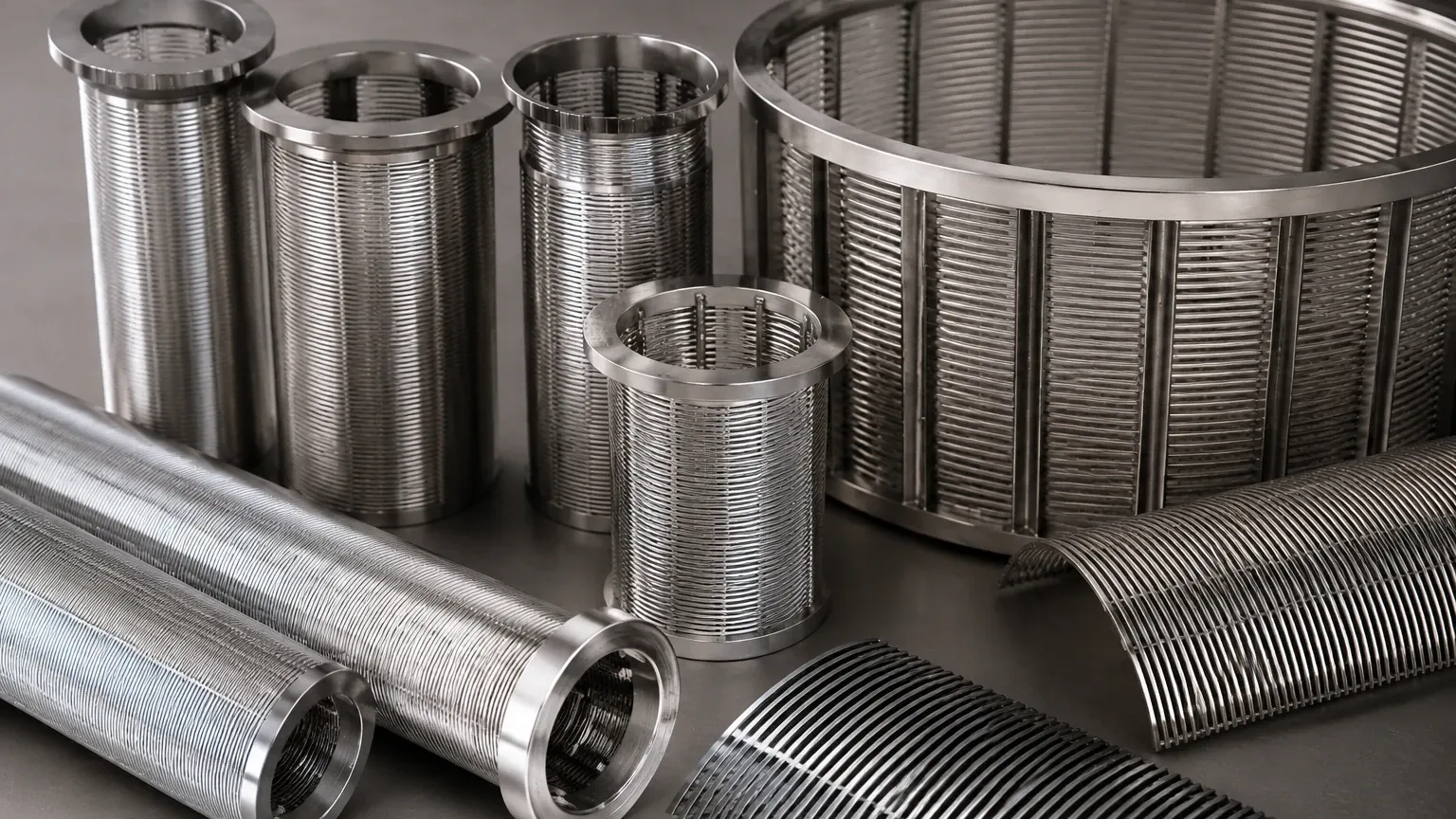
A wedge wire static screen is essentially a curved or inclined panel composed of V-shaped profile wires resistance-welded onto support rods. The core functionality of this technology lies in its ability to handle large volumes of slurry with minimal risk of clogging. In a typical installation, the slurry is fed via a header box onto the top of the screen. As the fluid flows down the curved surface, the sharp leading edges of the V-shaped wires "slice" the bottom layer of the liquid, directing it through the slots, while the solid particles are retained on the surface and slide down to the discharge point.
This method of separation is primarily driven by the Coanda effect and centrifugal force. The curvature of the screen enhances the separation efficiency by increasing the velocity of the fluid relative to the screen surface. Because the wedge wire static screen has no moving parts, it offers a highly reliable and cost-effective alternative to powered separation equipment in applications where gravity-fed processing is feasible.
Engineering Design: The V-Wire Advantage
The primary reason engineers specify wedge wire for static screens over woven wire mesh or perforated plate is the V-shaped profile of the wire. This geometry offers several distinct technical advantages:
1. Non-Clogging Surface: The V-profile creates a slot that widens inwardly. If a particle manages to pass through the narrowest point of the slot (the surface), it will fall freely through the wider opening below without becoming wedged. This self-cleaning characteristic is vital for continuous industrial processes.
2. High Open Area: Compared to other filtration media, wedge wire provides a superior ratio of open area to total surface area. This allows for higher flow rates per square foot of screen, enabling smaller equipment footprints.
3. Structural Integrity: Each intersection of the profile wire and support rod is welded, creating a rigid, one-piece construction. This allows the screen to withstand significant hydraulic loads and abrasive forces without deforming.
When designing a wedge wire static screen, the orientation of the wires is paramount. For static screens, the profile wires are usually oriented perpendicular to the direction of the flow. This orientation allows the leading edge of each wire to effectively strip the water from the solids.
Material Considerations for Industrial Environments
Material selection is a decisive factor in the total cost of ownership and the operational lifespan of a filtration system. Stainless steel is the industry standard due to its mechanical strength and resistance to corrosion. Kaifil utilizes several grades of stainless steel to match specific application environments:
* Grade 304 Stainless Steel: The most common choice for general industrial applications, providing excellent strength and basic corrosion resistance. It is suitable for most water treatment and non-corrosive chemical processes.
* Grade 316L Stainless Steel: Containing molybdenum, 316L offers superior resistance to chlorides and acidic environments. It is the preferred material for pharmaceutical, food and beverage, and marine applications where sanitation and chemical stability are required.
* Duplex Stainless Steels: For highly abrasive or extremely corrosive environments, such as mining or specialized chemical processing, duplex alloys provide higher yield strength and enhanced resistance to stress corrosion cracking.
Engineers must also consider the surface finish. For food and beverage applications, electropolishing may be required to ensure a smooth, burr-free surface that prevents bacterial growth and facilitates easier cleaning.
Performance Optimization: Slot Size and Tilt Angle
The efficiency of a wedge wire static screen is determined by two critical variables: the slot width (aperture) and the tilt angle of the profile wires.
Slot Width Precision
Slot widths in industrial static screens can range from as small as 50 microns to several millimeters. The selection depends entirely on the particle size distribution of the solids to be removed. It is important to note that the "cut point" of a static screen is typically about half the size of the physical slot width due to the angle at which the fluid enters the slot. For example, a screen with a 0.5mm slot might effectively remove particles down to 0.25mm.
The Role of Tilt Angle
In high-performance static screens, the profile wires are often tilted at a slight angle (usually between 3° and 6°) relative to the support rods. This tilt increases the "slicing" action of the wire, allowing more fluid to be diverted through the slots. Proper tilt angle calibration can increase the hydraulic capacity of a screen by up to 25% without increasing the physical size of the unit. However, excessive tilt can lead to increased wear on the leading edge of the wire, necessitating a balance between throughput and durability.
Applications Across Key Industrial Sectors
The versatility of the wedge wire static screen makes it a staple in various sectors where bulk separation is required.
Wastewater and Sewage Treatment
In municipal and industrial wastewater plants, static screens are used for primary treatment to remove large solids, plastics, and fibrous materials. This protects downstream pumps and fine filtration systems from damage and clogging. The lack of moving parts makes them ideal for remote or unmanned facilities.
Food and Beverage Processing
In the sugar and starch industries, wedge wire screens are used for dewatering pulp and separating fibers. The stainless steel construction ensures compliance with food safety regulations, while the high throughput allows for the processing of large batches of raw materials.
Pulp and Paper Industry
Static screens are employed for fiber recovery and white water filtration. By recovering usable fibers from the waste stream, mills can significantly reduce material loss and improve the sustainability of their operations.
Chemical and Petrochemical
In chemical processing, these screens are used for catalyst recovery and the separation of solid precipitates from liquid reagents. The ability to customize the metallurgy (e.g., 316L or Duplex) ensures that the screens can withstand aggressive chemical reactions and high temperatures.
Maintenance, Longevity, and Operational Reliability
While wedge wire static screens are marketed as low-maintenance, they are not "no-maintenance." The longevity of the screen depends on regular inspection and appropriate cleaning protocols. Over time, even the best non-clogging designs can experience a buildup of fats, oils, or biological films (biofouling).
Cleaning Methods:
* Backwashing: Many systems incorporate automated spray bars that periodically wash the screen from the underside to dislodge any trapped particles.
* Chemical Cleaning: In food or chemical applications, CIP (Clean-In-Place) cycles using caustic or acidic solutions may be necessary to maintain sanitary standards.
* Mechanical Cleaning: Manual brushing with soft-bristle brushes can be used for stubborn deposits, though care must be taken not to damage the precision slot openings.
Replacement cycles vary based on the abrasiveness of the media. In mining applications, screens may need replacement every few months, whereas in clean water applications, they can last for many years. Monitoring the pressure drop across the screen or the moisture content of the discharged solids is an effective way to determine when a screen is reaching the end of its functional life.
Procurement Guide: Engineering Specifications for Custom Solutions
When sourcing a wedge wire static screen, providing detailed technical specifications to the manufacturer is crucial for ensuring performance. Engineers should be prepared to confirm the following data points:
1. Flow Rate (Minimum, Average, and Peak): This determines the width and length of the screen required to prevent flooding.
2. Solid Loading: The concentration of solids in the slurry (measured in mg/L or percentage by weight) affects the required surface area and the frequency of cleaning.
3. Particle Size Distribution: Knowing the d50 and d90 particle sizes allows for the selection of the optimal slot width.
4. Fluid Characteristics: Temperature, pH, and viscosity are essential for material selection and hydraulic calculations.
5. Physical Constraints: The available footprint and the height of the feed inlet will dictate the arc radius and the overall dimensions of the screen housing.
Kaifil specializes in the custom fabrication of Wedge Wire Screens, offering OEM capabilities that allow for precise control over wire profiles, support rod spacing, and frame configurations. By working closely with an experienced manufacturer, engineering teams can develop filtration solutions that are tailored to the specific hydraulic and mechanical stresses of their unique application.
In conclusion, the wedge wire static screen remains a cornerstone of industrial filtration due to its simplicity, efficiency, and durability. By focusing on the technical aspects of V-wire geometry, material science, and hydraulic design, facilities can achieve reliable separation performance with minimal operational overhead.
