


Vadodara Wedge Wire Screens
In the landscape of industrial filtration, precision and structural integrity are the primary benchmarks for operational efficiency. For technical professionals and procurement teams managing large-scale processing plants, selecting the right filtration medium is a critical engineering decision. Among the various technologies available, wedge wire screens stand out as a preferred solution for demanding solid-liquid separation tasks. In major industrial hubs where chemical processing, water treatment, and heavy engineering converge, the demand for high-quality components like vadodara wedge wire screens has grown significantly, reflecting the region's sophisticated manufacturing requirements.
This article provides a technical overview of wedge wire technology, exploring engineering considerations, material selection, and the specific application requirements that define the performance of these components in industrial environments.
Understanding Wedge Wire Technology
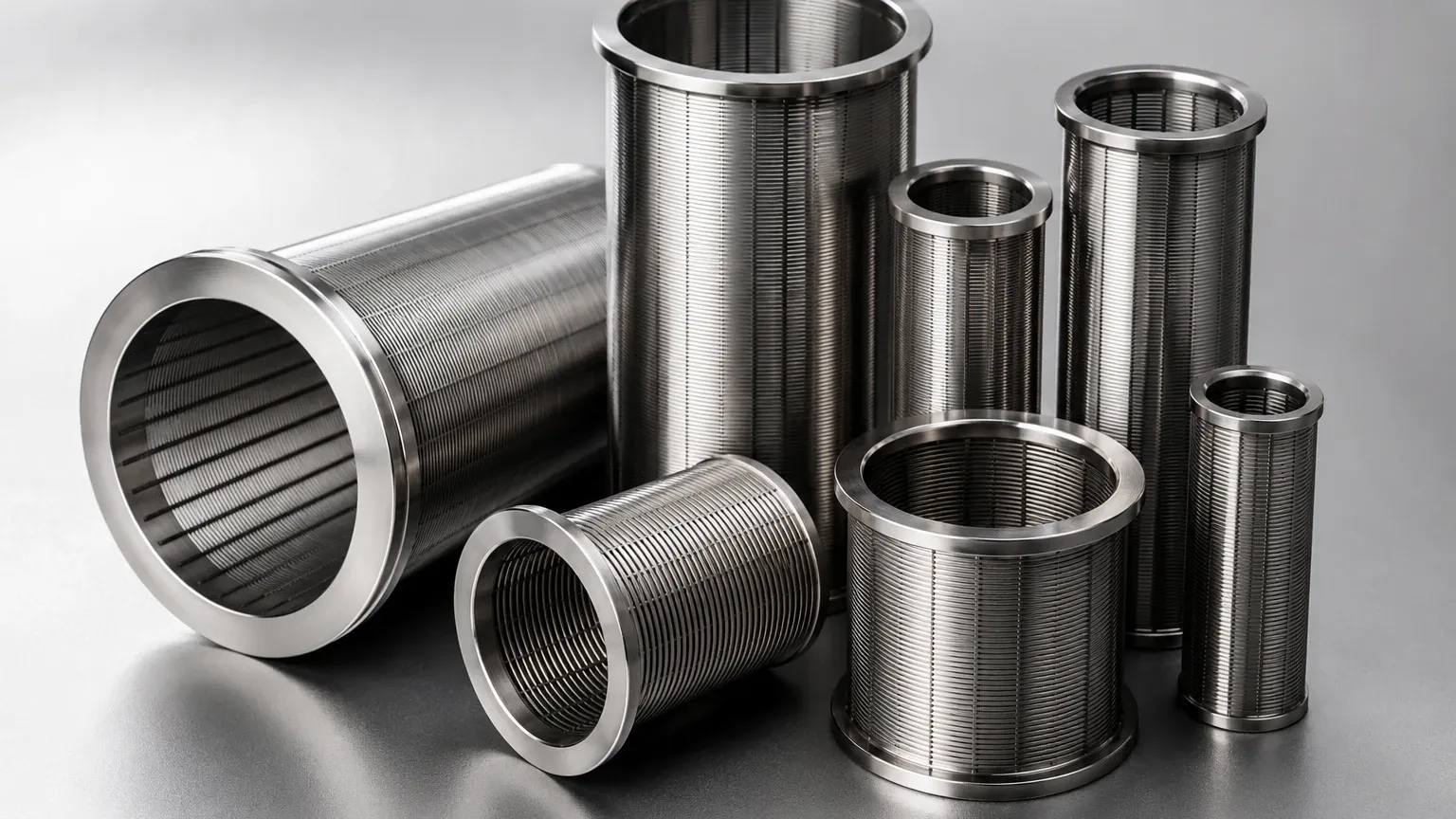
At its core, a wedge wire screen is a specialized metal filter constructed from V-shaped profile wires that are resistance-welded onto support rods at each intersection. This design differs fundamentally from woven wire mesh or perforated plates. The "V" profile of the wire creates a continuous slot that widens inwardly, a feature often referred to as a non-clogging or self-cleaning design.
The V-Profile Advantage
The geometry of the wire is the most significant factor in its performance. When particles pass through the slot, they only make contact at two points on the leading edges of the V-shape. If a particle is small enough to pass through the initial opening, it will easily clear the widening gap behind it. This prevents the "blinding" or "pegging" common in woven mesh filters, where particles often become trapped within the weave, leading to rapid pressure drops and increased maintenance frequency.
Structural Integrity and Resistance Welding
Unlike mechanical assembly methods, the resistance welding used in the manufacturing of Wedge Wire Screens ensures a high-strength bond between the profile wire and the support rods. This creates a rigid, one-piece structure capable of withstanding significant pressure differentials and mechanical stresses. For engineers, this translates to a longer service life and the ability to operate in high-vibration or high-flow environments without the risk of screen deformation.
Engineering Specifications for Industrial Applications
When specifying vadodara wedge wire screens for a project, several technical parameters must be evaluated to ensure the component meets the operational demands of the system.
Slot Size Precision
The slot size, or the gap between the profile wires, determines the filtration rating. Precision is paramount here; even minor deviations in slot width can lead to bypass of oversized particles or premature clogging. Industrial applications typically require slot sizes ranging from as small as 20 microns to several millimeters. In precision-heavy sectors like pharmaceuticals or fine chemical production, maintaining a tight tolerance on these openings is essential for process consistency.
Support Rod Configuration
While the profile wire dictates the filtration performance, the support rods dictate the mechanical strength. The spacing and shape of the support rods (which can be round, rectangular, or teardrop-shaped) are calculated based on the expected collapse pressure and the total load the screen will bear. In deep-well applications or high-pressure hydraulic systems, the density of support rods is increased to prevent structural failure.
Open Area Calculations
The "open area" is the percentage of the total screen surface that allows for fluid flow. A higher open area results in lower entrance velocities and reduced pressure drops across the filter. Engineers must balance the need for a high open area with the requirement for mechanical strength. Wedge wire designs typically offer a higher effective open area compared to perforated plates with similar filtration ratings, making them more energy-efficient for high-volume flow applications.
The Role of Wedge Wire Screens in Vadodara's Industrial Landscape
Vadodara is recognized as a significant industrial center, housing a high concentration of chemical, petrochemical, pharmaceutical, and power generation facilities. These industries rely heavily on robust filtration solutions to protect downstream equipment and ensure product purity.
Chemical and Petrochemical Processing
In the chemical plants surrounding the Vadodara region, wedge wire components are frequently used in reactor internals, catalyst bed supports, and resin traps. The ability of stainless steel wedge wire to resist corrosive chemicals while maintaining precise slot widths makes it indispensable for catalyst recovery processes. A failure in a catalyst trap can lead to the loss of expensive materials and damage to subsequent processing stages, making the reliability of the screen a high-stakes requirement.
Water and Wastewater Treatment
Municipal and industrial water treatment facilities in the region utilize wedge wire for intake screens, dewatering, and ion exchange processes. The non-clogging nature of the V-wire is particularly beneficial in treating raw water containing organic debris or in sludge dewatering applications where high solids loading would quickly blind traditional filter media.
Pharmaceutical and Food Production
For the pharmaceutical and food sectors, hygiene and cleanability are the primary concerns. The smooth surface of wedge wire screens facilitates effective Clean-In-Place (CIP) procedures. Furthermore, the absence of crevices or overlapping wires (which are found in woven mesh) minimizes the risk of bacterial growth and cross-contamination, aligning with stringent regulatory standards for these industries.
Material Selection and Corrosion Resistance
The longevity of a wedge wire screen is directly tied to the materials used in its construction. Since these components are often exposed to aggressive fluids and high temperatures, selecting the correct alloy is a critical step in the procurement process.
1. Stainless Steel 304: The standard choice for general industrial applications. It provides good corrosion resistance and mechanical strength for water treatment and non-acidic chemical processes.
2. Stainless Steel 316L: The "L" denotes low carbon, which improves weldability and resistance to intergranular corrosion. SS316L contains molybdenum, making it significantly more resistant to chlorides and pitting. This is the preferred material for pharmaceutical, food processing, and marine environments.
3. Duplex Stainless Steels: For extreme environments involving high concentrations of chlorides or highly acidic conditions, Duplex steels (like 2205) offer superior yield strength and exceptional resistance to stress corrosion cracking.
4. Specialty Alloys: In specific high-temperature or highly corrosive petrochemical applications, alloys such as Monel, Hastelloy, or Inconel may be required to ensure the filter does not degrade during the production cycle.
Customization and OEM Manufacturing Capabilities
Industrial filtration is rarely a one-size-fits-all field. Most applications require customized designs to fit existing housing or to meet specific hydraulic profiles. Manufacturers like Kaifil specialize in providing tailored solutions that go beyond standard catalog items.
Geometry and Form Factors
Wedge wire can be fabricated into a variety of shapes:
* Cylindrical Screens: Used in pipe systems, rotary screens, and well casings. These can be designed for flow from outside-to-inside (FOTI) or inside-to-outside (FITO).
* Flat Panels: Often used in vibratory shakers, floor drains, and intake structures.
* Sieve Bends: Curved screens used in minerals processing and starch production for gravity-fed separation.
* Conical and Basket Filters: Custom-shaped for specific centrifuge or strainer applications.
Technical Consultation
Effective procurement of vadodara wedge wire screens involves more than just providing dimensions. A technical consultation with the manufacturer can help identify potential issues such as flow-induced vibration, galvanic corrosion (if different metals are used in the assembly), or the need for reinforced end-fittings. OEM capabilities allow for the integration of flanges, handles, or specialized reinforcement rings directly into the screen assembly, simplifying the installation process for the end-user.
Installation and Maintenance Best Practices
To maximize the return on investment for high-performance filtration components, proper installation and maintenance protocols must be established.
Installation Considerations
During installation, it is vital to ensure that the screen is oriented correctly relative to the flow direction. For cylindrical screens, the direction of the V-wire (whether the flat side or the point of the V faces the flow) is determined by whether the system is designed for FITO or FOTI operation. Incorrect orientation will negate the non-clogging benefits of the wedge wire design. Additionally, ensuring proper sealing at the gaskets or flanges is necessary to prevent fluid bypass.
Cleaning and Maintenance
While wedge wire is inherently resistant to clogging, it is not immune to fouling, especially in applications with high oil content or biological growth. Common cleaning methods include:
* Backwashing: Reversing the flow of fluid to dislodge particles from the surface.
* Chemical Cleaning: Using compatible solvents or acids to dissolve scale or organic buildup.
* Ultrasonic Cleaning: For smaller, precision components, ultrasonic baths can remove fine particulates from the slots without damaging the wire structure.
* Mechanical Cleaning: Using brushes or scrapers. The smooth surface of the wedge wire allows for mechanical cleaning without the risk of snagging, which is a common problem with woven mesh.
Monitoring Performance
Engineers should monitor the pressure differential (ΔP) across the screen. A gradual increase in ΔP typically indicates normal loading, while a sudden spike may suggest a change in process conditions or unexpected fouling. Establishing a baseline ΔP for a clean screen helps in determining the optimal time for cleaning cycles, thereby reducing energy consumption and preventing potential screen collapse due to excessive pressure.
Total Cost of Ownership (TCO)
When evaluating the cost of Wedge Wire Screens, it is important to look beyond the initial purchase price. The total cost of ownership includes maintenance labor, downtime for cleaning or replacement, and the energy costs associated with pressure drop.
Because wedge wire screens are more durable and easier to clean than many alternatives, they often provide a lower TCO over a 5-to-10-year period. Their structural rigidity reduces the frequency of replacements, and their high open area minimizes the pumping power required to maintain flow rates. For facilities in industrial hubs like Vadodara, where operational uptime is a key performance indicator, the reliability of wedge wire is a strategic advantage.
Conclusion
Selecting the appropriate filtration media is a fundamental aspect of industrial process design. Vadodara wedge wire screens represent a sophisticated engineering solution for industries that cannot afford the risks associated with clogging, frequent maintenance, or structural failure. By understanding the nuances of V-wire geometry, material properties, and customization options, engineers and purchasing teams can ensure they implement filtration systems that are not only effective but also cost-efficient over their entire lifecycle.
Whether for a chemical refinery, a municipal water plant, or a pharmaceutical laboratory, the precision of wedge wire technology provides the consistency and durability required for modern industrial excellence. As manufacturing requirements continue to evolve toward higher purity and greater efficiency, the role of high-performance metal filtration remains more relevant than ever.
