


Wedge Wire Screen Cylinder
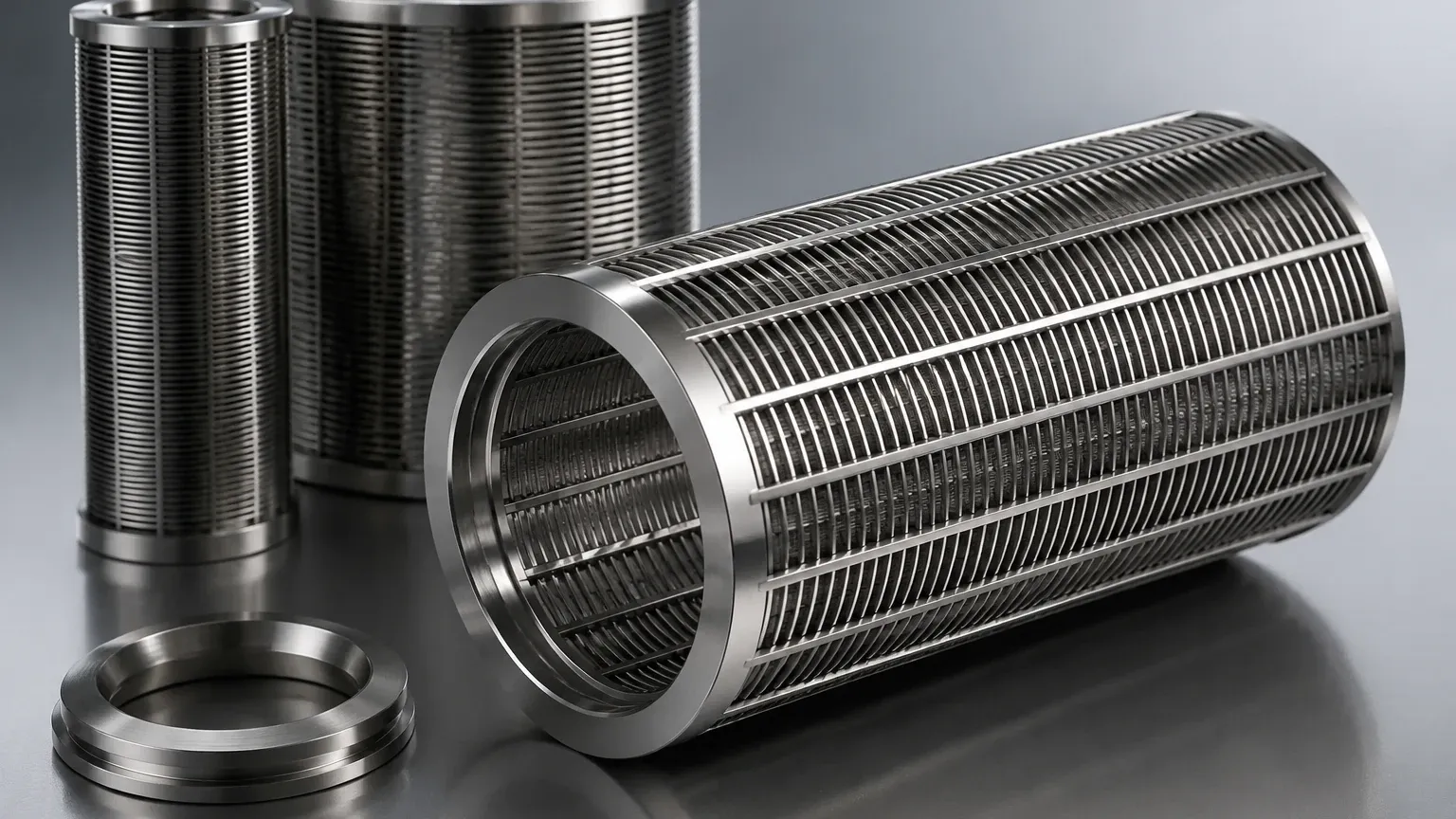
In industrial filtration and mechanical separation, the wedge wire screen cylinder stands as a critical component for processes requiring high precision, structural durability, and minimal maintenance. Unlike traditional woven wire mesh or perforated plates, these cylinders are engineered using a specialized resistance welding process that joins V-shaped profile wires to support rods. This construction creates a continuous slot that widens inwardly, a design feature that fundamentally alters the efficiency of solid-liquid separation.
For engineers and procurement professionals, selecting the right wedge wire screen cylinder involves more than just matching dimensions. It requires a deep understanding of fluid dynamics, material science, and mechanical stress factors. As a professional manufacturer, Kaifil provides these technical insights to ensure that filtration components meet the rigorous demands of chemical processing, water treatment, and food production.
The Engineering Fundamentals of Profile Wire Technology
The core advantage of Wedge Wire Screens lies in the geometry of the profile wire. The "V" shape, or wedge shape, is positioned so that the widest part of the wire faces the incoming flow. This creates a precision slot at the surface, which immediately widens as the fluid passes through the screen.
This geometry provides two primary technical benefits:
1. Non-Clogging Performance: In standard mesh filters, particles often become wedged within the aperture, leading to blinding. In a wedge wire screen cylinder, any particle small enough to pass through the initial slot width will easily clear the rest of the opening due to the increasing width of the internal gap.
2. Effective Backwashing: The smooth surface and widening slots make these cylinders ideal for automated self-cleaning systems. During a backwash cycle, the reverse flow of fluid effectively dislodges accumulated debris from the surface without the risk of particles becoming trapped deep within the media.
Flow Configuration: Radial vs. Axial and FOTI vs. FITI
When specifying a wedge wire screen cylinder, the direction of flow is the most significant design variable. The orientation of the profile wires relative to the support rods determines whether the screen is optimized for internal or external filtration.
FOTI (Flow Out-To-In)
In the Flow Out-To-In configuration, the smooth filtration surface is on the exterior of the cylinder. The support rods are located on the inside. This is the most common setup for intake screens, well screens, and cartridge filters where the fluid moves from the surrounding environment into the center of the cylinder. The external surface is easy to clean with mechanical scrapers or external spray bars.
FITI (Flow In-To-Out)
In the Flow In-To-Out configuration, the smooth surface is on the interior, and the support rods are on the exterior. This is often used in centrifugal separators, screw press screens, and internal drum filters. The internal smooth surface allows for the efficient movement of solids through the center of the cylinder, often assisted by an internal screw or auger.
Radial vs. Axial Orientation
Beyond flow direction, engineers must choose between radial and axial wire orientation. Radial wire cylinders (where the profile wire wraps around the circumference) are the standard for most pressure-driven filtration. Axial wire cylinders (where the profile wires run parallel to the length of the cylinder) are typically used in applications involving internal rotating elements, such as screw presses, to prevent the mechanical components from catching on the screen edges.
Material Selection for Industrial Environments
The longevity of a wedge wire screen cylinder is heavily dependent on its chemical and thermal compatibility with the process fluid. While stainless steel is the industry standard, the specific grade must be selected based on the operating environment.
* Grade 304 Stainless Steel: Suitable for general industrial applications, water treatment, and food processing where corrosion risks are moderate.
* Grade 316L Stainless Steel: The preferred choice for chemical processing and marine environments. The addition of molybdenum provides superior resistance to chlorides and pitting corrosion.
* Duplex Stainless Steels (e.g., 2205): Used in high-stress or highly corrosive environments where both mechanical strength and chemical resistance are paramount, such as in desalination or oil and gas processing.
* Specialty Alloys: For extreme temperatures or highly acidic environments, alloys like Monel or Hastelloy can be utilized, though these significantly increase the total cost of the component.
Engineering Considerations: Slot Precision and Structural Strength
Filtration accuracy in a wedge wire screen cylinder is defined by the slot width, which can be manufactured to tolerances as tight as ±0.05mm. For industrial applications, slot sizes typically range from 20 microns up to several millimeters.
Calculating Open Area
The "open area" percentage is a critical metric for determining flow rates and pressure drops. A higher open area reduces the velocity of the fluid passing through the slots, which minimizes erosion and reduces the energy required for pumping. However, increasing the open area often involves using thinner profile wires, which can compromise the structural integrity of the cylinder. Engineers must find the optimal balance between flow efficiency and mechanical durability.
Collapse Strength and Burst Pressure
Unlike woven mesh, which requires a separate support basket, a wedge wire screen cylinder is inherently structural. However, it must still be engineered to withstand the differential pressure (ΔP) across the screen. If the ΔP exceeds the design limits—often due to heavy loading of solids—the cylinder may collapse (in FOTI configurations) or burst (in FITI configurations). Kaifil engineers calculate the required support rod spacing and wire profile thickness based on the maximum expected pressure differentials to ensure operational safety.
Customization and Integration in Industrial Systems
A wedge wire screen cylinder is rarely a standalone component; it must be integrated into a larger housing or machine. Customization options are essential for seamless installation and performance.
* End Fittings: Cylinders can be supplied with various terminations, including standard NPT/BSP threads, ANSI or DIN flanges, weld rings, or custom-machined end caps. Proper sealing at these points is vital to prevent fluid bypass.
* Reinforcement Rings: For long cylinders or those operating under high mechanical torque (such as in a screw press), external or internal reinforcement rings are added to maintain the roundness of the cylinder and prevent deformation.
* Surface Treatments: Electropolishing is frequently applied to cylinders used in the pharmaceutical and food industries. This process removes surface impurities and creates an ultra-smooth finish that further reduces the adhesion of biological materials and simplifies sterilization.
Maintenance, Cleaning, and Total Cost of Ownership
While the initial capital expenditure for a wedge wire screen cylinder may be higher than for disposable filter cartridges or woven mesh, the total cost of ownership (TCO) is often lower due to the component's extended service life and reduced downtime.
Cleaning Protocols
Because wedge wire is a surface-loading medium, cleaning is straightforward. In many systems, an automated mechanical scraper or a back-pulse of air or water is sufficient to restore the original flow characteristics. This eliminates the recurring cost of replacement filters and the labor associated with frequent filter changes.
Wear and Erosion
In abrasive applications, such as mining or pulp and paper processing, the leading edges of the profile wires will eventually wear down. This wear can gradually increase the slot width, leading to a loss of filtration precision. Regular inspection of the slot gaps using feeler gauges or optical micrometers is recommended to determine the optimal replacement cycle before product quality is compromised.
Procurement Checklist for Engineers
Before finalizing a specification for a wedge wire screen cylinder, engineers should confirm the following data points with their manufacturer:
1. Fluid Characteristics: Viscosity, temperature, and chemical composition (especially pH and chloride levels).
2. Solids Loading: The concentration, size distribution, and nature (fibrous, granular, or gelatinous) of the particles to be removed.
3. Operating Pressure: Both the normal operating pressure and the maximum possible differential pressure during a surge or blockage.
4. Flow Direction: Explicitly define whether the flow is In-to-Out or Out-to-In.
5. Mechanical Interface: Exact dimensions and tolerances for end fittings to ensure a bypass-free installation.
Conclusion
The wedge wire screen cylinder is a versatile and robust solution for demanding industrial filtration tasks. Its unique construction provides a combination of precision, strength, and ease of cleaning that other filter media cannot match. By understanding the nuances of wire profiles, flow configurations, and material selection, technical professionals can optimize their filtration systems for maximum uptime and efficiency.
For those seeking high-performance, customized filtration components, Kaifil offers extensive manufacturing expertise to develop solutions tailored to specific application requirements. To explore technical specifications or discuss a custom design, engineers are encouraged to Review product options and application support to ensure their filtration systems are built for long-term reliability.
