


Wedge Wire Screen Hs Code
In the global procurement of industrial filtration components, technical specifications and regulatory compliance are equally critical. For procurement managers and engineers sourcing high-performance filtration media, understanding the wedge wire screen hs code is essential for accurate customs declaration, duty calculation, and supply chain efficiency. Wedge wire screens, characterized by their V-shaped profile wires and exceptional structural integrity, are specialized components used across diverse sectors including water treatment, mining, food processing, and petrochemicals.
As a manufacturer specializing in custom stainless steel filtration solutions, Kaifil provides precision-engineered Wedge Wire Screens designed to meet rigorous industrial standards. This guide examines the technical classification, engineering considerations, and logistical factors involved in the international trade of these essential filtration components.
Understanding the HS Code for Wedge Wire Screens
The Harmonized System (HS) is a standardized numerical method of classifying traded products. For wedge wire screens, the classification is not always straightforward because it can depend on the material composition, the manufacturing process, and the intended application of the final product.
Common Classification Categories
Most industrial wedge wire screens are manufactured from stainless steel due to its corrosion resistance and mechanical strength. Consequently, they typically fall under Chapter 73 of the Harmonized System, which covers "Articles of iron or steel."
1. HS Code 7314.12.00: This code often applies to endless bands for machinery, made of stainless steel wire. If the wedge wire is formed into a continuous belt or specific machine part, this may be the appropriate classification.
2. HS Code 7314.14.00: This covers other woven cloth of stainless steel. While wedge wire is technically welded rather than woven, some customs authorities group various steel mesh and screen products under this heading if they serve similar filtering functions.
3. HS Code 7326.90.00: This is a broader category for "Other articles of iron or steel." When a wedge wire component is highly customized—such as a specific lateral assembly or a complex resin trap—and does not fit neatly into the mesh categories, it may be classified here.
4. HS Code 8421.99.00: This code refers to "Parts for filtering or purifying machinery and apparatus." If the wedge wire screen is explicitly designed and sold as a replacement part for a specific piece of filtering equipment (like a centrifuge or a pressure leaf filter), this code is frequently utilized.
Why the Correct Code Matters
Selecting the accurate wedge wire screen hs code is vital for several reasons:
* Duty Rates: Different codes carry different import duty percentages depending on the trade agreements between the exporting and importing countries.
* Compliance: Incorrect classification can lead to audits, fines, or the seizure of goods by customs authorities.
* Trade Statistics: Governments use these codes to monitor trade volumes, which can influence future trade policies and anti-dumping investigations.
Engineering Foundations of Wedge Wire Screens
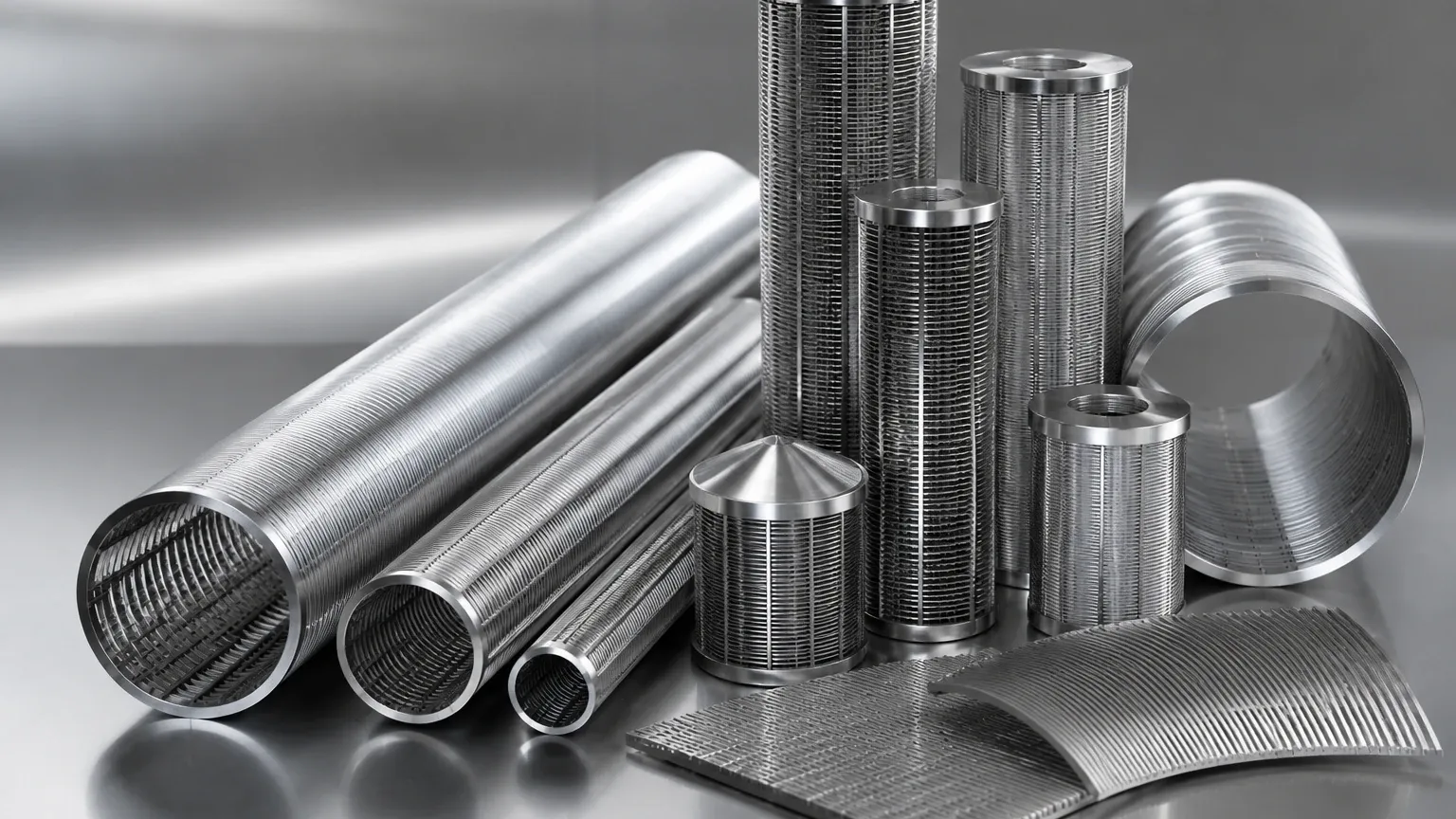
To understand why classification can vary, one must look at the engineering behind the product. Unlike standard woven wire mesh, wedge wire is a fabricated structure. It consists of surface profiles (V-shaped wires) that are resistance-welded onto support profiles (rods or spacers) at each intersection.
The V-Shaped Profile Advantage
The defining feature of wedge wire is the V-shaped profile. This geometry creates a slot that widens inwardly. In a filtration scenario, particles that pass through the narrowest point of the slot (the surface) are unlikely to become lodged further down because the opening expands. This "non-clogging" characteristic is the primary reason engineers specify wedge wire for high-solids applications.
Technical Specifications to Confirm
Before finalizing a purchase and determining the shipping classification, technical teams must define several parameters:
* Slot Opening (Aperture): This is the distance between the surface wires. It determines the filtration rating. Precision manufacturing at Kaifil allows for slot tolerances as tight as ±0.05mm.
* Profile Wire Size: The width and height of the V-wire affect the open area and the wear life of the screen.
* Support Rod Spacing: This dictates the mechanical strength and the pressure drop across the screen.
* Material Grade: While 304 and 316L stainless steel are standard, demanding environments may require Duplex stainless steel or Super Duplex for enhanced pitting resistance.
Application-Specific Considerations
The intended use of the screen often dictates its physical form, which in turn influences its logistical handling and potential HS classification.
Water Treatment and Intake
In water treatment, wedge wire is used in intake screens to protect pumps and aquatic life. These are often large, cylindrical structures. Because they are integrated into civil engineering projects or large-scale pumping stations, they may be classified as parts of water treatment systems.
Food and Beverage Processing
For the food industry, hygiene is paramount. Wedge wire screens used in mash tuns for brewing or juice extraction require smooth surfaces and high-quality welds to prevent bacterial growth. These screens are often electropolished. The level of finishing can sometimes move the product into a different sub-classification if it is considered a finished "appliance part."
Petrochemical and Oil & Gas
In reactor internals, wedge wire is used for center pipes, scale traps, and outlet collectors. These components must withstand high temperatures and significant mechanical stress. The complexity of these assemblies often leads them to be classified under machinery parts (Chapter 84) rather than simple steel articles (Chapter 73).
Evaluating Quality and Performance
When sourcing wedge wire, the total cost of ownership is more important than the initial purchase price. A lower-quality screen may have a lower upfront cost but can lead to frequent downtime, higher maintenance costs, and potential product contamination.
Key Evaluation Criteria
1. Weld Integrity: Every intersection of the profile wire and support rod must be securely welded. Weak welds lead to slot deformation under pressure, which compromises filtration accuracy.
2. Slot Uniformity: Inconsistent slot widths lead to uneven flow distribution and "hot spots" where the screen may wear out prematurely.
3. Surface Flatness/Roundness: For flat panels, flatness is crucial for proper sealing in frames. For cylinders, roundness ensures even rotation in centrifugal applications.
Replacement Cycles and Maintenance
Engineers should inquire about the expected service life based on the abrasiveness of the media. Wedge wire is inherently durable, but in mining or aggregate processing, the profile wires will eventually wear down. Monitoring the slot width over time is a standard maintenance procedure. Because wedge wire is a rigid structure, it can often be cleaned using backwashing or ultrasonic cleaning, extending the replacement cycle significantly compared to disposable filter cartridges.
Logistics and Global Trade Compliance
Shipping industrial components internationally requires meticulous documentation. Beyond the wedge wire screen hs code, several other factors influence the smooth transit of goods.
Documentation Requirements
* Commercial Invoice: Must clearly state the material grade, dimensions, and the HS code.
* Packing List: Details the weight and dimensions, which are critical for freight calculations.
* Certificate of Origin: Required for determining eligibility for preferential duty rates under free trade agreements.
* Material Test Reports (MTR): Essential for industrial applications to verify that the stainless steel meets the specified chemical and mechanical properties (e.g., ASTM or EN standards).
Risks of Misclassification
If a shipment is flagged for an incorrect HS code, the consequences can range from minor delays to significant financial penalties. If the customs office determines that a product was classified under a lower-duty code to avoid taxes, the importer may be liable for back taxes and fines. Furthermore, repeated misclassifications can result in a company being placed on a high-risk watch list, leading to 100% inspection rates for all future shipments.
Customization and OEM Capabilities
One of the primary strengths of Kaifil is the ability to provide customized filtration solutions. Industrial processes rarely fit a "one-size-fits-all" model. Customization options include:
* Variable Slot Openings: Designing a single screen with different slot widths to manage flow gradients.
* Reinforced Structures: Adding extra support bars or frames for high-pressure environments.
* Specialized End Fittings: Integrating flanges, threaded connectors, or custom mounting brackets directly onto the screen assembly.
By working closely with a manufacturer during the design phase, engineers can ensure that the final product is optimized for both performance and ease of installation.
Conclusion
Selecting and importing the right filtration components requires a balance of engineering expertise and logistical knowledge. The wedge wire screen hs code serves as the bridge between the technical reality of the product and the regulatory requirements of international trade. Whether you are designing a new water intake system or replacing screens in a chemical reactor, understanding these classifications ensures a more predictable and cost-effective procurement process.
Kaifil remains committed to delivering high-performance, durable, and precise Wedge Wire Screens tailored to the specific needs of global industrial applications. By focusing on quality manufacturing and technical support, we help our partners achieve optimized filtration performance and long-term reliability. For technical consultations or specific inquiries regarding material selection and custom designs, engaging with an experienced manufacturer early in the project lifecycle is the most effective way to ensure success.
