


Wedge Wire Screen Canada
In the demanding industrial landscape of North America, the requirement for high-precision filtration and separation media is critical. For engineers and procurement managers sourcing wedge wire screen canada solutions, understanding the technical nuances of these components is essential for ensuring operational efficiency and equipment longevity. Wedge wire, characterized by its V-shaped profile wires and sturdy support rods, offers a unique combination of mechanical strength and filtration precision that standard woven wire mesh often cannot match.
As a specialized manufacturer, Kaifil provides engineered Wedge Wire Screens designed to withstand the rigorous conditions found in Canadian mining, oil and gas, and water treatment sectors. This guide explores the technical specifications, application-specific considerations, and selection criteria necessary for integrating these components into industrial systems.
Understanding Wedge Wire Technology for Industrial Applications
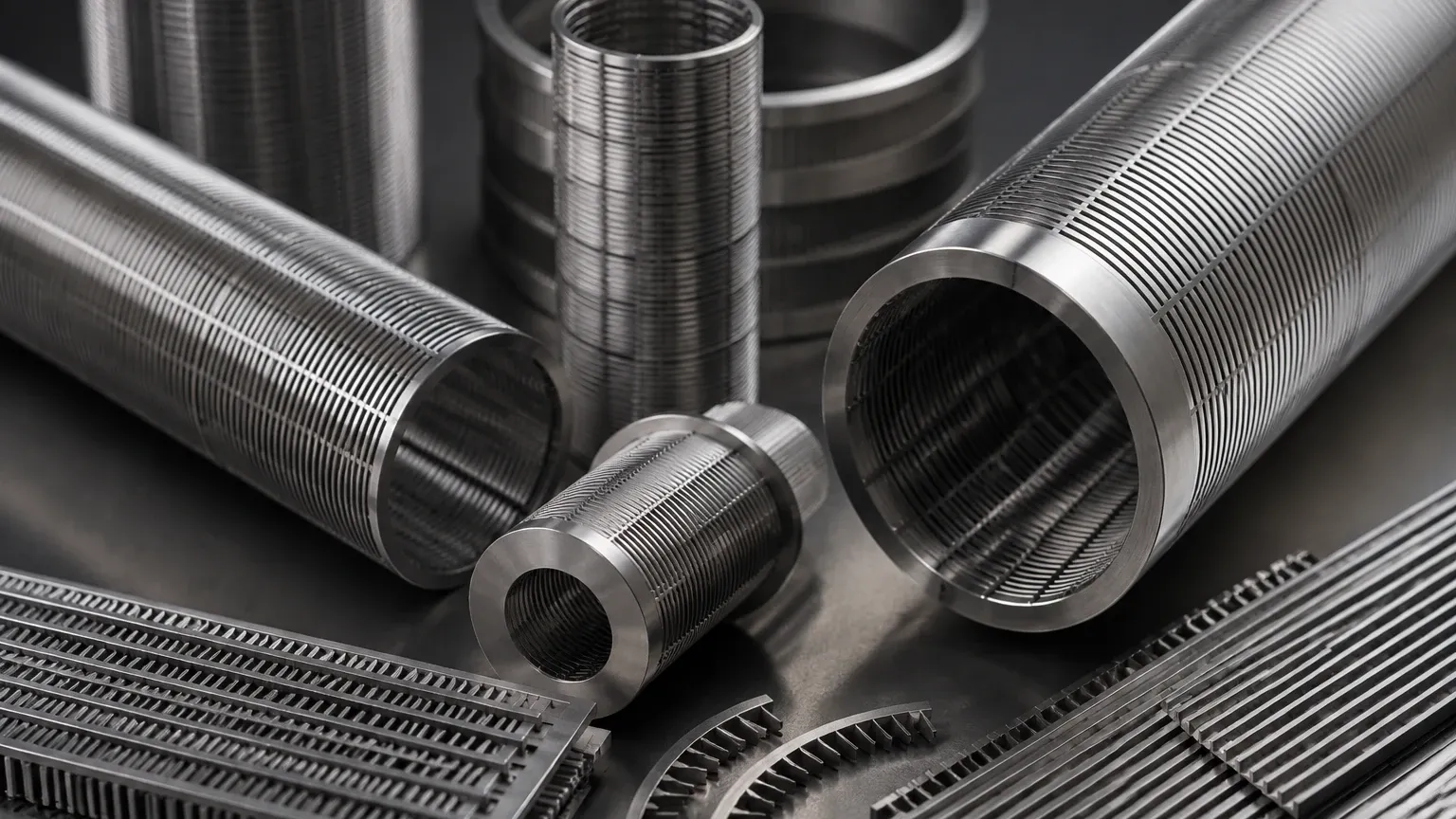
The fundamental advantage of wedge wire technology lies in its geometric design. Unlike traditional perforated plates or woven mesh, wedge wire is constructed by welding cold-rolled triangular (V-shaped) wires onto perpendicular support rods at every point of contact. This creates a continuous slot that widens inwardly.
The V-Shaped Profile Advantage
This specific geometry serves a dual purpose. First, the narrowest point of the slot is at the surface, which ensures that any particle capable of passing through the initial opening will continue through the screen without getting stuck. This "self-cleaning" or non-clogging characteristic is vital for continuous processes where downtime for manual cleaning is costly. Second, the V-shape minimizes the contact area between the solid particles and the screen, significantly reducing friction and wear.
Mechanical Integrity and Open Area
Engineers must balance the need for a high percentage of open area (for flow efficiency) with the structural requirements of the application. In high-pressure hydraulic systems or heavy-duty mining vibratory screens, the diameter and spacing of the support rods are increased to handle mechanical loads. The precision of the slot width, often measured in microns, determines the filtration rating and must be maintained across the entire surface of the screen to prevent bypass of oversized particles.
Critical Applications in the Canadian Market
The diverse industrial sectors in Canada present unique challenges for filtration media. From the sub-zero temperatures of northern mining operations to the chemically aggressive environments of coastal processing plants, wedge wire screens must be tailored to the environment.
Mining and Mineral Processing
Canada is a global leader in mineral extraction. In these environments, wedge wire is used extensively for dewatering, sizing, and media recovery. Whether it is potash in Saskatchewan or gold in Ontario, the abrasive nature of ore requires screens made from high-grade stainless steel or specialized alloys. The ability of wedge wire to maintain slot integrity under heavy vibration and high-volume throughput makes it the preferred choice for sieve bends and vibratory deck screens.
Oil Sands and Petrochemical Refining
In the Alberta oil sands, sand control is a primary concern. Wedge wire screens are utilized in SAGD (Steam Assisted Gravity Drainage) and other extraction methods to prevent sand from entering production tubing while allowing bitumen to flow. The high thermal stability of stainless steel wedge wire ensures that the screens do not deform under the intense heat and pressure typical of these operations.
Municipal and Industrial Water Treatment
For municipal water intake and wastewater treatment plants across Canada, wedge wire intake screens protect pumps and turbines from debris while minimizing impact on aquatic life. The precise slot openings allow for the exclusion of specific particle sizes while maintaining low approach velocities, which is often a regulatory requirement for environmental protection.
Engineering Considerations: Material Selection and Slot Precision
When specifying a wedge wire screen canada project, the choice of material is the first line of defense against premature failure. While 304-grade stainless steel is suitable for many general-purpose applications, more demanding environments require higher specifications.
* 316L Stainless Steel: The addition of molybdenum provides superior resistance to chlorides and pitting, making it the standard for chemical processing and marine environments.
* Duplex Stainless Steels: For applications involving high stress and highly corrosive fluids, duplex grades offer nearly double the yield strength of austenitic steels and exceptional resistance to stress corrosion cracking.
* Slot Tolerance: In precision filtration, a deviation of even a few microns can compromise the entire process. High-quality manufacturing processes utilize automated welding and continuous monitoring to ensure that slot widths remain consistent across large surface areas.
Customization Options for Specialized Equipment
Industrial filtration is rarely a one-size-fits-all scenario. Customization is necessary to integrate screens into existing infrastructure or specialized OEM equipment. Kaifil specializes in developing bespoke Wedge Wire Screens that meet exact dimensional and performance requirements.
Cylindrical and Flat Configurations
Wedge wire can be fabricated into various shapes. Cylindrical screens can be designed for flow from the outside in (FOTI) or inside out (FITO). In FOTI configurations, the flat side of the wire is on the exterior, creating a smooth surface for external cleaning. In FITO configurations, the flat side is on the interior, which is often used in screw press separators or rotating drum filters.
Reinforcement and Framing
For flat panels used in flooring or heavy-duty separation, additional framing and reinforcement bars are welded to the screen. This ensures the panel can withstand foot traffic or the weight of heavy slurry without bowing. Engineers should specify the expected load and flow rates during the design phase to ensure the support structure is adequate.
Evaluating Suppliers for Wedge Wire Screen Canada
For Canadian businesses, sourcing filtration components involves evaluating more than just the unit price. The total cost of ownership is influenced by durability, lead times, and technical support.
1. Technical Expertise: Does the supplier understand the fluid dynamics and mechanical stresses of your specific application? A supplier should be able to provide calculations for pressure drop and open area.
2. Quality Control: Ensure the manufacturer adheres to international standards (such as ISO) and provides material mill certificates. This is especially important in the pharmaceutical and food and beverage industries where material traceability is mandatory.
3. Logistics and Support: When searching for a wedge wire screen canada partner, consider the supplier's ability to provide timely shipping and responsive technical communication. In industrial settings, a delay in receiving a replacement screen can result in significant production losses.
Maintenance and Longevity in Demanding Environments
One of the primary reasons engineers select wedge wire over other media is its longevity. However, even the most robust screen requires proper maintenance to function at peak efficiency.
Cleaning Protocols
Because wedge wire is inherently resistant to blinding, cleaning is often simpler than with woven mesh. Backwashing—reversing the flow of fluid to dislodge particles—is highly effective. For stubborn deposits, chemical cleaning or ultrasonic baths can be used without damaging the structural integrity of the stainless steel wires.
Monitoring Wear
In abrasive applications, such as sand filtration or mineral sizing, the profile wires will eventually wear down. This wear increases the slot width, leading to a loss of filtration precision. Regular inspections should be conducted to measure slot openings at multiple points on the screen. If the slot width exceeds the allowable tolerance, the screen should be scheduled for replacement during a planned maintenance window to avoid emergency shutdowns.
Conclusion: Selecting the Right Filtration Partner
Choosing the correct wedge wire solution requires a deep understanding of both the material science and the specific operational variables of the Canadian industrial landscape. By focusing on precision engineering, material durability, and application-specific design, companies can significantly improve their process reliability.
Whether you are designing a new water intake system, upgrading a mining dewatering circuit, or requiring custom components for a chemical refinery, Kaifil offers the technical expertise and manufacturing capability to deliver high-performance filtration solutions. For detailed specifications and engineering support regarding Wedge Wire Screens, consulting with a specialist manufacturer is the most effective way to ensure your project meets its performance and budgetary goals.
