


Z Wire Screens
In the field of industrial separation and filtration, the geometry of the filtration media is a critical factor in determining the efficiency, durability, and maintenance requirements of a system. While standard V-shaped profiles are common, z wire screens represent a specialized engineering solution within the broader category of Wedge Wire Screens. These components are designed to meet the rigorous demands of heavy-duty industrial applications where mechanical strength and precise slot control are paramount.
Kaifil, a professional manufacturer specializing in custom stainless steel filtration solutions, produces these precision components to address the specific challenges faced by engineers in sectors ranging from mineral processing to chemical manufacturing. Understanding the technical nuances of Z-profile wire geometry is essential for technical professionals tasked with optimizing filtration performance and extending the service life of industrial equipment.
Engineering Principles of Z Wire Screens
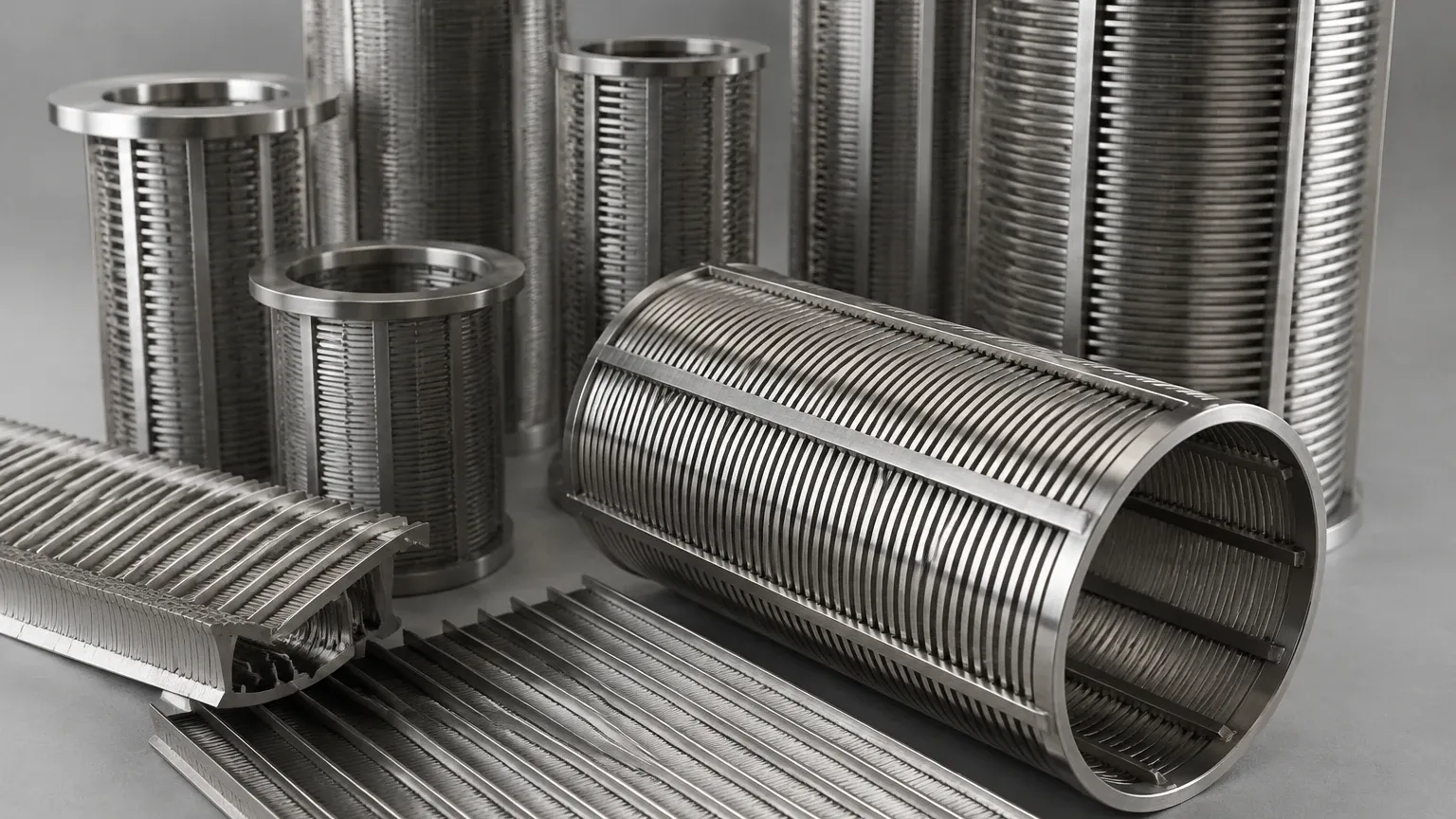
The fundamental design of a wedge wire screen involves a series of surface wires resistance-welded onto perpendicular support rods. The "Z" in z wire screens refers to the specific cross-sectional profile of the surface wire. Unlike the traditional equilateral or isosceles triangle profile of standard V-wires, the Z-profile features a more complex geometry that provides unique mechanical advantages.
Profile Geometry and Slot Integrity
The Z-shape is engineered to provide a wider base and a specific tilt or angle to the wire face. This geometry is particularly effective in maintaining slot width precision under high-pressure or high-load conditions. In industrial filtration, the "slot" is the gap between two adjacent wires. If these wires deform or shift due to mechanical stress, the filtration accuracy is compromised. The Z-profile offers enhanced lateral stability, ensuring that the slot width remains consistent across the entire surface of the screen.
Resistance Welding and Structural Bond
At Kaifil, the manufacturing process utilizes advanced resistance welding technology. Each intersection of the Z-wire and the support rod is fused at a molecular level. The increased contact area provided by the Z-profile base allows for a more robust weld compared to thinner wire profiles. This results in a screen that can withstand significant vibration, thermal expansion, and mechanical impact without structural failure.
Performance Advantages in Industrial Filtration
When selecting filtration media, engineers must balance flow rate, particle retention, and the risk of blinding (clogging). Z wire screens offer several performance characteristics that make them superior to woven mesh or perforated plates in specific environments.
Non-Clogging Characteristics
Like all high-quality wedge wire products, Z-profile screens feature a continuous slot that widens inwardly. This creates a two-point contact for particles. If a particle is small enough to pass through the initial slot opening, it will easily clear the rest of the screen because the opening expands behind the face. This "V-shaped" opening effect is maintained even with the Z-profile geometry, significantly reducing the risk of blinding and ensuring consistent flow rates over long operating cycles.
High Open Area and Flow Efficiency
Despite their heavy-duty construction, z wire screens can be engineered to provide a high percentage of open area. By optimizing the ratio between the wire width and the slot opening, Kaifil engineers can design screens that minimize pressure drop across the media. This is critical in pumped systems where excessive backpressure can lead to increased energy consumption and premature pump wear.
Mechanical Resistance to Abrasion
The Z-profile is often selected for applications involving abrasive slurries. The specific angle of the wire face can be oriented to deflect abrasive particles, reducing the rate of metal loss. In mining and mineral processing, where screens are subjected to constant bombardment by hard minerals, the durability of the Z-profile significantly extends the interval between screen replacements.
Material Selection and Corrosion Resistance
The performance of z wire screens is heavily dependent on the metallurgy of the stainless steel used in their construction. Kaifil utilizes high-grade alloys to ensure compatibility with various chemical and thermal environments.
* Grade 304 Stainless Steel: This is the standard material for general industrial applications. It offers excellent mechanical properties and good corrosion resistance in mildly corrosive environments. It is commonly used in food processing and standard water treatment.
* Grade 316L Stainless Steel: For applications involving chlorides or acidic solutions, 316L is the preferred choice. The addition of molybdenum enhances its resistance to pitting and crevice corrosion. This is the industry standard for pharmaceutical, chemical processing, and marine environments.
* Duplex Stainless Steels: In extreme cases where both high mechanical strength and superior corrosion resistance are required, duplex alloys may be used. These are particularly effective in high-pressure hydraulic systems or aggressive chemical reactors.
Key Applications for Z Wire Screens
Because of their robust construction and precision, z wire screens are utilized in some of the most demanding industrial sectors.
Mineral Processing and Aggregates
In mining operations, screens are used for dewatering, sizing, and media recovery. The high G-forces generated by vibrating screens require a filtration media that will not fatigue. Z-profile wires provide the necessary stiffness to resist harmonic vibration, preventing premature cracking of the welds.
Pulp and Paper Industry
The processing of wood pulp involves high volumes of water and fibrous materials that can easily clog standard filters. Z wire screens are used in pressure screens and fractionators to separate fibers by size. The smooth surface and non-clogging slot design allow for continuous operation without the need for frequent manual cleaning.
Water Intake and Treatment
Large-scale water intake systems for power plants or municipal treatment facilities use wedge wire cylinders to prevent debris and aquatic life from entering the system. The Z-profile can be used in these large-scale structures to provide the necessary hoop strength for submerged cylinders, ensuring they can withstand the external pressure of deep-water installation.
Food and Beverage Processing
In breweries, lauter tun screens require a flat, precise surface for the efficient separation of wort from grain. Custom-designed z wire screens provide a stable floor that supports the weight of the grain bed while allowing for clear liquid runoff. The stainless steel construction ensures compliance with strict hygiene and sanitation standards.
Customization and Engineering Considerations
One of the primary benefits of working with a specialized manufacturer like Kaifil is the ability to customize every aspect of the screen to fit the specific application. Engineers should consider the following parameters when specifying z wire screens:
1. Slot Size: This determines the filtration accuracy. Kaifil can produce screens with slot openings ranging from a few microns to several millimeters, depending on the wire profile used.
2. Support Rod Spacing: The distance between support rods determines the load-bearing capacity of the screen. Closer spacing increases strength but may slightly reduce the open area.
3. Flow Direction: Screens can be designed for flow from out-to-in (FOTI) or in-to-out (FITO). This is particularly important for cylindrical filter cartridges used in pressurized housings.
4. Surface Treatment: Options such as electropolishing, pickling, and passivation are available to enhance corrosion resistance and provide a smoother surface for sensitive applications like pharmaceutical manufacturing.
Maintenance and Total Cost of Ownership
While the initial cost of stainless steel z wire screens may be higher than that of synthetic mesh or disposable cartridges, the total cost of ownership (TCO) is significantly lower in industrial contexts.
Cleaning and Reusability
Unlike disposable filters, wedge wire components are designed for long-term use. They can be cleaned using backwashing, ultrasonic cleaning, or mechanical scraping. The rigid Z-profile ensures that the cleaning process—even when involving high-pressure jets—does not damage the filtration surface.
Replacement Cycles
By selecting the correct material and wire profile, engineers can predict and extend replacement cycles. Kaifil’s focus on weld integrity means that the primary failure mode is usually gradual abrasive wear rather than sudden structural collapse. This allows maintenance teams to plan replacements during scheduled shutdowns, avoiding costly emergency downtime.
Conclusion
For engineers and procurement professionals, selecting the right filtration media is a balance of technical specification and operational reliability. Z wire screens provide a high-performance alternative to standard profiles, offering enhanced structural integrity and superior resistance to the stresses of industrial processing. Whether used in a vibrating mineral separator or a precision chemical reactor, these components are essential for maintaining process efficiency.
Kaifil continues to support global industries by providing custom-engineered Wedge Wire Screens that meet the highest standards of quality and durability. By focusing on precision manufacturing and technical expertise, Kaifil ensures that every filtration component is optimized for its specific industrial environment, helping customers achieve reliable, long-term performance.
