


Y Wedges
In the field of industrial liquid-solid separation, the efficiency of a filtration system is largely dictated by the geometry of the filter media. Among the various configurations available, y wedges—a specific profile wire design used in the construction of Wedge Wire Screens—represent a critical component for high-demand applications. These components are engineered to provide a combination of structural rigidity, precise slot control, and superior release characteristics. For engineers and procurement specialists, understanding the technical nuances of y wedges is essential for optimizing process uptime and ensuring the longevity of filtration equipment.
Industrial filtration requires media that can withstand significant mechanical stress while maintaining a precise aperture. The "Y" profile, often categorized alongside V-wire designs, is specifically shaped to minimize the contact area between the filtered particles and the screen surface. This technical guide explores the engineering principles, material considerations, and application-specific advantages of utilizing y wedges in modern industrial environments.
Understanding the Geometry of Y Wedges in Filtration
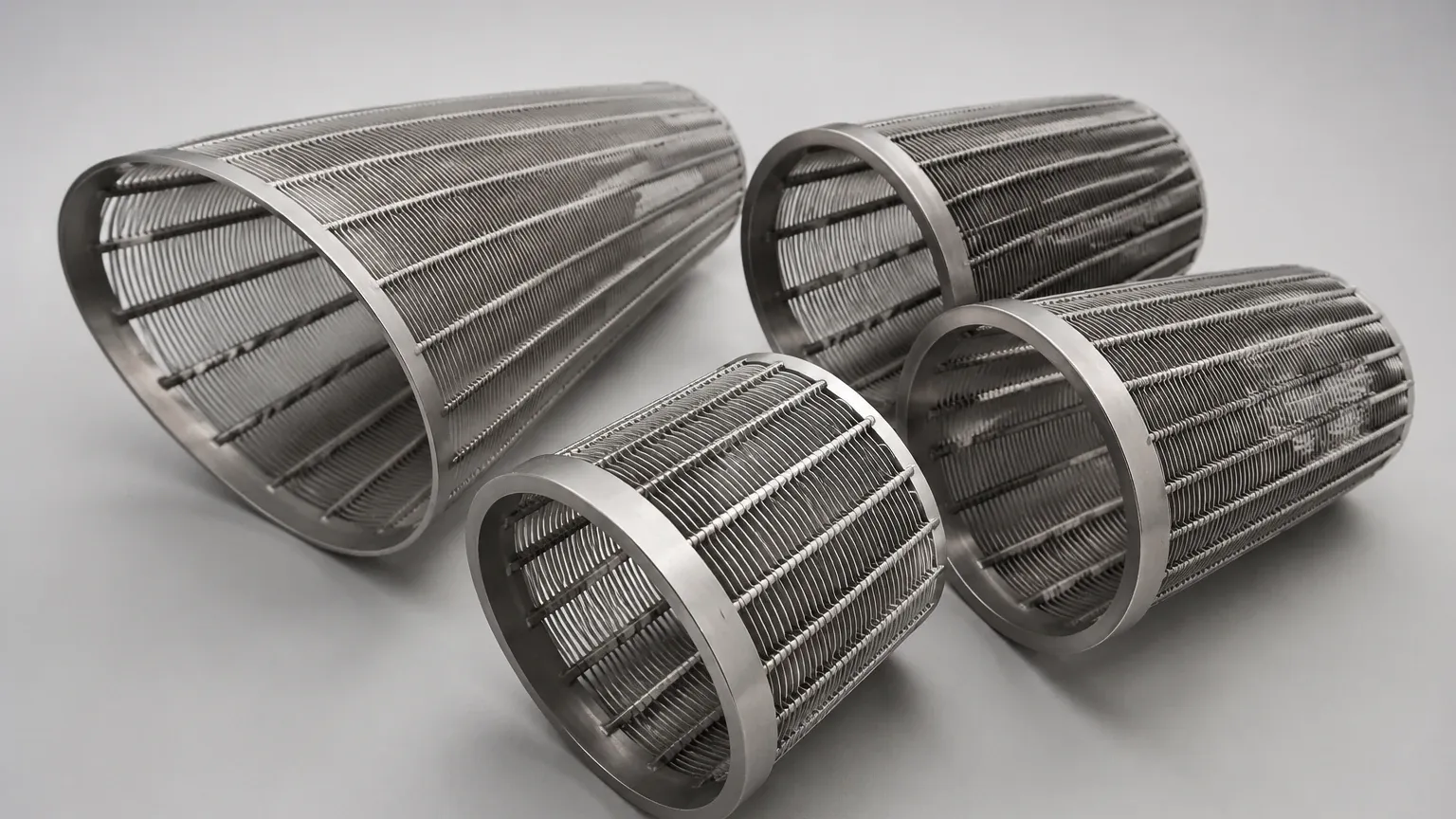
The fundamental principle behind Wedge Wire Screens is the use of profiled wires that are resistance-welded onto support rods. The y wedges profile is characterized by a wide head that tapers down to a narrower base, creating a divergent slot opening. This geometry is not merely an aesthetic choice; it is a functional requirement for non-clogging performance.
The Non-Clogging Mechanism
In a standard perforated plate or woven mesh, particles that are slightly larger than the opening can become wedged within the aperture, leading to "blinding" or clogging. With y wedges, the slot widens inwardly. Once a particle passes the initial narrowest point (the slot width), it moves into a larger space, allowing it to flow freely away from the screen. This two-point contact ensures that any solid material that enters the slot will pass through, provided it is not larger than the specified gap.
Structural Integrity
The "Y" shape provides a larger cross-sectional area at the top of the wire compared to thinner profile wires. This increased mass at the wear surface allows the screen to handle higher abrasive loads and greater pressure differentials without deforming. In high-pressure hydraulic systems or heavy-duty mining applications, this structural depth is a primary factor in the component's service life.
Technical Specifications and Material Selection
Selecting the correct material for y wedges is as important as the geometry itself. Because these screens are often deployed in corrosive or high-temperature environments, the metallurgy must be matched to the specific chemical profile of the process fluid.
Common Stainless Steel Grades
1. AISI 304/304L: The standard choice for general industrial use, providing excellent mechanical properties and good corrosion resistance in non-acidic environments.
2. AISI 316/316L: Enhanced with molybdenum, this grade is preferred for pharmaceutical, food and beverage, and chemical processing where resistance to chlorides and organic acids is required.
3. Duplex Stainless Steels: For applications involving extreme stress and highly corrosive media (such as seawater or concentrated brine), Duplex alloys offer superior yield strength and pitting resistance.
Slot Width Precision
The slot width, or the distance between adjacent y wedges, determines the filtration rating. In precision manufacturing, these slots can be controlled to tolerances as tight as ±0.05mm. Engineers must balance the need for fine filtration with the requirement for high flow rates; a narrower slot increases filtration efficiency but decreases the total open area, potentially increasing the pressure drop across the screen.
Performance Advantages of Wedge Wire Screens
When comparing y wedges to alternative filtration media like synthetic fabrics or multi-layered woven wire mesh, several performance advantages become apparent, particularly regarding total cost of ownership (TCO) and operational efficiency.
High Open Area and Flow Efficiency
Despite their robust construction, Wedge Wire Screens can be engineered to provide a high percentage of open area. By optimizing the ratio between the wire width and the slot width, manufacturers can maximize throughput. This is particularly beneficial in gravity-fed systems or low-pressure applications where maintaining a high flow rate is critical to process velocity.
Ease of Cleaning and Backwashing
The smooth surface profile of y wedges makes them ideal for automated cleaning systems. Whether using a mechanical scraper or a high-pressure backwash (back-pulsing) cycle, the divergent slots allow for the efficient removal of the filter cake. In continuous processes, such as water intake or pulp and paper processing, the ability to clean the screen in-situ without halting production is a significant operational advantage.
Mechanical Durability
Unlike woven mesh, which can fray or shift under vibration, y wedges are fusion-welded to support rods at every intersection. This creates a single, rigid structure that maintains slot consistency even under fluctuating temperatures and mechanical vibrations. This durability reduces the frequency of replacements and the risk of media migration into the downstream fluid.
Industrial Applications and Case Use
The versatility of y wedges allows them to be integrated into various equipment formats, including flat panels, curved sieve bends, and cylindrical filter cartridges. Their application spans across multiple sectors where reliability is non-negotiable.
Water and Wastewater Treatment
In municipal and industrial water treatment, these screens are used for primary solids removal, resin traps, and intake screening. The y wedges profile prevents aquatic debris and grit from clogging the system, protecting downstream pumps and membranes. Resin traps, in particular, rely on the high strength of wedge wire to prevent the loss of expensive ion-exchange resins in the event of a distribution system failure.
Food and Beverage Processing
Hygiene and cleanability are paramount in food production. Wedge wire is used in lauter tuns for brewing, juice extraction, and vegetable processing. The stainless steel construction ensures no contaminants are leached into the product, and the smooth surface supports Clean-in-Place (CIP) protocols, meeting stringent sanitary standards.
Petrochemical and Refining
In reactor internals, y wedges serve as support grids for catalyst beds. They must withstand extreme temperatures and the weight of the catalyst while ensuring uniform flow distribution. The precision of the slot width is vital here to prevent catalyst migration, which could cause catastrophic damage to downstream equipment.
Engineering Considerations for Custom Selection
Specifying y wedges for a new or existing system requires a detailed analysis of the operating parameters. Engineers should confirm several key data points before finalizing a design.
Flow Direction
It is essential to define whether the flow is from "inside-to-outside" or "outside-to-inside." This determines the orientation of the y wedges relative to the support rods. For cylindrical screens, the wires can be wrapped axially (parallel to the flow) or radially (perpendicular to the flow), depending on the cleaning mechanism and the nature of the solids being removed.
Load and Pressure Calculations
The support rod spacing is the primary factor in the screen's ability to resist collapse or bursting. For high-pressure applications, closer support rod spacing or heavier rod profiles are required. Engineers must calculate the maximum expected differential pressure (Delta P), especially during upset conditions when the screen may be heavily loaded with solids.
Surface Treatment
Depending on the application, additional surface treatments may be applied to the y wedges. Electropolishing can further enhance corrosion resistance and surface smoothness, which is beneficial in pharmaceutical applications. Passivation is standard for stainless steel components to remove surface iron and promote the formation of the protective oxide layer.
Maintenance and Operational Longevity
While y wedges are designed for durability, their service life can be extended through proper maintenance and monitoring. Because these are mechanical components, they are subject to wear, particularly in abrasive slurry applications.
Inspection Protocols
Regular visual inspections should check for signs of wire erosion, slot widening, or mechanical deformation. In abrasive environments, the leading edge of the y wedges may wear down over time, which can eventually alter the filtration rating or reduce the structural integrity of the screen.
Cleaning Best Practices
While backwashing is effective, some sticky or fibrous materials may require chemical cleaning or ultrasonic baths. It is important to ensure that any cleaning agents used are compatible with the stainless steel grade to avoid stress corrosion cracking or pitting. For systems using mechanical scrapers, the alignment of the scraper blades must be checked periodically to prevent uneven wear on the screen surface.
Conclusion
The integration of y wedges into industrial filtration systems offers a robust solution for complex separation challenges. By providing a non-clogging surface, high structural strength, and excellent flow characteristics, these components represent a superior choice for engineers focused on process reliability. Whether used in water treatment, chemical processing, or food production, the technical advantages of wedge wire technology translate directly into reduced maintenance costs and optimized production efficiency.
When sourcing these components, partnering with a manufacturer that understands the intersection of metallurgy and fluid dynamics is vital. Customization in slot width, material grade, and structural reinforcement ensures that the final product is perfectly aligned with the specific demands of the application. For those evaluating filtration options, Wedge Wire Screens utilizing precision-engineered y wedges provide the technical foundation required for modern industrial excellence.
