


6 Mesh Filter
In industrial filtration, the selection of the correct mesh size is a critical engineering decision that directly impacts system efficiency, equipment longevity, and maintenance intervals. A 6 mesh filter represents a coarse filtration solution designed for high-flow applications where the primary objective is the removal of large particulates, debris, or contaminants from liquid or gas streams.
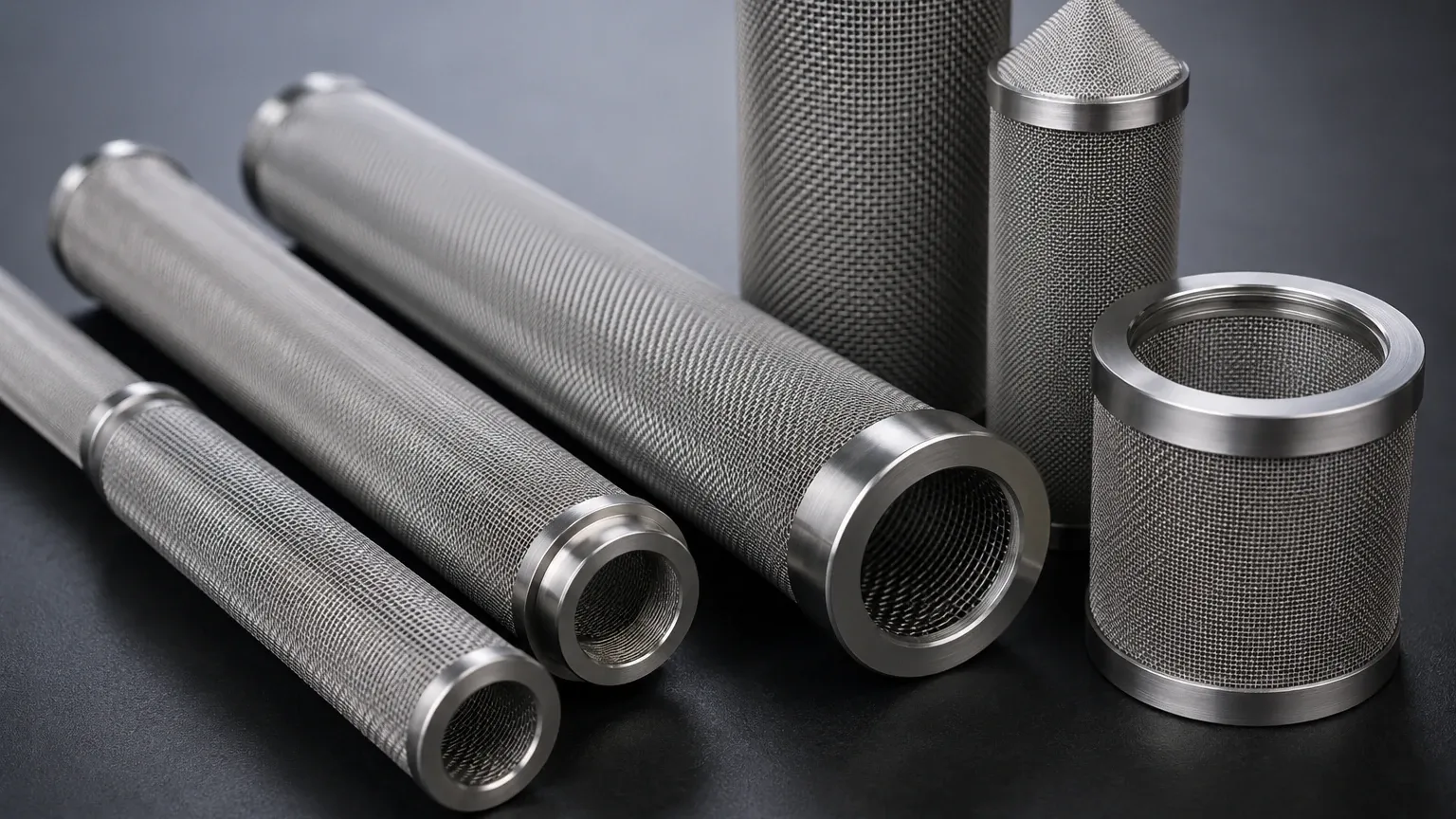
This guide examines the technical specifications, engineering considerations, and application-specific advantages of 6 mesh filtration components, particularly when configured as Wire Mesh Filter Cylinders & Tubes. For engineers and procurement professionals, understanding the interplay between wire diameter, aperture size, and material properties is essential for optimizing industrial filtration systems.
Understanding 6 Mesh Filter Specifications
The term "6 mesh" refers to the number of openings per linear inch of the wire cloth. In a standard 6 mesh configuration, there are six wires and six openings within one inch (25.4 mm). However, the mesh count alone does not fully define the filter's performance; the wire diameter is the second critical variable that determines both the aperture size and the open area percentage.
Aperture Size and Particle Retention
The aperture, or clear opening, is the distance between two adjacent parallel wires. For a standard industrial 6 mesh filter, the wire diameter typically ranges from 0.8 mm to 1.2 mm (0.032" to 0.047").
* Calculation: If using a 0.9 mm wire diameter, the aperture is calculated as: (25.4 mm / 6) – 0.9 mm = 3.33 mm.
* Retention: This means the filter will reliably block particles larger than approximately 3,330 microns.
Open Area Percentage
The open area is the ratio of the total area of the openings to the total area of the mesh. A 6 mesh filter generally offers a high open area, often between 60% and 75%. This high porosity is vital for maintaining low pressure drops across the filter media, making it ideal for suction strainers or high-velocity intake systems where flow restriction must be minimized.
Engineering Considerations for Wire Mesh Filter Cylinders & Tubes
When 6 mesh is fabricated into Wire Mesh Filter Cylinders & Tubes, several mechanical factors must be addressed to ensure the component survives the stresses of industrial operation.
Structural Integrity and Reinforcement
Because 6 mesh is a relatively coarse and open weave, the individual wires are thicker than those found in fine micron meshes. This provides inherent rigidity. However, in high-pressure hydraulic or chemical processing environments, a single layer of 6 mesh may require structural support. Engineers often specify a perforated metal core or a secondary, heavier support mesh to prevent the cylinder from collapsing under differential pressure (ΔP).
Seam Welding and Fabrication
The integrity of the longitudinal seam in a filter tube is a common point of failure. For industrial-grade components, plasma welding or advanced spot welding techniques are employed to ensure the seam is as strong as the parent mesh. This is particularly important for 6 mesh filters used in vibrating equipment or high-turbulence flow paths, where mechanical fatigue can lead to wire displacement.
Flow Dynamics and Pressure Drop
One of the primary reasons engineers select a 6 mesh filter is to achieve a high flow rate with minimal resistance. The "clean pressure drop" is significantly lower than that of 20 or 40 mesh filters. However, as the filter captures large debris—such as scale, wood chips, or plastic fragments—the effective filtration area (EFA) decreases. Designers must calculate the dirt-holding capacity to determine the appropriate surface area of the cylinder to ensure the system does not reach critical pressure levels between maintenance cycles.
Material Selection for Industrial Environments
The performance of a 6 mesh filter is heavily dependent on the alloy used in its construction. Stainless steel is the industry standard due to its mechanical strength and resistance to environmental degradation.
1. AISI 304 Stainless Steel: This is the most common material for general industrial use. It offers excellent strength and good corrosion resistance for water treatment, food processing, and basic chemical applications. It is cost-effective for environments where high concentrations of chlorides or extreme acids are not present.
2. AISI 316/316L Stainless Steel: For marine environments, pharmaceutical production, or aggressive chemical processing, 316 stainless steel is preferred. The addition of molybdenum provides superior resistance to pitting and crevice corrosion, especially in the presence of chlorides. 316L (low carbon) is often specified for components requiring extensive welding to prevent carbide precipitation.
3. Specialty Alloys: In high-temperature or highly corrosive settings, materials such as Monel, Inconel, or Hastelloy may be used to fabricate Wire Mesh Filter Cylinders & Tubes. These are typically reserved for specialized oil and gas or aerospace applications.
Common Applications for 6 Mesh Filtration
While fine filters are used for polishing and final product safety, the 6 mesh filter serves as the "first line of defense" or a protective guard in various industrial sectors.
Water Treatment and Intake Screens
In municipal and industrial water treatment, 6 mesh cylinders are used as intake screens to protect pumps and downstream sensitive equipment from large aquatic debris, leaves, and stones. The high open area allows for massive volumes of water to pass while maintaining a safe velocity to prevent fish impingement.
Food and Beverage Processing
During the initial stages of processing raw agricultural products, 6 mesh baskets and tubes are used to separate large solids from liquids. For example, in juice production, a 6 mesh filter might be used to remove large pulp clumps or seeds before the liquid moves to finer clarification stages.
Hydraulic and Lube Oil Systems
In heavy machinery, 6 mesh is frequently used in suction strainers located inside the oil reservoir. These filters prevent large metal shavings or external contaminants from entering the pump, which could cause catastrophic mechanical failure. Because suction lines are sensitive to vacuum pressure, the low-resistance nature of the 6 mesh is essential.
Chemical and Petrochemical Refining
Process engineers use 6 mesh components to protect valves and heat exchangers from pipe scale and welding slag. These filters are often designed as temporary "start-up" strainers or permanent protective elements in large-diameter piping systems.
Maintenance, Cleaning, and Longevity
Unlike disposable polymer filters, stainless steel 6 mesh filter components are designed for long-term reuse. The durability of the wire mesh allows for multiple cleaning methods:
* Backwashing: High-pressure flow in the reverse direction can dislodge trapped particles from the mesh surface.
* Ultrasonic Cleaning: For stubborn contaminants or biological buildup, ultrasonic baths can penetrate the weave to restore the filter to near-original flow conditions.
* Mechanical Cleaning: Because the wires in 6 mesh are relatively thick, they can withstand gentle manual brushing or low-pressure power washing without deforming the aperture size.
Regular inspection is required to check for "wire blinding" (where particles become permanently wedged in the openings) or signs of erosion on the upstream side of the mesh. If the wire diameter begins to thin due to abrasive flow, the structural integrity of the cylinder may be compromised, necessitating replacement.
Purchasing Guide: What Engineers Must Confirm
When sourcing Wire Mesh Filter Cylinders & Tubes for an OEM project or a facility upgrade, providing vague specifications can lead to performance issues. International buyers should confirm the following technical details with the manufacturer:
1. Exact Wire Diameter: Do not just specify "6 mesh." Define the wire diameter (e.g., 0.9 mm) to ensure the aperture and open area meet your flow calculations.
2. Alloy Certification: Request material test reports (MTRs) to verify the grade of stainless steel, especially if the application involves corrosive chemicals.
3. Dimensional Tolerances: Specify the required tolerances for the outer diameter (OD), inner diameter (ID), and overall length. For filters fitting into precision housings, a tolerance of +/- 0.5 mm or tighter may be necessary.
4. End Configuration: Determine if the filter tube requires open ends, closed ends (flat or conical), or specialized fittings like NPT threads, flanges, or O-ring grooves.
5. Operating Environment: Disclose the maximum operating temperature and differential pressure. This allows the manufacturer to recommend necessary reinforcements or specialized welding techniques.
By focusing on these technical parameters, engineering teams can ensure that the selected 6 mesh filter provides reliable, cost-effective performance while protecting downstream assets from damage. Whether used as a simple strainer or a complex component within a multi-stage filtration system, the 6 mesh configuration remains a staple of industrial fluid engineering due to its balance of strength and high-flow capability.
