


7 Wire Mesh
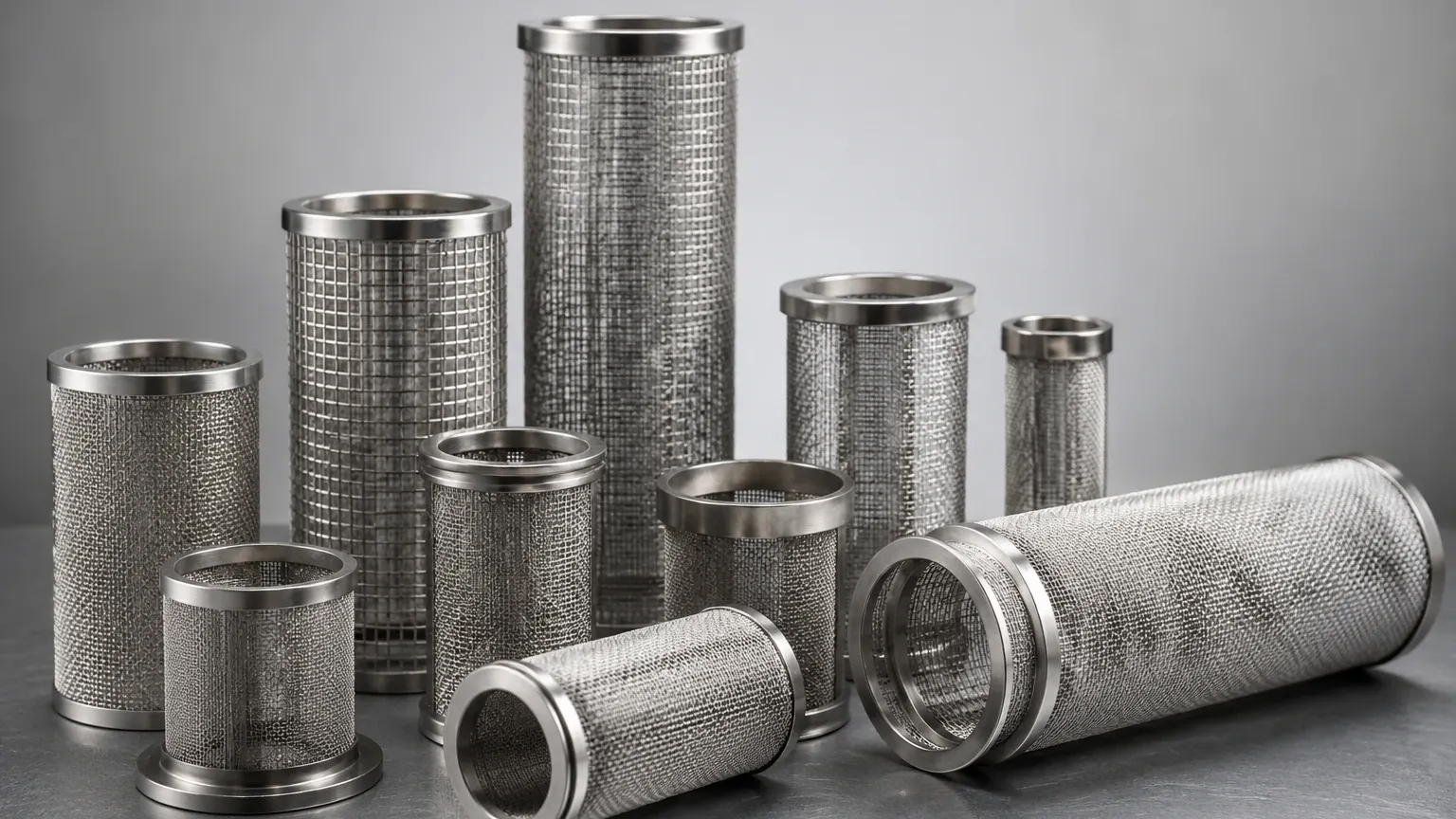
In industrial filtration, the selection of the correct mesh specification is a critical engineering decision that impacts throughput, equipment longevity, and product purity. Among the various configurations used in mechanical separation, 7 wire mesh—referring to a mesh count of seven openings per linear inch—serves as a robust solution for coarse filtration and structural support. When integrated into Wire Mesh Filter Cylinders & Tubes, this specific mesh provides the mechanical foundation necessary for demanding hydraulic, chemical, and water treatment applications.
This guide examines the technical parameters of 7 wire mesh, its role in multi-layer filtration systems, and the engineering considerations essential for procurement and installation.
Understanding 7 Wire Mesh in Industrial Applications
The term "7 wire mesh" typically denotes a mesh where there are seven wires per inch in both the warp and weft directions. In the context of stainless steel wire cloth, this results in a relatively large aperture size, making it unsuitable for fine particle retention but ideal for high-flow environments and heavy-duty structural roles.
Technical Specifications
To evaluate the suitability of a 7-mesh screen, engineers must consider the relationship between wire diameter and open area. For a standard 7-mesh stainless steel screen:
- Aperture (Opening Size): Depending on the wire diameter (typically ranging from 0.035" to 0.063"), the opening size usually falls between 2.8mm and 3.2mm.
- Open Area Percentage: This configuration often yields an open area of 50% to 70%, allowing for exceptionally low pressure drops even at high flow velocities.
- Structural Rigidity: Because the wires used in 7-mesh configurations are thicker than those in finer meshes (such as 100 or 200 mesh), the material exhibits high resistance to mechanical deformation and abrasive wear.
In many B2B industrial settings, 7 wire mesh is not used as the primary filtration medium for fine particulates. Instead, it functions as a "trash screen" to remove large debris or as a support cage for finer mesh layers in sintered or pleated filter elements.
Structural Integrity of Wire Mesh Filter Cylinders & Tubes
When 7 wire mesh is fabricated into Wire Mesh Filter Cylinders & Tubes, the focus shifts from simple screening to structural engineering. These components must withstand internal or external pressure differentials without collapsing or bursting.
Fabrication Techniques
Manufacturing high-quality filter cylinders involves several precise steps:
1. Precision Cutting: Ensuring the mesh is cut squarely to maintain the integrity of the seam.
2. Seam Welding: For industrial applications, plasma or TIG (Tungsten Inert Gas) welding is preferred over spot welding. A continuous longitudinal seam ensures that there are no bypass paths for unfiltered fluid.
3. End Cap Integration: The cylinders are often fitted with custom end caps (threaded, flanged, or open) to facilitate installation into housing units. These joints must be hermetically sealed to prevent leakage.
The Role of Support Layers
In high-pressure hydraulic or liquid processing systems, a fine filtration mesh lacks the inherent strength to resist the force of the fluid. In these designs, a layer of 7 wire mesh is often used as an outer or inner support tube. This "dual-layer" or "multi-layer" construction allows the fine mesh to perform the separation while the 7-mesh provides the skeleton that maintains the cylinder’s shape under load.
Engineering Principles: Flow Dynamics and Pressure Drop
One of the primary reasons engineers specify Wire Mesh Filter Cylinders & Tubes utilizing 7 wire mesh is the optimization of flow dynamics. In any filtration system, the "clean pressure drop" (∆P) is a key performance indicator.
Minimizing Resistance
Because 7 wire mesh has a high percentage of open area, it contributes negligibly to the overall pressure drop of a system. This is particularly important in gravity-fed systems or suction-side pump protection where maintaining a high Net Positive Suction Head (NPSH) is vital. If the mesh is too restrictive, it can cause pump cavitation, leading to catastrophic equipment failure.
Turbulence and Laminar Flow
At the interface of the filter, the wire geometry influences fluid behavior. The relatively thick wires of a 7-mesh screen can induce localized turbulence, which, in certain applications, helps prevent the rapid buildup of a filter cake by keeping larger particles in suspension longer. However, for most liquid applications, the goal is to maintain a steady flow profile to ensure uniform loading across the filter surface.
Material Selection: Stainless Steel Grades and Corrosion Resistance
Industrial environments often involve exposure to corrosive chemicals, high temperatures, or cryogenic conditions. Therefore, the material grade of the 7 wire mesh is as important as the mesh count itself.
Grade 304 vs. Grade 316L
- Stainless Steel 304: The standard choice for general industrial use, offering good corrosion resistance and excellent formability. It is suitable for food and beverage applications where high acidity is not a concern.
- Stainless Steel 316L: The "L" stands for low carbon, which is crucial for components that require extensive welding. 316L contains molybdenum, providing superior resistance to chlorides and pitting. This is the preferred material for marine environments, pharmaceutical processing, and aggressive chemical filtration.
Specialty Alloys
For extreme environments, such as those found in petrochemical refining or highly acidic processing, 7 wire mesh can be manufactured from Hastelloy, Monel, or Inconel. These materials maintain their structural integrity at temperatures exceeding 800°C and resist oxidation that would degrade standard stainless steels.
Application Risks and Operational Constraints
While 7 wire mesh is highly durable, improper application can lead to operational inefficiencies. Engineers must account for the following risks:
Particle Bypass and Oversizing
The most common risk with 7 wire mesh is "oversizing" the aperture for the intended application. If the target contaminant is 1mm in diameter, a 7-mesh screen (with ~2.8mm openings) will provide zero retention. This seems elementary, but in complex systems where particle distribution varies, using a 7-mesh screen alone can allow damaging debris to reach downstream precision components like valves or spray nozzles.
Fatigue and Vibration
In high-flow or pulsating systems, the wires of the mesh can be subject to vibration. Over time, this can lead to work-hardening and eventual stress-corrosion cracking, particularly at the weld points. Specifying a heavier wire diameter for the 7-mesh component can mitigate this risk by shifting the natural frequency of the cylinder above the operational vibration range.
Cleaning and Maintenance
Unlike disposable polymer filters, stainless steel Wire Mesh Filter Cylinders & Tubes are designed for reuse. However, 7-mesh screens can become "blinded" if fibrous materials or sticky resins wrap around the wires. Cleaning protocols—such as backwashing, ultrasonic cleaning, or chemical baths—must be established based on the specific nature of the contaminant.
Procurement and Quality Assurance for International Buyers
For purchasing teams and engineers sourcing filtration components globally, verifying the technical specifications of 7 wire mesh products is essential to ensure system compatibility.
Essential Verification Points
When requesting a quote or technical drawing, the following data points should be confirmed:
1. Wire Diameter: Do not just specify "7 mesh." Specify the wire diameter (e.g., 0.047") to ensure the resulting aperture and strength meet your requirements.
2. Mesh Tolerance: Industrial standards (such as ASTM E2011) define allowable variations in mesh count and wire diameter. Ensure the manufacturer adheres to these standards.
3. Material Certification: Request Mill Test Reports (MTRs) to verify the chemical composition of the stainless steel. This is the only way to guarantee that a component sold as 316L actually meets the molybdenum requirements for corrosion resistance.
4. Weld Integrity: Inquire about the welding method and whether the seams undergo non-destructive testing (NDT) if the application involves high-pressure differentials.
Customization Options
Because no two industrial processes are identical, OEM manufacturers often provide customized solutions. This includes varying the length and diameter of the tubes, adding reinforcement rings, or combining the 7 wire mesh with perforated metal for even greater structural support. By working closely with a manufacturer that understands the nuances of metal filtration, engineers can develop components that balance filtration efficiency with long-term durability.
Conclusion
7 wire mesh remains a staple in the industrial filtration landscape due to its versatility and strength. Whether used as a primary coarse screen or a structural backbone for complex Wire Mesh Filter Cylinders & Tubes, its performance is predicated on correct material selection and precise fabrication. By understanding the engineering boundaries of this specification—from flow dynamics to chemical compatibility—technical professionals can optimize their filtration processes, reduce maintenance downtime, and ensure the protection of critical downstream equipment.
