


Cylinder Mesh Filter
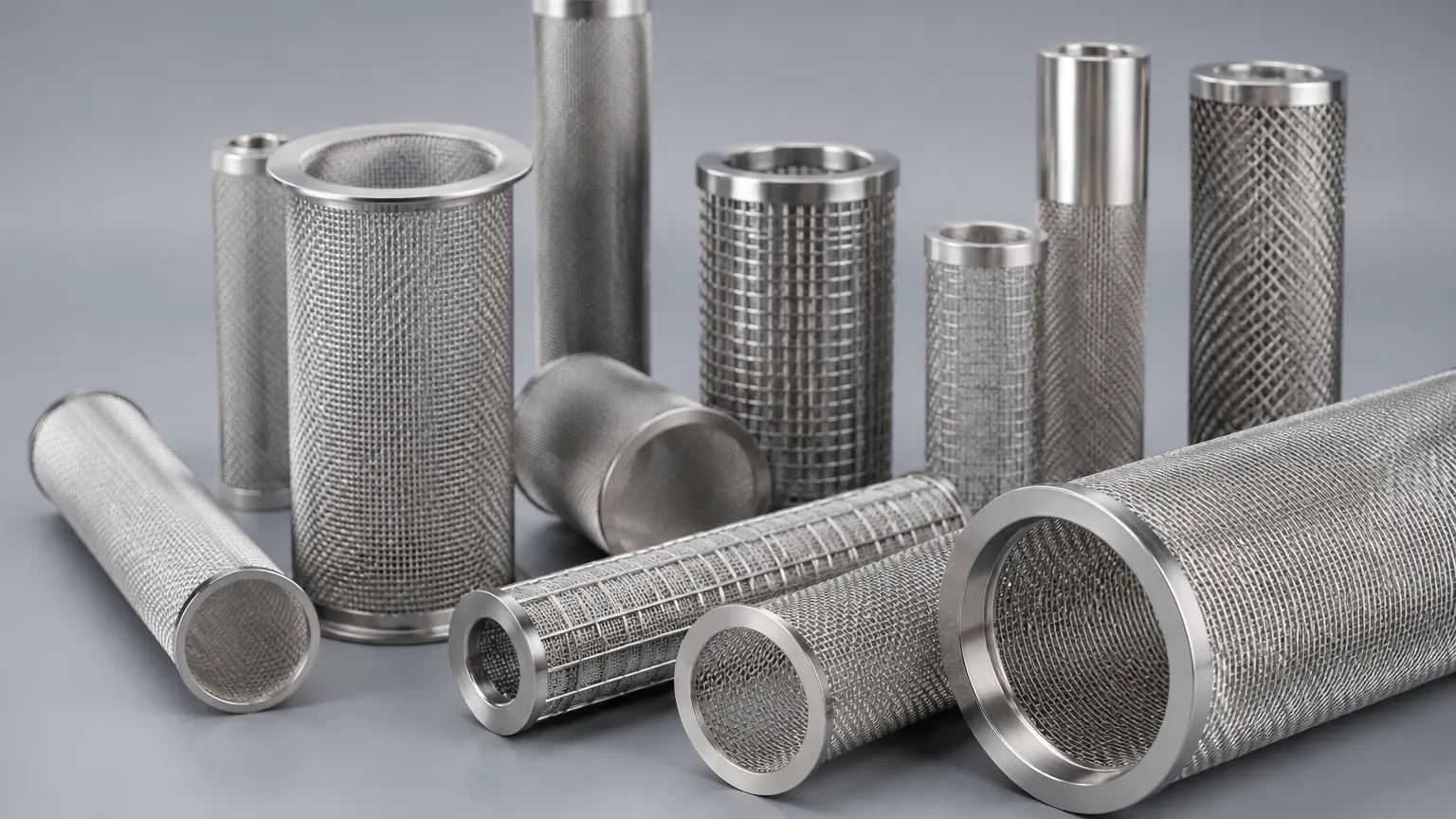
In industrial filtration, the selection of a robust and precise filtration medium is critical to maintaining process integrity, protecting downstream equipment, and ensuring product quality. The cylinder mesh filter, a specialized configuration of Wire Mesh Filter Cylinders & Tubes, serves as a cornerstone in liquid and gas separation across diverse sectors. These components are engineered to withstand high pressures, corrosive environments, and extreme temperatures while providing consistent micron-rated filtration.
Understanding the technical nuances of these filters is essential for engineers and procurement teams who must balance initial capital expenditure with long-term operational efficiency. This guide examines the engineering principles, material science, and customization factors that define high-performance cylindrical filtration solutions.
Understanding Wire Mesh Filter Cylinders & Tubes in Industrial Applications
A cylinder mesh filter is essentially a porous metal structure formed into a tubular shape, designed to capture particulate matter from a fluid stream. Unlike disposable pleated paper or polymer filters, stainless steel wire mesh cylinders are permanent or semi-permanent components that offer superior mechanical strength and reusability.
The geometry of a cylinder provides a significant surface area relative to its footprint, allowing for high flow rates with minimal pressure drop. In industrial settings, these filters are often integrated into housing units where the fluid flows from the outside in (capturing debris on the exterior) or from the inside out (retaining particles within the cylinder for easy removal). The choice of flow direction depends on the specific system design and the method of cleaning employed, such as backwashing or manual removal.
Material Selection and Engineering Standards
The performance of a cylinder mesh filter is fundamentally dictated by the material from which it is manufactured. In most industrial environments, stainless steel is the standard due to its balance of cost, durability, and chemical resistance.
Stainless Steel Grades
* Type 304: The most common grade, offering excellent corrosion resistance in standard water treatment and food processing applications. It is suitable for environments where exposure to aggressive chemicals is limited.
* Type 316/316L: Contains molybdenum, which provides enhanced resistance to pitting and crevice corrosion, particularly in chloride-rich environments. 316L (low carbon) is often preferred for welded structures to prevent carbide precipitation during the welding process, ensuring the integrity of the filter seams.
* Specialty Alloys: For extreme conditions, such as highly acidic chemical processing or high-temperature aerospace applications, alloys like Monel, Inconel, or Hastelloy may be utilized to prevent premature failure due to oxidation or chemical attack.
Beyond chemical compatibility, material selection must account for temperature fluctuations. Stainless steel wire mesh maintains its structural integrity at temperatures far exceeding those of synthetic filters, often operating effectively from cryogenic levels up to 800°F (427°C) or higher, depending on the alloy and mechanical load.
Structural Design: Single-Layer vs. Multi-Layer Cylinder Mesh Filters
Engineers must determine the structural requirements of the filter based on the operating pressure and the nature of the contaminants. The design of a cylinder mesh filter can range from a simple single-layer mesh to a complex multi-layered sintered structure.
Single-Layer Filters
Single-layer wire mesh cylinders are ideal for low-pressure applications or as primary strainers. They are lightweight and easy to clean but may lack the rigidity required for high-differential pressure environments. These are often used in suction strainers or as a protective barrier for pumps.
Multi-Layer and Reinforced Designs
To handle higher mechanical stresses, filters are often designed with multiple layers:
1. Filtration Layer: The fine mesh that determines the micron rating.
2. Support Layer: A coarser mesh or perforated metal core that provides structural rigidity, preventing the fine mesh from collapsing or deforming under pressure.
3. Protective Layer: An outer layer that shields the filtration medium from physical damage during handling or installation.
In many heavy-duty industrial applications, the wire mesh is wrapped around a perforated stainless steel tube. This combination allows the filter to withstand significant pressure surges without compromising the filtration accuracy.
Filtration Performance: Micron Ratings and Weave Types
The efficiency of a cylinder mesh filter is defined by its micron rating—the size of the smallest particle it can reliably trap. This rating is determined by the weave pattern of the wire mesh.
* Plain Weave: The most straightforward pattern where wires cross over and under each other. It offers high flow rates and is easy to clean, typically used for coarser filtration (100 microns and above).
* Twill Weave: Each warp wire passes over and under two shute wires. This allows for a heavier wire diameter in a given mesh count, providing increased strength for finer filtration tasks.
* Dutch Weave (Plain and Twill): This weave uses a larger diameter warp wire and a smaller diameter shute wire, creating a dense, strong mesh with very small triangular openings. Dutch weave is the standard for precision filtration, capable of achieving ratings as fine as 5 to 10 microns.
When selecting a weave, engineers must consider the "open area" percentage. A higher open area results in lower initial pressure drop and longer run times between cleaning cycles, but it may reduce the overall mechanical strength of the cylinder.
Manufacturing and Customization Capabilities
One of the primary advantages of working with a professional manufacturer like Kaifil is the ability to customize the Wire Mesh Filter Cylinders & Tubes to exact system specifications. Standard off-the-shelf filters rarely meet the precise needs of specialized industrial machinery.
Customization Parameters
* Dimensions: Precise control over length, outer diameter (OD), and inner diameter (ID) ensures a perfect fit within existing filter housings, eliminating bypass risks.
* End Fittings: Cylinders can be equipped with various end caps, including threaded fittings (NPT/BSP), flanges, O-ring grooves, or plain open ends. These fittings are typically TIG (Tungsten Inert Gas) welded to the mesh to ensure a leak-proof, high-strength bond.
* Seam Construction: For cylindrical filters, the longitudinal seam is a critical point of failure. Advanced welding techniques, such as plasma welding or resistance welding, are used to create a seam that is as strong as the parent material, ensuring the cylinder remains perfectly round and structurally sound.
OEM capabilities allow for the integration of specialized features, such as internal baffles or reinforced handles for easier maintenance removal.
Industry-Specific Applications and Compatibility
The versatility of the cylinder mesh filter makes it indispensable across various high-stakes industries:
* Chemical Processing: Used to filter catalysts, polymers, and aggressive solvents. The corrosion resistance of 316L stainless steel ensures the filter does not contaminate the chemical stream.
* Food and Beverage: Stainless steel filters are inherently hygienic and meet FDA requirements. They are used in the filtration of syrups, beverages, and oils, where they must withstand Clean-in-Place (CIP) procedures involving high-temperature steam and caustic chemicals.
* Pharmaceuticals: Precision Dutch weave cylinders provide the high-accuracy filtration required for active pharmaceutical ingredients (APIs), ensuring batch consistency and purity.
* Hydraulic Systems: Protecting sensitive valves and actuators from metal shavings and environmental contaminants. These filters must handle high-pressure pulses without fatigue.
* Water Treatment: From desalination pre-filtration to industrial wastewater recovery, wire mesh cylinders remove suspended solids and protect membrane systems from fouling.
Maintenance, Cleaning, and Total Cost of Ownership
While the initial cost of a stainless steel cylinder mesh filter is higher than that of a disposable cartridge, the total cost of ownership (TCO) is significantly lower in many industrial contexts. The primary driver of this value is cleanability.
Cleaning Methods
* Backwashing: Reversing the flow of the fluid to dislodge particles trapped on the surface of the mesh. This is often automated in continuous process systems.
* Ultrasonic Cleaning: Using high-frequency sound waves in a cleaning solvent to remove fine particulates embedded deep within the mesh pores. This is the most effective method for restoring a filter to near-original differential pressure.
* Chemical Cleaning: Using acids or alkalis to dissolve organic or mineral scale, provided the filter material is compatible with the cleaning agent.
Replacement Cycles
The lifespan of a metal filter is determined by the frequency of cleaning and the mechanical wear on the mesh. Unlike polymer filters that degrade over time, a well-maintained stainless steel cylinder can last for years. Engineers should monitor the "clean pressure drop" after each cleaning cycle; a gradual increase in this baseline indicates that the mesh is becoming permanently blinded or fatigued, signaling the need for replacement.
Critical Considerations Before Purchasing
Before finalizing a specification for a cylinder mesh filter, technical professionals should confirm several key data points with their manufacturer:
1. Maximum Differential Pressure: What is the highest pressure the filter will encounter before it is cleaned? Does the design require a perforated support core to prevent collapse?
2. Fluid Characteristics: What is the viscosity and temperature of the fluid? High-viscosity liquids require larger open areas to maintain flow.
3. Contaminant Type: Are the particles hard and abrasive, or soft and deformable? This influences the choice of weave and the frequency of cleaning.
4. Seal Compatibility: If using O-rings or gaskets, ensure the material (Viton, EPDM, PTFE) is compatible with the process fluid and temperature.
By addressing these engineering considerations, purchasing teams can ensure they receive a filtration solution that optimizes performance and minimizes downtime. For more information on specific configurations and technical support, Review product options and application support to find the ideal match for your industrial requirements.
