


Filter Mesh Tube
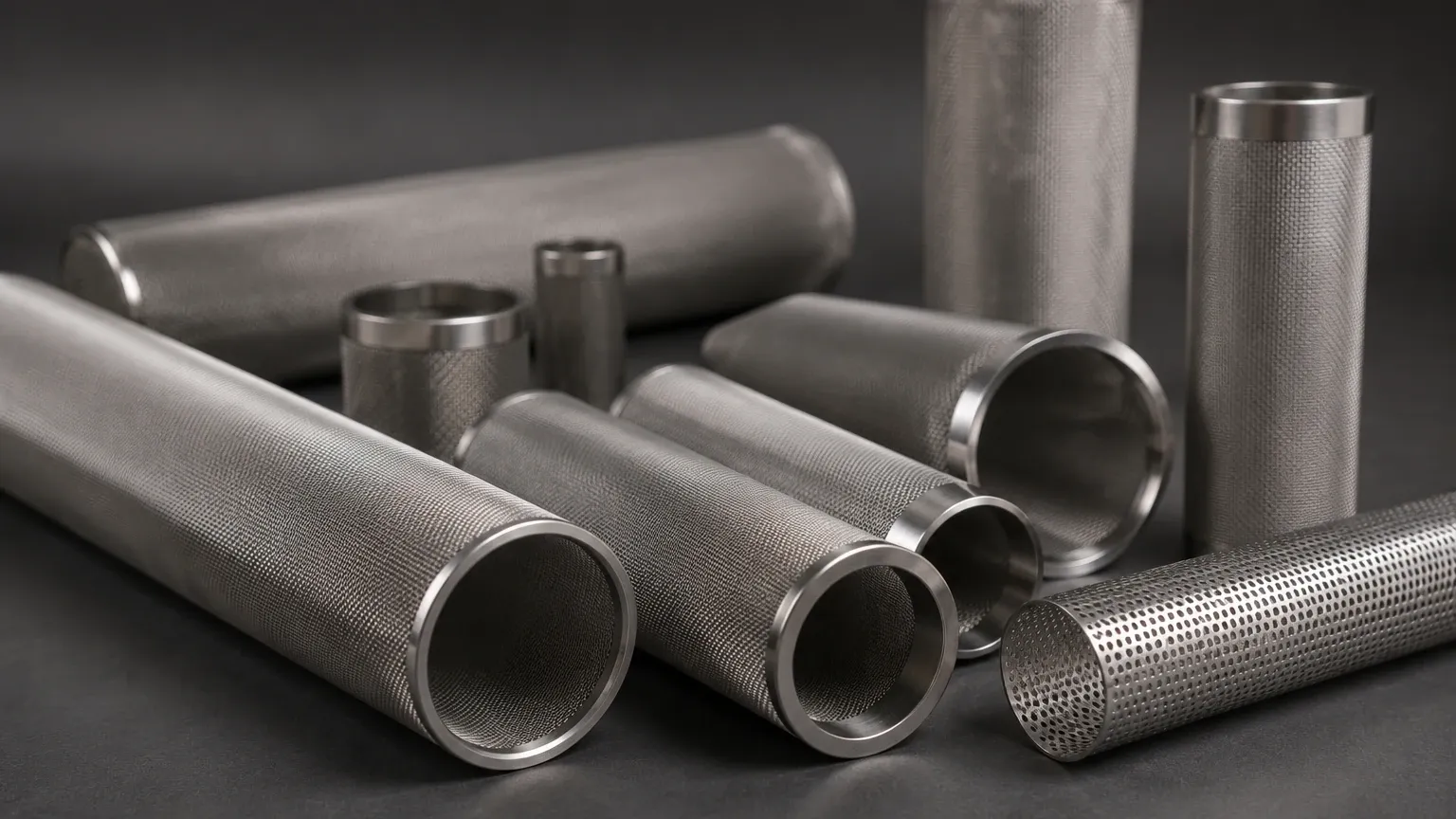
In industrial filtration, the geometry of a filter component is as critical as the material from which it is constructed. The filter mesh tube, a cylindrical configuration of woven wire cloth, represents one of the most versatile and widely utilized structures in fluid and gas processing. These components, often categorized under Wire Mesh Filter Cylinders & Tubes, provide the necessary surface area and structural rigidity required to withstand high-pressure differentials while maintaining precise filtration ratings.
For engineers and procurement professionals, selecting the correct filter mesh tube involves a detailed analysis of mechanical stresses, chemical environments, and the specific particle retention requirements of the application. This guide explores the engineering fundamentals, material science, and manufacturing considerations essential for optimizing filtration performance in demanding industrial sectors.
Understanding the Fundamentals of Wire Mesh Filter Cylinders & Tubes
A filter mesh tube is essentially a precision-engineered cylinder formed by rolling and welding stainless steel wire mesh. Unlike flat mesh screens, the tubular shape allows for a continuous flow path, typically from the outside-in or inside-out, which is ideal for integration into piping systems, housings, and hydraulic circuits.
The primary advantage of the cylindrical shape is its inherent strength. When fluid passes through a mesh, it exerts pressure. A flat screen may bow or rupture under high loads, whereas a cylindrical structure distributes these forces more evenly across its circumference. Furthermore, the tubular design allows for the inclusion of internal or external support layers—such as perforated metal or coarser mesh—without significantly increasing the footprint of the filter assembly.
Material Selection and Chemical Compatibility
The performance of any Wire Mesh Filter Cylinders & Tubes is fundamentally limited by its material composition. In industrial environments, stainless steel is the standard due to its mechanical strength and resistance to environmental degradation.
Stainless Steel 304 vs. 316L
* Type 304: This is the most common grade used for general industrial applications. It offers excellent strength and good corrosion resistance for water treatment, food processing, and basic chemical applications. However, it is susceptible to pitting in high-chloride environments.
* Type 316L: Containing molybdenum, 316L provides superior resistance to chlorides and acids. The "L" denotes low carbon, which is crucial for the welding processes used to form the tube. Low carbon content prevents carbide precipitation during welding, ensuring the seam remains as corrosion-resistant as the rest of the mesh.
Specialized Alloys
In extreme cases involving highly corrosive acids or ultra-high temperatures, alloys such as Monel, Inconel, or Hastelloy may be required. These materials are selected when standard stainless steels would fail due to stress corrosion cracking or rapid oxidation.
Engineering the Structure: Single-Layer vs. Multi-Layer Filter Mesh Tubes
The complexity of a filter mesh tube's construction depends on the required filtration fineness and the operating pressure of the system.
Single-Layer Tubes
Single-layer tubes are typically used for coarse filtration or straining. They are constructed from a single sheet of woven wire mesh. While cost-effective and easy to clean, they have limited mechanical strength and are generally used in low-pressure applications where the primary goal is to remove large debris.
Multi-Layer Sintered Mesh Tubes
For high-precision applications, multiple layers of mesh are combined. These layers often include:
1. Filtration Layer: The fine mesh that determines the actual micron rating.
2. Support Layers: Coarser mesh layers that provide mechanical stability to the fine filtration layer.
3. Protection Layers: Outer layers that protect the delicate filtration mesh from mechanical damage during handling or installation.
In many high-pressure scenarios, a filter mesh tube is reinforced with a perforated metal core. This core acts as a skeleton, allowing the mesh to withstand high differential pressures (Delta P) without collapsing or deforming.
Performance Metrics: Filtration Accuracy and Flow Dynamics
When specifying a filter mesh tube, engineers must balance filtration accuracy with flow capacity. This is determined by the weave type and the open area of the mesh.
Weave Types and Micron Ratings
* Plain Weave: The simplest weave where wires cross over and under each other. It provides a high open area and low pressure drop but is limited in how fine it can go.
* Dutch Weave: This weave uses heavier warp wires and finer shute wires driven closely together. It creates a dense, strong mesh capable of very fine filtration (down to 5-10 microns) while maintaining high mechanical strength.
* Twill Weave: Allows for thicker wires in a given mesh count, providing increased durability for medium-range filtration tasks.
Pressure Drop (Delta P)
The "open area" of the mesh dictates the initial pressure drop across the filter. A higher open area reduces energy costs for pumps but may result in a less robust mesh. Engineers must calculate the total surface area of the cylinder to ensure the flux (flow per unit area) remains within acceptable limits to prevent premature clogging.
Manufacturing Techniques and Structural Integrity
The reliability of Wire Mesh Filter Cylinders & Tubes depends heavily on the quality of the manufacturing process, particularly the longitudinal seam and the end-cap attachments.
Welding Methods
* Plasma/Argon Arc Welding: Provides a clean, high-strength seam. This is essential for ensuring that the tube does not split under pressure. In the pharmaceutical and food industries, these welds must be ground smooth to eliminate crevices where bacteria could proliferate.
* Spot Welding: Often used for overlapping seams in less critical applications or for securing support structures.
Integrity Testing
To ensure the filtration rating is consistent across the entire tube, manufacturers may perform bubble point tests. This involves submerging the tube in a liquid and applying air pressure; the pressure at which the first bubble appears indicates the largest pore size in the mesh. This ensures there are no defects in the weave or the welded seams.
Industrial Applications of Stainless Steel Filter Mesh Tubes
Due to their durability and cleanability, these components are utilized across a broad spectrum of industries:
* Chemical Processing: Used for filtering catalysts, polymer melts, and aggressive solvents where polymer-based filters would dissolve or degrade.
* Food and Beverage: Essential for straining juices, syrups, and oils. The ability to withstand Clean-in-Place (CIP) procedures makes stainless steel mesh the preferred choice for hygienic applications.
* Hydraulic Systems: Acting as suction strainers or return-line filters, they protect sensitive valves and pumps from metal shavings and other contaminants.
* Water Treatment: Utilized in pre-filtration for RO (Reverse Osmosis) systems and in self-cleaning backwash filters for industrial cooling water.
* Pharmaceuticals: Used in the recovery of active pharmaceutical ingredients (APIs) and in sterile gas filtration, where the material must be autoclavable and non-leaching.
Maintenance, Cleaning, and Service Life Considerations
One of the most significant B2B advantages of a stainless steel filter mesh tube over disposable cartridges is its reusability. This significantly reduces the total cost of ownership (TCO) and minimizes waste.
Cleaning Protocols
* Backwashing: Reversing the flow of fluid to dislodge particles trapped on the surface of the mesh. This is often automated in continuous flow systems.
* Ultrasonic Cleaning: Using high-frequency sound waves in a cleaning solution to remove fine particles embedded deep within the mesh pores. This is highly effective for Dutch weave and multi-layer sintered tubes.
* Chemical Cleaning: Using acids or alkalis to dissolve organic or inorganic scaling, provided the mesh material is compatible with the cleaning agent.
Replacement Cycles
While reusable, mesh tubes are not infinite. Fatigue from pressure cycling, erosion from high-velocity abrasive particles, and eventual permanent fouling (where particles cannot be removed by cleaning) will necessitate replacement. Monitoring the pressure differential across the filter is the most reliable method for determining when a tube requires cleaning or replacement.
Key Specifications for Custom Procurement
When ordering customized Wire Mesh Filter Cylinders & Tubes, providing precise technical data is necessary to ensure the component performs as expected. Purchasing teams should confirm the following specifications:
1. Dimensions: Outer diameter (OD), inner diameter (ID), and overall length. Note if tolerances are critical for fitting into existing housings.
2. Filtration Rating: Specify whether the micron rating is "absolute" (100% retention) or "nominal" (approximate retention).
3. End Cap Configuration: Options include open ends, closed ends (flat or conical), threaded fittings (NPT/BSP), or specialized flanges and O-ring grooves.
4. Operating Environment: Maximum operating temperature, maximum differential pressure, and a full list of chemicals the mesh will contact.
5. Support Structure: Determine if an internal perforated core or external cage is required based on the flow direction and pressure loads.
By focusing on these technical parameters, engineers can ensure that the selected filter mesh tube provides reliable, long-term service in even the most demanding industrial environments. Kaifil specializes in the production of these high-precision components, offering the expertise required to move from initial design to high-volume OEM production while maintaining strict quality standards.
