


Mesh Filter vs Paper Filter: An Engineering Guide to Industrial Media Selection
In industrial filtration, the selection of filter media is a critical engineering decision that directly impacts process efficiency, equipment longevity, and operational costs. While various materials exist, the debate often centers on mesh filter vs paper filter configurations. For engineers and procurement teams, understanding the mechanical properties, fluid dynamics, and lifecycle economics of these two media types is essential for optimizing systems ranging from hydraulic circuits to chemical processing lines.
This guide examines the technical distinctions between stainless steel wire mesh and cellulose-based paper filters, providing a factual framework for selecting the appropriate solution for demanding industrial environments.
Understanding the Core Technologies
Before comparing performance, it is necessary to define the physical structure and operating principles of each medium.
Wire Mesh Filters
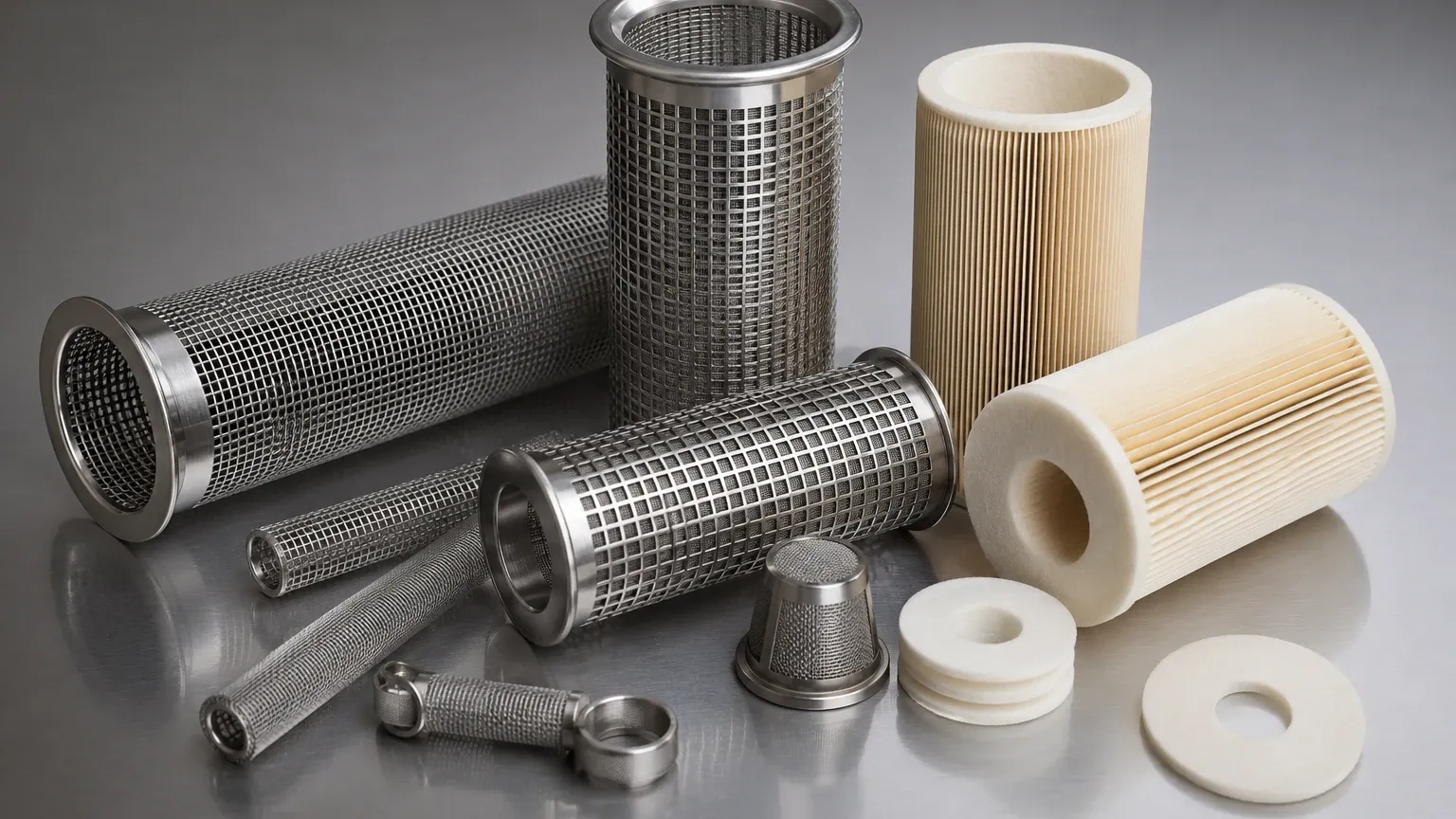
Industrial mesh filters are typically constructed from stainless steel (304, 316, or 316L) or other specialized alloys. These filters are manufactured by weaving metallic wires into precise patterns or by sintering multiple layers of mesh together to create a rigid, porous structure. In many high-pressure or high-flow applications, these materials are fabricated into Wire Mesh Filter Cylinders & Tubes to provide structural integrity and maximize surface area.
Wire mesh operates primarily as a surface filter. Particles larger than the pore size are captured on the upstream surface of the media, forming a "filter cake" that can eventually contribute to the filtration process itself.
Paper Filters
Paper filters, often referred to as cellulose or depth media, are composed of randomly oriented fibers (cellulose, glass fiber, or synthetics) bonded together. These fibers create a complex, tortuous path for the fluid. Paper filters operate as depth filters, where contaminants are trapped within the thickness of the media through mechanical interlocking and adsorption. They are generally considered disposable components.
Technical Comparison: Mesh Filter vs Paper Filter
When evaluating mesh filter vs paper filter options, engineers must weigh several performance metrics against the specific requirements of the application.
1. Filtration Mechanism and Efficiency
* Mesh Filters: Provide a precise, absolute micron rating. Because the openings are geometrically fixed during the weaving process, the maximum particle size that can pass through is strictly controlled. This makes wire mesh ideal for applications requiring consistent, repeatable particle retention.
* Paper Filters: Often provide a nominal rating. While they are highly effective at capturing fine particles (often down to sub-micron levels), the random fiber distribution means there is a statistical probability that some larger particles may pass through if the fluid velocity or pressure increases suddenly.
2. Flow Rate and Pressure Drop (Delta P)
Fluid dynamics play a significant role in media selection. Wire mesh typically offers a higher percentage of open area compared to paper. This results in a lower initial pressure drop across the filter. For systems where maintaining high flow rates with minimal energy loss is a priority, stainless steel cylinders and tubes are often the preferred choice.
Paper filters, due to their dense fiber structure, create higher resistance to flow. As the depth of the media fills with contaminants, the pressure drop increases more rapidly than with surface-based mesh, necessitating more frequent monitoring of the differential pressure.
3. Structural Integrity and Durability
In industrial environments, filters are often subjected to mechanical stresses, including pressure surges, vibration, and high-viscosity fluids.
* Mechanical Strength: Stainless steel Wire Mesh Filter Cylinders & Tubes are inherently robust. They can withstand high differential pressures without collapsing or bypassing. This structural stability is critical in hydraulic systems and high-pressure gas filtration.
* Media Migration: A significant risk with paper filters is "media migration," where fibers from the filter itself break loose and enter the downstream fluid. This is unacceptable in pharmaceutical or precision hydraulic applications. Stainless steel mesh, being a continuous metallic structure, eliminates the risk of fiber shedding.
4. Thermal and Chemical Compatibility
Temperature and chemical composition are often the deciding factors in the mesh filter vs paper filter comparison.
* Temperature Limits: Paper filters are limited by the thermal stability of cellulose and the resins used to bond the fibers, typically failing at temperatures exceeding 120°C (250°F). Stainless steel mesh can operate in cryogenic temperatures or extreme heat (up to 450°C or higher, depending on the alloy), making it the standard for steam filtration and high-temperature chemical reactions.
* Chemical Resistance: Cellulose is susceptible to degradation by strong acids, bases, and certain solvents. Stainless steel (particularly 316L) offers broad resistance to a wide range of industrial chemicals, ensuring the filter does not corrode or leach contaminants into the process stream.
Operational Economics: Disposable vs. Cleanable
The total cost of ownership (TCO) is a major consideration for purchasing teams. The choice between a disposable paper element and a reusable mesh element involves balancing capital expenditure (CAPEX) against operational expenditure (OPEX).
The Case for Paper (Disposable)
Paper filters have a significantly lower initial purchase price. For processes with very low levels of contamination or applications where cross-contamination must be avoided at all costs (requiring a fresh filter for every batch), disposable paper is often economically viable. However, the costs of frequent replacement, labor for change-outs, and disposal of contaminated media can accumulate quickly.
The Case for Mesh (Cleanable/Reusable)
While the initial investment in Wire Mesh Filter Cylinders & Tubes is higher, these components are designed for long-term use. They can be cleaned using various methods, including:
* Backwashing: Reversing the flow to dislodge the filter cake.
* Ultrasonic Cleaning: Using high-frequency sound waves in a solvent bath to remove fine particles from the mesh pores.
* Chemical Cleaning: Using compatible solvents to dissolve accumulated resins or organic matter.
In high-volume industrial processes, the ability to clean and reuse the filter significantly reduces the long-term cost per gallon filtered and minimizes environmental impact by reducing waste.
Engineering Selection Criteria
To determine whether a mesh or paper filter is appropriate, engineers should answer the following questions during the design phase:
1. What is the target particle size? If sub-micron filtration is required and the fluid is relatively clean, paper or glass fiber may be necessary. For precise retention above 5-10 microns, wire mesh is usually superior.
2. What are the operating temperatures and pressures? If the system exceeds 100°C or involves high-pressure spikes, stainless steel is mandatory.
3. Is the fluid chemically aggressive? Verify the compatibility of cellulose and binders versus stainless steel alloys.
4. What is the cost of downtime? If frequent filter changes disrupt production, a cleanable mesh system with a duplex configuration (allowing one filter to be cleaned while the other is in service) may be more cost-effective.
5. Is fiber migration a risk? In food, beverage, or pharmaceutical production, the risk of paper fibers entering the product often dictates the use of metallic mesh.
Customization and Integration
Industrial filtration is rarely a one-size-fits-all requirement. One of the primary advantages of utilizing wire mesh is the ability to customize the filter geometry. Wire Mesh Filter Cylinders & Tubes can be engineered with specific reinforcement layers, such as perforated metal cores or outer shrouds, to handle extreme mechanical loads. Furthermore, multiple layers of different mesh counts can be sintered together to combine the fine filtration of a Dutch weave with the structural support of a coarse square mesh.
This level of customization allows engineers to fine-tune the filtration performance to the specific viscosity and flow characteristics of their process fluid, a degree of control that is rarely possible with standardized paper cartridges.
Summary of Key Differences
| Feature | Wire Mesh Filter | Paper Filter |
| :— | :— | :— |
| Filtration Type | Surface (Absolute) | Depth (Nominal) |
| Material | Stainless Steel / Alloys | Cellulose / Glass Fiber |
| Reusability | Cleanable and Reusable | Disposable |
| Temperature Resistance | Excellent (High/Low) | Limited |
| Chemical Resistance | High (Alloy dependent) | Low to Moderate |
| Structural Strength | High | Low (Requires support) |
| Initial Cost | Higher | Lower |
| Long-term Cost | Lower (due to reuse) | Higher (due to replacement) |
Conclusion
In the comparison of mesh filter vs paper filter, the optimal choice is dictated by the technical rigors of the application. Paper filters remain a staple for light-duty, disposable applications where low initial cost is prioritized. However, for industrial processes requiring durability, chemical resistance, and precise, high-flow performance, stainless steel wire mesh provides a more reliable and sustainable solution.
By selecting high-quality Wire Mesh Filter Cylinders & Tubes, engineers can ensure their systems operate with maximum efficiency, minimal downtime, and a lower total cost of ownership over the equipment's lifecycle. When specifying filtration components, always consult with manufacturing experts to confirm material compatibility and mechanical design requirements for your specific industrial environment.
