


Understanding Industrial Wire Mesh Filter Price: An Engineering and Procurement Guide
In industrial filtration, selecting the right component involves a careful balance between performance requirements and budgetary constraints. For engineers and procurement specialists, the wire mesh filter price is rarely a static figure; rather, it is a variable influenced by material science, manufacturing precision, and the specific demands of the application environment.
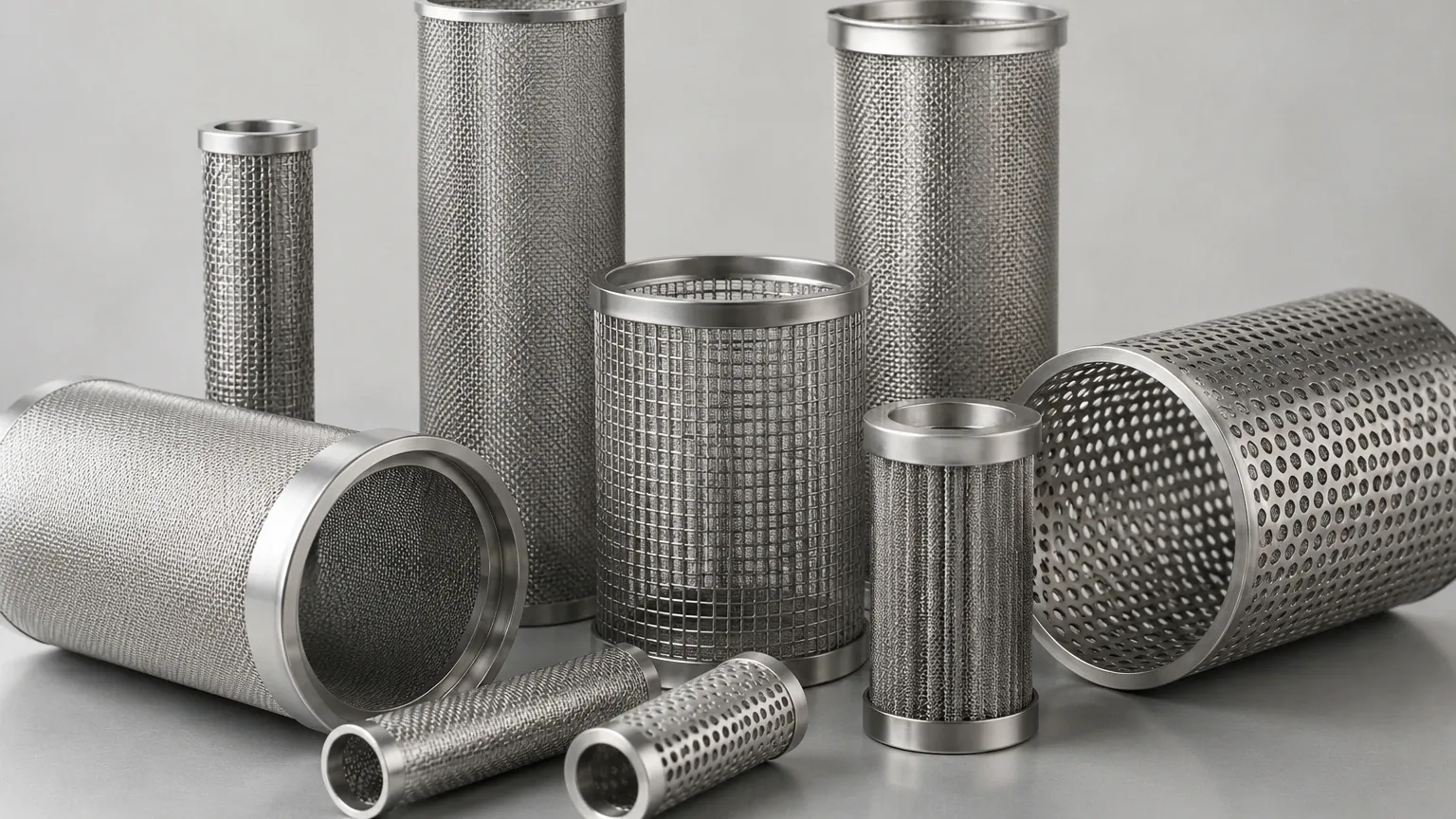
Stainless steel Wire Mesh Filter Cylinders & Tubes are foundational components in chemical processing, hydraulic systems, and food production. Unlike disposable polymer filters, these metal components offer high mechanical strength and reusability. However, to accurately evaluate the total cost of ownership, one must look beyond the initial quote and understand the technical drivers that dictate the pricing of these precision-engineered parts.
Technical Foundations of Wire Mesh Filter Cylinders & Tubes
Before analyzing cost factors, it is essential to define the structural composition of these filters. A wire mesh filter cylinder typically consists of one or more layers of woven wire cloth. These layers may be formed into a tube through longitudinal welding or pleated to increase the effective filtration area.
Material Selection and Grade
Material choice is the primary driver of the wire mesh filter price. In industrial settings, the most common alloys are Stainless Steel 304 and 316L.
* Stainless Steel 304: Suitable for general industrial use where basic corrosion resistance is required. It is the more cost-effective option for applications involving water treatment or non-corrosive oils.
* Stainless Steel 316L: Contains molybdenum, providing superior resistance to chlorides and acids. In pharmaceutical and chemical processing, 316L is often the standard, despite its higher market price, due to its longevity in aggressive environments.
* Exotic Alloys: For extreme conditions, materials like Monel, Inconel, or Hastelloy may be required. These materials can significantly increase the unit cost but are necessary for high-temperature or highly acidic processes where standard stainless steel would fail.
Key Factors Influencing Wire Mesh Filter Price
When requesting a quote for industrial filters, several technical specifications will directly impact the final cost. Understanding these variables allows engineers to optimize their designs for both performance and economy.
1. Mesh Count and Micron Rating
The density of the weave—often referred to as the mesh count—determines the filtration accuracy. Finer filtration (lower micron ratings) requires thinner wires and a more complex weaving process. For instance, a 5-micron Dutch weave mesh is more labor-intensive to produce than a 100-mesh plain weave, which is reflected in the price. High-precision mesh requires stringent quality control to ensure uniform pore size distribution, another factor that adds to the manufacturing overhead.
2. Multi-Layer vs. Single-Layer Construction
Single-layer tubes are suitable for low-pressure applications where mechanical stress is minimal. However, many industrial processes require multi-layer sintered or reinforced mesh. By combining a fine filtration layer with coarser support layers, the filter gains the structural integrity needed to withstand high differential pressures. The addition of these layers, along with the sintering process (bonding the layers at high heat), increases the material volume and energy consumption during production, leading to a higher wire mesh filter price.
3. Manufacturing Complexity and Tolerances
The method used to join the mesh into a cylindrical shape is critical. High-quality filters utilize TIG (Tungsten Inert Gas) or plasma welding to ensure a seamless, burr-free joint that maintains the integrity of the filtration rating. Precision machining of end caps (threaded, flanged, or O-ring grooves) also adds to the cost. If an application requires extremely tight dimensional tolerances for a proprietary housing, the specialized tooling and inspection time will be reflected in the quote.
4. Order Volume and Scale
Like most industrial components, economies of scale apply to wire mesh filters. The setup time for weaving looms and welding jigs is significant. Therefore, the unit price for a prototype or a small batch of five filters will be considerably higher than a production run of five hundred. For international buyers, consolidating orders can also reduce the impact of shipping and customs fees on the per-unit cost.
Engineering Considerations for Selection
To ensure that the wire mesh filter price translates into value, engineers must match the filter's specifications to the operating parameters of the system. Over-specifying can lead to unnecessary costs, while under-specifying can lead to system failure.
Pressure Drop and Flow Rate
A filter with an excessively fine micron rating for the task will experience a rapid increase in differential pressure (ΔP). This not only requires more frequent cleaning or replacement but also increases the energy load on pumps. Engineers should select the coarsest mesh that still protects downstream equipment or meets product purity standards to optimize the flow-to-cost ratio.
Mechanical Strength and Support
In hydraulic or high-viscosity applications, the filter must resist collapsing. This often necessitates the use of internal perforated metal cores or external cages. While these structural elements increase the initial price, they prevent catastrophic failure that could result in expensive system downtime and debris contamination.
Chemical and Thermal Compatibility
Operating temperatures and the chemical composition of the filtrate must be confirmed. Stainless steel filters are excellent for high-temperature applications where polymer filters would melt. However, if the process involves fluctuating temperatures, the thermal expansion of the metal must be considered in the design of the filter housing and seals to prevent bypass.
Customization and Its Impact on Cost
Standard off-the-shelf filters are rarely sufficient for specialized industrial machinery. Kaifil specializes in providing customized solutions that meet specific engineering requirements. Customization options that influence the wire mesh filter price include:
* Bespoke Dimensions: Non-standard lengths and diameters require custom cutting and welding setups.
* Specialized End Fittings: Custom-machined flanges, NPT threads, or bayonet-style connectors designed to fit existing infrastructure.
* Surface Treatments: Electropolishing is often required for food and beverage or pharmaceutical applications to ensure the surface is smooth and easy to sanitize. Passivation can also be applied to enhance corrosion resistance.
* Pleated Designs: For applications requiring a high flow rate in a compact footprint, pleating the mesh increases the surface area significantly. The pleating process involves precision folding machinery and specialized end-cap bonding, which adds to the complexity and cost.
Total Cost of Ownership (TCO) vs. Initial Purchase Price
For procurement teams, the lowest wire mesh filter price is not always the most economical choice over the long term. Metal filters are an investment in durability.
Reusability and Cleaning
Unlike disposable cartridges, stainless steel Wire Mesh Filter Cylinders & Tubes can be cleaned and returned to service multiple times. Methods such as ultrasonic cleaning, backwashing, or chemical baths can restore the filter's permeability. When calculating the TCO, the cost of the metal filter should be divided by its expected number of cleaning cycles. Often, a stainless steel filter that costs ten times more than a plastic one will pay for itself within a year by eliminating the need for frequent replacements and reducing waste disposal costs.
Maintenance Cycles and Downtime
A high-quality filter with a robust construction reduces the risk of unplanned maintenance. If a cheaper, lower-quality filter fails and allows contaminants to reach sensitive downstream components—such as high-pressure nozzles or precision valves—the repair costs will far exceed any initial savings on the filter itself.
Procurement Guidelines for International Buyers
When sourcing wire mesh filters globally, clear communication of technical requirements is vital to ensure the received product meets expectations. Before finalizing a purchase, buyers should confirm the following with the manufacturer:
1. Material Certification: Request Mill Test Reports (MTRs) to verify that the stainless steel grade (e.g., 316L) matches the specification.
2. Filtration Verification: Ask for bubble point test results or micron rating certifications to ensure the mesh performs as advertised.
3. Welding Standards: Confirm that the welding process is suited for the application, particularly if the filter will be used in a high-pressure or high-vibration environment.
4. Packaging and Protection: Given the delicate nature of fine wire mesh, ensure the manufacturer uses robust packaging to prevent deformation during international transit.
5. Lead Times: Custom manufacturing takes time. Clarify the production schedule and shipping durations to avoid project delays.
Conclusion
The wire mesh filter price is a reflection of the engineering precision and material quality required to protect industrial processes. By focusing on the specific needs of the application—such as micron rating, material grade, and structural reinforcement—engineers can select a filtration solution that offers the best performance.
At Kaifil, we understand that every industrial environment is unique. We provide reliable OEM and customized filtration solutions, working closely with global customers to develop high-performance components. Whether you require a single-layer tube for a simple strainer or a complex multi-layer sintered cylinder for a chemical reactor, focusing on quality and technical accuracy ensures a filtration system that is both effective and cost-efficient over its entire operational life.
