


Wire Mesh Weight
In industrial engineering and procurement, specifying the correct filtration component involves more than just selecting a micron rating. For technical professionals designing or maintaining complex systems, understanding the physical properties of filtration media is essential. One of the most critical, yet often overlooked, specifications is wire mesh weight. This metric serves as a primary indicator of material volume, structural integrity, and ultimately, the durability of the filtration system under operational stress.
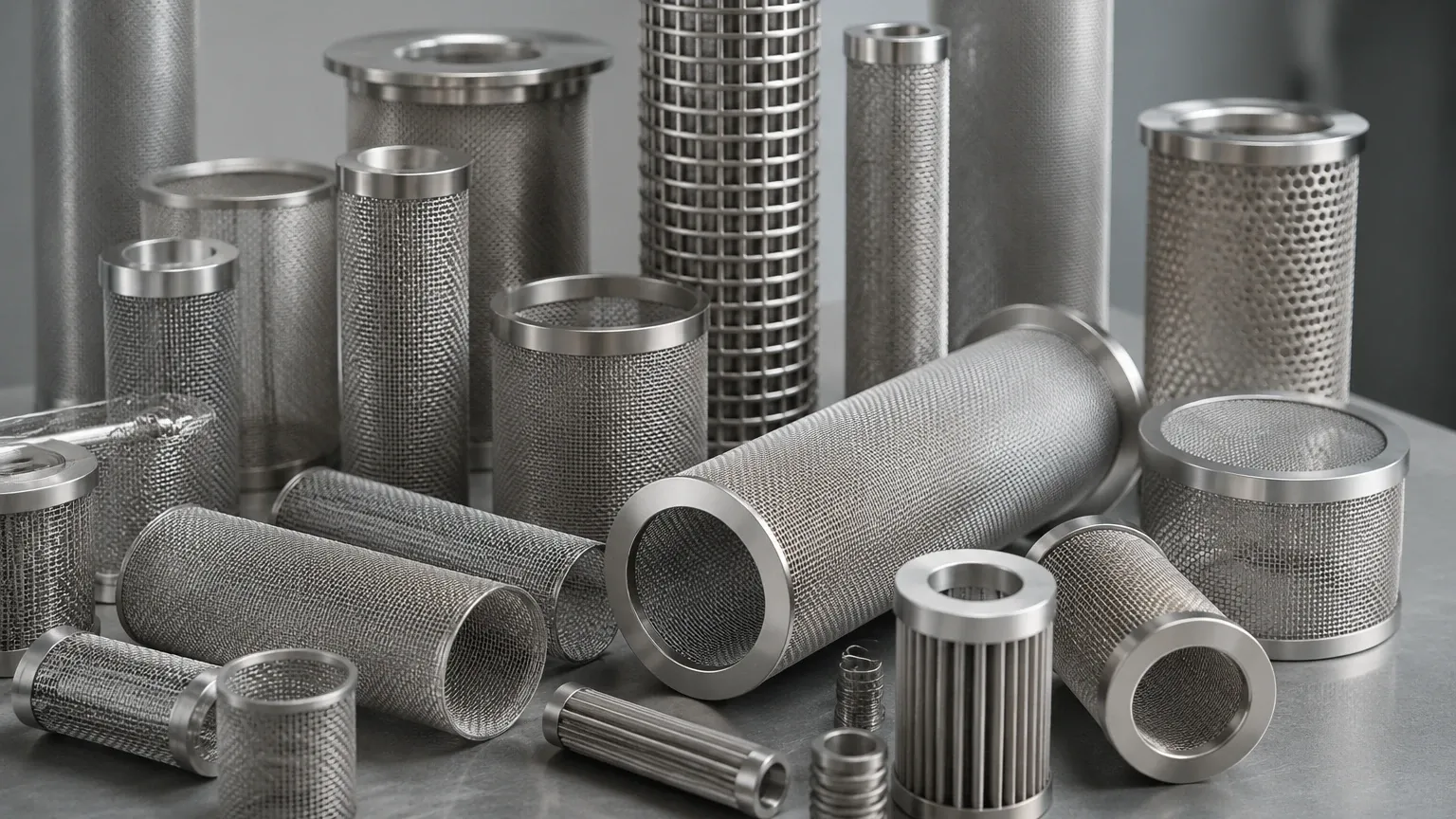
For engineers integrating Wire Mesh Filter Cylinders & Tubes into hydraulic, chemical, or food processing systems, the weight of the mesh directly influences the mechanical strength of the component. This guide explores the technical nuances of calculating wire mesh weight, its impact on performance, and why it is a vital parameter for quality assurance and cost management.
The Significance of Wire Mesh Weight in Industrial Engineering
In the context of industrial filtration, the weight of a wire mesh is not merely a logistical detail for shipping; it is a fundamental engineering property. It represents the mass of the metal per unit area, which correlates to the wire diameter and the density of the weave.
When designing filtration systems, engineers must account for the weight for several reasons:
1. Structural Integrity: Heavier mesh typically utilizes thicker wire diameters, providing higher resistance to mechanical deformation. This is crucial in high-pressure applications where the mesh must withstand significant differential pressure without collapsing or stretching.
2. Material Verification: Because stainless steel alloys have specific densities, the weight of a finished roll or component can be used to verify that the material meets the specified thickness and mesh count. A lower-than-expected weight often indicates "under-gauged" wire, which compromises the filter's lifespan.
3. Thermal Stability: In high-temperature chemical processing, the mass of the filter affects its thermal inertia and its ability to resist warping during rapid temperature fluctuations.
Calculating Wire Mesh Weight: Formulas and Variables
To accurately determine the wire mesh weight, engineers rely on standardized formulas that factor in the wire diameter, the mesh count (number of wires per linear inch), and the material density.
The Standard Formula
For stainless steel wire mesh (specifically T-304 and T-316), the approximate weight can be calculated using the following metric formula:
Weight (kg/m²) = (Wire Diameter in mm)² × Mesh Count / 2
Alternatively, for a more precise calculation that accounts for the specific gravity of the alloy:
Weight = ½ × Mesh Count × (Wire Diameter)² × Density Factor
Key Variables
* Wire Diameter (d): The thickness of the individual wires before weaving. Even a variation of 0.01mm can significantly alter the total weight and the resulting open area.
* Mesh Count (n): The number of openings per linear inch. A higher mesh count with the same wire diameter increases the total weight but decreases the aperture size.
* Material Density: While most industrial filters use stainless steel (with a density of approximately 7.93 g/cm³ for SS304), specialized alloys like Monel or Inconel will have different density factors, requiring adjustments to the weight calculation.
Material Selection and Density Considerations
The choice of alloy is the primary driver of the weight-to-performance ratio. At Kaifil, we specialize in stainless steel filtration solutions because of the material's predictable mechanical properties and corrosion resistance.
* SS304/304L: The standard for most industrial applications. It provides a balanced weight profile and excellent formability for creating complex shapes.
* SS316/316L: Contains molybdenum, which slightly increases the density and weight compared to 304, but offers superior resistance to chlorides and pitting. In marine or pharmaceutical environments, the slight weight increase is a necessary trade-off for longevity.
* High-Nickel Alloys: For extreme environments, materials like Hastelloy are used. These materials are denser than standard stainless steel, resulting in a higher wire mesh weight for the same geometric specifications.
When selecting a material, engineers must balance the chemical compatibility requirements with the physical weight constraints of the housing and support structures.
Structural Considerations for Wire Mesh Filter Cylinders & Tubes
When wire mesh is converted into Wire Mesh Filter Cylinders & Tubes, the weight calculation becomes more complex. It is no longer just about the area; it involves the overlap of seams, the addition of reinforcement rings, and the potential for multi-layer construction.
Multi-Layer Sintered Mesh
In many high-pressure hydraulic applications, a single layer of mesh is insufficient. Engineers often specify multi-layer sintered mesh, which bonds several layers of varying mesh counts together. This significantly increases the total weight of the component but provides a rigid, self-supporting structure that eliminates the need for heavy internal perforated cores in some designs.
Reinforcement and Support
The total weight of a filter cylinder often includes the weight of the end caps (flanges, threads, or flat caps) and internal supports. A common engineering challenge is minimizing the weight of the assembly to reduce the load on the piping system while ensuring the mesh itself is heavy enough to handle the flow velocity.
Impact of Weight on Performance and Installation
The wire mesh weight has a direct relationship with the "Open Area Percentage." Generally, as the wire diameter (and thus the weight) increases for a given mesh count, the open area decreases. This leads to several performance implications:
* Pressure Drop (ΔP): A heavier mesh with thicker wires reduces the total flow area, which may increase the initial pressure drop across the filter. Engineers must calculate whether the added structural strength of a heavier mesh justifies the increased energy cost of pumping fluid through a more restrictive media.
* Cleaning and Maintenance: Heavier, more robust mesh can withstand more aggressive cleaning cycles, such as high-pressure backwashing or ultrasonic cleaning, without tearing. This extends the replacement cycle, improving the total cost of ownership.
* Installation Constraints: In large-scale industrial water treatment or oil filtration, the cumulative weight of hundreds of filter tubes can be substantial. The support plates and lifting mechanisms must be rated for the "wet weight" of the filters (the weight of the metal plus the weight of the fluid and retained contaminants).
Practical Implications for Procurement and Logistics
For international buyers and procurement managers, wire mesh weight is a key metric for logistics planning and cost verification.
Shipping and Handling
Industrial filters are often shipped in bulk. Knowing the precise weight of the wire mesh allows for accurate freight quoting and ensures that the packaging is sufficient to prevent deformation during transit. For large-diameter cylinders, the weight determines whether specialized handling equipment is required at the point of installation.
Cost Considerations
In the stainless steel industry, material costs are often calculated by weight. When reviewing quotes for customized filtration solutions, a significantly lower price from one supplier may be the result of using a lighter mesh with thinner wires. By specifying the required wire mesh weight or wire diameter in the RFQ (Request for Quote), procurement teams can ensure they are comparing "like-for-like" products and avoiding components that may fail prematurely due to insufficient material thickness.
Quality Assurance through Weight Verification
At Kaifil, quality control involves rigorous checks of physical dimensions and material properties. Verifying the weight of the mesh is a non-destructive way to ensure compliance with engineering standards.
1. Tolerance Checks: Standard industrial wire mesh follows tolerances set by ISO or ASTM standards. We ensure that the weight of the delivered product falls within the calculated tolerance range for the specified wire diameter and mesh count.
2. Aperture Consistency: While weight measures total mass, it must be paired with optical inspection to ensure the mass is distributed evenly. This ensures that the filtration accuracy (micron rating) is consistent across the entire surface of the Wire Mesh Filter Cylinders & Tubes.
3. Durability Testing: We correlate weight data with burst pressure testing. Heavier mesh configurations consistently show higher resistance to fatigue and mechanical failure in pulsating flow environments.
Conclusion: Making Informed Selection Decisions
Understanding wire mesh weight is essential for any engineer or purchasing professional involved in industrial filtration. It is a metric that bridges the gap between theoretical design and real-world durability. By focusing on the relationship between wire diameter, mesh count, and material density, technical teams can specify filters that offer the optimal balance of flow efficiency and structural strength.
When sourcing components, always confirm the wire diameter and the calculated weight per unit. This transparency ensures that the filtration solution will perform reliably under the specific pressures and temperatures of your application. For customized requirements, working with a manufacturer that understands these engineering boundaries is the best way to optimize both performance and cost-effectiveness in demanding industrial environments.
