


8 Gauge Woven Wire Mesh: A Technical Guide for Industrial Applications
In heavy industrial environments, the structural integrity of filtration and separation media is as critical as its opening precision. 8 gauge woven wire mesh represents one of the more robust specifications in the wire cloth industry, designed for applications where standard light-duty meshes would fail under mechanical stress, high-pressure flow, or abrasive impact. For engineers and procurement specialists, selecting the correct 8 gauge configuration requires a deep understanding of wire diameter standards, material properties, and weave stability.
This guide examines the technical parameters of 8 gauge wire mesh, its performance characteristics in demanding sectors, and the engineering considerations necessary to ensure long-term operational efficiency.
Technical Specifications: Defining 8 Gauge
The term "8 gauge" refers to the diameter of the individual wires used in the weaving process. In the context of industrial wire mesh, manufacturers typically adhere to the U.S. Steel Wire Gauge (also known as Washburn & Moen) or the American Wire Gauge (AWG). For most industrial applications involving stainless steel or carbon steel, an 8 gauge wire has a nominal diameter of approximately 0.162 inches (4.11 mm).
Because the wire is significantly thick, 8 gauge woven wire mesh is characterized by high mass per square foot and immense tensile strength. Unlike finer meshes that can be woven into high mesh counts (the number of openings per linear inch), 8 gauge wire is typically limited to lower mesh counts or large clear openings. Common configurations include:
* 1 Mesh: Consisting of one opening per inch, resulting in a clear opening of approximately 0.838 inches (21.29 mm) after accounting for the wire diameter.
* 2 Mesh: Providing two openings per inch, with a clear opening of roughly 0.338 inches (8.59 mm).
* Custom Clear Openings: Often specified by the clear space between wires (e.g., 1-inch or 2-inch clear opening) rather than mesh count.
Material Performance: Stainless Steel vs. Alloys
Material selection is the primary determinant of the mesh’s service life, especially when exposed to corrosive chemicals or extreme temperatures. At Kaifil, we prioritize high-grade alloys to meet the rigorous demands of industrial filtration and structural support.
Stainless Steel 304
As the most common industrial grade, SS304 provides excellent durability and basic corrosion resistance. It is suitable for 8 gauge mesh used in machinery guards, safety partitions, and general-purpose aggregate screening where exposure to highly acidic or chloride-rich environments is limited.
Stainless Steel 316L
For chemical processing, marine environments, or pharmaceutical applications, SS316L is the preferred choice. The addition of molybdenum enhances resistance to pitting and crevice corrosion. In 8 gauge specifications, SS316L provides the necessary structural weight combined with superior chemical stability.
Carbon Steel and Galvanized Steel
In applications where corrosion is not a primary concern but impact resistance is paramount—such as mining or heavy construction—high-carbon steel or galvanized steel may be utilized. However, for long-term filtration solutions where hygiene or fluid purity is required, stainless steel remains the industry standard.
Weave Configurations for Heavy Gauge Mesh
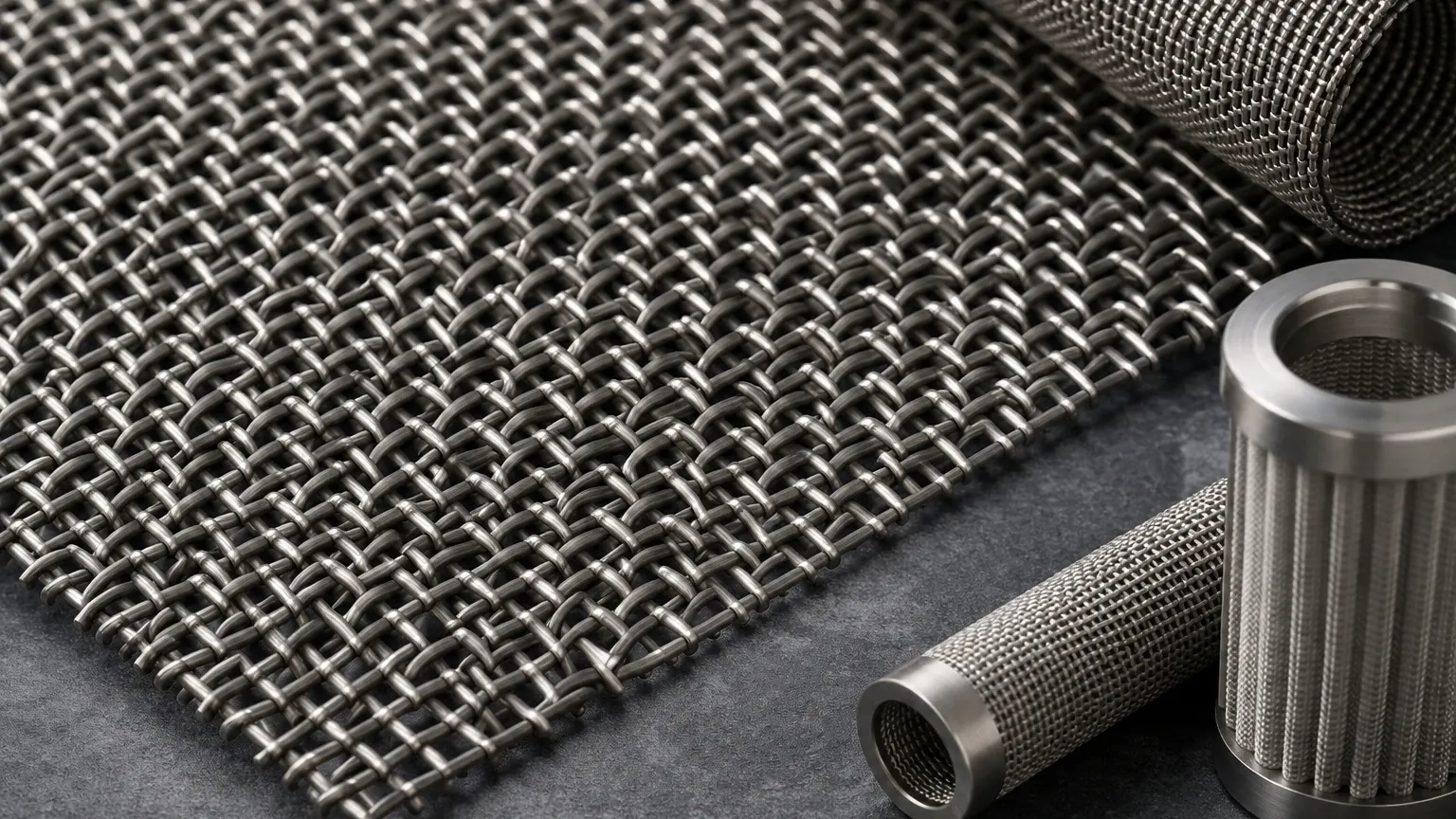
The thickness of 8 gauge wire presents unique challenges during the weaving process. Because the wire is too stiff for standard "over-under" plain weaving without pre-treatment, most heavy-gauge mesh is manufactured using a pre-crimped process.
Plain Crimp
In a plain crimp (or intermediate crimp) style, both the warp and shute wires are pre-crimped with extra corrugations between the points of intersection. This ensures that the wires remain locked in place, maintaining dimensional accuracy even when subjected to heavy vibration or high-pressure fluid flow.
Lock Crimp
Lock crimping is often used for 8 gauge wire mesh intended for heavy-duty screening. The wires are crimped at the points of intersection with a distinct "knuckle," which locks the wires together more securely than a standard crimp. This prevents wire movement and maintains the integrity of the opening size under heavy loads.
Flat Top Weave
For applications requiring a smooth surface—such as conveyor belts or vibrating screens where material must flow without obstruction—a flat top weave is employed. All the crimping is offset to the underside, leaving the top surface completely flat. This reduces friction and wear on the mesh surface.
To explore specific weave styles and technical data, engineers can Review product options and application support for detailed Plain, twill and dutch woven wire mesh in SS304/316L — rolls, cut mesh and framed panels. Send mesh count or micron target for a technical quote.
Critical Engineering Considerations: Load and Impact
When integrating 8 gauge woven wire mesh into an industrial system, engineers must calculate the mechanical stresses the mesh will encounter. Unlike thin filtration cloths, 8 gauge mesh often serves as a structural component or a primary screen for large-scale debris.
1. Load-Bearing Capacity: Because of the 0.162-inch wire diameter, this mesh can support significant weight. It is essential to calculate the "Open Area Percentage." A higher open area allows for greater flow rates but may reduce the overall structural rigidity of the panel.
2. Vibration Fatigue: In applications like vibrating sifters, the mesh is constantly flexed. Selecting a lock-crimp weave is vital here to prevent the wires from rubbing against each other, which leads to premature wire thinning and eventual breakage.
3. Pressure Drop: In fluid filtration, the heavy wire diameter creates a more significant obstruction than fine mesh. Engineers must ensure the pump capacity can handle the pressure drop across the 8 gauge screen while maintaining the required flow velocity.
Common Risks and Quality Control in Procurement
Procuring heavy-gauge mesh involves different risks than purchasing fine wire cloth. The primary concerns for 8 gauge specifications are dimensional stability and alloy integrity.
* Wire Diameter Tolerance: Some manufacturers may use "sub-gauge" wire to reduce costs, providing a diameter slightly thinner than the specified 0.162 inches. Even a small reduction in diameter significantly impacts the tensile strength and the percentage of open area. Buyers should confirm wire diameter tolerances before finalizing an order.
* Weave Tightness: If the crimping is not precise, the wires may shift during transit or installation. This results in inconsistent opening sizes, which can compromise the accuracy of separation in industrial processes.
* Edge Treatment: Due to the thickness of 8 gauge wire, the edges of a cut mesh panel can be hazardous and difficult to secure. Procurement teams should specify whether they require raw edges, hooked edges (for tensioning), or framed edges (for bolt-in installation).
Total Cost of Ownership (TCO)
While 8 gauge woven wire mesh has a higher initial material cost than lighter gauges, its total cost of ownership is often lower in demanding environments. The durability of the 4.11 mm wire reduces the frequency of replacement cycles. In a chemical processing plant, for example, replacing a damaged filter screen involves not just the cost of the mesh, but also significant labor costs and production downtime. Investing in a high-quality SS316L 8 gauge mesh ensures that the component survives multiple cleaning cycles and mechanical stresses, providing a better long-term ROI.
Applications of 8 Gauge Woven Wire Mesh
Due to its strength, this mesh is utilized across various heavy industries:
* Mining and Quarrying: Used as primary screening media for sorting large aggregates and ores. The high impact resistance of 8 gauge wire prevents deformation from falling rocks.
* Water Treatment: Serving as intake screens for power plants or municipal water facilities to prevent large debris, fish, and branches from entering the pumping system.
* Petrochemicals: Used as support grids for catalyst beds. The mesh must support the weight of the catalyst beads while allowing gas or liquid to pass through freely.
* Industrial Safety: Fabricating heavy-duty machine guards and security partitions that can withstand physical impact or attempted breaches.
Conclusion
Selecting 8 gauge woven wire mesh is a strategic decision for applications requiring maximum durability and structural performance. By understanding the nuances of wire diameter, crimp styles, and material grades, engineers can specify a solution that optimizes both filtration efficiency and mechanical longevity.
At Kaifil, we specialize in providing precision-engineered metal filtration components tailored to specific industrial requirements. Whether your project demands custom-framed panels or specific alloy configurations, focusing on technical accuracy ensures that your filtration system performs reliably in the most demanding environments. Before proceeding with a purchase, always confirm the specific environmental conditions—including chemical exposure, mechanical load, and temperature fluctuations—to ensure the selected mesh specification is fit for purpose.
