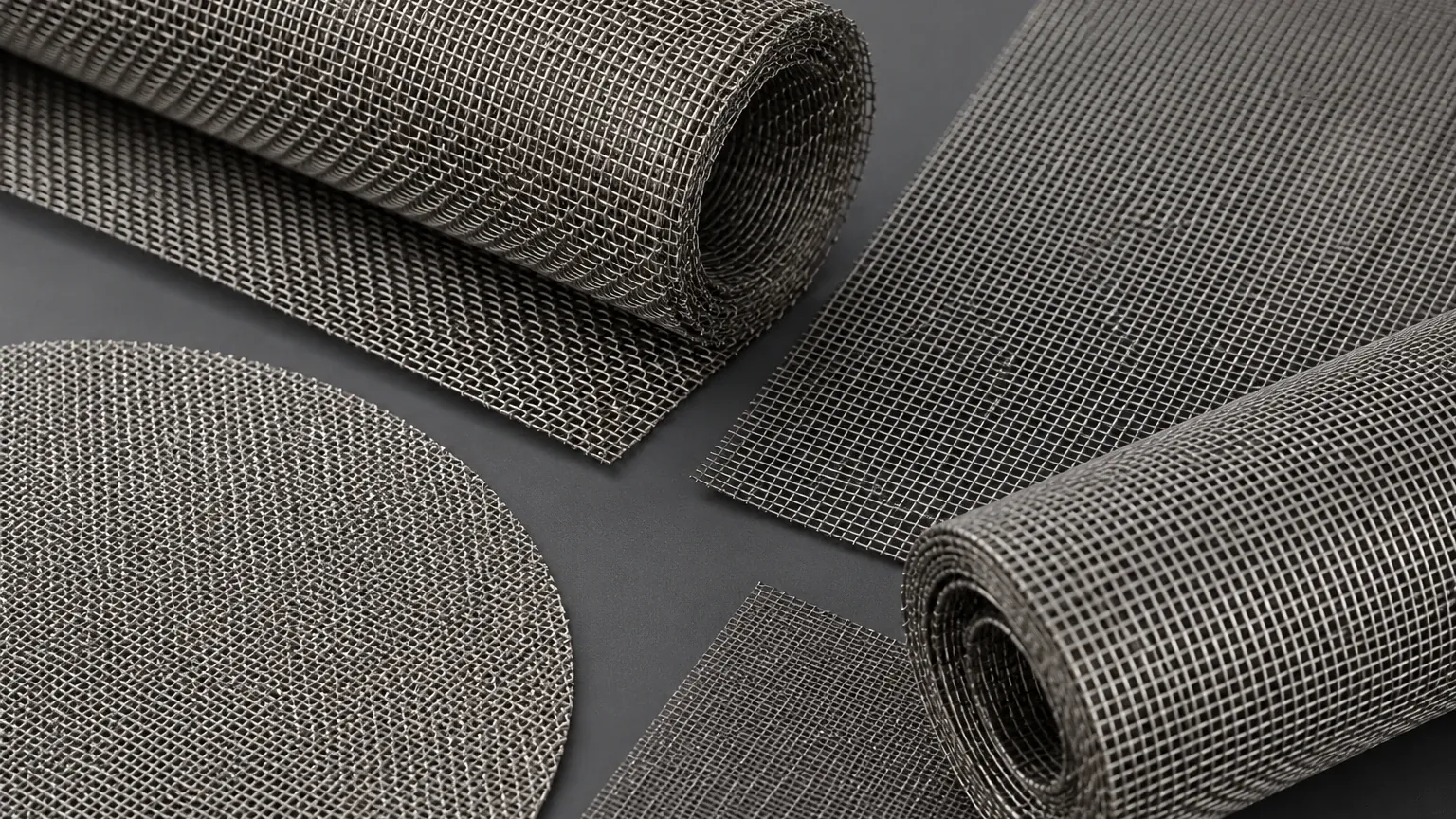
#9 Woven Wire
In industrial filtration and heavy-duty screening, the structural integrity of the media is often as critical as the filtration accuracy itself. One of the most robust specifications utilized in demanding environments is #9 woven wire. This designation typically refers to the wire gauge used in the construction of Woven Wire Mesh, providing a combination of high mechanical strength, impact resistance, and durability. For engineers and procurement teams, understanding the technical nuances of #9 gauge wire—approximately 0.148 inches or 3.76 mm in diameter—is essential for selecting the right components for high-stress applications.
Understanding the Technical Specifications of #9 Woven Wire
The term "#9 woven wire" primarily identifies the thickness of the individual wires used to create the mesh. In the American Wire Gauge (AWG) or Steel Wire Gauge (SWG) systems, a #9 gauge wire is a heavy-duty industrial material. When this wire is woven into a mesh, the resulting product is significantly more rigid than standard filtration cloths.
Wire Diameter and Aperture Size
Because the wire diameter is substantial (3.76 mm), the mesh counts for #9 woven wire are generally lower than those found in fine laboratory sieves. Common configurations include large clear openings ranging from 1/2 inch to several inches. The relationship between the wire diameter and the opening size determines the "open area" percentage, which directly impacts flow rates and pressure drop in fluid or air filtration systems.
Material Composition
While #9 wire can be manufactured from carbon steel or galvanized steel, industrial applications—particularly in chemical processing, food and beverage, and pharmaceuticals—require stainless steel.
* Type 304 Stainless Steel: The most common grade, offering excellent strength and basic corrosion resistance. It is suitable for many industrial environments where high-temperature resistance and durability are required.
* Type 316L Stainless Steel: Contains molybdenum, providing superior resistance to chlorides and pitting. This is the preferred choice for marine environments, pharmaceutical manufacturing, and chemical processing where the mesh is exposed to corrosive agents.
Weave Styles and Structural Integrity
The method by which #9 wire is woven determines its stability and how it handles mechanical loads. Unlike fine mesh that can be woven in a simple plain weave, heavy-duty #9 wire often requires specialized crimping techniques to ensure the wires remain locked in place.
1. Plain Weave
In a plain weave, each shute wire passes alternately over and under each warp wire. While simple, for a #9 gauge wire, this requires significant force during manufacturing. It provides a consistent opening size and is used when the mesh count is relatively high for the wire diameter.
2. Intermediate Crimp
For larger openings, intermediate crimping is used. Both the warp and shute wires are crimped with extra corrugations between the points of intersection. This provides additional rigidity and ensures that the wires do not shift even when subjected to high-pressure flows or heavy material loads.
3. Lock Crimp
Lock crimping is often the preferred choice for #9 woven wire in heavy industrial screening. The wires are crimped at the points of intersection in a way that "locks" them together. This prevents any movement of the wires, maintaining the accuracy of the aperture size throughout the lifecycle of the filter or screen.
4. Flat Top Weave
In this style, all the crimping is offset to one side of the mesh, creating a smooth, flat surface on the top. This is particularly useful in applications where material must slide across the mesh without obstruction or where a smooth surface is required for cleaning and sanitation.
Key Applications for Heavy-Duty Woven Wire Mesh
#9 woven wire is rarely used as a primary filtration layer for fine particles. Instead, it serves critical roles in systems where mechanical stress is a primary factor.
Support Layers for Multi-Layer Filters
In high-pressure hydraulic or chemical filtration, fine stainless steel filter media lacks the structural strength to withstand the differential pressure. #9 woven wire mesh is frequently used as a drainage or support layer. It provides a rigid skeleton that prevents the finer mesh from collapsing or deforming under load.
Industrial Screening and Sizing
In mining, aggregate processing, and waste management, #9 wire is used to sort large materials. Its thickness allows it to withstand the constant impact of heavy stones, ores, or recycled materials without breaking or stretching.
Security and Protective Enclosures
Beyond filtration, #9 woven wire is a standard for security partitions, machine guards, and window screens in industrial facilities. The thickness of the wire makes it nearly impossible to cut with standard hand tools, providing a high level of physical security while allowing for airflow and visibility.
Architectural and Food Processing Grilles
In the food industry, heavy-duty mesh is used for drying racks, oven conveyors, and large-scale sieving. The ability to use 316L stainless steel ensures that the mesh remains hygienic and resistant to the harsh cleaning chemicals used in food-grade environments.
Engineering Considerations: Selection and Performance
When specifying #9 woven wire for a project, engineers must look beyond the wire diameter. Several factors influence the total cost of ownership and the performance of the component.
Load-Bearing Capacity
The heavy gauge of #9 wire provides exceptional tensile strength. Engineers must calculate the maximum load the mesh will encounter, whether from fluid pressure or the weight of solid materials. The choice of weave (e.g., lock crimp) will significantly influence the mesh's ability to resist deformation.
Flow Resistance and Pressure Drop
In filtration applications, the large wire diameter of #9 gauge can lead to a lower percentage of open area compared to thinner wires with the same aperture size. It is vital to model the flow resistance to ensure that the support layer does not introduce an unacceptable pressure drop into the system.
Customization and Fabrication
Due to its thickness, #9 woven wire is difficult to work with on-site. It requires specialized industrial equipment for cutting, bending, and welding. When sourcing this material, it is often more cost-effective to order customized components, such as:
* Cut-to-size panels: Precision-cut pieces that fit directly into existing frames.
* Framed panels: Mesh welded into U-bound or angle-iron frames for immediate installation.
* Cylindrical filters: Heavy-duty mesh rolled and seam-welded to form the core of a filter cartridge.
Common Risks and Quality Evaluation
Not all #9 woven wire is manufactured to the same standards. For B2B buyers, verifying quality is essential to prevent premature failure in the field.
* Wire Diameter Consistency: Variations in wire diameter can lead to uneven tension in the weave, creating weak points that may fail under vibration or pressure.
* Alloy Verification: Especially in the chemical and pharmaceutical sectors, ensuring the material is true 316L (with the correct molybdenum content) is critical. Material Test Reports (MTRs) should be requested for all critical applications.
* Crimp Integrity: In lock-crimp or intermediate-crimp mesh, the crimps must be deep enough to secure the wires. Loose wires will eventually lead to "fretting," where the wires rub against each other and wear down, eventually causing the mesh to break.
Maintenance and Replacement Cycles
The durability of #9 woven wire generally leads to a long service life. However, in abrasive or corrosive environments, a regular inspection schedule is necessary.
* Abrasive Wear: In screening applications, the wire diameter will gradually decrease as material passes over it. The mesh should be replaced before the wire thins to the point where it can no longer support the required load.
* Cleaning Protocols: In filtration systems, heavy-duty mesh can often be cleaned using ultrasonic baths, backwashing, or chemical cleaning. The robust nature of the #9 wire allows for more aggressive cleaning methods than would be possible with finer meshes.
Conclusion
#9 woven wire represents a pinnacle of strength in the world of industrial wire cloth. Whether it is used as a protective barrier, a sizing screen, or a structural support for precision filtration media, its performance is dictated by the quality of the weave and the suitability of the alloy. For technical teams, the key to success lies in defining the specific mechanical and environmental requirements of the application before procurement.
For those seeking specific configurations, including Plain, twill and dutch woven wire mesh in SS304/316L — rolls, cut mesh and framed panels. Send mesh count or micron target for a technical quote. to ensure the selected material meets the rigorous demands of your industrial environment.