


9 X 9 Wire Mesh
In the landscape of industrial filtration and screening, the selection of mesh specifications directly impacts process efficiency, equipment longevity, and product purity. Among the various configurations available, 9 x 9 wire mesh serves as a versatile, medium-coarse solution frequently utilized in chemical processing, food production, and mechanical protection.
As a technical specification, 9 x 9 mesh refers to the number of openings per linear inch in both the warp and shute directions. This guide examines the engineering characteristics, material considerations, and application-specific selection criteria for Woven Wire Mesh to assist engineers and procurement teams in making informed technical decisions.
Understanding the Technical Specifications of 9 x 9 Wire Mesh
When evaluating 9 x 9 wire mesh, it is essential to look beyond the mesh count alone. The performance of the mesh is defined by the relationship between the mesh count, the wire diameter, and the resulting open area.
Mesh Count and Aperture Size
The term "9 x 9" indicates nine wires per inch in both directions. However, the actual size of the opening (aperture) depends on the diameter of the wire used. For example, using a standard 0.032-inch (0.81 mm) wire diameter results in an aperture of approximately 0.079 inches (2.01 mm). If a heavier 0.047-inch (1.20 mm) wire is used for increased durability, the aperture narrows to 0.064 inches (1.63 mm). Engineers must calculate the required aperture to ensure the mesh successfully retains particles of a specific size while maintaining the desired flow characteristics.
Open Area Percentage
The open area is a critical metric for calculating flow rates and pressure drops across a filtration system. A higher open area reduces resistance to fluid or gas flow but may compromise the structural integrity of the mesh if the wire is too thin. For most 9 x 9 configurations, the open area typically ranges between 45% and 65%. In high-velocity environments, selecting a wire diameter that balances mechanical strength with a sufficient open area is vital to prevent mesh deformation or premature fatigue.
Material Selection: SS304 vs. SS316L
The choice of alloy is perhaps the most significant factor in determining the service life of 9 x 9 wire mesh in industrial environments. At Kaifil, we primarily manufacture these components from stainless steel to ensure resistance to corrosion and high temperatures.
1. Stainless Steel 304: This is the standard industrial grade, offering excellent durability and cost-effectiveness. It is suitable for most atmospheric conditions and applications involving fresh water or mild chemicals. It is commonly used in food processing and general industrial screening.
2. Stainless Steel 316L: For more demanding environments, SS316L is the preferred choice. The addition of molybdenum provides enhanced resistance to pitting and crevice corrosion, particularly in chloride-rich environments or acidic chemical processing. The "L" (low carbon) designation also makes it more suitable for components that require welding, as it minimizes carbide precipitation.
3. Specialty Alloys: In cases involving extreme temperatures or highly aggressive media, other materials such as Monel, Inconel, or Duplex stainless steel may be specified. These materials ensure the mesh maintains its structural properties under thermal cycling or high-pressure conditions.
Mechanical Properties and Weave Types
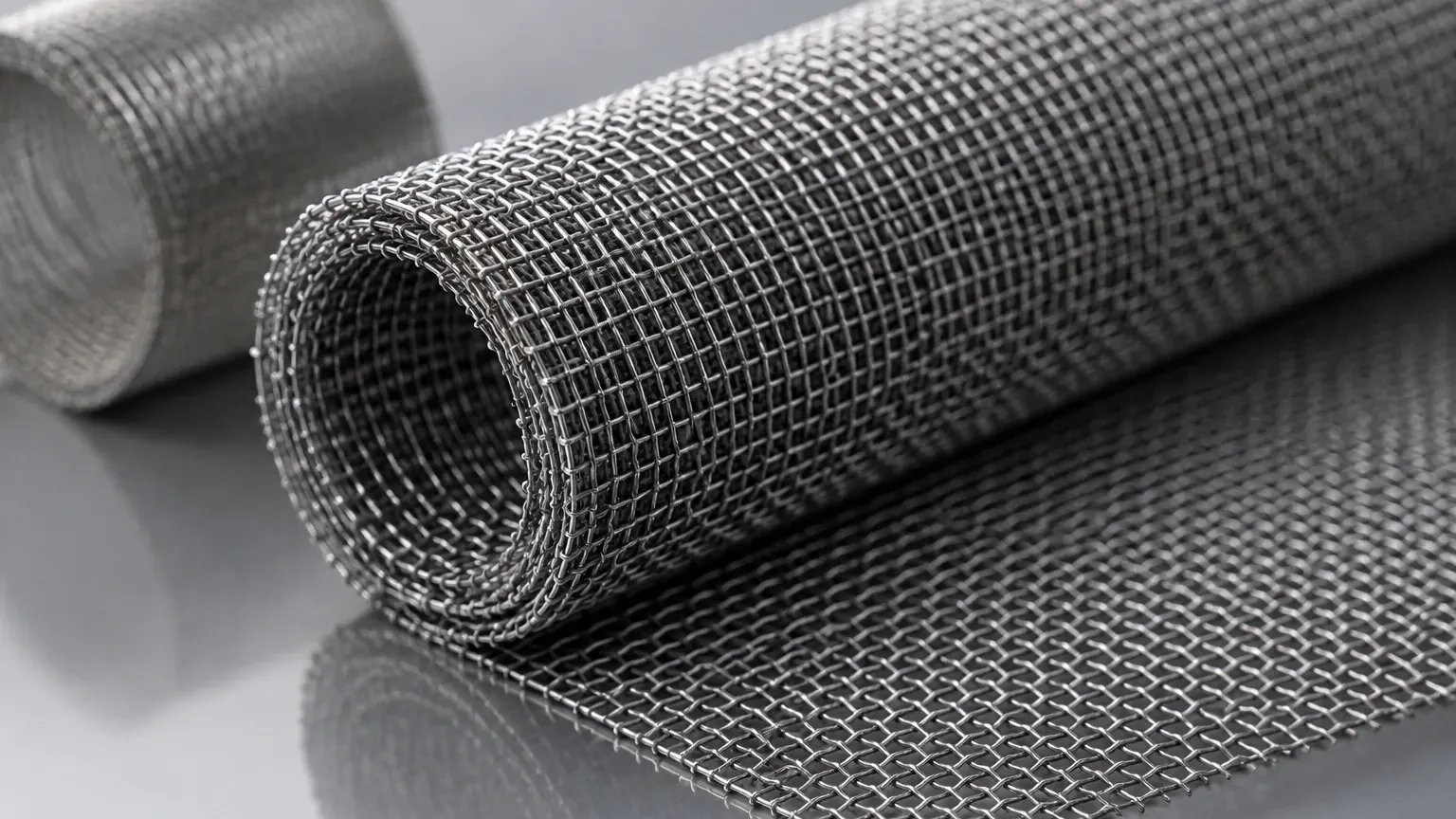
For a 9 x 9 mesh count, the Plain Weave is the most common construction. In a plain weave, each shute wire passes over and under one warp wire in a consistent pattern. This creates a stable, square opening that is easy to clean and offers predictable flow patterns.
Structural Integrity
The mechanical strength of the mesh is determined by the wire's tensile strength and the precision of the weaving process. In industrial applications where the mesh is subjected to vibration (such as in vibrating screens) or high-pressure differentials (as a support layer in a filter cartridge), the mesh must be woven with consistent tension. Inconsistent tension can lead to "wire migration," where the wires shift during operation, altering the aperture size and compromising filtration accuracy.
Edge Treatments and Customization
Depending on how the 9 x 9 mesh is integrated into a system, edge treatment may be required. Options include:
* Raw Edges: Suitable for mesh that will be further processed or welded into a frame.
* Hemmed or Folded Edges: Used to prevent fraying and provide a safer handling surface.
* Framed Panels: The mesh is secured within a U-binder or custom metal frame for use as a removable screen or guard.
Primary Industrial Applications for 9 x 9 Mesh
Because of its medium-coarse nature, 9 x 9 wire mesh is rarely used as a primary fine filter. Instead, it excels in roles requiring high throughput and mechanical robustness.
1. Support and Drainage Layers
In multi-layer filtration systems, such as pleated filter cartridges or sintered mesh laminates, 9 x 9 mesh often serves as a support layer. It provides the necessary rigidity to finer mesh layers, preventing them from collapsing under pressure while allowing the filtrate to flow freely toward the core.
2. Industrial Guards and Safety Screens
The durability of 9 x 9 mesh makes it an ideal material for protective guards on machinery, ventilation ports, and intake vents. It allows for maximum airflow or cooling while preventing the entry of debris or accidental contact with moving parts.
3. Coarse Screening in Food and Beverage
In the food industry, this mesh is used for initial screening of raw materials, such as grains or large particulates in liquid processing. Using SS316L ensures compliance with hygiene standards and resistance to the caustic cleaning agents used in CIP (Clean-In-Place) cycles.
4. Catalyst Support in Chemical Reactors
In chemical processing, 9 x 9 mesh can be used to support catalyst beds. The mesh must be engineered to withstand both the weight of the catalyst and the corrosive nature of the chemical reaction occurring within the vessel.
Engineering Considerations for Procurement
When specifying 9 x 9 wire mesh for a project, engineers should evaluate the total cost of ownership rather than just the initial purchase price. A lower-quality mesh may suffer from wire breakage or corrosion, leading to unscheduled downtime and potential contamination of the process stream.
Evaluating Quality Standards
A reliable manufacturer should provide documentation regarding the material grade and dimensional tolerances. Key quality indicators include:
* Wire Diameter Consistency: Variations in wire diameter can lead to uneven tension and aperture distortion.
* Flatness: For framed panels or disc filters, the mesh must be perfectly flat to ensure a proper seal within the housing.
* Surface Finish: In pharmaceutical or food applications, the mesh may require ultrasonic cleaning or electropolishing to remove residual lubricants from the weaving process.
Common Risks in Mesh Selection
One of the most common risks is underestimating the impact of the environment on the mesh. For instance, using SS304 in a marine or high-chloride environment will lead to rapid failure. Similarly, failing to account for the pressure drop across the mesh can result in reduced system efficiency or pump cavitation. It is always advisable to consult with a manufacturer to verify that the selected wire diameter and material are compatible with the operating parameters of the system.
Customization and OEM Capabilities
At Kaifil, we recognize that standard off-the-shelf mesh does not always meet the rigorous demands of specialized industrial equipment. We offer extensive customization for Plain, twill and dutch woven wire mesh in SS304/316L — rolls, cut mesh and framed panels. Send mesh count or micron target for a technical quote.
Our capabilities include:
* Custom Slitting: Providing mesh in specific widths for automated production lines.
* Precision Die-Cutting: Producing mesh discs or complex shapes with tight tolerances for integration into valves or sensors.
* Welding and Fabrication: Integrating the 9 x 9 mesh into custom-designed filter baskets, cylinders, or framed assemblies.
* Material Certification: Providing Mill Test Reports (MTRs) to verify chemical composition and mechanical properties.
Conclusion: Selecting the Right 9 x 9 Mesh
Selecting the appropriate 9 x 9 wire mesh requires a detailed understanding of the application's mechanical and chemical demands. By focusing on the relationship between wire diameter, aperture size, and material grade, engineers can ensure they select a component that provides reliable performance and long-term durability.
Whether the mesh is intended for use as a support layer in a high-pressure hydraulic system or as a protective screen in a chemical plant, the quality of the weave and the integrity of the material are paramount. For technical assistance in selecting the optimal mesh configuration or to request a quote for custom-fabricated components, professional manufacturers like Kaifil provide the engineering expertise necessary to support complex industrial requirements.
