


Understanding Crimped Woven Wire Mesh: An Engineering Guide to Selection and Application
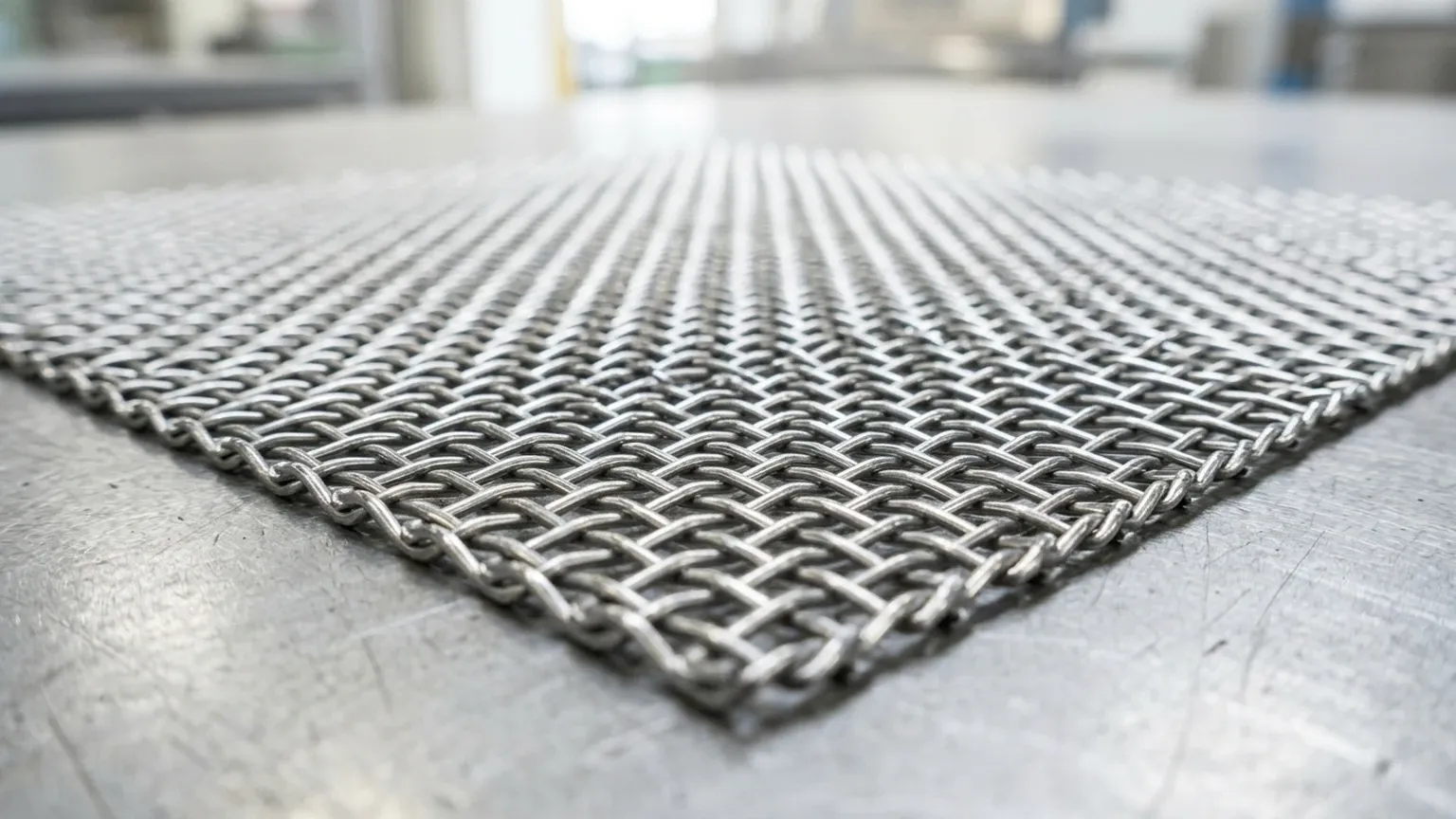
In industrial filtration and material separation, the structural integrity of the media is as critical as its filtration accuracy. While standard Woven Wire Mesh is suitable for many fine-mesh applications, heavy-duty industrial processes often require a more robust solution. This is where crimped woven wire mesh becomes essential. Unlike standard weaving processes where straight wires are interlaced, crimped mesh utilizes wires that are pre-deformed with precise indentations or "crimps" before being woven together.
For engineers and procurement specialists at Kaifil, understanding the mechanical nuances of crimping styles, material properties, and load-bearing capacities is vital for optimizing filtration performance and extending the service life of equipment in demanding environments like chemical processing, mining, and food production.
The Mechanics of Crimping: Why Pre-Deformation Matters
The defining characteristic of crimped woven wire mesh is the mechanical deformation of the wire prior to the weaving process. In standard plain weaving, the wires are bent over and under each other during the loom process. However, for heavier wire gauges or larger aperture sizes, the tension of a standard loom is often insufficient to keep the wires securely in place.
By pre-crimping the wire, manufacturers create a series of "pockets" or notches that allow the warp and weft wires to nestle into one another. This mechanical lock prevents the wires from shifting or sliding, even when subjected to high-pressure flow, heavy mechanical loads, or intense vibration. This stability ensures that the aperture size—the critical dimension for filtration and screening—remains constant throughout the life of the component.
Common Crimping Styles and Their Engineering Advantages
Selecting the right crimp style is not merely an aesthetic choice; it dictates the mesh's structural rigidity, surface smoothness, and resistance to wear. At Kaifil, we focus on providing specific configurations that align with industrial performance requirements.
1. Plain Crimp (Double Crimp)
This is the most common style where both the warp and weft wires are crimped at every intersection. It provides a highly stable structure with equal tension in both directions. It is typically used for medium to light wire gauges where a consistent opening is required for general screening and filtration.
2. Intermediate Crimp
In this configuration, extra crimps are added between the points of intersection. This is particularly useful when using relatively light wire to create large openings. The additional crimps provide extra stiffness and ensure that the wires do not bow or spread, maintaining the integrity of the aperture under load.
3. Lock Crimp
Lock crimping involves deep notches at the wire intersections. The wires are essentially "locked" into place, offering the highest level of stability. This style is preferred for applications involving high-frequency vibration, such as vibrating screens in mining or aggregate processing, where wire movement would quickly lead to aperture distortion and premature failure.
4. Flat Top Crimp
In a flat top crimp, all the crimping is offset to one side of the mesh, leaving the other side completely smooth. This design is engineered to reduce friction and turbulence. In filtration, a smooth surface prevents material buildup (blinding) and allows for easier cleaning. In screening, it ensures a more uniform flow of material across the surface, reducing localized wear on the wire peaks.
Material Selection: The Role of Stainless Steel in Durability
For industrial filtration, the choice of material is the primary factor in determining the mesh's resistance to corrosion, heat, and chemical attack. Kaifil specializes in high-performance stainless steel alloys to meet these challenges.
* SS304: The standard grade for general industrial use. It offers excellent physical properties and good resistance to atmospheric corrosion. It is widely used in food processing and general water treatment.
* SS316/316L: Containing molybdenum, these grades offer superior resistance to chlorides and acidic environments. SS316L (low carbon) is specifically preferred for welded assemblies or applications in the pharmaceutical and chemical sectors where intergranular corrosion must be avoided.
* High-Temperature Alloys: For specialized applications like petrochemical refining or heat treatment baskets, specialized alloys may be required to maintain structural integrity at temperatures exceeding 800°C.
When evaluating Woven Wire Mesh, engineers must confirm the chemical compatibility of the alloy with the process fluid to prevent premature failure due to pitting or stress corrosion cracking.
Key Evaluation Criteria for Industrial Procurement
When specifying crimped woven wire mesh for a project, technical professionals should evaluate the following four criteria to ensure the component meets the application's demands:
Aperture Precision and Open Area
The aperture (opening size) determines the particle cut-off point. However, engineers must also consider the "open area" percentage—the ratio of the openings to the total surface area. A higher open area increases flow rate and reduces pressure drop but may compromise the structural strength of the mesh. Finding the balance between filtration efficiency and mechanical durability is the core of effective filter design.
Wire Diameter vs. Service Life
While thinner wires increase the open area, they are more susceptible to abrasion and corrosion. In high-wear environments, such as hydraulic systems or abrasive slurry filtration, selecting a slightly larger wire diameter with a more robust crimp (like a lock crimp) can significantly extend the replacement cycle, lowering the total cost of ownership.
Mechanical Stability and Vibration Resistance
In applications where the mesh is used as a support layer for finer filter media or in vibrating equipment, mechanical stability is paramount. If the wires shift, the aperture changes, leading to "bypass" where oversized particles pass through the filter. Pre-crimped designs are specifically engineered to mitigate this risk.
Customization and OEM Integration
Industrial systems often require non-standard dimensions. Whether it is a specific mesh count, a unique frame integration, or a custom-cut panel, working with a manufacturer that offers OEM capabilities is essential. Plain, twill and dutch woven wire mesh in SS304/316L — rolls, cut mesh and framed panels. Send mesh count or micron target for a technical quote. This level of customization ensures that the filtration component fits perfectly within the existing housing, eliminating the risk of leaks or bypass.
Industrial Applications of Crimped Mesh
Because of its versatility and strength, crimped woven wire mesh is utilized across a broad spectrum of heavy industries:
* Chemical and Petrochemical: Used as catalyst support grids, reactor internals, and for the filtration of corrosive process fluids.
* Food and Beverage: Employed in drying belts, sorting screens, and filtration systems where hygiene (SS316L) and ease of cleaning (flat top crimp) are required.
* Water Treatment: Serving as intake screens and pre-filtration media for large-scale desalination and wastewater plants.
* Mining and Aggregate: Utilized in high-impact vibrating screens for sizing and dewatering ores and minerals.
* Architectural and Security: Due to its aesthetic appeal and structural strength, it is also used in functional architectural facades and safety partitions.
Total Cost Considerations and Maintenance
While the initial purchase price of a high-quality stainless steel crimped woven wire mesh may be higher than lower-grade alternatives, the total cost of ownership (TCO) is often significantly lower. A properly specified mesh reduces:
1. Downtime: Longer intervals between replacements mean fewer process interruptions.
2. Maintenance Labor: Durable materials and stable apertures require less frequent inspection and manual cleaning.
3. Product Loss: Consistent filtration accuracy prevents downstream contamination and product rejects.
Engineers should establish a regular inspection schedule to check for signs of wire thinning, localized corrosion, or mechanical deformation. In high-vibration environments, checking the tension and the integrity of the frame attachment is crucial to prevent fatigue failure at the edges of the mesh.
Conclusion: Selecting the Right Partner for Filtration Solutions
Choosing the right crimped woven wire mesh requires a deep understanding of both the material science and the mechanical requirements of the application. By focusing on the specific crimping style, wire gauge, and alloy grade, engineers can ensure their filtration systems operate at peak efficiency with minimal maintenance requirements.
Kaifil provides the technical expertise and manufacturing precision needed to develop customized filtration components that meet these rigorous standards. From initial material selection to the final production of precision metal filter components, our focus remains on delivering reliability and performance in every mesh panel and cartridge we produce.
For technical assistance in defining your mesh specifications or to request a quote for custom industrial filtration solutions, visit our comprehensive Woven Wire Mesh selection guide.
