


Metal Woven Wire Mesh: A Technical Guide for Industrial Filtration Selection
In industrial filtration and separation processes, the choice of media directly impacts the efficiency, longevity, and cost-effectiveness of the entire system. Metal woven wire mesh remains one of the most versatile and reliable materials for these demanding environments. Characterized by its precise aperture sizes and structural integrity, it serves as a critical component in industries ranging from chemical processing and pharmaceuticals to food production and hydraulic systems.
Selecting the appropriate metal woven wire mesh requires a deep understanding of weave patterns, material properties, and mechanical performance. This guide provides technical insights into the engineering considerations necessary for optimizing filtration performance and ensuring long-term reliability.
Understanding Weave Types and Their Functional Impact
The performance of a filter is largely defined by how the wires are interlaced. Different weave patterns offer varying degrees of strength, flow capacity, and filtration accuracy. Engineers must evaluate these patterns based on the specific particle size and pressure requirements of their application.
Plain Weave
Plain weave is the most common and straightforward pattern, where each warp wire crosses over and under each weft wire. This results in a stable structure with square openings. It is widely used for general screening and low-pressure filtration applications. Because of its high open area, it provides excellent flow rates but may lack the mechanical strength required for high-viscosity fluids or high-pressure differentials.
Twill Weave
In a twill weave, each weft wire passes over and under two warp wires in a staggered sequence. This allows for the use of heavier wires in a given mesh count, providing increased strength and durability. Twill weaves are often utilized when a finer mesh is required than what can be achieved with a plain weave using the same wire diameter. This weave type is particularly effective in applications involving heavy loads or abrasive materials.
Dutch Weave (Plain and Twill)
Dutch weaves utilize different diameters for warp and weft wires. Typically, the warp wires are heavier and spaced further apart, while the weft wires are thinner and driven closely together.
- Plain Dutch Weave: Provides a dense, strong mesh with relatively high flow rates. It is ideal for high-pressure filtration where a high degree of mechanical strength is necessary.
- Twill Dutch Weave: By combining the twill and Dutch patterns, this weave achieves the finest filtration ratings available in woven wire mesh. The overlapping wires create a complex path for the fluid, trapping very fine particles while maintaining structural integrity under extreme pressure.
Material Selection: SS304 vs. SS316L
Material compatibility is a non-negotiable factor in industrial filtration. The chemical environment, temperature, and hygiene requirements of the process dictate the grade of stainless steel required for the metal woven wire mesh.
Stainless Steel 304 (SS304)
SS304 is the standard industrial grade for most filtration applications. It offers good corrosion resistance to many organic and inorganic chemicals. It is frequently used in water treatment, general industrial processing, and food and beverage applications where extreme chemical exposure is not a primary concern. However, in environments with high chloride concentrations, SS304 may be susceptible to pitting corrosion.
Stainless Steel 316L (SS316L)
The addition of molybdenum in SS316L significantly enhances its resistance to chlorides and acids. The "L" denotes low carbon content, which improves weldability and prevents sensitization—a common cause of intergranular corrosion. For pharmaceutical, marine, and aggressive chemical processing applications, SS316L is the preferred choice. It ensures that the mesh maintains its structural integrity and prevents contamination of the process stream.
Mesh Count, Micron Rating, and Open Area
One of the most common points of confusion in specifying woven wire mesh is the relationship between mesh count and micron rating. Understanding these metrics is essential for accurate filter selection.
* Mesh Count: Refers to the number of openings per linear inch. A higher mesh count generally indicates a finer filter, but it must be considered alongside the wire diameter.
* Micron Rating: This defines the size of the particles the mesh can effectively retain. It is important to distinguish between "nominal" and "absolute" micron ratings. Absolute ratings refer to the size of the largest spherical particle that can pass through the mesh, while nominal ratings refer to a percentage of particles retained.
* Open Area Percentage: This is the ratio of the total area of the openings to the total area of the mesh. A higher open area results in a lower pressure drop and higher flow rates but may reduce the mechanical strength of the mesh. Engineers must balance the need for high throughput with the structural requirements of the application.
Engineering Considerations for High-Performance Filtration
When designing or purchasing metal woven wire mesh components, several engineering factors must be evaluated to prevent premature failure and optimize performance.
Pressure Drop and Flow Rate
The pressure drop across a filter is a critical metric for system efficiency. Factors influencing pressure drop include the fluid's viscosity, velocity, and the mesh's open area. If the pressure drop is too high, it can lead to mesh deformation or system bypass. Conversely, a filter with too much open area may not provide the necessary filtration accuracy.
Mechanical Strength and Support
In high-pressure or high-flow applications, the mesh itself may require additional support. This is often achieved by pleating the mesh to increase surface area or by using a perforated metal core or a heavier backup mesh. Ensuring that the metal woven wire mesh can withstand the mechanical stresses of the process without tearing or shifting is vital for consistent performance.
Temperature Stability
Stainless steel meshes are capable of operating at elevated temperatures, but thermal expansion and potential oxidation must be considered. At very high temperatures, the mechanical properties of the steel may diminish, requiring heavier wire diameters or specialized alloys.
Customization and OEM Solutions
Industrial applications rarely follow a one-size-fits-all approach. Customization is often required to integrate filtration components seamlessly into existing machinery or specific processes. Kaifil specializes in providing tailored solutions that meet these unique requirements.
Customization options include:
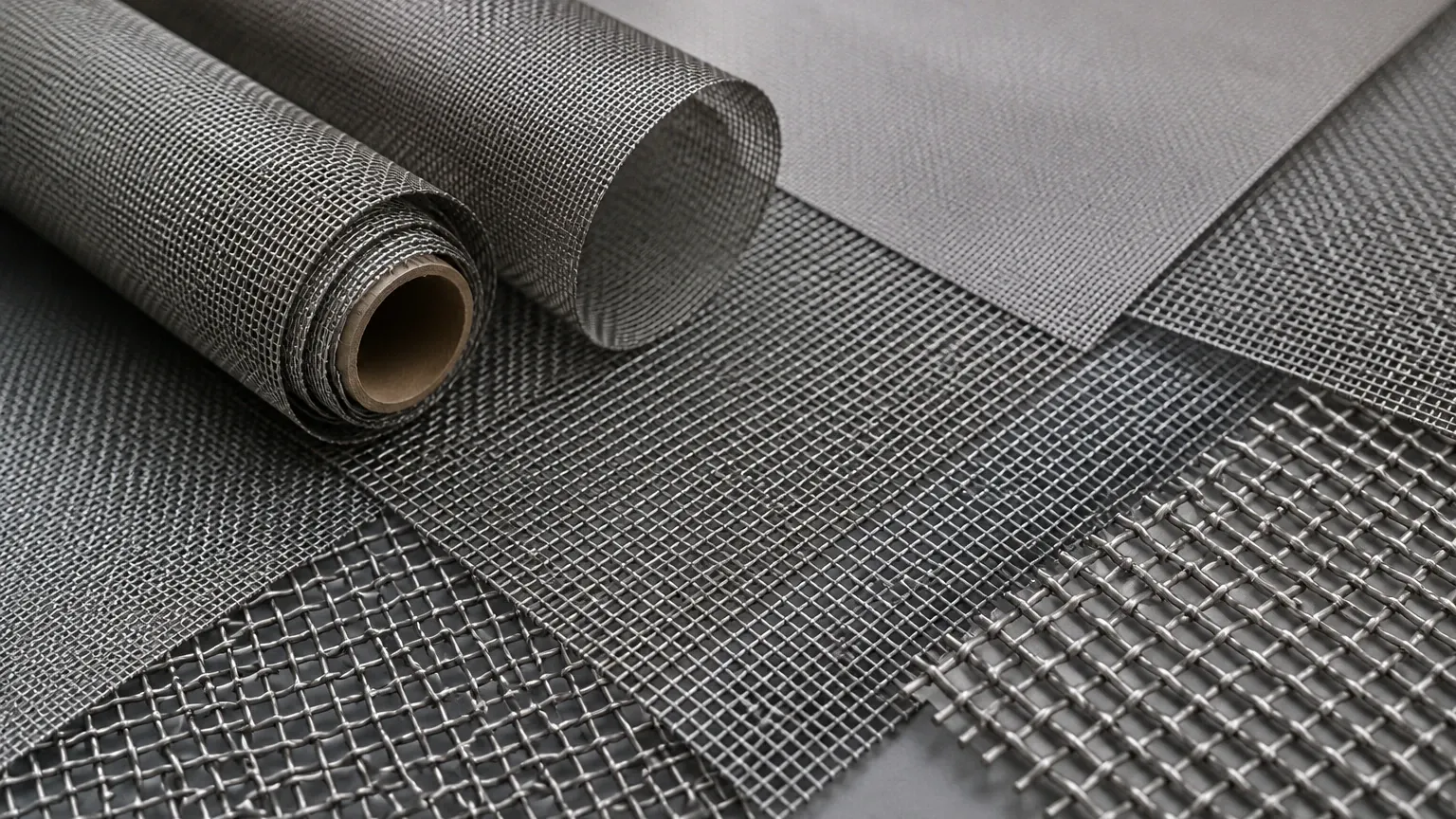
* Specific Dimensions: Mesh can be supplied in rolls, cut-to-size pieces, or circular discs.
* Framed Panels: For easier installation and improved structural rigidity, mesh can be mounted in frames made of stainless steel or other alloys.
* Multi-layer Sintered Mesh: For extreme environments, multiple layers of mesh can be sintered together to combine the filtration accuracy of fine mesh with the strength of coarse mesh.
* Fabricated Components: This includes the production of filter cartridges, baskets, and strainers designed to exact OEM specifications.
Total Cost of Ownership and Maintenance
While the initial purchase price of metal woven wire mesh is an important factor, the total cost of ownership (TCO) provides a more accurate picture of value. TCO includes the initial cost, the frequency of replacement, the ease of cleaning, and the impact of the filter on the overall process efficiency.
Cleaning and Reusability
One of the primary advantages of stainless steel mesh over disposable media is its cleanability. Methods such as backwashing, ultrasonic cleaning, or chemical cleaning can restore the mesh to its original performance levels. This reduces waste and lowers long-term operational costs.
Replacement Cycles
Regular inspection is necessary to identify signs of wear, such as wire thinning, aperture distortion, or blinding (clogging that cannot be cleaned). Establishing a predictable replacement cycle based on operational data helps prevent unscheduled downtime and ensures consistent product quality.
Why Technical Confirmation Matters Before Purchase
Before finalizing a purchase of metal woven wire mesh, technical professionals should confirm several key details with their supplier to ensure the product is fit for purpose:
1. Material Certification: Ensure the grade of stainless steel is verified through MTRs (Material Test Reports).
2. Aperture Uniformity: In precision filtration, even small variations in opening size can lead to process failures.
3. Edge Treatment: Depending on the application, mesh may require welded, hemmed, or bound edges to prevent fraying and ensure safety during handling.
4. Compatibility with Housing: Confirm that the dimensions and tolerances of the mesh or fabricated component match the existing filter housing.
By focusing on these technical parameters, engineers can select filtration solutions that provide the best balance of performance, durability, and cost. Whether for a standard chemical process or a highly specialized pharmaceutical application, the right metal woven wire mesh is a fundamental building block for industrial success.
