


Mild Steel Woven Wire Mesh: Engineering Properties and Industrial Selection Guide
In the landscape of industrial filtration and material separation, selecting the appropriate medium requires a balance between mechanical performance, environmental compatibility, and cost-efficiency. While stainless steel is often the default choice for high-corrosion environments, mild steel woven wire mesh—also known as low-carbon steel wire mesh—serves as a critical component in applications where high tensile strength and economy are prioritized over chemical resistance.
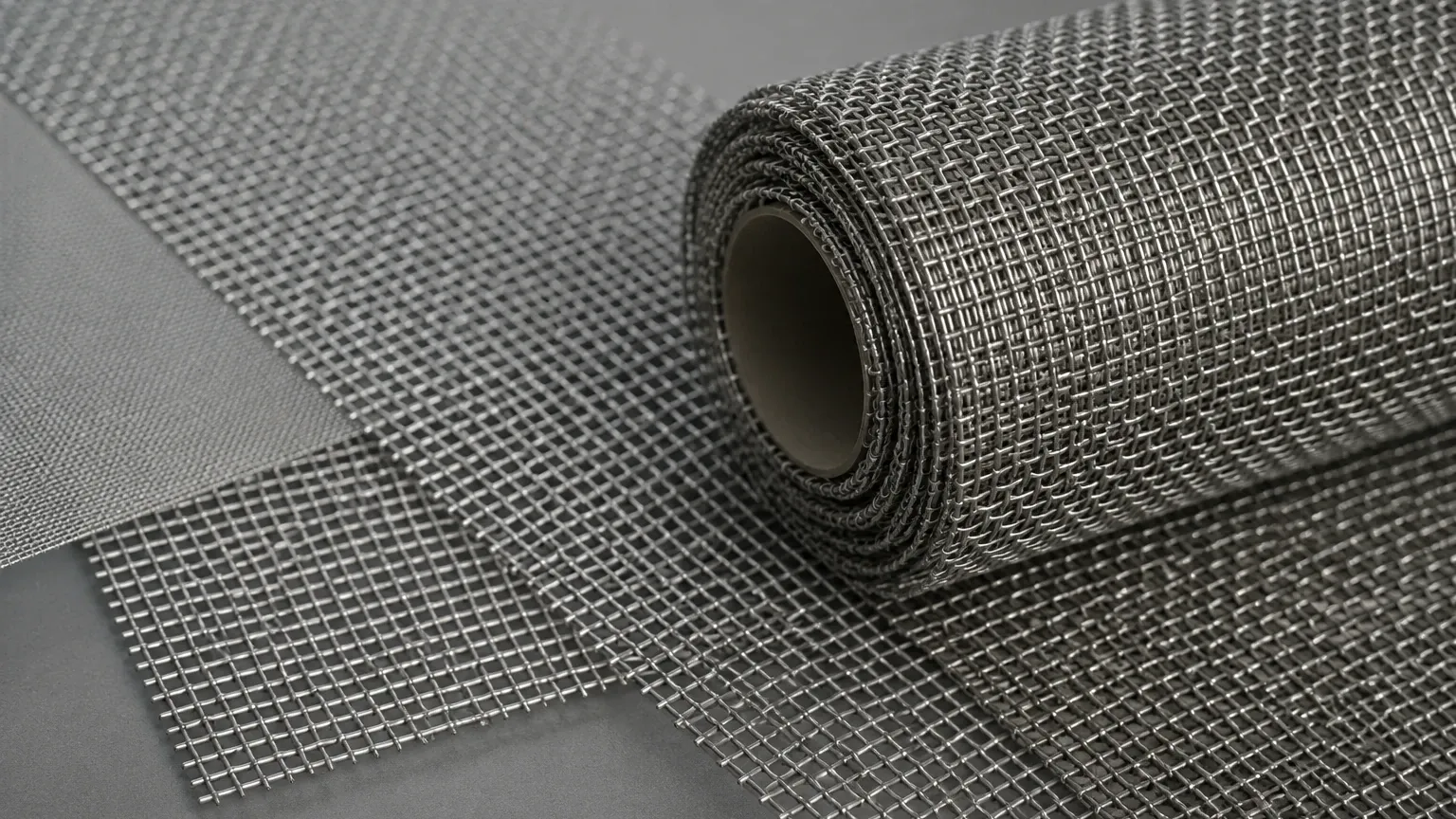
As a versatile industrial material, woven wire mesh is manufactured by interlacing metallic wires in a predetermined pattern to create precise apertures. When fabricated from mild steel, this mesh provides a robust structural foundation for a wide range of industrial processes, from heavy-duty sifting to the reinforcement of filtration elements.
Understanding the Composition of Mild Steel Woven Wire Mesh
Mild steel is defined by its low carbon content, typically ranging from 0.05% to 0.25%. This chemical composition significantly influences the physical properties of the resulting mesh. Unlike high-carbon steels, mild steel is highly ductile and malleable, allowing it to be drawn into fine wires and woven into intricate patterns without becoming brittle.
Mechanical Characteristics
The primary advantage of mild steel in the context of Woven Wire Mesh is its balance of strength and flexibility. It possesses high tensile strength, making it suitable for applications involving high pressure or mechanical impact. However, because it lacks the chromium content found in stainless steel, it does not form a self-healing oxide layer, making it susceptible to oxidation (rust) if left untreated.
Magnetic Properties
Mild steel is inherently ferromagnetic. In industrial sifting or recycling operations, this property is often leveraged to allow for the easy separation of the mesh from other non-metallic materials or to use magnetic systems to secure the mesh in place during high-vibration processing.
Technical Specifications and Weave Variations
The performance of mild steel woven wire mesh is dictated by its weave type, which determines the stability of the mesh, the precision of the openings, and the overall flow capacity. Engineers must select the weave based on the specific particle size they intend to retain or the structural load the mesh must support.
Plain Weave
This is the most common and straightforward weave pattern. Each warp wire (running lengthwise) crosses over and under each shute wire (running crosswise). Plain weave mild steel mesh offers the highest level of transparency and open area, making it ideal for high-flow filtration and basic screening.
Twill Weave
In a twill weave, each warp wire and shute wire passes over two and under two successive wires. This reduces the stress on the wires during the weaving process, allowing for the use of heavier wire diameters relative to the aperture size. Twill weave is often selected when the mesh needs to withstand higher mechanical loads than a plain weave can accommodate.
Dutch Weave (Plain and Twill)
Dutch weaves utilize different wire diameters for the warp and shute. Typically, a smaller number of heavier warp wires are combined with a higher number of finer shute wires. This creates a dense, strong mesh with very small, tortuous paths for the fluid or gas to pass through. While more common in stainless steel for precision filtration, mild steel dutch weaves are used in heavy-duty hydraulic filters and fuel strainers where the environment is controlled (e.g., submerged in oil).
Key Evaluation Criteria: Aperture, Wire Diameter, and Open Area
When specifying mild steel woven wire mesh for an industrial project, three primary geometric factors must be calculated to ensure the component meets performance expectations.
1. Aperture (w): The clear distance between two adjacent warp or shute wires. This determines the maximum particle size that can pass through the mesh.
2. Wire Diameter (d): The thickness of the wire before weaving. Heavier diameters increase the mesh's lifespan and resistance to abrasion but decrease the open area.
3. Percentage of Open Area (Ao): Calculated using the formula `Ao = (w / (w + d))² × 100`. A higher open area results in lower pressure drops across the filter but may compromise the structural integrity of the mesh under high-pressure differentials.
For engineers designing filtration systems, balancing these three factors is essential. A mesh with a high aperture but thin wire may fail prematurely due to fatigue, while a mesh with thick wire and small apertures may cause excessive energy consumption due to restricted flow.
Corrosion Mitigation and Surface Treatments
The most significant limitation of mild steel woven wire mesh is its vulnerability to corrosion. In many B2B applications, the mesh is subjected to moisture, humidity, or mildly acidic environments. To extend the service life of the component, several surface treatments are commonly applied:
* Galvanization: Coating the steel with a layer of zinc. This can be done before weaving (pre-galvanized) or after the mesh is formed (hot-dip galvanized). Hot-dip galvanizing provides superior protection as it seals the intersection points of the wires.
* Oiling: For mesh used in internal machinery or temporary storage, a light coat of industrial oil can prevent flash rusting.
* PVC or Epoxy Coating: Applying a polymer layer provides a physical barrier against chemical attack and moisture. This is common in architectural or outdoor screening applications.
* Painting/Powder Coating: Used primarily for aesthetic purposes or in environments where the mesh is not subjected to high-velocity fluid flow that could strip the coating.
Comparing Mild Steel and Stainless Steel Woven Wire Mesh
In many engineering discussions, the choice between mild steel and stainless steel is a matter of Total Cost of Ownership (TCO). While mild steel has a lower upfront material cost, the long-term costs of replacement and maintenance must be considered.
| Feature | Mild Steel Woven Wire Mesh | Stainless Steel Woven Wire Mesh |
| :— | :— | :— |
| Corrosion Resistance | Low (Requires coating) | High (Inherent) |
| Tensile Strength | High | Very High |
| Cost | Economical | Premium |
| Temperature Resistance | Moderate | High |
| Magnetism | Magnetic | Generally Non-magnetic (300 series) |
| Common Grades | C1006, C1008 | SS304, SS316L |
For critical applications in food processing, pharmaceuticals, or high-acid chemical production, the durability of stainless steel is non-negotiable. Kaifil provides Plain, twill and dutch woven wire mesh in SS304/316L — rolls, cut mesh and framed panels. Send mesh count or micron target for a technical quote. to ensure that high-performance standards are met where mild steel would fail. However, in hydraulic systems where the mesh is constantly bathed in oil, or in dry sifting of non-corrosive aggregates, mild steel remains a technically sound and cost-effective solution.
Common Industrial Applications
Mild steel woven wire mesh is utilized across various sectors where its specific mechanical properties provide a functional advantage:
1. Industrial Sifting and Grading
In the construction and mining industries, mild steel mesh is used to sort aggregates, sand, and minerals. Its high impact resistance allows it to handle the abrasive nature of these materials better than softer alloys.
2. Support Media for Pleated Filters
In complex filtration assemblies, a fine filtration layer (often made of fiberglass or fine stainless mesh) requires a rigid support structure to prevent collapsing under pressure. Mild steel mesh acts as an excellent pleated support layer in hydraulic and air filters.
3. Safety Guarding and Enclosures
Due to its strength and weldability, mild steel mesh is a standard material for machine guards, security screens, and ventilated partitions in manufacturing facilities. It allows for airflow and visibility while maintaining a high level of physical security.
4. Flame Arrestors
In certain low-corrosion gas exhaust systems, layers of mild steel woven wire mesh are used to dissipate heat and prevent the passage of flames, acting as a critical safety component in industrial burners.
Procurement and Customization Considerations
When sourcing mild steel woven wire mesh, purchasing teams and engineers should confirm several technical details to ensure the product is fit for purpose:
* Edge Finish: Depending on the installation method, the mesh can be supplied with raw edges, hemmed edges, or welded into a frame. Raw edges are prone to fraying if the mesh is subjected to vibration.
* Roll vs. Sheet: Standard production often results in rolls, but for high-precision applications, flattened sheets are preferred to remove the "curl" memory of the wire.
* Tolerances: Standard industrial tolerances for mesh count and wire diameter should be established upfront. For precision sifting, tighter tolerances are required to ensure consistent output.
* Cleaning Standards: In B2B supply chains, the presence of residual weaving lubricants can be an issue. Specifying "degreased" mesh is necessary for applications involving sensitive fluids or subsequent coating processes.
Conclusion
Mild steel woven wire mesh remains a foundational material in industrial engineering, offering a unique combination of strength, ductility, and affordability. While its susceptibility to corrosion requires careful consideration of surface treatments or environmental controls, its performance in structural support and dry material processing is well-documented. By understanding the nuances of weave types, material properties, and the trade-offs between mild steel and stainless steel, engineers can optimize their filtration and separation systems for both performance and budget.
For applications requiring the highest levels of precision and longevity in demanding environments, exploring advanced stainless steel options is often the next logical step in the design process.
