


Nickel Woven Wire Mesh: Engineering Guide for High-Performance Industrial Filtration
In the landscape of industrial filtration and separation, material selection is often the deciding factor between operational efficiency and frequent system failure. While stainless steel remains the industry standard for a wide range of applications, certain aggressive chemical environments and high-temperature processes demand the unique properties of nickel alloys. Nickel woven wire mesh represents a specialized category of Woven Wire Mesh designed to withstand conditions where standard austenitic steels might succumb to corrosion or mechanical degradation.
For engineers and procurement professionals, understanding the technical nuances of nickel mesh is essential for optimizing filter life and ensuring process integrity. This guide explores the material properties, weave configurations, and selection criteria necessary for implementing nickel filtration solutions in demanding industrial sectors.
Understanding Nickel Woven Wire Mesh in Industrial Contexts
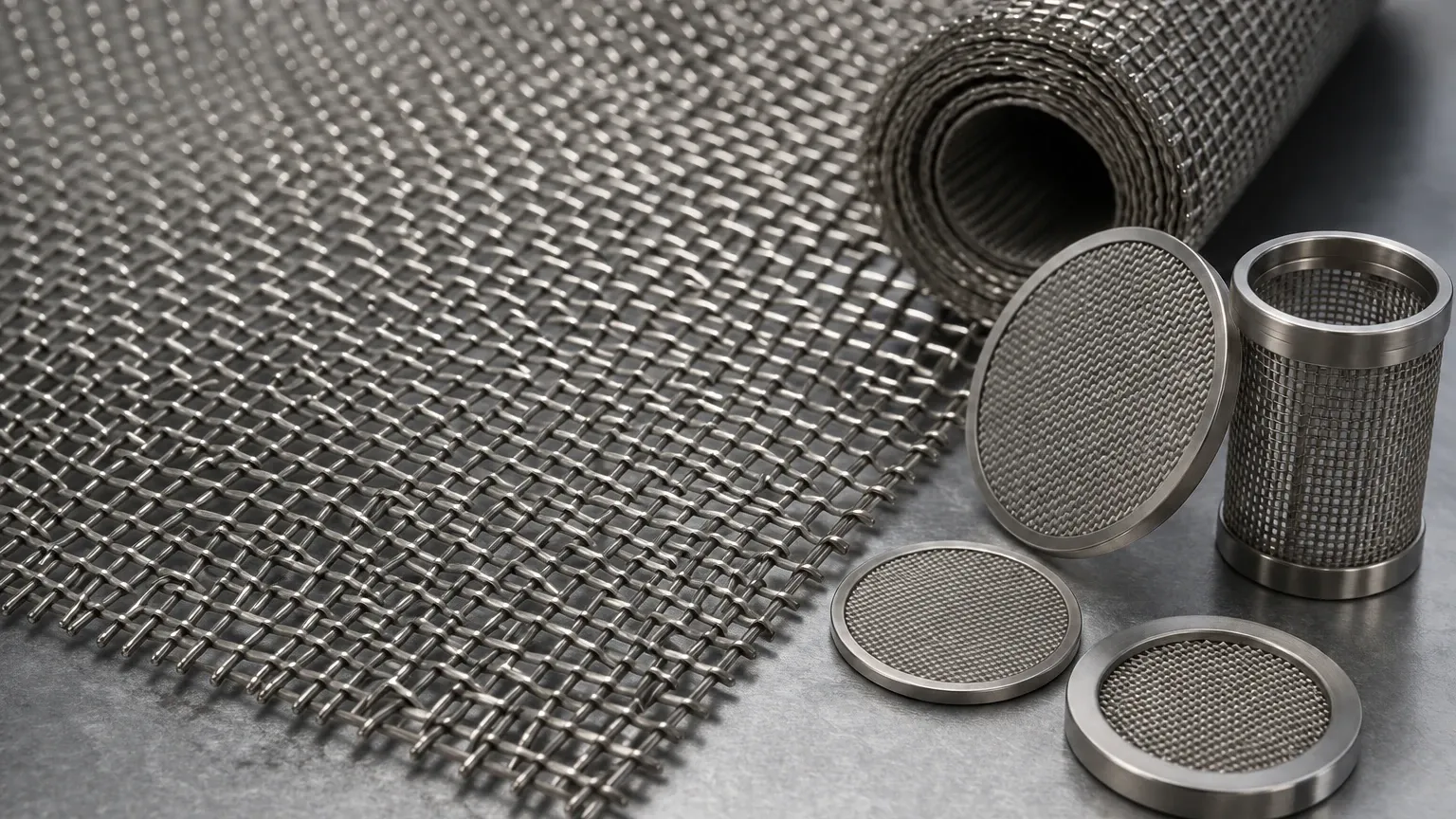
Nickel woven wire mesh is produced by weaving commercially pure nickel wires into precise geometric patterns. Unlike stainless steel, which relies on a chromium oxide layer for protection, nickel possesses inherent resistance to a variety of reducing chemicals and caustic alkalis. In the broader category of industrial wire cloth, nickel is prized for its high thermal conductivity, electrical conductivity, and magnetic properties.
When specifying nickel mesh, the primary focus is usually on its performance in environments involving sodium hydroxide (caustic soda), potassium hydroxide, and various dry gases. It serves as a critical component in hydrogen production, chemical processing, and electronic applications where material purity is paramount.
Material Science: Choosing Between Nickel 200 and 201
Most industrial nickel mesh is manufactured using one of two primary grades: Nickel 200 or Nickel 201. Choosing the correct grade is vital for the longevity of the filter element.
Nickel 200 (UNS N02200)
Nickel 200 is commercially pure (99.6%) wrought nickel. It offers excellent mechanical properties and a high resistance to many corrosive environments. It is particularly effective against caustic alkalis at various concentrations and temperatures. However, its use is generally limited to temperatures below 315°C (600°F). At temperatures above this threshold, Nickel 200 can suffer from graphitization, leading to a significant loss in ductility and eventual embrittlement.
Nickel 201 (UNS N02201)
Nickel 201 is the low-carbon version of Nickel 200. By limiting the carbon content to a maximum of 0.02%, the material avoids the risk of intergranular embrittlement at temperatures exceeding 315°C. For high-heat applications, such as thermal processing or high-temperature chemical reactors, Nickel 201 is the mandatory specification for woven wire mesh components.
| Property | Nickel 200 | Nickel 201 |
| :— | :— | :— |
| Carbon Content | 0.15% max | 0.02% max |
| Max Service Temp | 315°C (600°F) | 600°C+ (1100°F+) |
| Corrosion Resistance | Excellent in Caustics | Excellent in Caustics |
| Primary Use | General Chemical | High-Temp Chemical |
Technical Specifications and Weave Patterns
The performance of nickel woven wire mesh is defined by its weave architecture, which determines the filtration accuracy (micron rating), mechanical strength, and flow characteristics. At Kaifil, we provide various weave types to meet specific industrial requirements.
1. Plain Weave
The most common configuration where each warp wire crosses alternately over and under each shute wire. This provides the highest level of transparency and is ideal for basic sieving and low-pressure drop applications. Plain weave nickel mesh is frequently used in battery electrode support and simple gas filtration.
2. Twill Weave
In a twill weave, each warp wire passes alternately over and under two shute wires. This allows for a heavier wire diameter to be used for a given mesh count compared to plain weave. Twill weaves are often employed when the mesh needs to withstand higher mechanical loads or when a finer mesh count is required than plain weaving can reliably produce.
3. Dutch Weave (Plain and Twill)
Dutch weaves utilize a combination of different wire diameters in the warp and shute directions. This results in a dense, robust mesh with small, triangular openings. Dutch woven nickel mesh is the standard for high-pressure filtration, as it offers superior strength and precise micron ratings for liquid-solid separation in chemical processing.
4. Reverse Dutch Weave
By reversing the wire diameters (placing the larger number of finer wires in the warp), this weave provides high mechanical strength along the length of the mesh. It is particularly useful in continuous filtration systems and leaf filters where the mesh is subject to high tension.
Key Industrial Applications and Performance Expectations
Nickel's unique electrochemical and thermal profile makes it indispensable in several high-stakes industries. Engineers should evaluate nickel mesh when the following applications are involved:
* Chlor-Alkali Industry: Nickel mesh is the primary material for electrodes and filtration in the production of chlorine and caustic soda. Its resistance to concentrated lye is unmatched by most stainless steels.
* Hydrogen Production: In alkaline water electrolyzers, nickel woven mesh serves as an efficient catalyst support and current collector due to its high conductivity and stability in alkaline electrolytes.
* Chemical Processing: Used in the filtration of fluorine, bromine, and various organic chlorides. It is also essential for handling synthetic fibers and viscose production.
* Aerospace and Electronics: Utilized for EMI/RFI shielding, battery components, and fuel cell membranes where electrical performance must be maintained in corrosive environments.
* Food and Beverage: Specifically in the processing of highly alkaline cleaning agents or specialized food additives where material leaching must be prevented.
Engineering Selection: Factors Beyond Mesh Count
When specifying nickel woven wire mesh for a project, moving beyond simple mesh count to a more comprehensive technical evaluation is necessary. Engineers should confirm the following parameters before procurement:
Filtration Accuracy and Micron Rating
Is the requirement for nominal or absolute filtration? While plain weaves provide predictable nominal ratings, Dutch weaves are necessary for absolute particle retention. Ensure the micron rating accounts for the maximum particle size allowed downstream.
Effective Open Area (EOA)
The percentage of open area directly impacts the flow rate and pressure drop across the filter. High-mesh-count nickel cloth offers finer filtration but increases resistance. Engineers must balance the need for particle retention with the allowable differential pressure (Delta P) of the system.
Mechanical Loading and Support
Nickel is more ductile than many stainless steels. In high-pressure applications, the mesh may require a support layer (such as a coarser stainless steel or nickel backing mesh) to prevent deformation or "ballooning" of the filter element.
Chemical Compatibility and Purity
While nickel is highly resistant to alkalis, it can be susceptible to certain oxidizing acids (like nitric acid) and sulfur-bearing gases at high temperatures. Always verify the specific chemical composition of the process fluid, including trace impurities that could lead to stress corrosion cracking.
Quality Assurance and Sourcing Considerations
Sourcing industrial-grade nickel mesh requires a partner capable of providing verifiable material traceability. Because nickel is a high-value commodity, "commercial grade" substitutes that do not meet UNS N02200/N02201 standards can lead to catastrophic failure in the field.
Critical quality checks for nickel mesh include:
1. Material Certification: Mill test reports (MTRs) confirming the chemical composition, particularly the carbon content for high-temperature applications.
2. Dimensional Accuracy: Verification of wire diameter and mesh count using optical measurement systems to ensure consistency across the entire roll or component.
3. Surface Cleanliness: For electronics and pharmaceutical applications, the mesh must be free of lubricants and drawing oils used during the weaving process.
4. Customization and Fabrication: Many industrial applications require the mesh to be converted into finished components, such as pleated cartridges, framed panels, or multi-layer sintered laminates. Partnering with a manufacturer like Kaifil ensures that the fabrication process (welding, cutting, forming) preserves the integrity of the nickel alloy.
Total Cost of Ownership (TCO)
The initial cost of nickel woven wire mesh is significantly higher than that of standard stainless steel. However, the TCO often favors nickel in aggressive environments. By preventing premature corrosion, reducing downtime for filter replacements, and maintaining product purity, nickel filtration solutions provide a higher return on investment over the lifecycle of the industrial equipment.
When evaluating costs, engineers should consider the frequency of replacement cycles. If a 316L stainless steel filter requires replacement every three months due to caustic pitting, a nickel filter that lasts two years will drastically reduce labor costs and production losses.
Conclusion
Nickel woven wire mesh is a critical engineering material for the most demanding filtration and electrochemical challenges. Whether it is the high-temperature stability of Nickel 201 or the exceptional caustic resistance of Nickel 200, selecting the right mesh requires a deep understanding of both material science and weaving technology. By focusing on precise technical specifications and partnering with experienced manufacturers, industrial operators can achieve reliable, long-term performance in their most sensitive processes.
For technical assistance in selecting the optimal weave pattern or material grade for your application, Plain, twill and dutch woven wire mesh in SS304/316L — rolls, cut mesh and framed panels. Send mesh count or micron target for a technical quote. Kaifil provides the engineering expertise and manufacturing precision required to deliver custom nickel and stainless steel filtration solutions worldwide.
