


Stainless Steel Woven Wire Mesh Near Me: A Technical Guide for Industrial Procurement
When engineers and procurement specialists search for stainless steel woven wire mesh near me, the underlying requirement is rarely just about geographic proximity. In an industrial context, "near me" signifies a need for reliable supply chains, technical accessibility, and a partner capable of meeting stringent performance specifications. Whether the application involves chemical processing, hydraulic filtration, or food-grade separation, selecting the right Woven Wire Mesh requires a deep understanding of metallurgy, weave geometry, and mechanical durability.
While local distributors may offer standard hardware-grade mesh, specialized industrial applications often demand direct collaboration with manufacturers. This ensures that the material properties, such as corrosion resistance and tensile strength, align with the operational environment. This guide explores the technical considerations necessary for sourcing high-quality woven wire mesh and how to evaluate suppliers based on engineering requirements rather than just location.
Understanding the Technical Specifications of Woven Wire Mesh
The performance of a filter or screen is dictated by the precision of its weave and the quality of the alloy used. When sourcing stainless steel woven wire mesh near me, it is critical to distinguish between different weave patterns, as each serves a distinct functional purpose in industrial filtration.
Plain Weave vs. Twill Weave
Plain weave is the most common configuration, where each warp wire crosses alternately over and under each shute wire at 90-degree angles. This provides a stable structure with consistent aperture sizes, ideal for general screening and particle separation. However, for finer filtration requirements where a heavier wire diameter is needed relative to the mesh count, a twill weave is employed. In a twill weave, each shute wire passes over and under two warp wires, allowing for greater flexibility and the use of thicker wires in high-mesh-count specifications.
Dutch Weave for High-Pressure Filtration
For applications requiring high-pressure stability and precise micron ratings, Dutch weaves (both plain and twill) are the industry standard. Unlike square mesh, Dutch weaves utilize different wire diameters for the warp and shute. This results in a dense, compact mesh with no visible openings when viewed directly. The filtration occurs through the tortuous path created by the overlapping wires. This structure is essential for hydraulic filters, fuel systems, and polymer melt filtration where mechanical strength is as important as filtration accuracy.
Material Selection: Beyond Standard Stainless Steel
One of the primary risks of sourcing from generic local suppliers is the lack of material traceability. For industrial environments, the difference between Grade 304 and Grade 316L stainless steel is the difference between a long-lasting component and a premature system failure.
* SS304: Suitable for general industrial use, providing good corrosion resistance and mechanical properties. It is often used in food processing and architectural applications where exposure to highly corrosive chemicals is limited.
* SS316/316L: Contains molybdenum, which significantly enhances resistance to pitting and crevice corrosion in chloride environments. The "L" (low carbon) variant is preferred for components that require welding, as it prevents carbide precipitation that can lead to intergranular corrosion.
* Specialty Alloys: In extreme environments involving high temperatures or aggressive acids, materials like Inconel, Monel, or Hastelloy may be integrated into the woven structure.
Before finalizing a purchase, engineers should confirm that the supplier can provide material mill certificates to ensure the alloy composition meets the project's chemical compatibility requirements.
Evaluating Local vs. Manufacturer-Direct Sourcing
The search for stainless steel woven wire mesh near me often leads to two types of suppliers: local general-purpose distributors and specialized manufacturers like Kaifil. Understanding the trade-offs between these options is vital for total cost of ownership (TCO) management.
Local Distributors
Local distributors are advantageous for small-quantity, non-critical needs, such as basic insect screens or simple architectural guards. They typically stock standard rolls and can offer same-day pickup. However, they often lack the technical expertise to advise on flow dynamics, pressure drop calculations, or custom fabrication needs. Furthermore, their inventory is usually limited to standard mesh counts, which may not optimize the efficiency of a specific industrial process.
Direct Manufacturers and Technical Partners
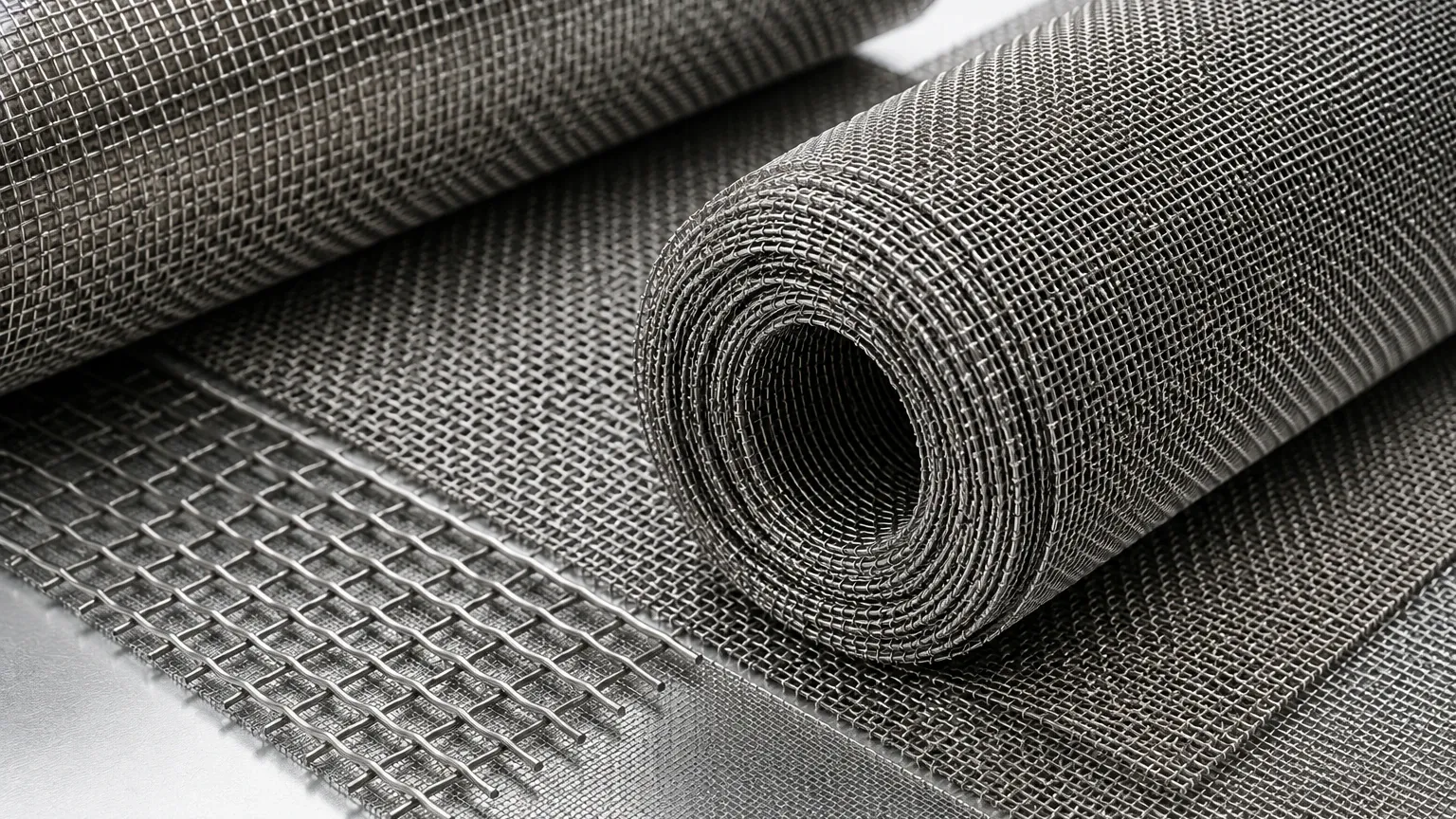
Working with a manufacturer provides access to a broader range of specifications and customization options. For instance, Plain, twill and dutch woven wire mesh in SS304/316L — rolls, cut mesh and framed panels. Send mesh count or micron target for a technical quote. This level of service allows engineers to request specific slit widths, custom-shaped discs, or reinforced framed panels that are ready for immediate installation into existing machinery. Manufacturers also offer technical support to help determine the optimal mesh count and wire diameter to balance filtration efficiency with structural integrity.
Engineering Considerations: Micron Ratings and Flow Dynamics
When selecting Woven Wire Mesh, the primary goal is usually to achieve a specific filtration target while maintaining an acceptable flow rate. Engineers must evaluate three key metrics:
1. Aperture (Opening Size): The clear distance between two adjacent wires. This determines the maximum particle size that can pass through the mesh.
2. Mesh Count: The number of openings per linear inch. While often used as a shorthand for fineness, it must be considered alongside wire diameter to understand the actual aperture size.
3. Percentage of Open Area: This is the ratio of the area of the openings to the total area of the mesh. A higher open area reduces pressure drop and increases flow capacity but may compromise the mechanical strength of the mesh.
In high-viscosity applications, such as oil filtration or chemical processing, a mesh with a high open area is often required to prevent excessive pump strain. Conversely, in vibrating screens used for mining or aggregate processing, a heavier wire diameter is prioritized to withstand abrasive wear, even if it reduces the total open area.
Customization and OEM Integration
Industrial equipment often requires filtration components that do not fit standard roll dimensions. This is where the limitations of a "near me" search become apparent. A specialized manufacturer can provide value-added services that reduce assembly time and waste on the factory floor.
Precision Slitting and Cutting
Standard mesh rolls are typically 36, 48, or 60 inches wide. For manufacturers of small inline filters, receiving mesh in precision-slit ribbons (e.g., 20mm wide) eliminates the need for in-house cutting and reduces the risk of frayed edges. Laser cutting or ultrasonic cutting can also be used to produce complex shapes with sealed edges, preventing wire migration in sensitive systems.
Framed Panels and Multi-Layer Sintering
In many heavy-duty applications, a single layer of woven wire mesh may lack the necessary rigidity. Manufacturers can provide framed panels where the mesh is tensioned and welded into a stainless steel frame. For even greater durability, multiple layers of mesh can be sintered together. Sintered wire mesh combines the precision of fine filter cloth with the mechanical strength of heavy support mesh, creating a robust, cleanable filter medium suitable for high-pressure backwashing.
Quality Assurance and Compliance in Filtration
For industries such as pharmaceuticals and food and beverage processing, the quality of the Woven Wire Mesh is a matter of regulatory compliance. It is essential to ensure that the mesh is free from manufacturing lubricants, burrs, and loose wires that could contaminate the product stream.
Reliable suppliers implement rigorous quality control measures, including:
* Visual Inspection: Checking for weave irregularities, streaks, or physical damage.
* Dimensional Verification: Using digital microscopes to confirm mesh count and aperture consistency across the entire roll.
* Bubble Point Testing: For Dutch weave meshes, this test verifies the pore size and ensures there are no defects in the weave structure that could allow bypass.
* Cleaning Standards: Providing mesh that has been ultrasonically cleaned to meet high-purity requirements.
Conclusion: Making an Informed Procurement Decision
While the convenience of finding stainless steel woven wire mesh near me is an attractive starting point, the technical demands of industrial filtration require a more nuanced approach. The focus should remain on material integrity, weave precision, and the supplier's ability to provide customized solutions that integrate seamlessly into your operations.
By prioritizing technical specifications—such as the specific stainless steel grade, the appropriate weave pattern for the pressure environment, and the required micron rating—engineers can ensure long-term reliability and lower maintenance costs. Whether you require bulk rolls of plain weave for protective screening or custom-fabricated Dutch weave discs for high-precision chemical processing, partnering with a manufacturer that understands the engineering behind the mesh is essential for achieving optimal filtration performance.
