


Stainless Steel Woven Wire Mesh Nearby: A Technical Guide for Industrial Procurement
For procurement managers and maintenance engineers, the search for "stainless steel woven wire mesh nearby" is often triggered by an immediate operational need—a failed filter in a chemical processing line, the urgent need for a prototype in an R&D lab, or the scheduled overhaul of a hydraulic system. However, in the context of industrial filtration, "nearby" involves more than just geographical proximity; it encompasses supply chain reliability, technical compatibility, and the ability to source high-precision materials that meet exact engineering specifications.
Woven wire mesh is a critical component in various sectors, including pharmaceutical manufacturing, food and beverage processing, and water treatment. Selecting the right mesh requires a deep understanding of metallurgy, weave patterns, and filtration physics. This guide examines the technical considerations essential for selecting and sourcing stainless steel woven wire mesh, helping professionals move beyond simple proximity to find the most effective filtration solutions.
Understanding the Metallurgy of Woven Wire Mesh
When evaluating stainless steel woven wire mesh, the first decision point is the alloy. The chemical composition of the wire directly impacts the mesh's resistance to corrosion, temperature, and mechanical stress.
Grade 304 Stainless Steel
Grade 304 is the most widely used stainless steel for wire mesh. It contains approximately 18% chromium and 8% nickel, providing excellent resistance to atmospheric corrosion and many organic and inorganic chemicals. It is the standard choice for general industrial applications where extreme chemical resistance is not required.
Grade 316 and 316L Stainless Steel
For more demanding environments, Grade 316 is the industry standard. The addition of 2% to 3% molybdenum enhances its resistance to pitting and crevice corrosion, particularly in chloride-rich environments. Grade 316L (low carbon) is preferred for applications involving welding, as the lower carbon content minimizes carbide precipitation that can lead to intergranular corrosion. This grade is essential for marine applications, pharmaceutical processing, and high-purity chemical filtration.
Specialized Alloys
In certain high-temperature or highly acidic environments, standard stainless steel may be insufficient. In these cases, engineers may look for mesh woven from Duplex stainless steels or nickel-based alloys like Monel or Inconel, though these are typically custom-ordered rather than found in local stock.
Weave Types and Their Impact on Filtration Performance
The method by which the wires are interlaced determines the mesh's mechanical strength, aperture stability, and filtration accuracy. Understanding these patterns is crucial when sourcing Woven Wire Mesh for specific industrial tasks.
Plain Weave
This is the most common and straightforward weave pattern. Each shute (cross) wire passes alternately over and under each warp (lengthwise) wire. Plain weave offers high precision for aperture sizes and is ideal for light-duty filtration, sieving, and protective screening.
Twill Weave
In a twill weave, each shute wire passes alternately over and under two warp wires. This allows for the use of heavier wire diameters in a given mesh count, resulting in a stronger and more durable mesh. Twill weave is often used for heavy-duty filtration where the mesh must withstand higher pressure differentials without deforming.
Dutch Weave (Plain and Twill)
Dutch weaves utilize different wire diameters for the warp and shute directions. Typically, the warp wires are heavier and spaced further apart, while the shute wires are finer and driven close together. This creates a "tortuous path" for the fluid, providing excellent filtration accuracy and high mechanical strength.
* Plain Dutch Weave: Offers high flow rates and is relatively easy to clean.
* Twill Dutch Weave: Allows for the finest filtration levels (down to a few microns) because the shute wires are packed so tightly that they overlap, creating a dense, multi-layered filter medium.
The "Nearby" Dilemma: Local Stock vs. Custom Manufacturing
Searching for "stainless steel woven wire mesh nearby" often reveals a trade-off between speed and specification. Local industrial hardware distributors typically stock a limited range of standard mesh counts (e.g., 20×20 or 100×100) in Grade 304 plain weave. While these are suitable for basic screening, they often fall short of the requirements for specialized industrial filtration.
The Limitations of Local Off-the-Shelf Mesh
1. Limited Material Traceability: Local stock may lack the detailed Mill Test Reports (MTRs) required for pharmaceutical or food-grade compliance.
2. Lack of Precision: General-purpose mesh often has wider tolerances for aperture size, which can lead to inconsistent filtration performance.
3. Standard Sizes Only: If your application requires a specific micron rating or a non-standard width, local distributors likely cannot fulfill the order without significant lead times themselves.
The Value of Direct Manufacturer Partnerships
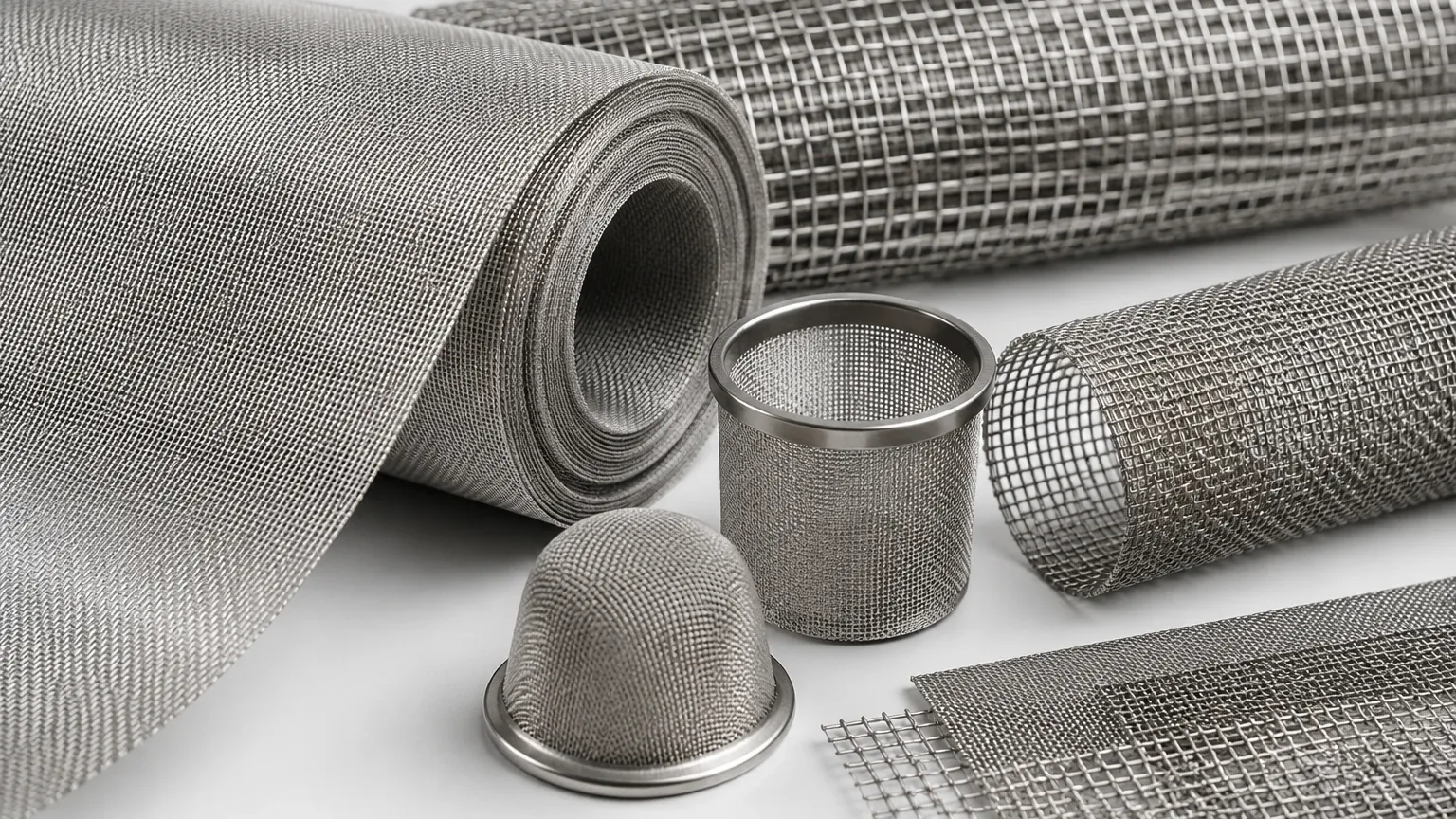
Partnering with a specialized manufacturer like Kaifil provides access to a broader range of technical capabilities. Manufacturers can provide Plain, twill and dutch woven wire mesh in SS304/316L — rolls, cut mesh and framed panels. Send mesh count or micron target for a technical quote. This ensures that the material is not just "nearby" in terms of shipping, but exactly matched to the technical requirements of the equipment.
Key Technical Specifications to Confirm Before Purchase
To ensure the mesh performs as expected, engineers should provide and verify the following specifications when requesting a quote:
* Mesh Count: The number of openings per linear inch. Note that as the wire diameter increases, the aperture size (the actual hole) decreases for the same mesh count.
* Wire Diameter: Specified in millimeters or inches. This affects the mesh's open area and structural integrity.
* Aperture (Opening Size): The clear distance between adjacent wires. This is the most critical factor for determining what size particles will be retained.
* Micron Rating: Used primarily for Dutch weaves to describe the filtration fineness. It is important to distinguish between "nominal" (average) and "absolute" (maximum) micron ratings.
* Open Area Percentage: The ratio of the area of the openings to the total area of the mesh. A higher open area reduces pressure drop but may decrease the mechanical strength of the mesh.
Quality Control and Industrial Compliance
In B2B environments, the quality of the mesh is not just about the physical product but also the documentation that accompanies it. When sourcing stainless steel woven wire mesh nearby or globally, verify that the supplier can provide:
1. Material Certifications: Confirmation of the chemical composition (e.g., confirming the molybdenum content in 316L).
2. Dimensional Inspection Reports: Verification that the mesh count, wire diameter, and aperture sizes are within the specified tolerances.
3. Compliance Standards: Depending on the industry, the mesh may need to comply with ASTM E2016 (Standard Specification for Industrial Woven Wire Cloth) or FDA requirements for food contact surfaces.
Total Cost of Ownership and Maintenance
While the initial purchase price is a factor, the total cost of ownership (TCO) is determined by the mesh's longevity and its impact on process efficiency. High-quality stainless steel mesh is often preferred over synthetic alternatives because it can be cleaned and reused multiple times.
Cleaning and Regeneration
Stainless steel mesh can be cleaned using ultrasonic baths, back-flushing, or chemical cleaning agents, depending on the contaminant. Choosing a weave like Plain Dutch or Twill Dutch allows for effective cake release and regeneration, extending the life of the filter element and reducing the frequency of replacement.
Durability in High-Pressure Systems
In hydraulic or high-pressure chemical systems, the mesh must resist "wire migration" and deformation. A properly specified twill or Dutch weave, potentially supported by a coarser backing mesh, ensures that the filtration accuracy remains constant even under fluctuating pressure loads.
Conclusion: Making an Informed Sourcing Decision
When the need for stainless steel woven wire mesh arises, the most effective strategy is to balance the urgency of "nearby" availability with the technical rigor required for industrial performance. While local distributors serve a purpose for general maintenance, specialized filtration applications demand a manufacturer's expertise.
By focusing on material grade, weave precision, and documented quality, engineering and procurement teams can ensure they are not just buying a commodity, but an engineered component that will protect their equipment and optimize their processes. For those requiring specific performance metrics, engaging with a manufacturer to define the exact mesh count or micron target remains the most reliable path to operational success.
