


In the landscape of industrial filtration and separation, the choice of media directly impacts operational efficiency, product purity, and equipment longevity. For engineers and procurement specialists sourcing stainless steel woven wire mesh nz, understanding the technical nuances of material science and mechanical weaving is essential. Stainless steel remains the gold standard for filtration in demanding environments due to its inherent resistance to corrosion, high temperatures, and mechanical stress.
As a specialized manufacturer, Kaifil provides precision-engineered filtration solutions that bridge the gap between standard commodity mesh and high-performance industrial components. This guide explores the critical engineering factors that define the performance of Woven Wire Mesh and how to select the optimal specifications for diverse industrial applications.
Understanding the Role of Stainless Steel Woven Wire Mesh in Industrial Applications
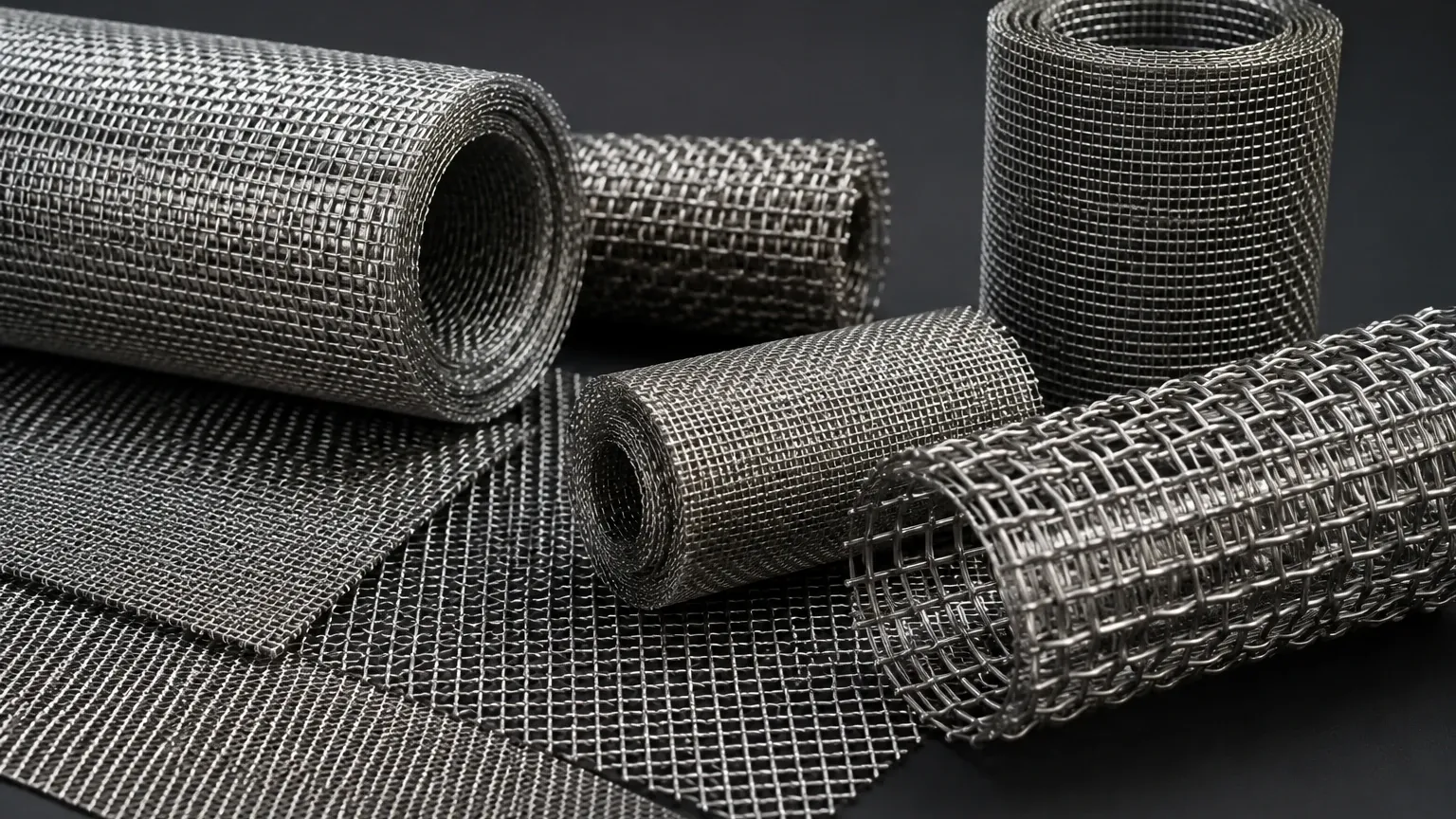
Woven wire mesh is a versatile material produced by weaving metallic wires on industrial looms. In the context of New Zealand’s primary industries—including dairy processing, honey production, wine filtration, and marine engineering—the demand for stainless steel woven wire mesh nz is driven by the need for hygienic, durable, and reusable filtration media. Unlike synthetic filters, stainless steel mesh offers structural integrity that can withstand high differential pressures and rigorous cleaning cycles (CIP/SIP).
The primary function of the mesh is to provide a precise barrier that allows fluids or gases to pass while retaining solid particles. The accuracy of this barrier is determined by the consistency of the weave and the quality of the wire used. In critical applications, such as pharmaceutical manufacturing or fine chemical processing, even a minor deviation in aperture size can lead to batch contamination or downstream equipment damage.
Material Grades: Selecting the Right Alloy for the NZ Environment
Material selection is the first and most crucial step in specifying wire mesh. While many alloys are available, two grades dominate the industrial landscape:
SS304 (18-8 Stainless Steel)
Grade 304 is the most common stainless steel used in wire mesh. It offers excellent resistance to atmospheric corrosion and is suitable for most food-grade applications and general industrial filtering. It is a cost-effective solution for environments where chemical exposure is limited to mild acids or alkalis.
SS316 and SS316L
For industries operating in coastal regions or those involving chloride-rich environments—common in many New Zealand processing plants—SS316 is the preferred choice. The addition of molybdenum (2-3%) significantly enhances resistance to pitting and crevice corrosion. SS316L (low carbon) is often specified for components that require welding, as it prevents carbide precipitation that can lead to intergranular corrosion.
When evaluating stainless steel woven wire mesh nz, engineers must consider the specific chemical composition of the process fluid. For instance, in marine applications or high-salinity food processing, the superior corrosion profile of 316L ensures a longer service life and reduces the risk of metallic leaching into the product stream.
Technical Specifications: Mesh Count, Aperture, and Wire Diameter
To accurately specify Woven Wire Mesh, three interdependent variables must be defined:
1. Mesh Count: This refers to the number of openings per linear inch (25.4mm). A higher mesh count indicates a finer mesh with smaller openings.
2. Aperture (Opening Size): This is the clear distance between two adjacent warp or weft wires. It defines the particle size that the mesh will retain.
3. Wire Diameter: The thickness of the wire before weaving. The wire diameter dictates the mechanical strength and the "Open Area" of the mesh.
The Open Area Calculation
The percentage of open area is a critical metric for fluid dynamics. It is calculated using the formula:
*Open Area % = (Aperture / (Aperture + Wire Diameter))² x 100*
A higher open area results in lower pressure drops and higher flow rates but may compromise the structural rigidity of the mesh. Engineers must balance the need for throughput with the mechanical demands of the application, such as backwashing pressures or the weight of the filter cake.
Comparing Weave Patterns for Filtration Performance
The method by which wires are interlaced significantly affects the filtration characteristics and the physical properties of the mesh. Common weave types include:
Plain Weave
The most straightforward pattern where each warp wire crosses alternately over and under each weft wire. This produces square openings and is ideal for general screening and low-pressure filtration. It provides the highest open area and is the easiest to clean.
Twill Weave
In a twill weave, each warp wire passes alternately over and under two weft wires. This allows for the use of heavier wire diameters in a given mesh count, resulting in a more robust mesh that can handle higher mechanical loads. It is typically used for finer filtration where the wire would be too thin for a plain weave.
Dutch Weave (Plain and Twill)
Dutch weaves utilize different diameters for warp and weft wires. The weft wires are driven closely together, creating a dense, wedge-shaped opening rather than a square one.
* Plain Dutch Weave: Offers high strength and is excellent for high-pressure filtration.
* Twill Dutch Weave: Allows for the finest filtration levels (down to 5-10 microns) by overlapping multiple layers of wire within the weave. It provides a tortuous path for particles, enhancing depth filtration capabilities.
Engineering Considerations for High-Performance Filtration
When integrating Woven Wire Mesh into an industrial system, several engineering factors must be evaluated to ensure performance expectations are met:
Pressure Drop (ΔP)
As fluid passes through the mesh, a pressure drop occurs. This is influenced by the fluid's viscosity, velocity, and the mesh's open area. Over time, as particles accumulate on the surface (forming a filter cake), the pressure drop increases. Systems must be designed with sufficient head pressure to account for both the clean mesh and the loaded state.
Micron Rating: Nominal vs. Absolute
* Nominal Rating: Indicates the ability of the mesh to retain the majority of particles of a specific size (e.g., 90% retention).
* Absolute Rating: Refers to the diameter of the largest hard spherical particle that will pass through the mesh under specified test conditions. For critical safety-related filtration, absolute ratings are required.
Mechanical Stability
In high-flow applications, the mesh may be subject to vibration or turbulence. If the wire diameter is too thin, the mesh can deform, altering the aperture size and compromising filtration accuracy. In such cases, the mesh is often supported by a perforated metal core or a coarser backing mesh (pleated or cylindrical construction).
Customization and OEM Solutions for Specialized Requirements
Standard off-the-shelf mesh rolls often require further processing to be useful in a specific industrial machine. For the New Zealand market, where many specialized manufacturing plants operate, customization is key.
Kaifil specializes in transforming raw Woven Wire Mesh into finished components, including:
* Custom Cut Pieces: Precision laser or plasma cutting to exact dimensions to prevent fraying.
* Framed Panels: Mesh tensioned and secured within stainless steel frames for use in vibrating screens or architectural panels.
* Multi-Layer Sintered Mesh: Bonding multiple layers of mesh through heat and pressure to create a single, porous plate with exceptional strength and precise filtration ratings.
* Filter Cartridges and Strainers: Fabricating the mesh into pleated or cylindrical forms with custom end caps (DOE, 222, 226) for integration into existing housing units.
By working directly with a manufacturer, engineers can specify exact tolerances and material certifications (MTC) required for compliance with international standards such as ISO or FDA regulations for food contact.
Maintenance and Total Cost of Ownership
While the initial cost of stainless steel woven wire mesh nz may be higher than disposable synthetic filters, the total cost of ownership (TCO) is often lower. Stainless steel filters are cleanable and reusable, which reduces waste and eliminates the recurring cost of replacement cartridges.
Cleaning Methods
* Ultrasonic Cleaning: Effective for removing fine particles trapped within the weave of Dutch weave meshes.
* Backwashing: Using reverse flow to dislodge filter cake in automated systems.
* Chemical Cleaning: Utilizing compatible solvents or acids to dissolve organic or inorganic scaling, provided the alloy (304 or 316) is resistant to the cleaning agent.
Replacement Cycles
The lifespan of a stainless steel filter depends on the abrasiveness of the particles and the frequency of cleaning. Regular inspection for wire fatigue, corrosion spots, or mesh distortion is necessary. In non-abrasive environments, a well-maintained stainless steel mesh can last for several years, providing a stable and predictable filtration performance.
Conclusion: Making an Informed Selection
Selecting the right Woven Wire Mesh involves more than just picking a mesh count. It requires a holistic evaluation of the operating environment, the physical properties of the media, and the desired filtration outcome. For those sourcing stainless steel woven wire mesh nz, focusing on material grade (304 vs 316L), weave type, and mechanical support structures will ensure the longevity and efficiency of the filtration system.
Whether you are designing a new filtration system for a dairy plant or replacing components in a chemical reactor, partnering with a manufacturer that understands these technical boundaries is essential. By confirming material certifications, aperture tolerances, and customization options before purchase, engineers can secure a reliable solution that meets the rigorous demands of modern industry.
