


Stretching Woven Wire Fence Over Hills: Engineering and Installation Guide
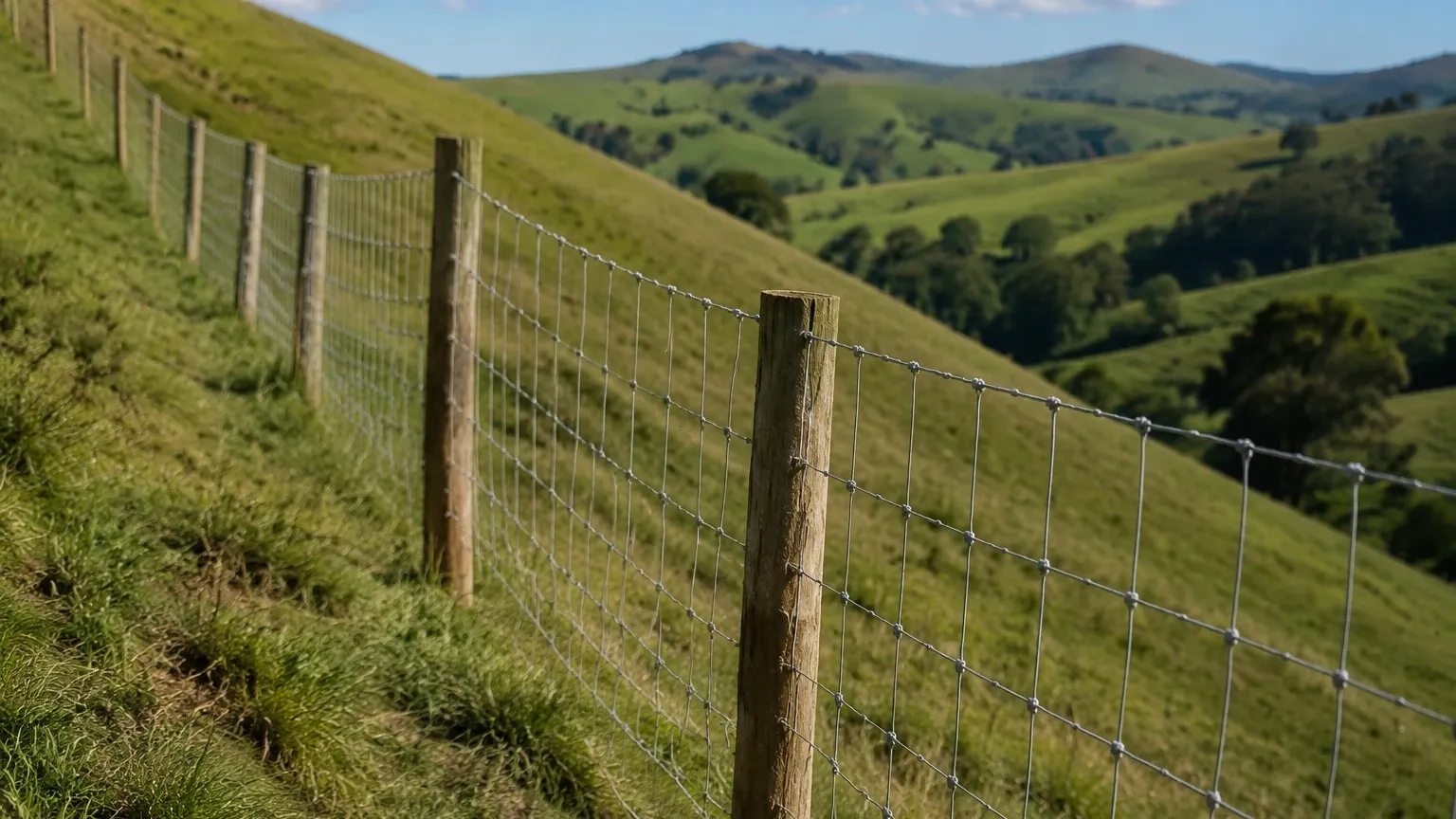
In industrial and perimeter security applications, the installation of Woven Wire Mesh often encounters topographical challenges. Unlike flat-plane installations, stretching woven wire fence over hills requires a nuanced understanding of material tension, structural bracing, and the mechanical properties of the mesh itself. Whether the application is a high-durability perimeter barrier or a specialized industrial containment system, maintaining uniform tension across uneven terrain is critical to the longevity and performance of the structure.
For engineers and project managers, the primary objective is to prevent sagging at the "toes" (bottoms) of hills and over-tensioning at the "crests" (tops). This guide examines the technical requirements for stretching woven wire mesh across sloped environments, focusing on material selection, structural preparation, and specific tensioning methodologies.
Understanding the Mechanics of Woven Wire Mesh on Slopes
Woven wire mesh is defined by its construction: longitudinal (warp) wires and transverse (weft) wires interlaced to create a stable grid. In high-grade industrial versions, such as those manufactured from SS304 or SS316L stainless steel, the wire possesses a specific tensile strength and elasticity.
When stretching woven wire fence over hills, the mesh must accommodate the change in vertical angle without compromising the integrity of the weave. Standard woven mesh is generally more adaptable to contouring than welded wire mesh because the intersections allow for a minute degree of movement, often referred to as "racking." However, high-precision industrial mesh with tight tolerances requires specific handling to ensure the aperture size remains consistent under tension.
Key Material Considerations
1. Tensile Strength: High-tensile stainless steel wires resist stretching better than low-carbon steel, making them ideal for long-term installations on hills where gravity and tension are constant variables.
2. Crimp Style: The type of crimp (plain, intermediate, or lock crimp) affects how the mesh reacts to being pulled at an angle. Lock-crimp mesh provides superior stability on slopes by preventing wire migration.
3. Corrosion Resistance: For outdoor or industrial perimeter applications, SS316L is preferred due to its resistance to chloride-induced stress corrosion cracking, especially in areas where runoff may accumulate at the base of hills.
Structural Preparation for Uneven Terrain
Before the mesh is even unrolled, the structural foundation must be engineered to handle the unique load paths created by elevation changes. When stretching woven wire fence over hills, the posts at the highest and lowest points of the slope become "stress points."
Post Placement and Depth
On a flat surface, post spacing is uniform. On hills, spacing should often be reduced to provide more frequent points of attachment and to better follow the ground's contour. For significant slopes, posts should be set deeper and potentially reinforced with concrete to resist the downward or upward pull of the tensioned mesh.
The Importance of H-Braces
Bracing is the most critical element of a sloped installation. An H-brace assembly (two posts with a horizontal crossbar and a diagonal tension wire) should be installed at:
* The beginning and end of the fence line.
* The top of every major hill (crest).
* The bottom of every major dip (toe).
* Any point where the slope angle changes significantly.
These braces act as anchor points, allowing the installer to tension the mesh in segments rather than attempting one continuous pull over multiple elevation changes, which invariably leads to uneven tension.
Methodologies for Stretching Woven Wire Fence Over Hills
There are two primary methods for managing elevation changes: the Contouring Method and the Stepping Method. The choice depends on the severity of the slope and the aesthetic or security requirements of the project.
1. The Contouring Method (Following the Grade)
Contouring is the preferred method for high-security and industrial containment because it eliminates gaps at the bottom of the fence. This method involves pulling the mesh parallel to the ground.
* The Pulling Process: The mesh is attached to a starting H-brace. A stretcher bar is attached to the other end of the mesh section. Using a come-along or a tractor-mounted tensioning tool, the mesh is pulled toward the next H-brace.
* Relieving Tension: As the mesh is pulled over a crest, the top wires will tighten faster than the bottom wires. To correct this, installers may need to slightly "rack" the mesh by pulling the bottom corner more aggressively or by making relief cuts in the selvedge (only if permitted by the engineering specs) and overlapping the mesh.
* Securing the Mesh: On hills, it is vital to secure the mesh to the "pressure side" of the posts. At the top of a hill, the mesh wants to pull away from the ground; at the bottom, it wants to lift. Heavy-duty clips or wire ties must be used to ensure the mesh remains at the desired height.
2. The Stepping Method
Stepping is used when the terrain is too steep for the mesh to rack naturally or when using rigid framed panels of Woven Wire Mesh.
* Execution: Each section of mesh is installed horizontally, with the next section placed at a lower or higher elevation, creating a "stair-step" effect.
* Limitations: This method creates triangular gaps at the bottom of each step. In industrial settings, these gaps are typically filled with custom-cut mesh panels or concrete sills to maintain the barrier's integrity.
Technical Evaluation of Tensioning Equipment
Achieving the correct tension is a balance between structural stability and material fatigue. Over-tensioning can lead to wire breakage at the crimp points, while under-tensioning results in a fence that sags and fails to meet security standards.
Stretcher Bars
A professional-grade stretcher bar is essential. It should grip the entire height of the mesh evenly. For stainless steel woven mesh, the bar should be lined with a material that prevents marring or scratching the wire's protective oxide layer, which could otherwise lead to localized corrosion.
Tension Indicators
For critical infrastructure, engineers may specify the use of tension meters. These devices measure the kilonewtons (kN) of force applied to the mesh. This ensures that the installation remains within the elastic deformation range of the stainless steel, allowing the mesh to expand and contract with temperature changes without becoming permanently distorted.
Common Risks and Mitigation Strategies
Stretching woven wire fence over hills introduces several risks that can compromise the project's lifespan if not addressed during the planning phase.
1. Soil Erosion and Post Instability
Hills are prone to erosion. If the soil around the anchor posts washes away, the tension of the woven wire mesh will pull the posts out of alignment.
* Mitigation: Use longer posts for hillsides and consider adding "deadman" anchors—horizontal blocks buried in the ground and wired to the post—to provide additional resistance against the lateral pull of the mesh.
2. Galvanic Corrosion
In industrial environments, the hardware used to secure the mesh is as important as the mesh itself. If stainless steel mesh is secured with galvanized staples or clips, galvanic corrosion will occur, especially in the high-moisture areas at the base of hills.
* Mitigation: Always match the hardware material to the mesh material. Use SS304 or SS316 fasteners for stainless steel installations.
3. Harmonic Vibration
In high-wind areas, a tensioned wire mesh on a slope can act like a stringed instrument, creating harmonic vibrations that can loosen fasteners over time.
* Mitigation: Ensure the mesh is dampened by using high-quality insulators or rubber-lined clamps at strategic attachment points.
Engineering Checklist Before Installation
Before proceeding with a purchase or installation, the following technical details should be confirmed with the mesh manufacturer and the site engineer:
* Mesh Specification: Does the wire diameter and weave type provide the necessary flexibility for the calculated slope angles?
* Topographical Survey: Has the maximum grade change been measured to determine if contouring is feasible?
* Load Calculations: Have the H-braces been designed to withstand the cumulative tension of the specific mesh weight and length?
* Environmental Factors: Will the installation be subject to heavy snow loads or high winds that could increase the stress on the tensioned mesh?
Conclusion
Successfully stretching woven wire fence over hills is a task that combines mechanical engineering with skilled installation. By selecting the appropriate Woven Wire Mesh—specifically high-tensile stainless steel variants—and employing robust bracing and tensioning techniques, it is possible to create a durable, effective barrier on even the most challenging terrain.
For industrial applications requiring precision and longevity, the focus must remain on material quality and structural integrity. Properly tensioned mesh not only provides the necessary physical barrier but also maintains the aesthetic and functional standards required in professional environments. When planning your next project involving complex topography, ensure that the mesh specifications and installation hardware are aligned with the technical demands of the site's elevation changes.
