


Woven Wire Mesh: A Technical Guide for Industrial and Commercial Selection
In the procurement of industrial materials, the distinction between general-purpose hardware and engineered components is critical. For many small-scale residential or light DIY projects, searching for "woven steel mesh bunnings" provides a convenient starting point for basic screening or fencing needs. However, for engineers and procurement professionals in the chemical, pharmaceutical, food and beverage, and hydraulic sectors, the requirements for filtration and separation go far beyond what is available in a retail hardware environment.
Woven wire mesh is a versatile material used across a spectrum of industries, from simple architectural accents to high-precision micron-rated filter elements. Understanding the technical nuances of material grade, weave type, and mechanical properties is essential for ensuring the longevity and efficiency of industrial systems. This guide explores the engineering considerations behind Woven Wire Mesh and helps technical teams determine when off-the-shelf retail options are sufficient and when custom-manufactured solutions are required.
1. Material Selection: Beyond Basic Steel
When evaluating woven steel mesh bunnings or similar retail offerings, the material is often limited to galvanized steel or standard grade 304 stainless steel. In industrial environments, material selection is the first line of defense against corrosion, heat, and chemical degradation.
Stainless Steel 304 vs. 316L
Stainless steel 304 is the most common alloy used in wire mesh due to its excellent balance of cost and performance. It is suitable for most atmospheric conditions and food processing applications. However, in marine environments or processes involving chlorides and acids, 316L stainless steel is the industry standard. The addition of molybdenum in 316L provides superior resistance to pitting and crevice corrosion, which is vital for long-term reliability in chemical processing plants.
Specialty Alloys
For extreme environments, industrial manufacturers like Kaifil provide mesh in specialty alloys such as Monel, Inconel, or Hastelloy. These materials are engineered to withstand high temperatures and highly corrosive media that would cause standard retail-grade steel to fail within hours. When selecting a mesh, engineers must consider the pH levels, temperature fluctuations, and the presence of abrasive particles in the fluid stream.
2. Understanding Weave Types and Their Functional Roles
The method by which wires are interlaced significantly impacts the mesh’s filtration accuracy, flow rate, and mechanical strength. While retail "woven steel mesh bunnings" typically focuses on simple plain weaves for general screening, industrial applications utilize several complex weave patterns.
Plain Weave
This is the most straightforward pattern, where each warp wire crosses over and under each shute wire. It provides the highest open area and is ideal for low-pressure filtration and protective screening. Its simplicity makes it cost-effective, but it is limited in its ability to achieve very fine micron ratings.
Twill Weave
In a twill weave, each shute wire passes over and under two warp wires. This allows for the use of heavier wires in a given mesh count, resulting in a stronger and more durable mesh. Twill weaves are often used when the mesh must withstand higher mechanical loads without deforming the apertures.
Dutch Weave (Plain and Twill)
Dutch weaves utilize a higher density of shute wires than warp wires. This creates a "tortuous path" for the fluid, allowing for much finer filtration (down to 5-10 microns) while maintaining high structural integrity. Dutch woven wire mesh is the preferred choice for high-pressure hydraulic filters and fuel filtration systems where precision is paramount.
3. Technical Specifications: Mesh Count, Wire Diameter, and Aperture
For an engineer, the performance of a filter is defined by its geometry. Retail descriptions of mesh often lack the precision required for fluid dynamics calculations. Industrial-grade Woven Wire Mesh is specified using three primary metrics:
1. Mesh Count: The number of openings per linear inch. A higher mesh count indicates finer filtration but also increases the resistance to flow.
2. Wire Diameter: The thickness of the wire before weaving. Thicker wires provide better durability and resistance to pressure but reduce the percentage of open area.
3. Aperture (Opening Size): The clear distance between two adjacent wires. This determines the largest particle that can pass through the mesh.
In industrial procurement, these three factors must be balanced. For example, a mesh with a high open area will allow for high flow rates (low pressure drop) but may be too fragile for a high-vibration environment. Conversely, a heavy-duty mesh with thick wires may restrict flow too much, leading to pump cavitation or system inefficiency.
4. Industrial vs. Retail Grade: The Gap in Quality Control
While "woven steel mesh bunnings" options serve the DIY market well, they are not designed to meet the rigorous standards of industrial quality control. There are several key differences that purchasing teams must consider:
Tolerance and Consistency
Industrial manufacturing ensures that the aperture size is consistent across the entire roll or panel. In high-precision filtration, a single oversized hole can allow contaminants to pass through, potentially damaging downstream equipment like turbines or high-pressure nozzles. Retail-grade mesh often has wider tolerances, which is acceptable for a garden fence but catastrophic for a pharmaceutical separation process.
Surface Cleanliness
Industrial filters, especially those used in the food, beverage, and medical industries, must be free of lubricants, oils, and metallic dust from the weaving process. Professional manufacturers employ ultrasonic cleaning and passivation processes to ensure the mesh is chemically inert and ready for use in sterile environments.
Certification and Traceability
B2B buyers often require material test reports (MTRs) and certificates of conformance. These documents trace the chemical composition of the steel back to the original melt, ensuring that the material meets ASTM or ISO standards. Retail products rarely provide this level of documentation, making them unsuitable for regulated industries.
5. Customization and Secondary Processing
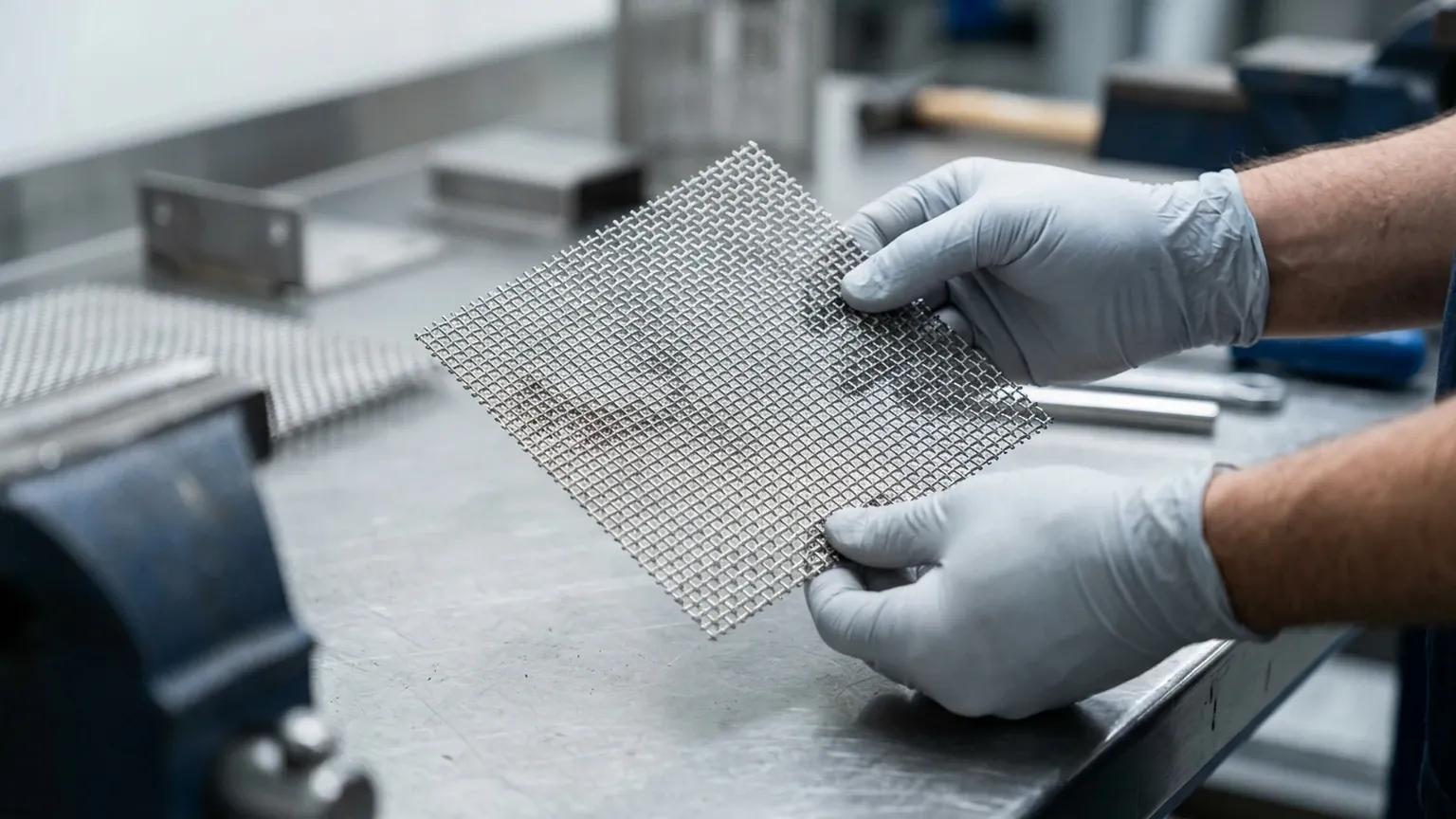
One of the primary advantages of working with a professional manufacturer like Kaifil is the ability to customize the mesh for specific equipment. Unlike pre-cut retail sheets, industrial mesh can be further processed into specialized components:
* Filter Cartridges: Mesh can be pleated to increase the surface area, allowing for longer service life and higher dirt-holding capacity.
* Framed Panels: For vibrating screens or intake filters, the mesh can be welded into rigid stainless steel frames to prevent fraying and ensure a secure fit.
* Multi-layer Sintered Mesh: For extreme pressure applications, multiple layers of woven wire mesh are sintered (diffusion-bonded) together to create a porous metal plate with incredible strength and precise filtration characteristics.
* Custom Shapes: Using CNC laser or waterjet cutting, mesh can be shaped into discs, gaskets, or cones to fit proprietary machinery.
6. Total Cost of Ownership and Replacement Cycles
When evaluating the cost of woven wire mesh, it is a mistake to look only at the initial purchase price. Retail-grade "woven steel mesh bunnings" may appear cheaper upfront, but their total cost of ownership (TCO) can be significantly higher in an industrial setting.
Durability and Maintenance
An engineered mesh designed for a specific flow rate and chemical environment will last significantly longer than a generic alternative. Frequent replacements due to corrosion or mechanical failure lead to increased labor costs and, more importantly, expensive production downtime.
Cleaning and Reusability
Stainless steel woven wire mesh is prized for its ability to be cleaned and reused. Whether through backwashing, ultrasonic cleaning, or chemical soaking, a high-quality mesh can be restored to near-original performance multiple times. Lower-quality mesh often deforms during the cleaning process, necessitating a full replacement.
7. Engineering Selection Criteria: A Checklist for Buyers
Before finalizing a purchase of Woven Wire Mesh, engineering and purchasing teams should confirm the following technical requirements:
* Micron Rating: What is the specific particle size that must be retained?
* Operating Pressure: What is the maximum differential pressure the mesh will encounter?
* Chemical Compatibility: Will the mesh be exposed to cleaning agents, acids, or salt spray?
* Flow Rate: What is the required volume of fluid or gas that must pass through the mesh per minute?
* Mechanical Attachment: How will the mesh be secured? (e.g., welding, mechanical clamping, or epoxy bonding)
Conclusion
While retail sources like Bunnings are excellent for general-purpose applications, the demanding nature of industrial filtration requires a more technical approach. Choosing the right woven wire mesh involves a deep understanding of metallurgy, weave patterns, and fluid dynamics. By partnering with a specialized manufacturer like Kaifil, companies can ensure they receive high-performance filtration components that are tailored to their specific operational needs, ensuring system reliability and optimized production efficiency.
For those requiring precise specifications, material certifications, and custom-engineered designs, moving beyond retail-grade options to professional industrial mesh is the only way to guarantee long-term performance in critical applications.
