


Woven Wire Fence 60
In industrial and commercial environments, the selection of woven wire mesh for partitions, enclosures, and filtration systems requires a deep understanding of material properties, weave patterns, and dimensional specifications. The term "woven wire fence 60" typically refers to a 60-inch height or width specification for large-scale industrial barriers or heavy-duty screening applications. Whether used for machine guarding, high-security partitions, or large-scale filtration panels, the integrity of the installation depends on the technical characteristics of the mesh selected.
For engineers and procurement specialists, the challenge lies in balancing structural stability with functional requirements such as airflow, visibility, or filtration accuracy. This guide examines the technical nuances of 60-inch woven wire mesh systems, focusing on the engineering considerations necessary for industrial-grade performance.
Understanding Woven Wire Mesh Specifications
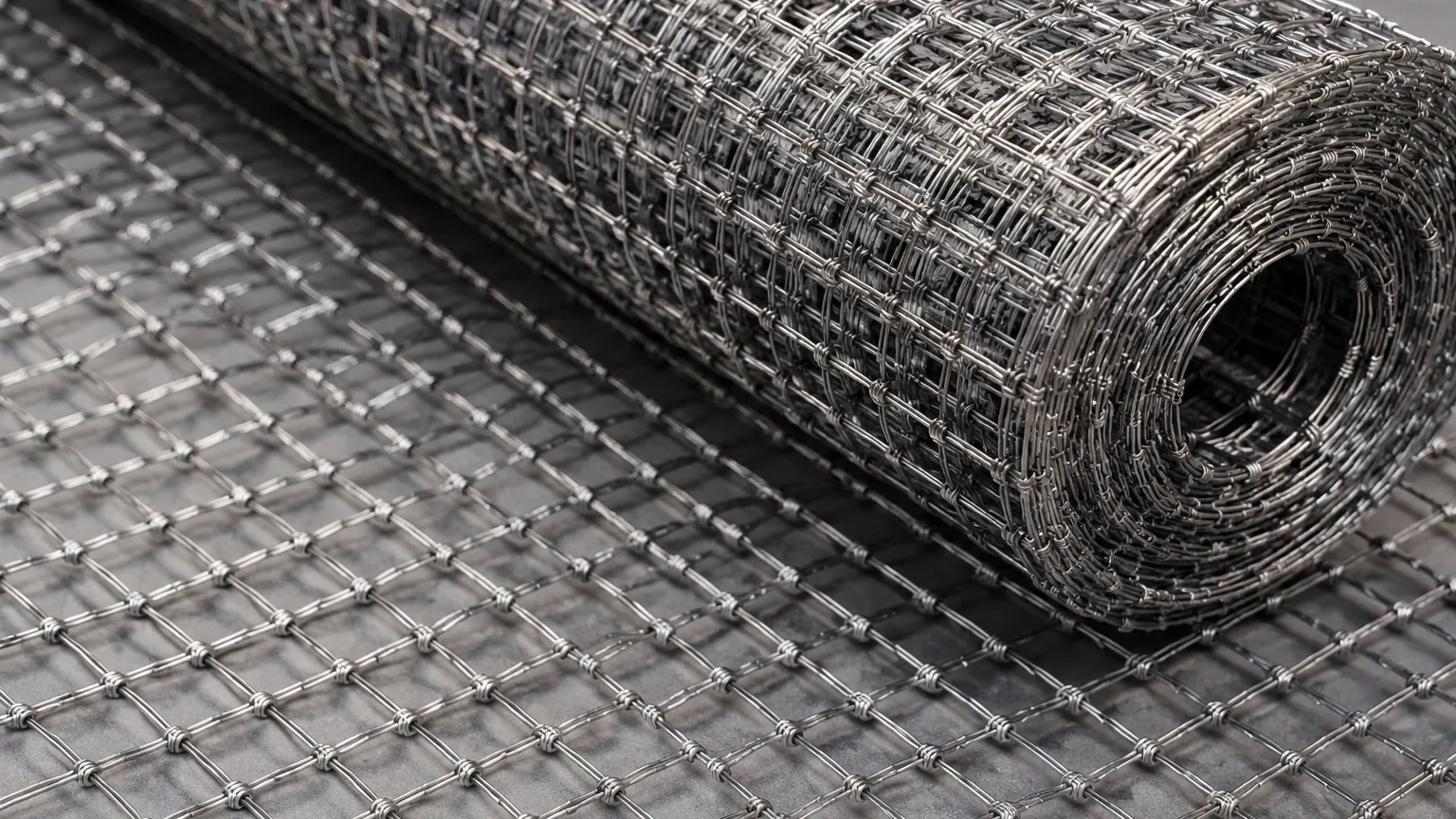
Woven wire mesh is defined by the intersection of warp wires (running the length of the roll) and shute wires (running across the width). When discussing a "60" specification, it is critical to distinguish between physical dimensions and mesh density. In an industrial context, 60 inches is a standard roll width that minimizes the need for seams and joints in large-scale installations, thereby reducing potential failure points and installation labor.
Mesh Count vs. Aperture Size
While "60" often refers to the physical height of a fence or partition, it can also refer to the mesh count—the number of openings per linear inch. A 60-mesh screen is a precision component often used in fine filtration. However, for industrial "fencing" or partitions, the focus is usually on the wire gauge (diameter) and the resulting aperture (the clear opening between wires).
1. Aperture (Open Area): This determines the level of transparency and airflow. In security or safety partitions, a smaller aperture prevents the passage of tools or hands, while a larger aperture is preferred for ventilation in equipment enclosures.
2. Wire Diameter: The thickness of the wire directly impacts the tensile strength and impact resistance of the mesh. For a 60-inch high panel, using a heavier gauge wire is essential to prevent sagging and to maintain structural rigidity over time.
Material Selection: SS304 vs. SS316L
The environment in which the woven wire mesh will be installed dictates the material choice. For most industrial applications, stainless steel is the preferred medium due to its longevity and resistance to mechanical wear.
Type 304 Stainless Steel
As the most common industrial grade, SS304 offers excellent value for indoor partitions and general-purpose screening. It provides sufficient corrosion resistance for standard industrial atmospheres. However, in environments with high humidity or exposure to mild chemicals, regular maintenance is required to prevent surface oxidation.
Type 316L Stainless Steel
For applications in chemical processing, marine environments, or food and beverage facilities, SS316L is the technical standard. The addition of molybdenum enhances resistance to pitting and crevice corrosion, particularly in chloride-rich environments. The "L" designation stands for low carbon, which improves weldability—a crucial factor if the 60-inch panels are to be welded into frames or support structures.
When specifying materials for your project, it is helpful to consult technical documentation. For instance, you can Plain, twill and dutch woven wire mesh in SS304/316L — rolls, cut mesh and framed panels. Send mesh count or micron target for a technical quote. to evaluate which alloy and weave type align with your specific environmental demands.
Engineering Considerations for 60-Inch Installations
Installing 60-inch woven wire mesh as a fence or partition involves more than simple attachment. Engineers must account for several physical variables to ensure the system remains functional throughout its lifecycle.
Tensile Strength and Tensioning
Woven wire mesh is inherently flexible. For a 60-inch vertical span, the mesh must be properly tensioned to avoid "bellying" or deformation. In industrial fencing, this is often achieved through the use of tension bars and heavy-duty frames. The tensile strength of the wire itself—determined by the alloy and the drawing process—must be sufficient to withstand accidental impacts or pressure without permanent elongation.
Structural Support and Framing
A 60-inch panel requires robust intermediate supports. Typically, vertical posts should be spaced no more than 4 to 6 feet apart, depending on the wire gauge. The method of attachment (bolting, clamping, or welding) must be chosen based on the vibration levels of the facility. In high-vibration environments, such as those near heavy machinery, mechanical fasteners with locking mechanisms are preferred over simple welds which may fatigue over time.
Open Area and Airflow Dynamics
In many industrial applications, a woven wire partition serves as a safety guard for heat-generating equipment. Engineers must calculate the "percentage of open area" to ensure that the mesh does not restrict airflow to the point of causing equipment overheating. The formula for open area in plain weave mesh is:
Open Area % = (Aperture / (Aperture + Wire Diameter))² x 100
Accurate calculation ensures that safety requirements are met without compromising machine efficiency.
Weave Patterns and Their Functional Impact
The way wires are interlaced affects both the aesthetic and the physical performance of the mesh. While there are dozens of specialized weaves, three are most common in industrial settings involving 60-inch dimensions.
Plain Weave
This is the most straightforward pattern, where each warp wire passes alternately over and under each shute wire. It offers the highest level of stability for general-purpose partitions and is the easiest to cut and frame without the mesh unraveling at the edges.
Twill Weave
In a twill weave, each warp wire passes over and under two shute wires. This allows for the use of heavier wire diameters in a given mesh count, resulting in a stronger, more durable mesh. Twill weave is often specified for high-impact areas where a standard plain weave might fail.
Dutch Weave
Primarily used for filtration rather than fencing, Dutch weaves utilize different diameters for warp and shute wires. While less common for 60-inch security fences, it is frequently used in 60-inch wide industrial filter belts or large-scale dewatering screens where high pressure and fine particle retention are required simultaneously.
Common Risks and Mitigation Strategies
Specifying the wrong type of woven wire mesh can lead to premature failure, safety hazards, and increased total cost of ownership. Professionals should be aware of the following risks:
1. Galvanic Corrosion
If stainless steel woven wire mesh is attached to a carbon steel frame without proper insulation, galvanic corrosion will occur. This leads to the rapid degradation of the mesh at the contact points. Always use compatible materials or non-conductive gaskets/washers to isolate the mesh from dissimilar metals.
2. Improper Gauge Selection
Choosing a wire gauge that is too thin for a 60-inch span is a common error. While thinner wire reduces initial material costs, it lacks the rigidity needed for industrial environments. A mesh that flexes too much can interfere with moving machine parts or fail to provide the necessary security barrier.
3. Edge Fraying
Unfinished edges on woven wire mesh can be hazardous to personnel and can lead to the mesh pulling out of its frame. For industrial partitions, specify "selvage" edges (finished edges) or ensure the mesh is fully encapsulated within a U-channel frame.
Customization and OEM Capabilities
Standard off-the-shelf mesh rolls may not always meet the precise requirements of a complex industrial project. Customization is often necessary to optimize performance and reduce waste. Professional manufacturers can provide tailored solutions, including:
* Custom Widths and Lengths: While 60 inches is a standard, custom widths can be manufactured to eliminate the need for field-cutting, which often results in jagged edges and material loss.
* Variable Wire Diameters: Engineering a mesh with a specific wire diameter to meet a target weight or strength requirement.
* Surface Treatments: Options such as passivating, electropolishing, or powder coating can be applied to enhance corrosion resistance or provide specific visual cues (e.g., safety yellow for machine guards).
Maintenance and Lifecycle Management
One of the primary advantages of stainless steel woven wire mesh is its low maintenance requirement. However, "low maintenance" does not mean "no maintenance." To maximize the lifespan of a 60-inch woven wire installation, a routine inspection schedule should be implemented.
1. Cleaning: In food processing or pharmaceutical environments, the mesh must be cleaned to prevent the buildup of organic matter. Stainless steel can withstand high-pressure washing and most industrial cleaning agents.
2. Tension Checks: Over time, physical impacts or thermal expansion/contraction may cause the mesh to slacken. Periodic re-tensioning ensures the structural integrity of the partition.
3. Integrity Inspection: Check for broken wires or signs of localized corrosion. A single broken wire in a high-pressure filtration system or a high-security fence can compromise the entire panel.
Conclusion: Selecting the Right Solution
When sourcing woven wire mesh for a 60-inch application, the decision should be driven by technical data rather than price alone. The total cost of ownership includes not just the initial purchase, but also the installation labor, maintenance requirements, and the projected lifespan of the material.
By confirming the specific alloy (SS304 or SS316L), the required wire gauge for the necessary rigidity, and the appropriate weave pattern for the application's airflow or filtration needs, engineers can ensure a reliable and durable installation. Whether the project involves a safety enclosure, a security partition, or a large-scale industrial filter, the precision of the woven wire mesh is the foundation of the system's success. Always work with a manufacturer capable of providing detailed material certifications and technical support to ensure the final product meets the rigorous demands of your industrial environment.
