


Engineering Guide to Woven Wire Fence 8 Ft: Industrial Applications and Material Selection
In industrial environments, the requirement for high-performance barriers often extends beyond basic containment. When specifying a woven wire fence 8 ft in height, engineers and procurement teams must look past standard agricultural or residential options. In heavy industry, chemical processing, and pharmaceutical manufacturing, an 8-foot barrier serves as a critical safety and security component, often integrated with complex filtration or ventilation systems.
Selecting the right Woven Wire Mesh involves understanding the interplay between wire diameter, aperture size, and alloy composition. At a height of 8 feet, structural integrity and dimensional stability become paramount. This guide explores the technical considerations, material science, and engineering requirements for deploying high-grade woven wire mesh in large-scale industrial fencing and enclosure applications.
1. Understanding the Structural Requirements of 8-Foot Mesh Barriers
An 8-foot height is a standard benchmark for industrial security and safety enclosures. However, the physical demands on the mesh at this scale are significant. Unlike shorter partitions, a woven wire fence 8 ft tall must withstand greater lateral forces, whether from environmental wind loads in outdoor settings or accidental impacts in high-traffic factory floors.
Tensile Strength and Wire Gauge
The strength of the fence is primarily determined by the wire gauge (diameter) and the tensile strength of the alloy used. For industrial-grade woven wire mesh, manufacturers typically use stainless steel wires with high tensile properties to ensure the mesh does not sag or deform over the 8-foot span. When the mesh is woven, the interlocking of wires provides inherent rigidity, but the choice of wire diameter must be balanced against the desired open area.
Dimensional Stability
In precision environments, such as pharmaceutical cleanrooms or food processing plants, the mesh must maintain its aperture size precisely. An 8-foot panel that stretches or warps can compromise safety protocols or allow unauthorized bypass of filtered air. High-quality weaving processes, such as those utilized by Kaifil, ensure that the crimp of the wire is tight and consistent, preventing "wire migration" even under physical stress.
2. Material Selection: SS304 vs. SS316L for Industrial Enclosures
The environment in which the woven wire fence 8 ft will be installed dictates the material selection. For most industrial applications, stainless steel is the preferred choice due to its longevity and resistance to mechanical wear.
Stainless Steel 304 (SS304)
SS304 is the most common grade used for industrial mesh. It offers excellent corrosion resistance for indoor applications and most standard outdoor environments. It provides a cost-effective solution for safety cages, machine guards, and perimeter fencing where extreme chemical exposure is not a primary concern.
Stainless Steel 316L (SS316L)
For environments involving chemical processing, marine exposure, or high-salinity atmospheres, SS316L is the superior choice. The addition of molybdenum enhances its resistance to pitting and crevice corrosion. In pharmaceutical and food industries, SS316L is often mandated due to its superior hygiene profile and ability to withstand aggressive CIP (Clean-in-Place) sterilization cycles. When specifying a woven wire fence 8 ft for these sectors, the long-term durability of SS316L often results in a lower total cost of ownership compared to cheaper alloys that require frequent replacement.
3. Weave Types and Their Impact on Fence Functionality
The method of weaving significantly influences both the aesthetic and functional properties of the mesh. While most fencing applications utilize a plain weave, specialized industrial requirements may necessitate alternative structures.
Plain Weave
In a plain weave, each shute wire passes alternately over and under each warp wire. This is the most common and economical weave for industrial fencing. It provides a consistent aperture and is ideal for 8-foot panels that require high visibility and airflow.
Twill Weave
Twill weave allows for the use of heavier wires in a given mesh count, as the wires pass over and under two wires at a time. This results in a more robust and flexible mesh, which can be beneficial for enclosures that need to absorb high-energy impacts without fracturing.
Dutch Weave and Filtration Integration
While primarily used in filtration, dutch woven wire mesh can be integrated into specialized 8-foot barriers that serve dual purposes: security and particulate control. For example, in high-pressure hydraulic testing bays, a dutch weave barrier can catch fine high-velocity spray while providing the structural strength of a security fence.
4. Key Evaluation Criteria for Industrial Procurement
When sourcing a woven wire fence 8 ft for a B2B project, engineers must confirm several technical parameters with the manufacturer to ensure the product meets the application's demands.
* Mesh Count vs. Aperture Size: The mesh count (number of wires per linear inch) determines the opening size. For security, a smaller aperture prevents climbing and the passage of small tools, whereas a larger aperture maximizes airflow and visibility.
* Open Area Percentage: This is critical for enclosures surrounding heat-generating machinery. A higher open area allows for better heat dissipation but may reduce the overall strength of the panel.
* Edge Treatment: For 8-foot panels, the edges must be properly finished—either through welding into a frame or using a finished selvedge—to prevent fraying and to ensure safe handling during installation.
* Tolerance Levels: Precision manufacturing ensures that the total height and width of the mesh panels are within tight tolerances, which is essential for modular installation systems where panels must align perfectly over long distances.
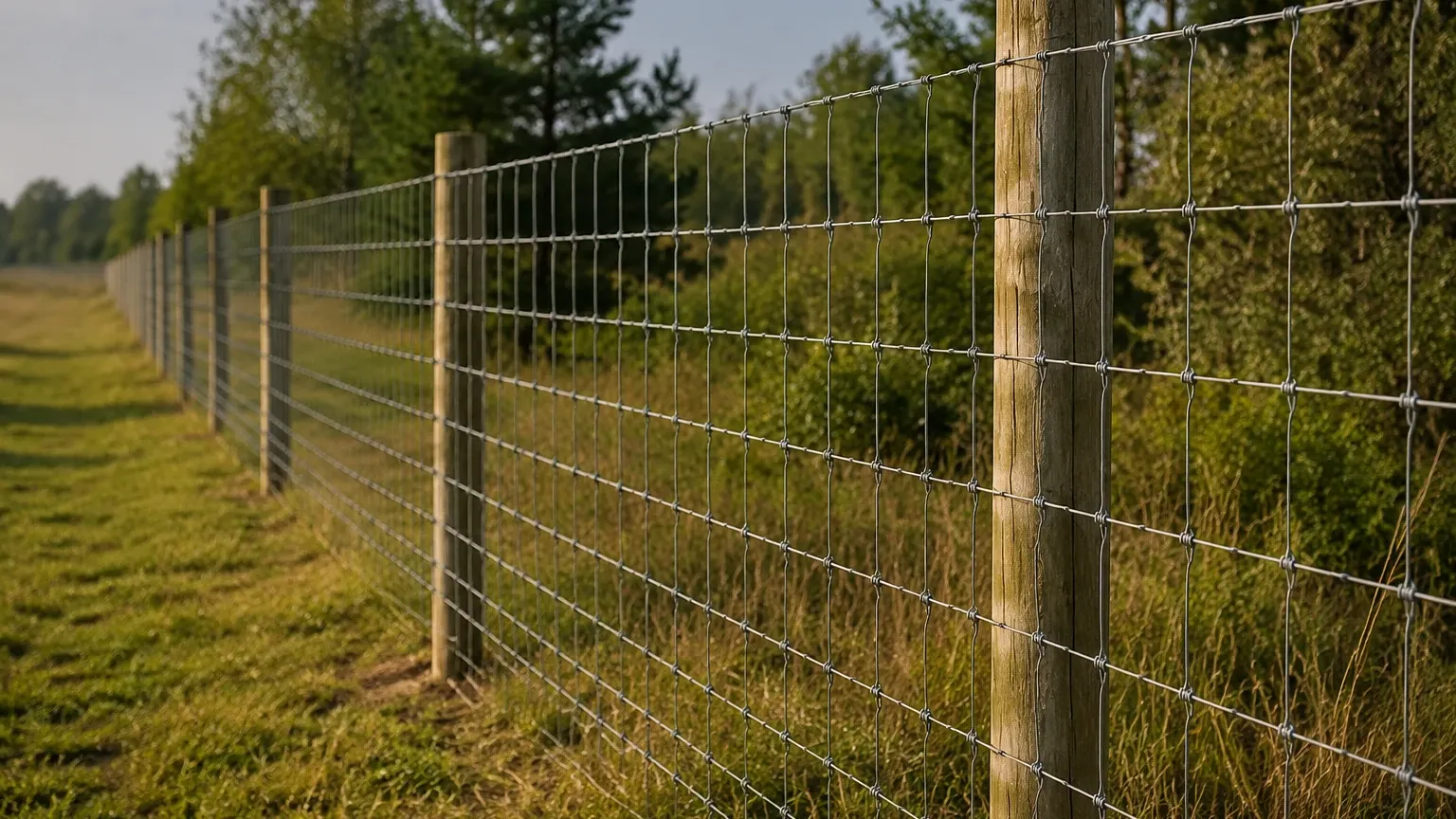
5. Installation and Engineering Considerations for 8-Foot Spans
Installing a woven wire fence 8 ft requires careful planning of the support structure. The mesh itself is only as strong as the frame it is mounted upon.
Framing Systems
For industrial applications, mesh is typically mounted into angle iron or tube frames. At 8 feet, horizontal mid-rails are often recommended to prevent the mesh from bowing. The method of attachment—whether tack welding, bolting with clamp bars, or using tensioning rods—should be selected based on the vibration levels and potential impact risks in the facility.
Tensioning and Sagging
Over time, lower-quality mesh may begin to sag under its own weight, especially at an 8-foot height. Specifying a pre-crimped woven wire mesh can mitigate this, as the pre-formed undulations in the wire provide a mechanical lock that maintains the tension of the panel throughout its service life.
Maintenance and Cleaning
In food and pharmaceutical sectors, the mesh must be accessible for cleaning. A woven wire fence 8 ft tall can be difficult to reach; therefore, selecting a high-polish stainless steel finish can reduce the accumulation of contaminants and make pressure washing more effective.
6. Customization and OEM Solutions from Kaifil
As a specialist manufacturer, Kaifil provides customized solutions that go beyond off-the-shelf fencing products. When a project requires specific filtration accuracies or unique structural properties, OEM capabilities become essential.
Engineers can request specific wire diameters and mesh counts to balance the weight of an 8-foot panel with the necessary protective qualities. Whether the application involves a chemical containment area requiring SS316L or a high-clearance warehouse partition, Kaifil’s expertise in Plain, twill and dutch woven wire mesh in SS304/316L — rolls, cut mesh and framed panels. Send mesh count or micron target for a technical quote. ensures that the final product meets the exact engineering specifications of the site.
7. Addressing Common Engineering Concerns
Before finalizing a purchase order for an 8-foot woven wire barrier, technical teams often have specific questions regarding performance and longevity.
What is the expected lifespan of a stainless steel woven wire fence?
In a controlled indoor environment, an SS304 fence can last decades with minimal maintenance. In corrosive outdoor or chemical environments, SS316L is required to reach a similar lifespan, typically exceeding 15-20 years depending on the concentration of corrosive agents.
Can the mesh be customized for specific airflow requirements?
Yes. By adjusting the wire diameter and mesh count, the open area can be precisely calculated to meet the CFM (Cubic Feet per Minute) requirements of HVAC systems or cooling fans located behind the barrier.
How does woven wire compare to expanded metal for 8-foot fences?
Woven wire mesh generally offers better dimensional accuracy and a smoother finish than expanded metal. While expanded metal is often cheaper, woven wire mesh provides superior visibility and is easier to clean, making it the preferred choice for high-specification industrial environments.
Conclusion
Specifying a woven wire fence 8 ft involves a deep understanding of material science and structural engineering. By selecting the appropriate stainless steel alloy, weave type, and wire gauge, industrial facilities can ensure a barrier that provides security, safety, and long-term durability. For complex applications where filtration and containment intersect, partnering with a manufacturer like Kaifil allows for the development of customized mesh solutions that meet the most demanding industrial standards.
When evaluating your next project, prioritize technical specifications and material integrity to ensure the total cost of ownership remains low while performance remains high. For detailed technical support and to explore available mesh configurations, Review product options and application support to find the optimal solution for your industrial enclosure needs.
