


In the procurement of wire-based products, the distinction between agricultural-grade fencing and industrial-grade mesh is critical for engineering performance and long-term durability. For many property owners or small-scale agricultural operations, searching for woven wire fence at menards provides a convenient starting point for general-purpose containment. However, for industrial professionals, chemical engineers, and filtration specialists, the requirements for wire products extend far beyond the capabilities of standard retail fencing.
While retail outlets like Menards offer essential solutions for livestock and perimeter security, industrial applications require a different level of material science and manufacturing precision. This article explores the technical specifications of retail woven wire products, compares them with high-performance Woven Wire Mesh, and provides an engineering-focused guide on selecting the right material for demanding environments.
Understanding the Specifications of Retail Woven Wire Fence
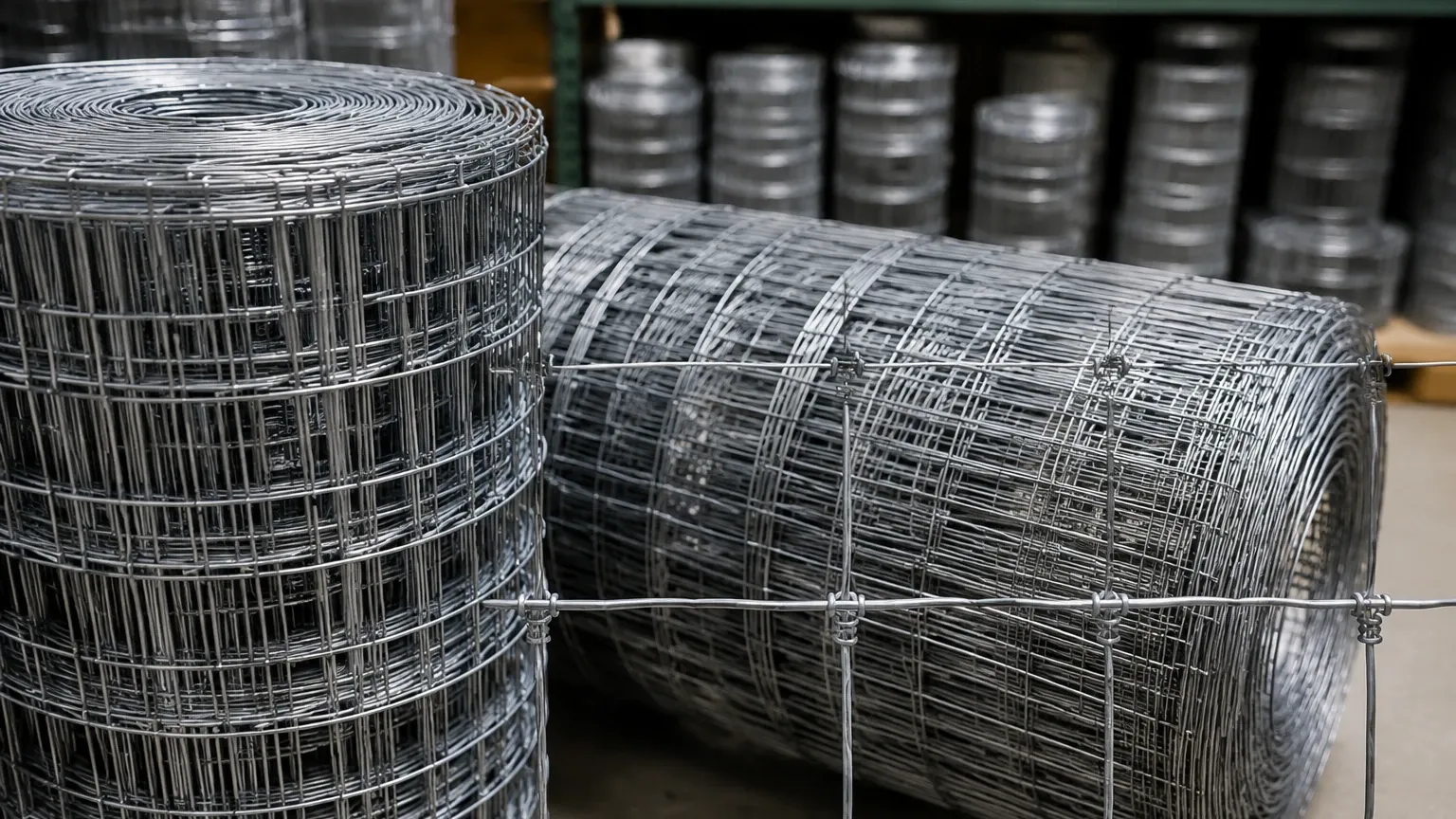
When evaluating a woven wire fence at menards, the focus is typically on physical containment and cost-effectiveness. These products are generally categorized as "Field Fence," "Horse Fence," or "Utility Fence." In a B2B or industrial context, these are considered low-precision wire products.
Wire Gauge and Tensile Strength
Retail fencing usually employs wire gauges ranging from 9 to 14.5 gauge. The tensile strength is designed to withstand the physical impact of livestock or the weight of climbing vegetation. In these applications, the wire is often "hinge-jointed," which allows the fence to give under pressure and spring back into shape. While effective for acreage, this construction lack the structural rigidity required for high-pressure filtration or precision screening.
Coating and Corrosion Resistance
Most woven wire fence products found at retail centers are made from carbon steel with a galvanized coating (Class 1 or Class 3 zinc coating). Galvanization provides a sacrificial layer of zinc that protects the underlying steel from oxidation. For outdoor agricultural use, this is sufficient. However, in industrial processing—especially where acids, alkalis, or high temperatures are present—galvanized coatings quickly fail, leading to contamination and structural breakdown.
Material Science: Galvanized Steel vs. Stainless Steel (SS304/316)
For engineers transitioning from general utility needs to industrial processes, the material choice is the most significant pivot point. While a woven wire fence at menards might suffice for a warehouse perimeter, it cannot be used in a food-grade assembly line or a chemical reactor.
The Limitations of Galvanized Wire
Galvanized wire is prone to "white rust" and eventual red rust when the zinc layer is compromised. In filtration, any oxidation can lead to downstream contamination, which is unacceptable in pharmaceutical or food and beverage sectors. Furthermore, galvanized wire has a limited temperature threshold; the zinc coating can begin to peel or melt at temperatures exceeding 390°F (200°C).
The Advantages of Stainless Steel Woven Wire Mesh
Industrial Woven Wire Mesh is primarily manufactured from Stainless Steel 304 or 316L.
* SS304: Offers excellent resistance to atmospheric corrosion and is the standard for most industrial screening applications.
* SS316L: Contains molybdenum, which provides superior resistance to chlorides and pitting. This is the material of choice for marine environments, medical applications, and aggressive chemical processing.
Unlike the products typically associated with a search for woven wire fence at menards, stainless steel mesh maintains its integrity at cryogenic temperatures and high-heat environments (up to 1500°F for certain grades), making it a prerequisite for advanced engineering projects.
Precision and Mesh Count: When Fencing Isn't Enough
The primary technical difference between "fence" and "mesh" lies in the aperture size and the precision of the weave.
Aperture vs. Mesh Count
Retail fencing is measured in inches (e.g., a 2"x4" opening). In contrast, industrial mesh is defined by its "mesh count"—the number of openings per linear inch. As the mesh count increases, the aperture size decreases, moving from visible holes to microscopic pores.
Weave Types and Engineering Performance
While retail fencing uses simple hinge-joints or fixed knots, industrial mesh utilizes sophisticated weaving patterns to achieve specific performance goals:
1. Plain Weave: The most common industrial weave where each warp wire crosses alternately over and under each weft wire. It provides high flow rates and is easy to clean.
2. Twill Weave: Each weft wire passes over and under two warp wires. This allows for a heavier wire diameter to be used for a given mesh count, increasing the mechanical strength of the filter element.
3. Dutch Weave: This weave uses a larger diameter warp wire and a smaller diameter weft wire. The result is a dense, strong mesh with very fine filtration ratings (down to 5-10 microns), which is impossible to achieve with standard fencing technology.
For those requiring high-precision specifications, Plain, twill and dutch woven wire mesh in SS304/316L — rolls, cut mesh and framed panels. Send mesh count or micron target for a technical quote. provides the necessary technical depth that retail products cannot match.
Industrial Applications of High-Performance Woven Wire Mesh
While a woven wire fence at menards is ideal for securing a job site or a farm, industrial woven wire mesh serves as a critical component in complex machinery and processing systems.
Chemical and Petrochemical Processing
In these sectors, mesh is used for catalyst support, mist elimination, and particle separation. The mesh must withstand corrosive fluids and high pressures. The precision of the weave ensures that flow rates remain consistent, preventing pressure drops that could compromise the entire system.
Food and Beverage Filtration
Stainless steel mesh is required for compliance with hygiene standards. It is used in everything from juice straining to flour sifting. Unlike galvanized fencing, stainless steel does not leach chemicals into the product and can be sanitized using high-pressure steam or caustic cleaning agents.
Pharmaceutical Manufacturing
Precision is paramount in pharmaceutical applications. Woven wire mesh is used in fluid bed dryers, granulators, and chromatography columns. The ability to define a specific micron rating ensures that active pharmaceutical ingredients (APIs) are processed with zero contamination and exact particle size distribution.
Selection Criteria: Engineering Considerations for Industrial Filtration
When moving beyond the scope of a woven wire fence at menards, engineers must evaluate several factors to ensure the longevity of their filtration or separation components.
1. Micron Rating and Filtration Efficiency
Determine the size of the smallest particle that must be retained. For general screening, a high-mesh count plain weave may work. For fine filtration under pressure, a Dutch weave is often necessary to prevent media migration and ensure structural integrity.
2. Mechanical Load and Pressure Drop
Every filter creates a pressure drop (Delta P). Engineers must balance the need for fine filtration with the requirement for adequate flow. Using a twilled weave can provide the strength to handle high-pressure differentials without deforming the mesh pores.
3. Environmental Compatibility
Assess the chemical composition of the fluid or gas passing through the mesh. If the environment is rich in chlorides, SS316L is mandatory. If the application involves high temperatures, the thermal expansion coefficient of the wire must be considered to prevent buckling within the housing.
4. Cleaning and Maintenance Cycles
Industrial mesh is an investment. Unlike retail fencing which is replaced when it rusts, industrial mesh can often be cleaned and reused. Ultrasonic cleaning, backwashing, and chemical baths are common methods used to extend the life of stainless steel filter cartridges.
Customization and OEM Solutions vs. Off-the-Shelf Retail
One of the primary limitations of purchasing a woven wire fence at menards is the lack of customization. Retail products come in standard rolls (typically 50ft or 100ft) and fixed heights.
In the B2B sector, customization is the standard. Manufacturers like Kaifil provide tailored solutions that include:
* Cut-to-Size Pieces: Precision laser or plasma cutting to fit specific machine housings.
* Framed Panels: Mesh welded into stainless steel frames for easy installation and added rigidity.
* Multi-Layer Sintering: Combining multiple layers of mesh through a heat-treating process to create a single, incredibly strong filtration plate.
* Custom Weave Patterns: Engineering a specific wire diameter and mesh count combination to meet a unique flow-rate requirement.
By working with a specialist, purchasing teams can ensure that the product they receive is optimized for their specific equipment, reducing downtime and improving the total cost of ownership (TCO).
Conclusion: Making the Right Choice for Industrial Performance
Understanding the difference between a woven wire fence at menards and industrial Woven Wire Mesh is essential for any technical professional. While retail fencing serves its purpose in agricultural and residential settings, it lacks the material purity, dimensional precision, and chemical resistance required for industrial operations.
When the project demands reliability, engineers should focus on the technical details: alloy composition, weave geometry, and micron accuracy. By selecting high-quality stainless steel mesh, companies can ensure their processes remain efficient, their products remain pure, and their equipment remains protected from the rigors of demanding industrial environments.
For those ready to move from general-purpose wire to engineered filtration solutions, evaluating the specific needs of the application—from pressure tolerances to chemical exposure—will lead to a more durable and cost-effective outcome than any off-the-shelf retail alternative.
