


Woven Wire Fence at Rural King: A Technical Comparison with Industrial Woven Wire Mesh
When sourcing materials for perimeter security, livestock containment, or basic site management, many procurement officers and property managers look toward retail solutions like a woven wire fence at rural king. These retail products serve a vital role in agricultural and light commercial applications, providing a cost-effective way to manage large areas. However, in the realm of industrial processing, chemical filtration, and precision engineering, the requirements for Woven Wire Mesh shift from basic containment to high-performance fluid dynamics and material separation.
Understanding the technical distinctions between standard agricultural fencing and industrial-grade stainless steel mesh is critical for engineers and technical buyers. While both products share the "woven wire" nomenclature, their material properties, manufacturing tolerances, and performance expectations exist on different ends of the engineering spectrum. This guide explores the evaluation criteria for these materials and helps technical professionals determine when a retail fence suffices and when a precision-engineered filtration component is required.
The Distinction Between Agricultural Fencing and Industrial Woven Wire Mesh
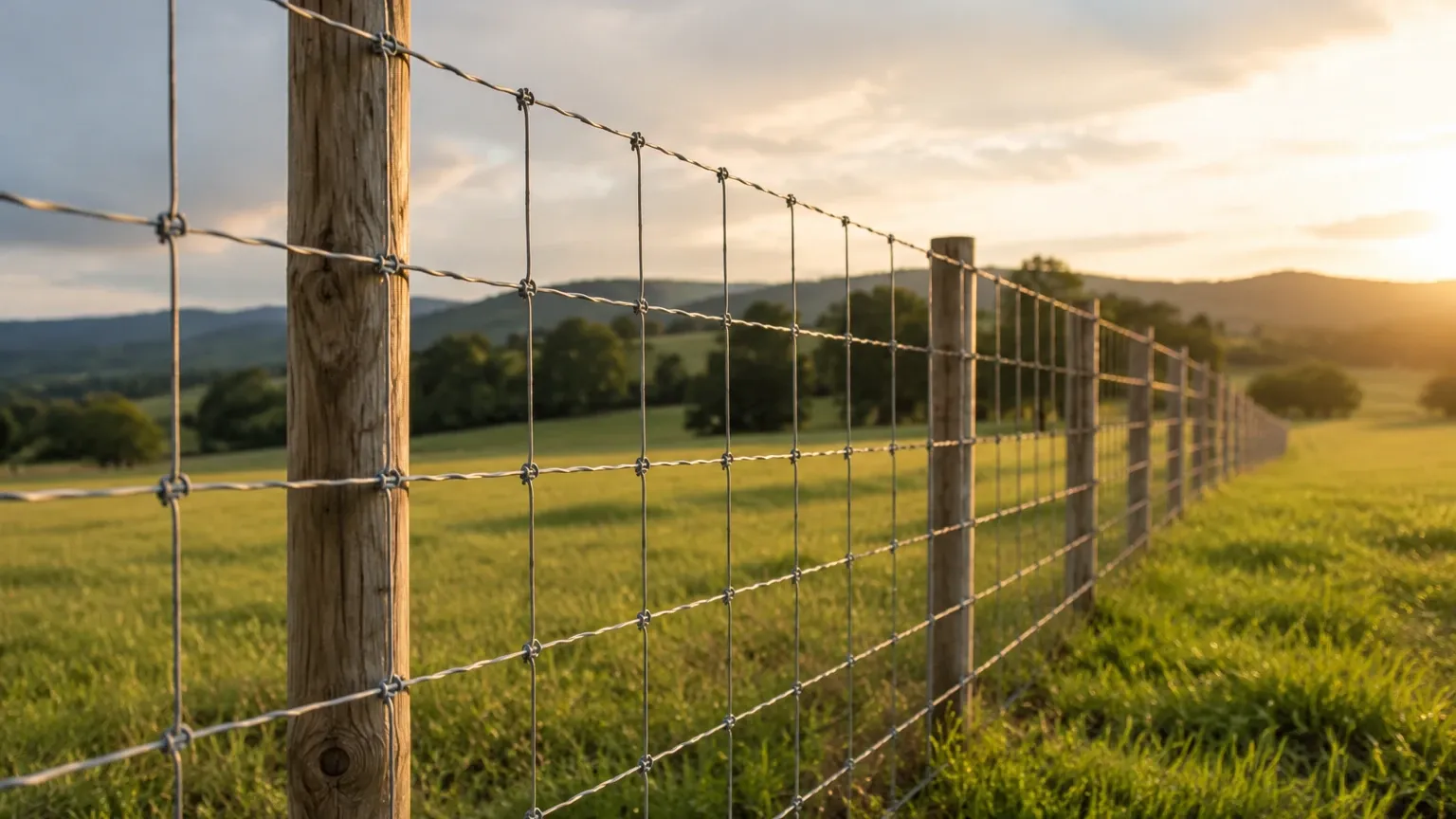
The primary difference between a retail woven wire fence at rural king and industrial mesh lies in the intended application. Agricultural fencing is designed for mechanical strength over large spans, focusing on impact resistance from livestock or wildlife. These fences typically utilize a "hinge joint" or "fixed knot" construction with relatively thick wire gauges (often 9 to 12.5 gauge).
In contrast, industrial woven wire mesh is manufactured for precision. Whether it is used in a chemical reactor, a food processing line, or a hydraulic system, the mesh must maintain a consistent pore size to ensure filtration accuracy. Industrial mesh is measured by mesh count (the number of openings per linear inch) or micron rating, rather than the broad spacing used in farm fencing. For engineers, the choice isn't just about "keeping things in or out," but about controlling the flow of particles and fluids under specific pressure and temperature conditions.
Material Integrity: SS304/316L vs. Galvanized Steel
Most retail fencing products are constructed from galvanized steel. While galvanization provides a layer of zinc protection against atmospheric corrosion, it is often insufficient for industrial environments. In chemical processing or pharmaceutical manufacturing, the presence of corrosive agents or the requirement for high-temperature sterilization makes galvanized steel a liability.
Industrial applications typically demand high-grade stainless steel, such as SS304 or SS316L.
* SS304: Offers excellent resistance to a wide range of atmospheric environments and many corrosive media. It is the standard for food and beverage applications where hygiene and durability are paramount.
* SS316L: Contains molybdenum, which provides superior resistance to chlorides and marine environments. This is the preferred material for chemical filtration and pharmaceutical processing where the mesh is exposed to aggressive solvents.
When evaluating a woven wire fence at rural king, the focus is on weatherproofing for outdoor use. When evaluating industrial mesh, the focus is on chemical compatibility and the prevention of medium contamination.
Weave Types and Filtration Efficiency
The geometry of the weave determines how a material performs under stress and how effectively it filters. Retail fencing almost exclusively uses a simple square or rectangular grid. However, industrial Plain, twill and dutch woven wire mesh in SS304/316L — rolls, cut mesh and framed panels. Send mesh count or micron target for a technical quote. offers various patterns tailored to specific mechanical needs:
1. Plain Weave: The most common industrial weave where each warp wire crosses alternately over and under each shute wire. It provides the highest level of transparency and is ideal for basic screening.
2. Twill Weave: Each shute wire passes successively over and under two warp wires. This allows for a heavier wire diameter to be used for a given mesh count, increasing the strength of the mesh for high-pressure applications.
3. Dutch Weave: This weave uses a larger diameter warp wire and a smaller diameter shute wire. The result is a dense, strong mesh with very fine openings, specifically designed for high-pressure filtration where a standard square mesh might deform.
While a woven wire fence at rural king is effective for boundary definition, these industrial weave patterns are engineered to handle the rigors of mechanical filtration, ensuring that the mesh remains stable even under significant differential pressure.
Key Performance Metrics for Industrial Mesh
When an engineer specifies woven wire mesh for a project, they look at metrics that go far beyond the height and length of a roll of fence. These include:
Micron Rating and Pore Size
In filtration, the goal is to capture particles of a specific size. Industrial mesh can be manufactured to filter particles as small as 5 microns. Retail fencing, which may have openings of 2 to 6 inches, cannot provide the surface area or the precision required for fluid processing.
Open Area Percentage
The "open area" determines the flow rate and pressure drop across the mesh. A higher open area allows for faster throughput but may sacrifice structural integrity. Engineers must balance these factors to ensure the filtration system operates efficiently without frequent clogging or mechanical failure.
Wire Diameter and Tolerance
In precision manufacturing, even a few microns of deviation in wire diameter can change the performance of a filter. Industrial manufacturers like Kaifil maintain strict tolerances to ensure that every square inch of the mesh performs identically. This level of consistency is rarely a requirement for a woven wire fence at rural king, where minor variations in wire thickness do not impact the fence's primary function.
Evaluating Total Cost of Ownership (TCO)
For a farmer or a residential property owner, the TCO of a woven wire fence at rural king is calculated based on the cost per foot and the years until the zinc coating fails. For an industrial facility, the TCO calculation is much more complex. It includes:
* Replacement Frequency: How often does the mesh need to be replaced due to wear, corrosion, or clogging?
* Downtime Costs: What is the financial impact of shutting down a production line to replace a failed filter component?
* Product Quality: Does the mesh consistently meet the filtration standards required to prevent downstream equipment damage or product contamination?
By investing in high-quality stainless steel woven wire mesh, industrial users often find that the higher initial capital expenditure is offset by significantly lower maintenance costs and longer service life compared to lower-grade alternatives.
When to Choose Custom Fabricated Filter Components
One of the significant limitations of purchasing retail products like a woven wire fence at rural king is the lack of customization. Retail products come in standard rolls and heights. In contrast, industrial filtration often requires bespoke solutions.
Customization options for industrial mesh include:
* Calendering: Flattening the mesh to provide a smoother surface and more stable pore structure.
* Sintering: Bonding multiple layers of mesh together using heat and pressure to create an incredibly strong, rigid filter medium that combines fine filtration with high mechanical strength.
* Fabrication: Cutting, welding, and framing the mesh into specific shapes like cartridges, discs, or conical filters to fit into existing industrial machinery.
Kaifil specializes in these types of OEM and customized filtration solutions, working closely with engineers to develop components that meet the exact demands of their specific application, whether it’s in water treatment, hydraulic systems, or chemical processing.
Conclusion: Selecting the Right Material for the Task
While a woven wire fence at rural king is an excellent product for its intended agricultural use, it is not a substitute for industrial-grade woven wire mesh. For engineers and technical buyers, the choice must be dictated by the environment, the required precision, and the long-term operational goals of the facility.
When your application moves beyond simple containment and into the realm of precision filtration, material durability, and chemical resistance, it is essential to partner with a manufacturer that understands the science of weaving. By selecting the correct material grade, weave pattern, and fabrication method, you ensure that your filtration system provides reliable, cost-effective performance for years to come.
For those requiring high-performance stainless steel solutions, exploring professional options in Woven Wire Mesh is the first step toward optimizing industrial process efficiency.
