


Woven Wire Fence Attachment: Engineering Reliable Industrial Enclosures
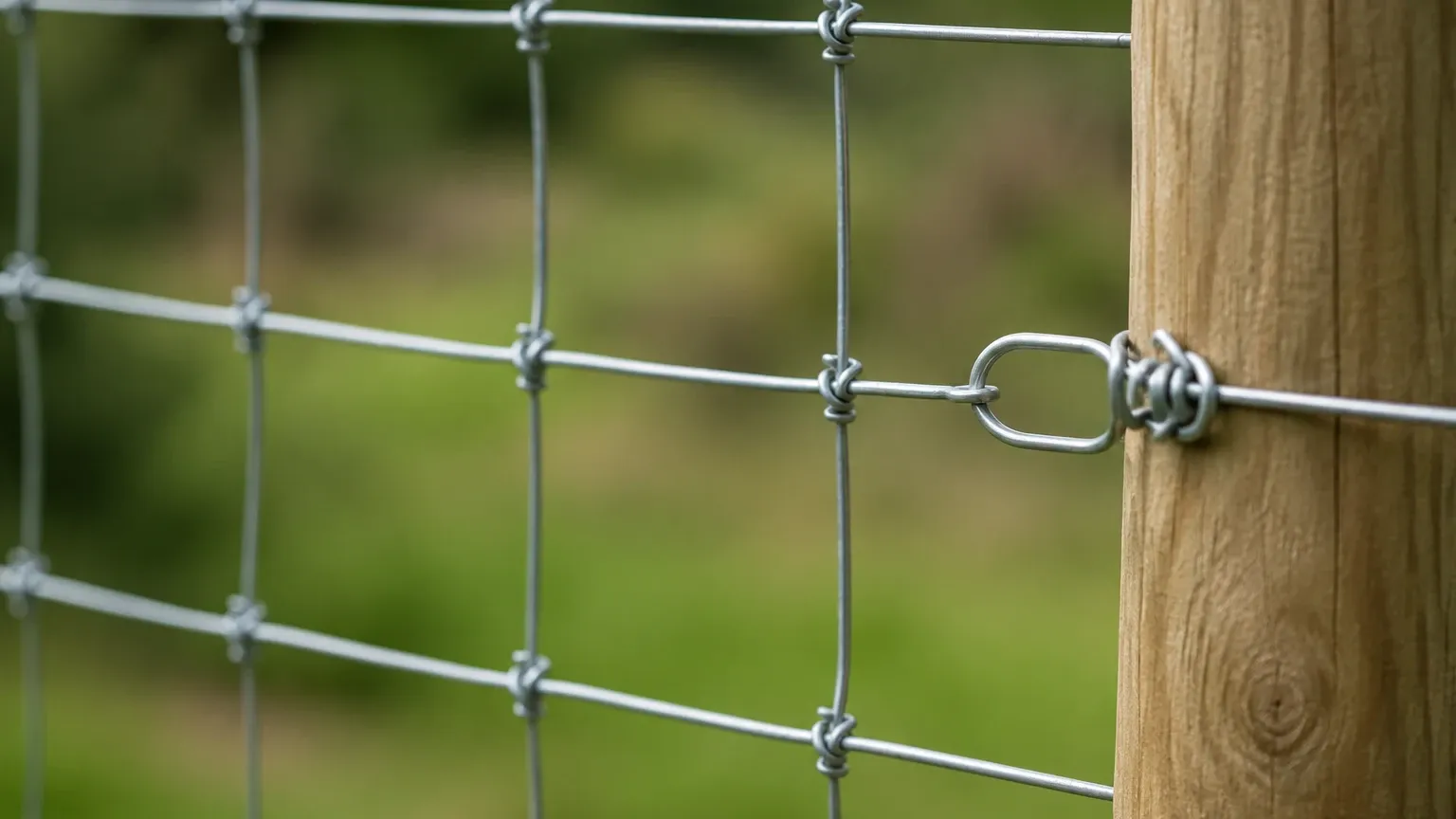
In industrial environments, the transition from a raw roll of high-quality mesh to a functional, secure barrier or enclosure depends entirely on the method of integration. While often overlooked, the strategy for woven wire fence attachment determines the structural integrity, safety, and longevity of the installation. Whether the application involves machine guarding, high-security perimeter fencing, or industrial partitions, the mechanical interface between the mesh and the support structure must account for tension, vibration, and environmental stressors.
For engineers and procurement teams, selecting the right attachment method is as critical as choosing the mesh specification itself. A failure at the attachment point can lead to mesh sagging, perimeter breaches, or safety hazards in automated manufacturing zones. This guide examines the technical considerations, material compatibility, and engineering best practices for securing woven wire mesh in demanding industrial settings.
The Engineering Fundamentals of Woven Wire Mesh
Before addressing attachment methods, it is essential to understand the physical characteristics of the material. Plain, twill and dutch woven wire mesh in SS304/316L — rolls, cut mesh and framed panels. Send mesh count or micron target for a technical quote. provides the baseline for most industrial enclosures. Unlike welded wire mesh, where intersections are fused, woven wire mesh relies on the mechanical interlocking of wires. This inherent flexibility allows it to absorb impacts more effectively but also requires precise tensioning during the attachment process.
When specifying mesh for a fence or enclosure, two primary factors influence the attachment strategy:
1. Wire Diameter: Thicker wires (high gauge) offer greater rigidity but require more robust mechanical fasteners or heavy-duty welding.
2. Mesh Count: A higher mesh count (smaller openings) provides a greater surface area for attachment but may increase wind resistance or fluid drag in outdoor or wash-down environments.
Key Considerations for Woven Wire Fence Attachment
Effective woven wire fence attachment is not a one-size-fits-all process. The choice of method must be dictated by the load requirements and the operational environment. Engineers must evaluate the following variables to prevent premature failure:
Tension and Load Distribution
In industrial fencing, the mesh must remain taut to prevent deformation. If the attachment points are spaced too far apart, the mesh will sag under its own weight or fail when subjected to external pressure. Proper attachment distributes the load across multiple warp and weft wires rather than concentrating stress on a single point. This is particularly important for stainless steel mesh, which, while durable, can undergo work hardening if subjected to localized, repetitive stress.
Thermal Expansion and Contraction
In facilities with significant temperature fluctuations—such as chemical processing plants or outdoor installations—the difference in thermal expansion rates between the stainless steel mesh and a carbon steel or aluminum frame can cause buckling. The attachment method must either allow for slight movement or be strong enough to constrain the mesh without shearing the fasteners.
Galvanic Corrosion Prevention
One of the most common mistakes in woven wire fence attachment is the use of dissimilar metals. Attaching SS316L mesh to a galvanized steel post using zinc-plated bolts can trigger galvanic corrosion, leading to the rapid degradation of the attachment point. Always ensure that fasteners, frames, and mesh share compatible electrochemical properties, or use insulating washers and coatings to break the electrical circuit.
Common Methods for Securing Industrial Mesh
Depending on the permanency required and the structural design, several standardized attachment methods are utilized in the B2B sector.
1. Mechanical Fastening with Tension Bars and Bolts
For high-security perimeter fencing and large-scale partitions, mechanical fastening is the preferred method. This involves threading a tension bar through the last row of the mesh weave and bolting that bar to the support post using heavy-duty clips or brackets.
* Advantages: Allows for field adjustments and easy replacement of damaged sections.
* Best Use: Large outdoor perimeters or modular warehouse partitions.
2. U-Edging and Framing
For machine guards and smaller panels, the mesh is often encased in a "U-channel" or "U-edge" frame. The mesh is inserted into the channel, which is then crimped or spot-welded. This frame is then bolted to the machinery or structural support.
* Advantages: Provides a clean, safe edge with no exposed wire ends; increases the overall rigidity of the panel.
* Best Use: Safety guarding for moving parts or internal facility dividers.
3. Direct Welding (TIG and Spot Welding)
In applications where a permanent, tamper-proof seal is required, direct welding is employed. Tungsten Inert Gas (TIG) welding is preferred for stainless steel woven wire mesh to maintain the corrosion resistance of the alloy. Spot welding is frequently used when attaching mesh to light-gauge angle iron frames.
* Advantages: Maximum security and structural integration.
* Best Use: Permanent filtration housings or high-vibration industrial sieves.
Material Selection: SS304 vs. SS316L for Enclosures
The environment in which the woven wire fence attachment will reside dictates the material grade. While both SS304 and SS316L are common in industrial filtration and fencing, their performance varies significantly in corrosive settings.
* SS304: Suitable for most indoor industrial applications, including machine guarding and general partitions. It offers excellent strength and cost-effectiveness.
* SS316L: Essential for marine environments, chemical processing zones, or food production facilities where frequent cleaning with harsh chemicals occurs. The addition of molybdenum in SS316L provides superior resistance to pitting and crevice corrosion, which often begins at the attachment points where moisture can be trapped.
Addressing Common Risks in Mesh Installation
Failure to properly execute the woven wire fence attachment can lead to several operational risks. Identifying these early in the design phase is crucial for maintaining a safe workspace.
* Vibration Fatigue: In environments with heavy machinery, constant vibration can cause mechanical fasteners to loosen. Using locking nuts or specialized vibration-resistant clips is mandatory in these scenarios.
* Point Loading: If the mesh is attached only at the corners, the central area becomes a liability. Engineers should calculate the maximum allowable deflection and add intermediate support rails or attachment points accordingly.
* Edge Fraying: Woven mesh that is not properly terminated at the attachment point will eventually unravel. Ensuring that the mesh is either welded to a frame or securely clamped within a tensioning system prevents this structural degradation.
Customization and OEM Solutions from Kaifil
As a specialist in custom filtration and metal components, Kaifil understands that standard off-the-shelf solutions rarely meet the rigorous demands of specialized industrial applications. Achieving the perfect woven wire fence attachment often requires customized mesh panels that are pre-cut, framed, or reinforced according to specific engineering drawings.
Kaifil provides comprehensive OEM services, including:
* Precision Cutting: Ensuring mesh panels fit perfectly into existing frames to simplify the attachment process.
* Custom Framing: Manufacturing pre-framed panels in SS304 or SS316L that are ready for immediate bolt-on installation.
* Technical Consulting: Assisting engineers in selecting the optimal wire diameter and weave type (plain, twill, or dutch) to balance strength and visibility/airflow requirements.
Conclusion: Optimizing Total Cost of Ownership
When planning an industrial enclosure or fencing project, the focus should extend beyond the initial purchase price of the woven wire mesh. The efficiency of the woven wire fence attachment system directly impacts the total cost of ownership. A well-engineered attachment system reduces installation labor, minimizes maintenance requirements, and extends the service life of the mesh.
By prioritizing material compatibility, proper tensioning, and the appropriate fastening method, facilities can ensure their filtration and enclosure systems perform reliably under pressure. For projects requiring high-performance stainless steel solutions, partnering with a manufacturer like Kaifil ensures that both the mesh and its integration components meet the highest industrial standards for quality and durability.
