


Engineering Durability: A Technical Guide to Woven Wire Mesh for Industrial Containment and Filtration
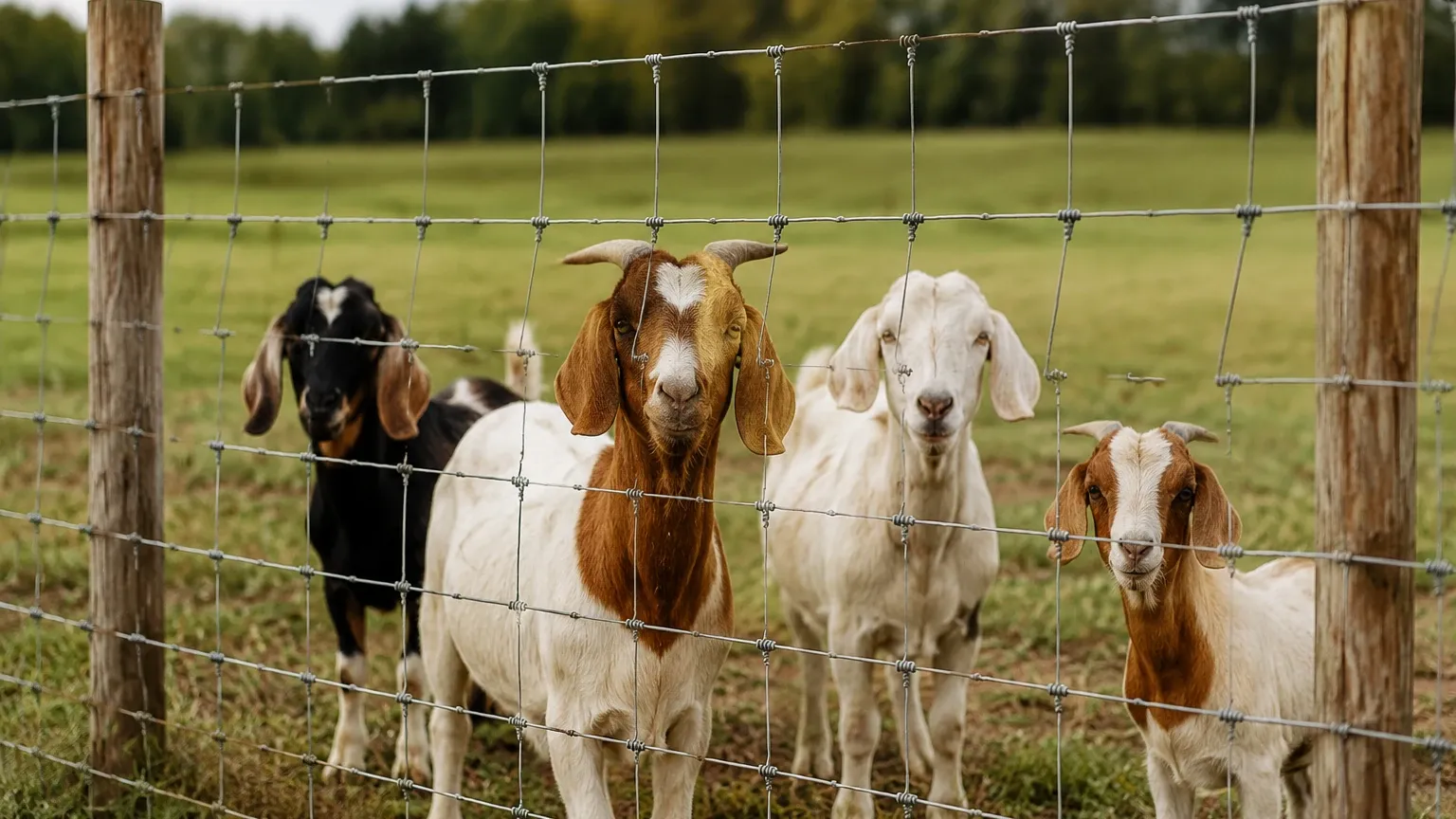
In the realm of industrial materials, Woven Wire Mesh stands as one of the most versatile and essential components. While its primary application often lies within high-precision filtration systems for the chemical, pharmaceutical, and food processing industries, the structural integrity of woven wire technology extends into specialized containment. One such application that demands high tensile strength and specific geometric configurations is the woven wire fence goats and other livestock require for secure, long-term containment.
For engineers and facility managers, selecting the right mesh involves more than just choosing a material; it requires a deep understanding of wire diameter, aperture size, alloy composition, and the mechanical stresses the mesh will encounter. This guide examines the technical specifications of woven wire mesh, contrasting industrial filtration needs with heavy-duty containment requirements to provide a comprehensive overview of selection criteria.
The Fundamentals of Woven Wire Mesh Construction
Woven wire mesh is produced by weaving individual wires over and under one another in a predetermined pattern. The precision of this process determines the mesh's performance in both filtration and structural applications. At Kaifil, the focus is on achieving exact apertures and consistent wire tension to ensure the final product meets rigorous industrial standards.
Weave Patterns and Their Applications
There are several primary weave patterns, each offering distinct advantages:
1. Plain Weave: The most common pattern where each warp wire crosses over and under each shute wire. This provides a high degree of stability and is frequently used in both industrial sieving and heavy-duty containment like a woven wire fence goats cannot easily deform.
2. Twill Weave: Each shute wire passes over and under two warp wires. This allows for a heavier wire diameter relative to the aperture size, increasing the mesh's overall strength and durability.
3. Dutch Weave: Utilizing different wire diameters for the warp and shute, this weave creates a dense, multi-layered structure ideal for fine filtration and high-pressure environments.
For containment and coarse filtration, the plain weave is typically preferred due to its uniform opening sizes and ease of cleaning.
Material Selection: SS304 vs. SS316L
The environment in which the mesh is deployed dictates the necessary alloy. In industrial settings, corrosion resistance is often the primary driver for material selection.
* Stainless Steel 304: This is the standard grade for most industrial applications. It offers excellent strength and good corrosion resistance for general use. In agricultural or outdoor containment, SS304 provides a significant upgrade over galvanized steel, resisting rust even in humid or high-moisture environments.
* Stainless Steel 316L: Containing molybdenum, 316L provides superior resistance to chlorides and acids. This is the preferred choice for marine environments, chemical processing plants, and pharmaceutical facilities where rigorous cleaning agents are used. If a woven wire fence goats application is located near a coastal area or within a facility that undergoes chemical washdowns, 316L is the authoritative choice for preventing stress corrosion cracking.
Technical Requirements for High-Stress Containment
When designing a containment system, such as a woven wire fence goats can interact with safely, engineers must account for the mechanical behavior of the animal and the physical environment. Goats are known for their tendency to lean, climb, and rub against barriers, which places significant lateral pressure on the mesh.
Aperture Size and Safety
In containment, the "mesh count" or aperture size is critical. For goats, an aperture that is too large allows for head entrapment, while an aperture that is too small may unnecessarily increase the weight and cost of the material. A standard 4-inch by 4-inch (approx. 100mm x 100mm) opening is often cited as the industry standard for livestock containment, but in industrial or high-security settings, smaller apertures are used to prevent climbing or the passage of smaller debris.
Tensile Strength and Wire Gauge
The gauge (diameter) of the wire determines the mesh's ability to withstand impact and constant pressure. Industrial-grade woven wire mesh utilizes precision-drawn wire that maintains consistent tensile strength across the entire roll. For heavy-duty applications, a wire diameter of 2.0mm to 4.0mm is common, providing the rigidity necessary to maintain the fence's shape under load without the sagging seen in lower-quality knotted fences.
Comparing Woven Mesh to Welded Wire
A common question during the procurement process is whether to use woven or welded wire mesh. From an engineering perspective, the differences are significant:
* Flexibility: Woven wire mesh possesses a degree of inherent flexibility. Because the wires are not fixed at every intersection (as they are in welded mesh), the structure can absorb impacts and distribute the load across a wider area. This makes it far more resilient for containing active animals or for use in vibrating industrial machinery.
* Longevity: Welded joints are often the first point of failure in corrosive environments. The welding process can alter the grain structure of the stainless steel, making the joints susceptible to intergranular corrosion. Plain, twill and dutch woven wire mesh in SS304/316L — rolls, cut mesh and framed panels. Send mesh count or micron target for a technical quote. avoids this risk by relying on the mechanical lock of the weave itself.
* Maintenance: Woven mesh is generally easier to repair and tension. If a single wire is damaged, it does not necessarily compromise the integrity of the entire panel in the same way a broken weld might.
Engineering Considerations for Installation
To achieve the performance expectations of a high-end containment or filtration system, installation must be executed with precision. For a woven wire fence goats or other industrial barriers, the following factors are paramount:
Tensioning
Unlike standard chain-link or light-gauge fencing, stainless steel woven wire mesh requires professional tensioning tools. Proper tension ensures that the mesh remains taut, preventing the "bowing" effect that occurs when pressure is applied. In industrial filtration housings, this tension is maintained by the frame or support structure, but in outdoor containment, it relies on robust corner posts and H-braces.
Post Spacing and Support
For heavy-duty woven mesh, post spacing should typically not exceed 8 to 10 feet. In high-pressure industrial zones, the mesh is often integrated into framed panels. These panels provide a rigid perimeter that protects the edges of the mesh from fraying and ensures that the load is transferred evenly to the support structure.
Edge Treatment
In B2B applications, the finish of the mesh edges is a safety and durability concern. Options include:
* Selvage Edges: The shute wires are looped back, creating a smooth, finished edge that prevents unraveling.
* Raw/Cut Edges: Common for mesh that will be welded into a frame or tucked into a channel.
* Hemmed or Bound Edges: Used in filtration cartridges to ensure no bypass occurs at the edges of the filter media.
Total Cost of Ownership (TCO) in Industrial Filtration and Containment
While the initial procurement cost of stainless steel woven wire mesh is higher than galvanized or plastic alternatives, the Total Cost of Ownership (TCO) is significantly lower. This is particularly true in demanding environments where replacement cycles are frequent.
1. Reduced Replacement Frequency: Stainless steel mesh can last decades, whereas galvanized mesh may fail within 5-7 years in corrosive or high-wear environments.
2. Lower Maintenance Labor: High-quality woven mesh requires less frequent re-tensioning and cleaning.
3. Operational Efficiency: In filtration, the precision of the weave ensures consistent flow rates and particle retention, reducing downtime caused by filter failure or bypass.
4. Safety and Compliance: For industries like food processing or pharmaceutical manufacturing, using high-grade SS316L mesh is often a regulatory requirement to prevent contamination.
Customization and OEM Capabilities
At Kaifil, we recognize that standard off-the-shelf solutions do not always meet the specific needs of a complex project. Whether you are designing a specialized woven wire fence goats containment system for a research facility or a multi-stage filtration system for a chemical plant, customization is key.
Our manufacturing capabilities allow for:
* Custom Mesh Counts: Tailoring the number of wires per inch to achieve specific micron ratings or aperture sizes.
* Variable Wire Diameters: Balancing weight and strength to meet the structural requirements of the application.
* Specialized Alloys: Sourcing specific grades of stainless steel or other metals for extreme temperature or chemical resistance.
* Fabricated Components: Providing the mesh as finished discs, cylinders, or framed panels ready for immediate installation.
Conclusion
Selecting the appropriate woven wire mesh requires a balance of material science, mechanical engineering, and practical application knowledge. Whether the goal is to create a secure woven wire fence goats cannot penetrate or to develop a high-precision filter for industrial processing, the quality of the weave and the choice of alloy are the foundations of success. By prioritizing technical specifications like tensile strength, corrosion resistance, and aperture precision, engineers can ensure their filtration and containment systems perform reliably for years to come.
For technical assistance in selecting the right mesh for your specific industrial application, consult with the engineering team at Kaifil to review material compatibility and performance expectations.
