


Woven Wire Fence Post Spacing: Engineering a Durable Industrial Barrier
In industrial environments, the integrity of a perimeter or containment system depends heavily on the structural framework supporting the mesh. While the quality of the mesh itself is paramount, the engineering of the support structure—specifically the woven wire fence post spacing—determines the long-term viability, tension retention, and safety of the installation. For engineers and facility managers, understanding the relationship between post intervals and the mechanical properties of Woven Wire Mesh is essential for optimizing both performance and total cost of ownership.
Selecting the correct spacing is not merely a matter of following a standard rule of thumb; it requires a technical evaluation of wire gauge, material tensile strength, environmental loads, and the specific weave pattern employed. This guide examines the technical variables that dictate post-spacing requirements for industrial woven wire systems.
The Role of Post Spacing in Structural Integrity
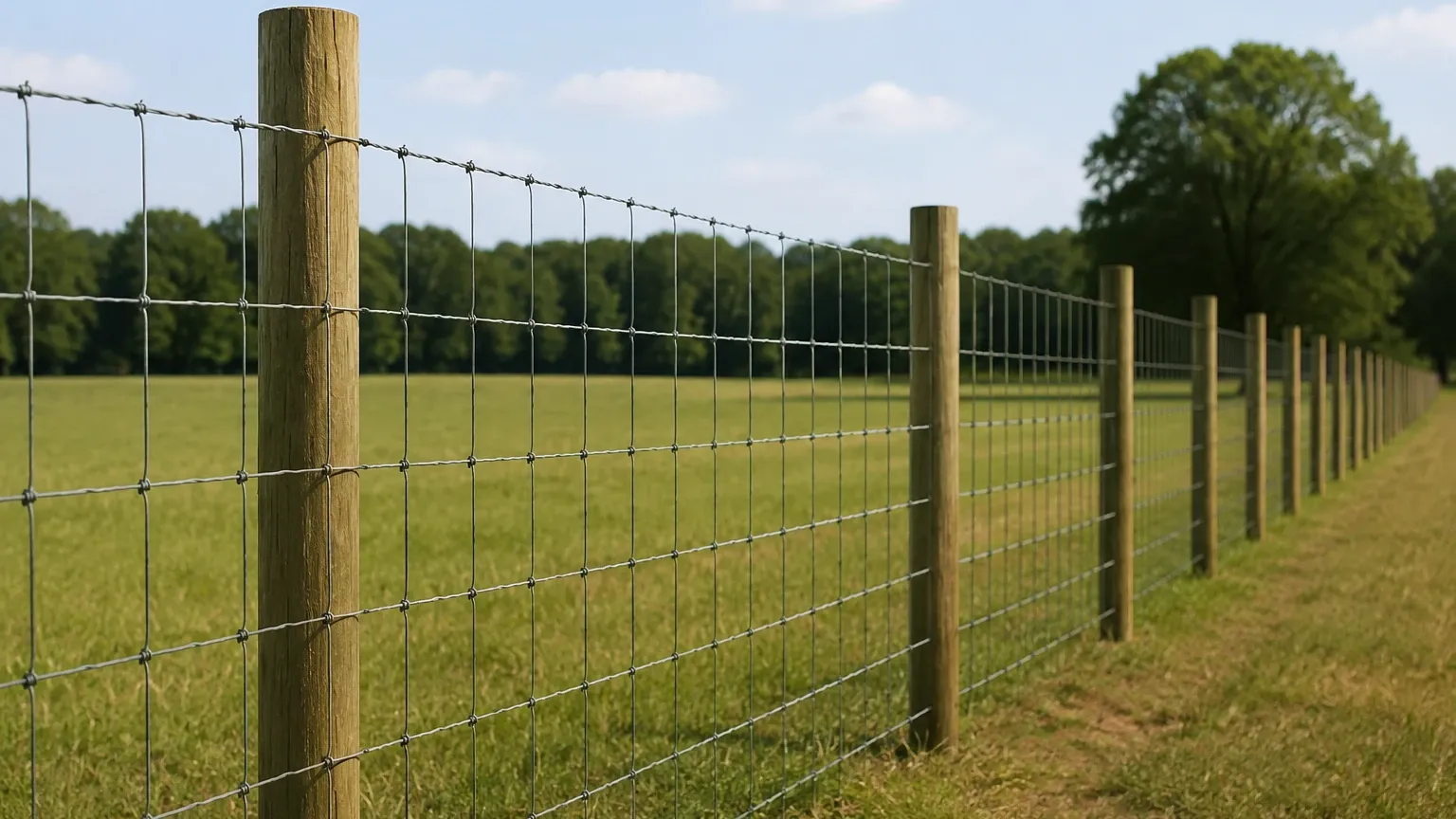
The primary function of posts in a woven wire system is to maintain the tension required to prevent sagging and to resist lateral impacts. Unlike welded wire, which relies on rigid joints, woven wire mesh derives its strength from the interlocking of wires and the tension applied across the span.
If the woven wire fence post spacing is too wide, the mesh may succumb to "scalloping" or sagging between posts, which compromises the security of the barrier and increases the risk of fatigue failure at the attachment points. Conversely, spacing posts too closely increases material and labor costs without necessarily providing a proportional increase in structural benefit. Finding the "engineering sweet spot" ensures that the mesh remains taut and functional throughout its service life.
Technical Factors Influencing Spacing Decisions
Several variables must be calculated before finalizing a post-layout design. These factors are interdependent and vary based on the specific industrial application.
1. Wire Gauge and Tensile Strength
High-tensile stainless steel wires can withstand significantly more tension than low-carbon steel alternatives. When using Plain, twill and dutch woven wire mesh in SS304/316L — rolls, cut mesh and framed panels. Send mesh count or micron target for a technical quote., the inherent strength of the material allows for greater distances between posts compared to softer materials. Thicker wire gauges (lower numbers) provide more rigidity, allowing for wider spans, whereas fine mesh used for safety screening or debris containment requires more frequent support to prevent deformation.
2. Mesh Aperture and Weave Type
The density of the weave affects how the mesh reacts to physical loads. A dense mesh with small openings has a higher surface area, making it more susceptible to wind loading. In outdoor industrial sites, wind can exert significant pressure on a fence line. In these scenarios, reducing the post spacing is necessary to distribute the wind load across more vertical supports.
3. Terrain and Topography
Industrial facilities are not always situated on perfectly level ground. On uneven terrain or slopes, the spacing must be shortened to allow the mesh to follow the contour of the land without creating gaps at the bottom or excessive tension at the top. For every significant change in grade, a terminal or pull post should be installed to reset the tensioning plane.
Standard Spacing Guidelines for Industrial Applications
While specific engineering calculations should always take precedence, the following guidelines serve as a baseline for industrial woven wire installations:
* Standard Perimeter Fencing: For general security and site demarcation using mid-to-heavy gauge woven wire, a spacing of 8 to 12 feet (2.4 to 3.6 meters) is typical. This provides a balance between structural rigidity and installation efficiency.
* High-Security Containment: In areas where the barrier must resist high-impact forces or prevent unauthorized scaling, spacing is often reduced to 6 to 8 feet (1.8 to 2.4 meters). This ensures the mesh remains extremely rigid.
* Lightweight Screening: For debris or safety screens using finer mesh, posts may be spaced at 4 to 6 feet (1.2 to 1.8 meters) to prevent the mesh from fluttering or tearing under localized pressure.
The Importance of Material Selection: SS304 vs. SS316L
In industrial filtration and containment, the environment often dictates the material. The choice between Grade 304 and Grade 316L stainless steel impacts not just corrosion resistance, but also the long-term tension of the fence.
* SS304: Suitable for most industrial environments where chemical exposure is moderate. It offers excellent tensile strength and is the standard for many woven wire applications.
* SS316L: Essential for coastal environments, chemical processing plants, or pharmaceutical facilities where chloride exposure or acidic conditions are present. The molybdenum content in 316L prevents pitting corrosion, which can weaken individual wires and lead to tension loss over time.
Using a high-quality Woven Wire Mesh manufactured to precise tolerances ensures that the tension is distributed evenly across the entire roll, preventing localized weak spots that could fail between posts.
Engineering Corner and Terminal Posts
The most critical components of any woven wire system are the terminal posts (corners, ends, and gates). These posts bear the brunt of the tension. Even with perfect woven wire fence post spacing for the "line" posts, the system will fail if the terminal posts are not properly braced.
In industrial settings, "H-Braces" or "N-Braces" are the standard. These assemblies use a horizontal cross-member and a diagonal tension wire to transfer the pull of the mesh to the ground. For spans exceeding 100 feet, it is often recommended to install a "pull post" assembly to allow for incremental tensioning and to prevent the entire line from sagging if one section is damaged.
Installation Best Practices for Optimized Spacing
To ensure the calculated spacing delivers the expected performance, the following installation steps are critical:
1. Post Depth and Footings: In most industrial applications, posts should be set at a depth of at least one-third of their total height. In areas with high wind loads or soft soil, concrete footings are mandatory to prevent post-lean.
2. Tensioning the Mesh: Woven wire should be pulled to approximately 1% to 2% of its total length to achieve proper tension. Over-tensioning can deform the mesh openings (especially in plain weaves), while under-tensioning leads to sagging.
3. Attachment Methods: Using industrial-grade clips or tension bars is superior to simple wire ties. Tension bars distribute the pull across the entire height of the mesh, preventing the individual wires from being pulled out of alignment at the post.
Evaluating Total Cost of Ownership (TCO)
When designing a barrier, it is tempting to increase the woven wire fence post spacing to save on material costs. However, a technical analysis often reveals that this leads to higher maintenance costs. Wider spacing requires heavier gauge wire and more robust bracing to compensate for the loss of vertical support.
By selecting a high-performance Woven Wire Mesh and adhering to scientifically sound spacing intervals, facilities can reduce the frequency of re-tensioning and replacement. Stainless steel solutions, while higher in initial cost, offer a significantly lower TCO due to their resistance to environmental degradation and mechanical wear.
Common Risks of Incorrect Spacing
Failure to adhere to proper spacing guidelines results in several common industrial issues:
* Vibration Fatigue: In environments with heavy machinery or high winds, loose mesh can vibrate. Over time, this vibration causes work-hardening and eventual snapping of the wires at the attachment points.
* Security Breaches: Sagging mesh creates gaps at the bottom of the fence line, which can be exploited by pests or unauthorized personnel.
* Safety Hazards: In safety screening applications, mesh that is not properly supported may fail to contain flying debris or equipment parts in the event of a mechanical failure.
Conclusion: Confirming Specifications Before Procurement
Before initiating a project, engineers should confirm the specific requirements of their application. This includes the required micron rating (if used for filtration/containment), the wire diameter, and the environmental conditions of the site.
Choosing the right partner for your filtration and containment needs is essential. Kaifil provides precision-engineered stainless steel solutions tailored to demanding industrial requirements. Whether you are designing a high-security perimeter or a specialized industrial containment system, the synergy between high-quality Woven Wire Mesh and precise woven wire fence post spacing is the foundation of a successful installation.
For technical assistance in selecting the appropriate mesh count or material grade for your specific project, consult with manufacturing experts who understand the mechanical nuances of industrial-grade stainless steel.
