


Woven Wire Fence Wholesale: A Technical Guide for Industrial Procurement
In industrial environments, the requirements for perimeter security, machinery guarding, and internal partitions extend far beyond basic aesthetics. Engineers and procurement specialists often seek woven wire fence wholesale solutions that provide a balance of structural integrity, corrosion resistance, and precise open areas. Unlike standard welded alternatives, woven wire mesh offers unique mechanical properties derived from the interlocking of wires, making it a preferred choice for demanding applications in chemical processing, food and beverage, and pharmaceutical facilities.
Selecting the right material and weave pattern is critical to ensuring the longevity of the installation and minimizing the total cost of ownership. This guide examines the technical considerations, material science, and procurement strategies essential for sourcing high-quality woven wire components for industrial fencing and screening.
The Engineering Behind Woven Wire Mesh
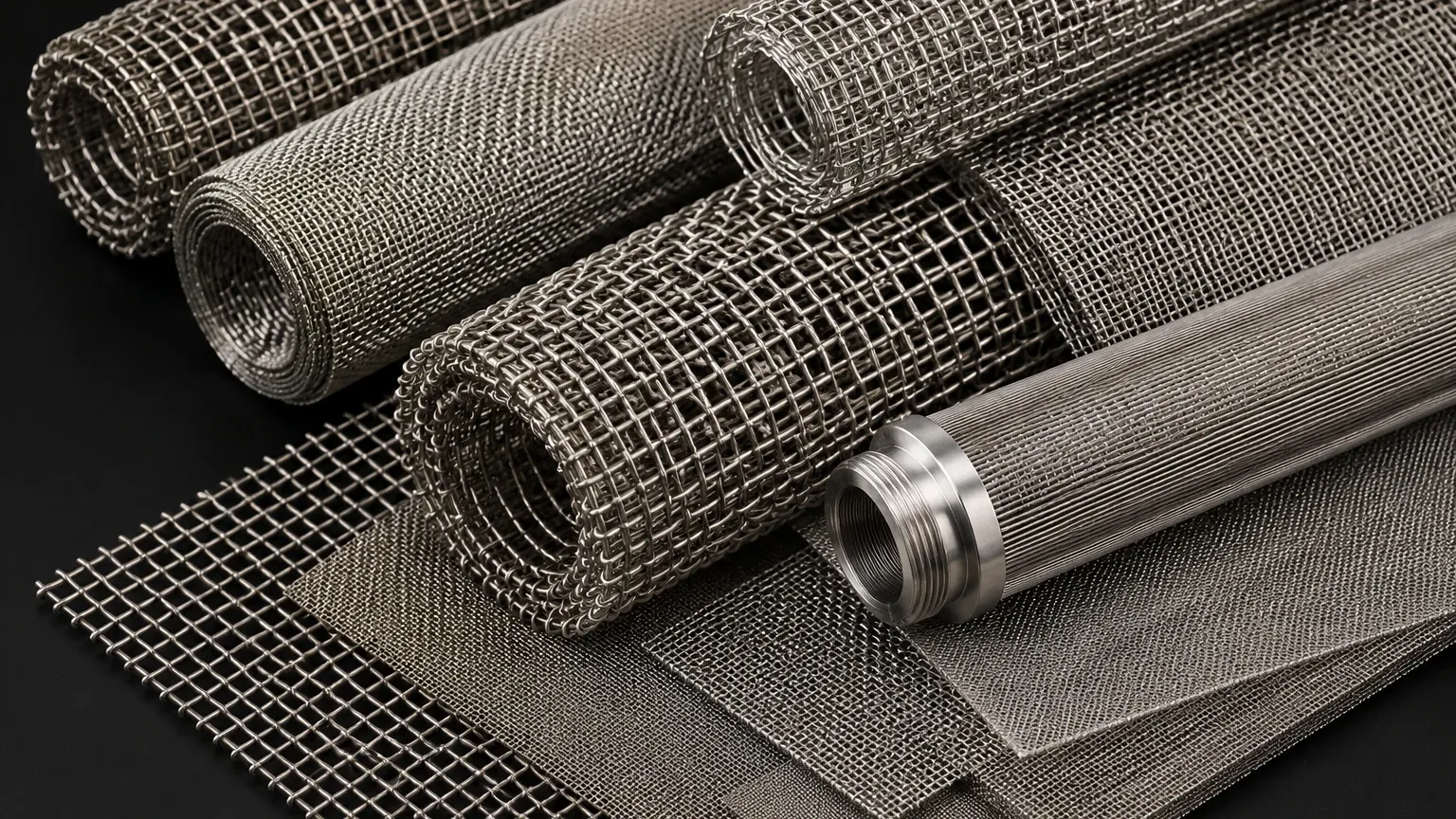
At its core, Woven Wire Mesh is produced by weaving individual metal wires over and under one another on a loom. This process creates a stable, flexible, and highly customizable fabric. For industrial fencing, the structural stability comes from the tension and friction between the warp (longitudinal) and weft (transverse) wires.
One of the primary advantages of a woven structure over a welded one is its ability to withstand vibration and thermal expansion without the risk of weld failure. In high-vibration environments, such as those found near heavy industrial crushers or large-scale HVAC systems, welded joints can develop micro-cracks over time. Woven mesh, by contrast, allows for minute movements between wires, distributing stress more evenly across the panel. This makes it an ideal candidate for woven wire fence wholesale orders intended for heavy-duty industrial partitions.
Material Selection: SS304 vs. SS316L
When sourcing industrial fencing, material selection is the most significant factor affecting durability. While carbon steel or galvanized options exist, stainless steel is the standard for B2B applications where chemical exposure or high humidity is a factor.
Grade 304 Stainless Steel
Grade 304 is the most common stainless steel used in woven wire applications. It offers excellent corrosion resistance to a wide range of atmospheric environments and many corrosive media. It is typically sufficient for internal factory partitions, equipment cages, and perimeter fencing in non-coastal areas.
Grade 316L Stainless Steel
For more aggressive environments, such as chemical processing plants, pharmaceutical cleanrooms, or facilities near saltwater, Grade 316L is recommended. The addition of molybdenum in 316L provides superior resistance to chlorides and pitting. When evaluating woven wire fence wholesale suppliers, it is vital to confirm the specific alloy grade, as the "L" in 316L denotes low carbon content, which is essential if any secondary welding is required during the installation of the fence frames to prevent carbide precipitation.
Technical Specifications for Wholesale Procurement
To ensure the mesh meets the specific needs of an industrial site, engineers must define several key parameters. A vague request for "fencing" often leads to misaligned expectations. Instead, procurement documents should specify:
1. Mesh Count: The number of openings per linear inch. For security fencing, a lower mesh count with thicker wire is standard, whereas for fine screening or safety guards, a higher mesh count may be necessary.
2. Wire Diameter: This determines the strength and weight of the mesh. In wholesale procurement, even a small difference in wire gauge can significantly impact the total weight of the order and the resulting price.
3. Aperture (Opening Size): The clear distance between two adjacent wires. This is critical for safety guards where OSHA or ISO standards dictate the maximum allowable opening to prevent finger or limb ingress.
4. Open Area Percentage: This calculation is vital for applications requiring airflow or visibility. High-density meshes provide better security but may restrict ventilation in equipment enclosures.
For specialized requirements, professionals should Plain, twill and dutch woven wire mesh in SS304/316L — rolls, cut mesh and framed panels. Send mesh count or micron target for a technical quote. to ensure the specifications align with the intended industrial load and environmental factors.
Weave Patterns and Structural Integrity
The method of weaving significantly influences the physical characteristics of the fence or screen. While many are familiar with basic over-under patterns, industrial applications often require specific weave types:
Plain Weave
This is the most common and economical weave. Each weft wire passes over and under one warp wire. It provides a consistent aperture and is suitable for most standard fencing and guarding needs.
Twill Weave
In a twill weave, each weft wire passes over and under two warp wires. This allows for the use of heavier wire diameters than would be possible in a plain weave of the same mesh count. Twill weave is often selected for woven wire fence wholesale projects that require extreme durability and impact resistance.
Dutch Weave
While primarily used in high-precision filtration, Dutch weaves (plain or twill) utilize different wire diameters for the warp and weft. This results in a very dense, strong mesh. In a fencing context, Dutch weaves might be used for high-security areas where visibility must be minimized while maintaining maximum structural strength.
Evaluating Suppliers for Woven Wire Fence Wholesale
Purchasing industrial-grade mesh in bulk requires rigorous supplier vetting. Because these components often serve as safety barriers or critical partitions, the following criteria should be evaluated:
* Manufacturing Consistency: Ensure the supplier uses advanced looms that maintain consistent tension. Variations in tension can lead to "wavy" mesh that is difficult to frame and install.
* Quality Certification: Look for suppliers who provide material test reports (MTRs) that verify the chemical composition of the stainless steel. This prevents the accidental procurement of sub-standard alloys that may rust prematurely.
* Customization Capabilities: Industrial projects rarely fit standard dimensions. A reliable wholesale partner should offer custom slit widths, specific roll lengths, or even pre-cut panels that are ready for framing.
* Total Cost of Ownership (TCO): While the initial price per square foot is important, consider the lifecycle. Stainless steel woven wire mesh requires significantly less maintenance and has a much longer service life than galvanized or plastic-coated alternatives, especially in corrosive industrial settings.
Installation and Maintenance Considerations
The performance of a woven wire fence is heavily dependent on how it is tensioned and framed. In an industrial wholesale context, the mesh is usually supplied in rolls or large sheets.
Framing Methods
For machinery guards and internal partitions, the mesh is typically secured into U-edging or angle iron frames. It is critical to ensure that the mesh is pulled taut before fastening to prevent sagging. In high-traffic areas, the use of stand-offs or intermediate supports may be necessary to maintain the integrity of large spans.
Cleaning and Passivation
Although stainless steel is inherently resistant to corrosion, the weaving process can sometimes introduce iron particles from the loom machinery onto the surface of the wire. For pharmaceutical or food-grade applications, it is often recommended that the mesh undergo a passivation process after fabrication. This involves a mild oxidant treatment that removes free iron and enhances the protective chromium oxide layer.
Common Risks in Wholesale Procurement
One of the most frequent issues in woven wire fence wholesale is the "out-of-square" mesh. This occurs when the warp and weft wires are not perfectly perpendicular. When an installer attempts to fit an out-of-square mesh into a rectangular frame, it results in buckling or uneven tension. To avoid this, engineers should specify tight tolerances for squareness, especially for large-scale architectural or security panels.
Another risk is wire "slippage." In very coarse weaves with thin wire, the wires may shift during transport or installation. Specifying a "crimped" woven mesh—where the wires are pre-bent before weaving—can provide additional mechanical locking to prevent this issue.
Conclusion: Making Informed Purchasing Decisions
Sourcing woven wire mesh for industrial fencing is a technical task that requires a deep understanding of material science and mechanical design. By focusing on high-grade stainless steel, precise weave specifications, and reputable manufacturing processes, procurement teams can ensure their facilities are protected by durable, high-performance barriers.
Whether the application is a safety guard for a high-speed bottling line or a secure partition for a chemical warehouse, the quality of the mesh is the determining factor in safety and longevity. For those managing complex projects, it is essential to work with a manufacturer that understands the nuances of industrial filtration and precision metal components, ensuring that every roll of mesh meets the rigorous standards of modern industry.
