


Woven Wire Fence Winder: Engineering Guide for Industrial Mesh Handling
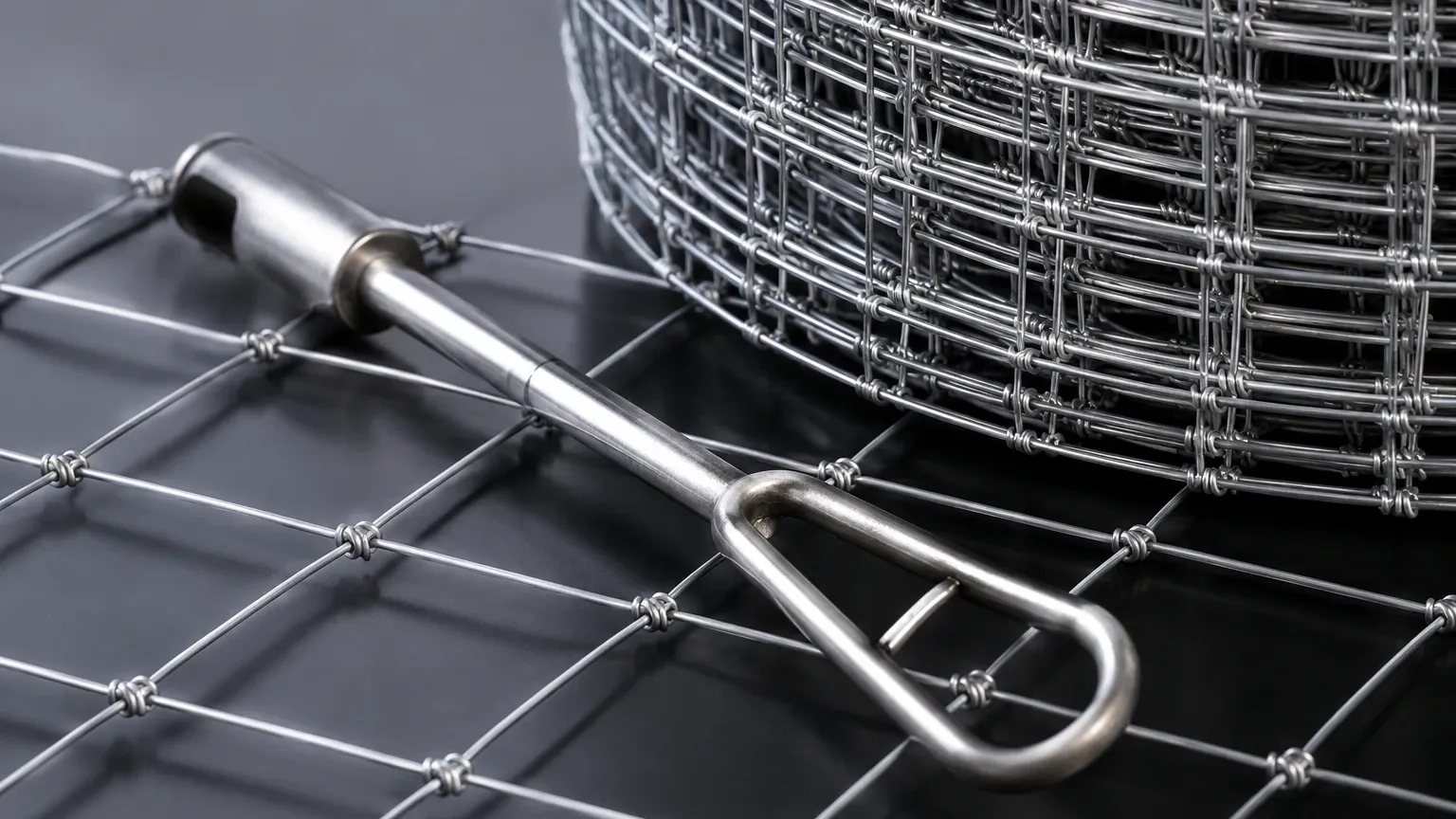
In industrial environments where large-scale perimeter security, high-volume filtration, or material separation is required, the management of heavy-duty mesh rolls presents significant logistical challenges. A woven wire fence winder is a specialized piece of mechanical equipment designed to streamline the installation, retrieval, and tensioning of industrial-grade mesh. While often associated with agricultural fencing, in a professional B2B context, these machines are critical for handling high-tensile stainless steel and alloy meshes used in chemical plants, water treatment facilities, and large-scale architectural projects.
Efficient handling of Woven Wire Mesh requires a deep understanding of the material’s physical properties. Unlike standard synthetic materials, metal mesh possesses high memory and significant weight, making manual handling not only inefficient but also hazardous to both the operator and the integrity of the mesh itself. This guide explores the technical mechanics, engineering considerations, and selection criteria for integrating winding equipment into industrial workflows.
Understanding the Mechanics of Woven Wire Fence Winders
A professional-grade woven wire fence winder operates on a system of torque application and controlled spooling. For industrial applications, these units are typically powered by hydraulic systems or heavy-duty electric motors, often designed to be mounted on skid steers, tractors, or dedicated industrial platforms.
The core components of a winder include the drive motor, the mandrel (or spool holder), and the tensioning arm. The drive motor must provide consistent torque to overcome the resistance of the mesh, especially when winding high-gauge wires. The mandrel must be adjustable to accommodate various core sizes, ensuring that the mesh is wound tightly and evenly.
One of the most critical mechanical features is the guide system. Because industrial mesh can vary in width and thickness, a guide system prevents "telescoping"—a phenomenon where the mesh layers slide laterally, creating an uneven roll that is difficult to store or re-deploy. Advanced winders utilize oscillating guides that distribute the mesh across the width of the spool with mathematical precision.
Influence of Woven Wire Mesh Characteristics on Winding
The performance of a woven wire fence winder is directly influenced by the specifications of the material being handled. Engineers must account for the weave type, wire diameter, and overall weight of the mesh roll. Different weave patterns react differently under the stress of mechanical winding.
For instance, the structural rigidity of the mesh determines the minimum winding radius. If a mesh is wound too tightly around a small-diameter mandrel, the wires may exceed their yield point, leading to permanent deformation or "set." This is particularly problematic in filtration applications where the precision of the aperture must be maintained.
When selecting materials for demanding industrial environments, engineers often specify Plain, twill and dutch woven wire mesh in SS304/316L — rolls, cut mesh and framed panels. Send mesh count or micron target for a technical quote. to ensure the mesh can withstand both the environmental stressors and the mechanical loads of automated winding and tensioning. The choice between a plain weave and a more complex dutch weave will dictate the friction coefficient during the winding process, requiring adjustments to the winder’s torque settings.
Engineering Considerations for Tension and Torque
Tension control is the most complex aspect of operating a woven wire fence winder. In industrial applications, improper tensioning can lead to several failure modes:
1. Mesh Elongation: Excessive tension can stretch the longitudinal wires (warp wires), altering the mesh count and reducing the filtration or separation accuracy.
2. Wire Breakage: High-tensile stainless steel has a specific limit before brittle failure occurs. Sudden jolts in the winding process can snap individual wires, compromising the entire roll.
3. Core Crushing: If the mesh is wound too tightly, the cumulative compressive force can crush the internal spool or mandrel, making it impossible to remove the roll.
To mitigate these risks, industrial winders often incorporate hydraulic bypass valves or electronic torque limiters. These safety features allow the operator to set a maximum tension threshold. For engineers, calculating the required torque involves analyzing the mesh’s cross-sectional area and the desired final roll diameter. A larger roll requires more torque to maintain consistent tension as the lever arm (the radius of the roll) increases.
Material Selection: SS304 vs. SS316L in Winding Applications
The metallurgical properties of the mesh being wound are paramount. In many B2B sectors, such as pharmaceutical or marine processing, the choice of material is non-negotiable.
* SS304: Offers excellent strength and standard corrosion resistance. It is suitable for most industrial fencing and general filtration needs. During winding, SS304 exhibits predictable work-hardening characteristics.
* SS316L: The "L" denotes low carbon, which, combined with molybdenum, provides superior resistance to chlorides and acids. From a winding perspective, SS316L is slightly more ductile than 304, which can be advantageous when winding tight coils, though it requires careful tension management to avoid over-stretching.
When using a woven wire fence winder with these materials, operators must ensure that the contact surfaces of the winder (rollers and mandrels) are also made of compatible non-corrosive materials or coated with polymers to prevent cross-contamination and galvanic corrosion.
Operational Maintenance for Industrial Mesh Winders
To maintain the precision required for handling high-value Woven Wire Mesh, a rigorous maintenance schedule for the winding equipment is essential. Because these machines often operate in dusty, outdoor, or chemically aggressive environments, the following components require regular inspection:
* Hydraulic Seals and Hoses: In hydraulic winders, any pressure drop can lead to inconsistent tensioning. Inspecting for leaks and ensuring fluid viscosity is appropriate for the operating temperature is critical.
* Mandrel Alignment: Over time, the heavy weight of metal mesh rolls can cause the mandrel to fall out of alignment. A misaligned mandrel will cause the mesh to wind at an angle, leading to edge damage.
* Drive Chain or Gearbox: For mechanical drives, lubrication is key to preventing "chatter"—small vibrations that can transfer to the mesh and cause micro-abrasions on the wire surface.
Technical Procurement Checklist
Before purchasing or specifying a woven wire fence winder for an industrial project, procurement teams and engineers should confirm the following technical details with their equipment provider:
| Feature | Requirement / Specification |
| :— | :— |
| Max Roll Weight | Must exceed the weight of the heaviest stainless steel mesh roll by at least 20%. |
| Mandrel Diameter | Must be larger than the minimum bend radius of the thickest wire gauge specified. |
| Power Source | Compatibility with existing hydraulic systems (GPM/PSI) or electrical supply. |
| Tension Control | Presence of adjustable torque limiters or hydraulic relief valves. |
| Corrosion Resistance | Use of stainless steel or powder-coated components for the winder frame. |
| Safety Features | Emergency stop mechanisms and shielding for pinch points during high-speed winding. |
Conclusion: Optimizing Mesh Lifecycle Management
The integration of a high-performance woven wire fence winder into industrial operations is more than a matter of convenience; it is a necessity for maintaining the structural integrity of high-quality Woven Wire Mesh. By automating the winding and tensioning process, companies can ensure that their filtration and fencing components are installed without damage, stored efficiently, and maintained for maximum service life.
For engineers, the focus must remain on the intersection of mechanical torque and material science. Whether dealing with fine micron-rated filters or heavy-duty perimeter barriers, the equipment used to handle the mesh must be as precise as the mesh itself. By following strict engineering guidelines for tension control and material compatibility, industrial facilities can significantly reduce waste and improve the total cost of ownership for their filtration and screening systems.
