


Woven Wire Mesh Adelaide: Technical Selection and Industrial Applications
In the industrial landscape of South Australia, particularly within the manufacturing hubs of Adelaide, the demand for high-precision filtration components has grown alongside advancements in defense, food processing, and chemical engineering. Selecting the right woven wire mesh is not merely a procurement task but an engineering decision that impacts the efficiency, safety, and longevity of industrial systems. Whether for hydraulic systems, pharmaceutical processing, or large-scale water treatment, understanding the technical nuances of metal mesh is essential for optimizing performance.
Industrial woven wire mesh is a versatile material produced by weaving metallic wires on industrial looms. The resulting medium offers precise aperture sizes, high mechanical strength, and excellent thermal resistance. For engineers and purchasing teams in Adelaide looking to integrate these components into their systems, the focus must remain on material integrity, weave geometry, and application-specific performance metrics.
Understanding the Technical Standards of Woven Wire Mesh
The performance of woven wire mesh is defined by several key parameters: mesh count, wire diameter, aperture size, and open area percentage. These factors determine the filtration accuracy and the flow characteristics of the medium.
Mesh Count vs. Aperture Size
Mesh count refers to the number of openings per linear inch. While a higher mesh count generally indicates finer filtration, it must be evaluated in conjunction with the wire diameter. The aperture size (the clear distance between two adjacent wires) is the most critical metric for filtration tasks, as it defines the maximum particle size that can pass through the mesh.
The Importance of Open Area
The open area is the ratio of the area of the apertures to the total area of the mesh, expressed as a percentage. In high-flow applications common in Adelaide’s wine and beverage processing sectors, a higher open area is often preferred to minimize pressure drop. However, increasing the open area usually requires thinner wires, which can compromise the structural integrity of the filter element under high-pressure conditions.
Material Selection: SS304 vs. SS316L for Australian Environments
Material selection is the foundation of filter durability. In the Australian context, where industrial sites may be exposed to coastal salinity or aggressive chemical cleaning agents, stainless steel remains the industry standard.
* Stainless Steel 304: This is the most common grade used for industrial mesh. It offers excellent mechanical properties and good resistance to atmospheric corrosion. It is suitable for most food-grade applications and general industrial screening where extreme chemical resistance is not required.
* Stainless Steel 316L: Containing molybdenum, SS316L provides superior resistance to chlorides and pitting corrosion. For Adelaide-based industries involving marine environments, pharmaceutical production, or acidic chemical processing, SS316L is the preferred choice. The "L" denotes low carbon content, which improves weldability and prevents sensitization during the fabrication of custom filter cartridges.
Beyond these, specialized alloys such as Monel, Inconel, or Hastelloy may be required for extreme temperature or highly corrosive environments, though stainless steel remains the most cost-effective solution for the majority of B2B filtration needs.
Weave Types and Their Impact on Filtration Performance
The method by which wires are interlaced significantly affects the mesh's physical properties and filtration characteristics. Engineers must choose a weave pattern that balances filtration fineness with mechanical strength.
Plain Weave
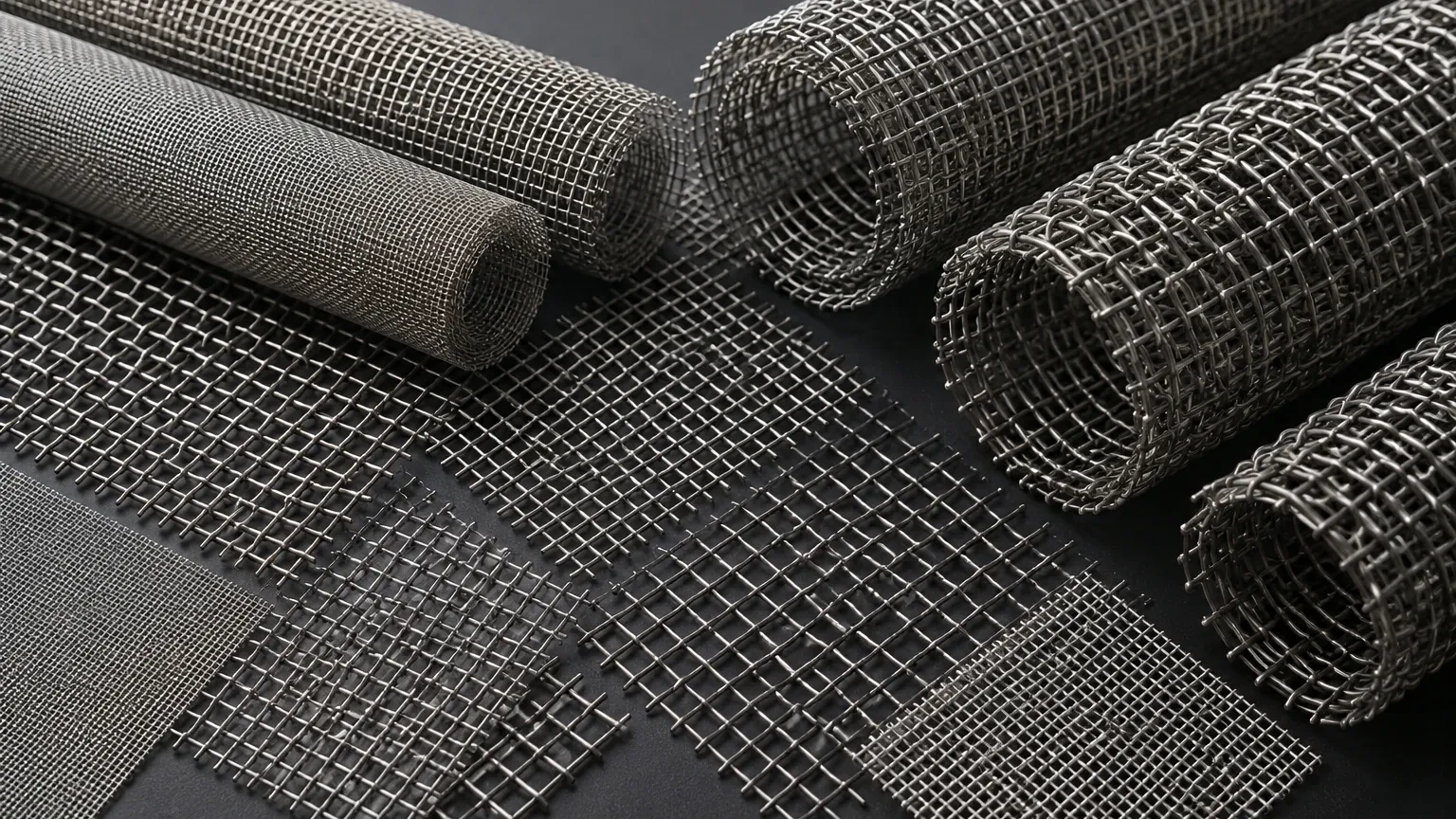
The most straightforward pattern, where each warp wire crosses alternately over and under each shute wire. It provides the highest open area and is ideal for general screening and low-pressure filtration. Plain, twill and dutch woven wire mesh in SS304/316L — rolls, cut mesh and framed panels. Send mesh count or micron target for a technical quote.
Twill Weave
In a twill weave, each shute wire passes alternately over and under two warp wires. This allows for the use of heavier wires for a given mesh count, resulting in a more robust mesh. It is often used for fine filtration where the mesh must withstand significant mechanical stress.
Dutch Weave (Plain and Twill)
Dutch weaves utilize different wire diameters for the warp and shute directions. The shute wires are driven closely together, creating a dense, wedge-shaped opening. This weave type does not have a straight-through opening but rather a tortuous path for the fluid, providing excellent surface filtration and high pressure resistance. Plain Dutch Weave is commonly used in hydraulic filters, while Twill Dutch Weave allows for the finest filtration ratings, often down to 10 microns or less.
Engineering Considerations for High-Performance Filtration
When specifying woven wire mesh adelaide for industrial projects, engineers must look beyond the basic dimensions and consider the operational environment of the filter.
Pressure Drop and Flow Rate
Every filter medium introduces a resistance to flow. An incorrectly specified mesh can lead to an excessive pressure drop, forcing pumps to work harder and increasing energy consumption. Calculating the clean pressure drop using the fluid’s viscosity and velocity is a standard step in the design phase.
Mechanical Loading and Support
Fine wire mesh is often delicate. In high-pressure applications, such as hydraulic return lines or high-viscosity chemical processing, the mesh must be supported by a coarser "backup" mesh or a perforated metal core. This prevents the mesh from deforming or "pleat bunching" under the force of the flow.
Filtration Rating: Absolute vs. Nominal
* Nominal Rating: Indicates the ability of the mesh to retain a majority of particles of a specific size (e.g., 90%).
* Absolute Rating: Refers to the diameter of the largest hard spherical particle that will pass through the filter under specified test conditions. For critical applications in the pharmaceutical or aerospace sectors, absolute ratings are mandatory to ensure system safety.
Evaluating Woven Wire Mesh for Specific Adelaide Industries
Adelaide’s diverse industrial base requires tailored filtration solutions. By understanding the specific needs of these sectors, procurement teams can better source appropriate materials.
Food and Beverage Processing
In the South Australian wine industry, woven wire mesh is used for the removal of solids from grape juice and the filtration of finished products. Here, hygiene is paramount. Stainless steel mesh is preferred for its ability to withstand Clean-in-Place (CIP) procedures involving caustic chemicals and high-temperature steam.
Water Treatment and Desalination
With South Australia's reliance on various water sources, including desalination, wire mesh serves as a critical pre-filtration stage. It protects sensitive reverse osmosis membranes from particulate damage. In these applications, SS316L is essential to combat the corrosive effects of saline water.
Defense and Aerospace
Adelaide is a hub for Australian defense manufacturing. Precision metal filters are used in fuel systems, hydraulic actuators, and cooling systems. These applications require rigorous quality control and often involve custom-designed mesh components with high-tolerance specifications.
Customization, OEM, and Total Cost of Ownership
One of the primary advantages of working with a professional manufacturer like Kaifil is the ability to move beyond standard off-the-shelf rolls. Customization is often necessary to fit existing machinery or to meet unique process requirements.
Custom Fabrication Options
* Cut-to-Size Pieces: Precision laser or plasma cutting ensures clean edges and exact dimensions for integration into larger assemblies.
* Framed Panels: Adding a rigid frame to the mesh provides structural support and eases installation in HVAC or industrial screening systems.
* Multi-Layer Sintering: For extreme environments, multiple layers of woven wire mesh can be sintered together to create a single, high-strength porous plate that combines fine filtration with high permeability.
Total Cost Considerations
While the initial purchase price of woven wire mesh is an important factor, the total cost of ownership (TCO) is a more accurate measure of value. TCO includes the cost of the mesh, installation time, cleaning frequency, and the lifespan of the component. High-quality stainless steel mesh may have a higher upfront cost than synthetic alternatives, but its durability, cleanability, and recyclability often result in lower long-term expenses. In many industrial processes, the ability to clean and reuse a stainless steel filter cartridge significantly reduces waste and operational downtime.
Quality Assurance and Procurement Checkpoints
Before finalizing a purchase of woven wire mesh, engineers should confirm several quality benchmarks with their supplier:
1. Material Certification: Ensure the supplier can provide mill test reports (MTRs) to verify the chemical composition of the stainless steel.
2. Dimensional Accuracy: Verify that the mesh count and wire diameter meet the tolerances specified in international standards (such as ISO 9044 or ASTM E2011).
3. Cleaning and Degreasing: For oxygen service or pharmaceutical applications, the mesh must be free of residual oils from the weaving process.
4. Packaging: For international shipping to Adelaide, the mesh should be securely packed to prevent deformation or contamination during transit.
By focusing on these technical details, Adelaide's industrial sectors can ensure they are utilizing filtration solutions that are not only effective but also optimized for their specific operational challenges. Woven wire mesh remains a cornerstone of modern engineering, providing the reliability and precision required for today’s demanding industrial processes.
