


Woven Wire Mesh Canada: A Technical Guide for Industrial Filtration
In the diverse industrial landscape of North America, precision and durability are the primary drivers for component selection. For engineers and procurement specialists sourcing woven wire mesh canada, understanding the technical nuances of material science and weave geometry is essential for optimizing filtration performance. Woven wire mesh serves as a critical component in sectors ranging from oil and gas extraction in Alberta to pharmaceutical manufacturing in Ontario and food processing in Quebec.
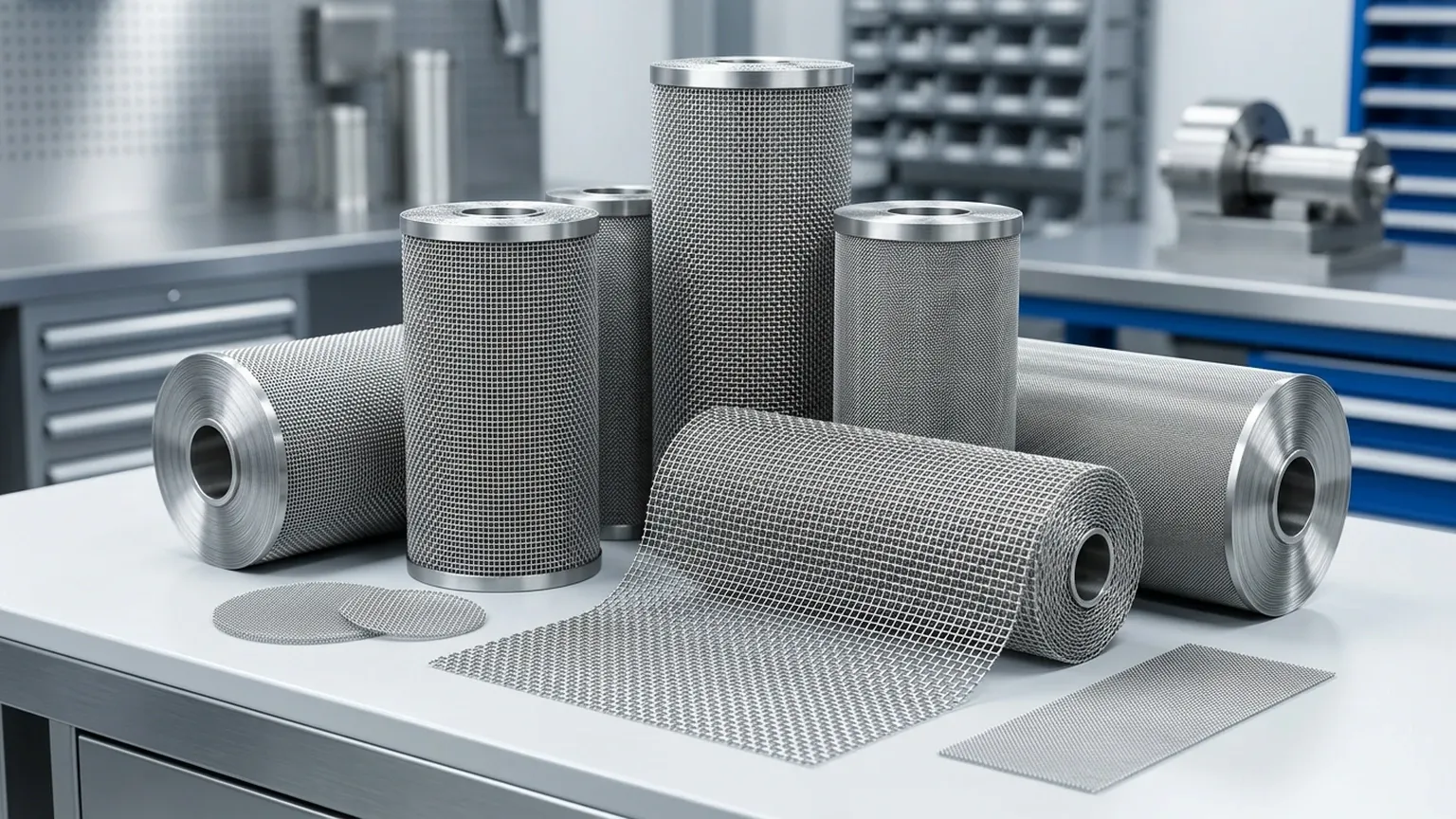
Selecting the appropriate mesh involves more than identifying a hole size; it requires a deep dive into mechanical properties, chemical compatibility, and the specific dynamics of the fluid or gas being filtered. This guide examines the technical considerations necessary for selecting high-performance Plain, twill and dutch woven wire mesh in SS304/316L — rolls, cut mesh and framed panels. Send mesh count or micron target for a technical quote. to ensure long-term operational efficiency.
The Role of Woven Wire Mesh in the Canadian Industrial Landscape
Canada’s industrial sectors face unique environmental and regulatory challenges. In the mining and resource sectors, filtration components must withstand abrasive slurries and high-pressure environments. In the food and beverage industry, compliance with strict hygiene standards is non-negotiable. Woven wire mesh is favored in these applications due to its predictable pore structure, ease of cleaning, and structural integrity.
Industrial filtration often requires a balance between flow rate (permeability) and particle retention. For Canadian manufacturers, sourcing woven wire mesh canada often involves looking for suppliers who can provide custom specifications that meet both international standards and local operational requirements. Whether used in centrifugal separators, vibrating screens, or high-pressure hydraulic filters, the quality of the weave directly impacts the downtime and maintenance cycles of the entire system.
Material Science: Selecting the Right Stainless Steel Grade
The performance of woven wire mesh is fundamentally tied to the alloy used. While various metals can be woven, stainless steel remains the industry standard for industrial filtration due to its corrosion resistance and mechanical strength. Kaifil specializes in two primary grades that cover the vast majority of industrial needs:
1. Stainless Steel 304 (SS304)
SS304 is the most common grade used in general industrial applications. It offers excellent resistance to atmospheric corrosion and is suitable for most food-grade applications. It provides a cost-effective solution for environments where high-strength acids or extreme salt concentrations are not present.
2. Stainless Steel 316L (SS316L)
For more demanding environments, such as chemical processing plants or marine-adjacent facilities, SS316L is the preferred choice. The addition of molybdenum enhances its resistance to pitting and crevice corrosion, particularly in chloride-rich environments. The "L" denotes low carbon content, which improves weldability and prevents sensitization—a critical factor when the mesh is integrated into welded filter cartridges or framed panels.
When evaluating materials for woven wire mesh canada, engineers must consider the chemical composition of the filtrate. A mismatch in material grade can lead to premature failure through stress corrosion cracking or uniform thinning, significantly increasing the total cost of ownership.
Engineering the Weave: Plain, Twill, and Dutch Patterns
The method by which wires are interlaced determines the mesh's mechanical strength, filtration accuracy, and flow characteristics. There are three primary weave patterns utilized in high-precision industrial filtration:
Plain Weave
This is the most straightforward and commonly used weave. Each shute wire (cross wire) passes alternately over and under each warp wire (longitudinal wire). Plain weave provides a square opening and is ideal for applications requiring high flow rates and moderate filtration accuracy. It is easy to clean and offers a high percentage of open area.
Twill Weave
In a twill weave, each shute wire passes alternately over and under two warp wires. This allows for the use of heavier wire diameters relative to the mesh count, resulting in a mesh that can withstand higher mechanical loads. Twill weaves are often used when a fine mesh is required but the wire must be thick enough to maintain structural rigidity.
Dutch Weave (Plain and Twill)
Dutch weaves utilize different wire diameters for the warp and shute. Typically, the shute wires are smaller and driven closer together, creating a dense, "zero-aperture" mesh. Filtration does not occur through square openings but through the triangular paths created by the overlapping wires. This weave is essential for high-pressure applications and fine filtration (down to the micron level), as it offers superior strength and excellent cake release properties during backwashing.
Technical Parameters: Mesh Count, Wire Diameter, and Micron Ratings
To specify woven wire mesh canada accurately, technical professionals must distinguish between several interrelated parameters:
* Mesh Count: The number of openings per linear inch. A higher mesh count indicates a finer mesh, but it must be balanced against wire diameter to ensure the mesh isn't too fragile for the application.
* Wire Diameter: Measured before weaving. The ratio between wire diameter and mesh count determines the "Open Area" percentage. A higher open area results in lower pressure drops and higher flow rates but may reduce the mesh's lifespan in abrasive environments.
* Aperture (Opening Size): The clear distance between two adjacent wires. This is the most critical factor for particle retention.
* Micron Rating: Often used in Dutch weaves to describe the size of particles the mesh will reliably intercept. It is important to distinguish between "nominal" micron ratings (60-80% efficiency) and "absolute" micron ratings (99% or higher efficiency).
For engineers, calculating the pressure drop across a clean mesh is a vital step in system design. Selecting a mesh that is too fine for the application will lead to rapid clogging and frequent maintenance, while a mesh that is too coarse will fail to protect downstream components like pumps and valves.
Customization and OEM Filtration Solutions for Canadian Projects
Off-the-shelf mesh rolls are often insufficient for specialized industrial equipment. Customization is where manufacturers like Kaifil provide the most value. When sourcing woven wire mesh canada, buyers should look for capabilities that extend beyond simple weaving:
1. Custom Slitting and Cutting: Providing mesh in precise widths or specific geometric shapes (circles, rectangles, or complex die-cuts) to fit unique filter housings.
2. Framed and Reinforced Panels: For heavy-duty screening or architectural applications, mesh can be integrated into stainless steel frames to provide additional structural support and ease of installation.
3. Multi-layer Sintering: In extreme environments, multiple layers of mesh (e.g., a fine filtration layer protected by coarser support layers) can be sintered together to create a single, high-strength porous plate.
4. Cylindrical and Conical Fabrication: Transforming flat mesh into pleated cartridges, cylinders, or strainers through precision welding and forming.
By working with a manufacturer that understands these requirements, Canadian firms can reduce secondary processing costs and ensure that the filtration component is perfectly matched to the housing and the operational flow dynamics.
Procurement Considerations: Quality Control and Lead Times
The procurement of industrial components involves more than comparing unit prices. For woven wire mesh canada, the total cost of ownership is influenced by the reliability of the supplier and the consistency of the product. Key factors to confirm before finalizing a purchase include:
* Material Certification: Ensure the supplier provides Mill Test Reports (MTRs) to verify the chemical composition of the stainless steel. This is particularly important for 316L to ensure the molybdenum content meets ASTM standards.
* Dimensional Accuracy: In high-precision filtration, even a small variance in wire diameter or mesh count can lead to significant changes in filtration efficiency and pressure drop.
* Cleaning and Degreasing: For pharmaceutical and food-grade applications, the mesh must be free of weaving oils and metallic residues. Inquire about the manufacturer’s ultrasonic cleaning and passivation processes.
* Logistics and Lead Times: While local distributors may offer quick shipping for standard sizes, custom OEM solutions often require direct collaboration with the manufacturer. Understanding the lead time from production to delivery in Canada is essential for project scheduling.
Conclusion
Selecting the right woven wire mesh canada is an engineering decision that impacts the safety, efficiency, and longevity of industrial systems. By focusing on the technical properties of stainless steel grades, the mechanical advantages of different weave patterns, and the precision of mesh specifications, technical professionals can ensure their filtration solutions perform reliably under the most demanding conditions.
Kaifil’s commitment to quality and customization allows us to support Canadian industries with high-performance filtration components. Whether you require standard rolls of SS304 plain weave or custom-engineered SS316L Dutch weave cartridges, focusing on technical accuracy from the outset will lead to optimized filtration performance and a lower total cost of operation. For specific projects, providing detailed mesh counts or target micron ratings allows for a more accurate technical quote and a solution tailored to your application's unique requirements.
