


Woven Wire Mesh Durban: An Industrial Guide to Selection and Specification
In the landscape of industrial manufacturing and processing, the efficiency of filtration and separation systems often dictates the quality of the final product and the longevity of downstream equipment. For engineers and procurement specialists sourcing woven wire mesh durban for South Africa’s industrial hubs, understanding the technical nuances of mesh construction is essential. Durban, as a primary port and a center for chemical, food processing, and maritime industries, presents unique environmental and operational challenges that necessitate high-performance filtration solutions.
Selecting the right Woven Wire Mesh involves more than simply choosing a material; it requires a deep dive into weave patterns, wire diameters, and metallurgical properties. This guide explores the engineering considerations necessary to optimize filtration performance in demanding industrial environments.
Engineering Fundamentals of Woven Wire Mesh
Woven wire mesh is a versatile material produced by weaving metallic wires on industrial looms. The resulting structure provides a precise pore size distribution, making it ideal for sieving, straining, and filtering. The performance of the mesh is primarily determined by its weave type, which dictates its mechanical strength and filtration accuracy.
Plain Weave
The most common configuration is the plain weave, where each warp wire crosses alternately over and under each shute (weft) wire. This creates a simple, stable structure with square openings. It is widely used for general screening and low-pressure filtration applications where high flow rates are prioritized over ultra-fine particle retention.
Twill Weave
In a twill weave, each shute wire passes over and under two warp wires in a staggered pattern. This allows for the use of heavier wires than a plain weave of the same mesh count, providing greater mechanical strength and the ability to produce finer meshes that can withstand higher pressure differentials.
Dutch Weave (Plain and Twill)
Dutch weaves utilize a combination of different wire diameters for the warp and shute. The shute wires are driven closely together, creating a dense, wedge-shaped opening rather than a square one.
- Plain Dutch Weave offers high mechanical strength and is excellent for high-pressure filtration.
- Twill Dutch Weave allows for even finer filtration ratings, often down to the micron level, by layering the shute wires more densely. This is the preferred choice for critical applications in the chemical and pharmaceutical sectors.
Material Selection for Corrosive Environments
For industrial operations in coastal regions or those involving aggressive chemicals, material selection is the most critical factor in preventing premature failure. When sourcing woven wire mesh durban, engineers must account for the high humidity and salinity of the coastal environment, as well as the specific chemical compatibility of the process fluid.
Stainless Steel 304
SS304 is the standard industrial grade, offering good corrosion resistance and excellent mechanical properties. It is suitable for food processing and general industrial use where exposure to harsh acids or high-salinity environments is minimal.
Stainless Steel 316L
For applications in Durban’s maritime and chemical processing industries, SS316L is often the minimum requirement. The addition of molybdenum enhances resistance to pitting and crevice corrosion, particularly in chloride-rich environments. The "L" denotes low carbon content, which improves weldability and prevents intergranular corrosion during the fabrication of filter cartridges or framed panels.
Specialized Alloys
In extreme cases involving high temperatures or highly acidic environments, specialized alloys like Inconel, Monel, or Hastelloy may be required. These materials maintain their structural integrity and filtration accuracy where standard stainless steels would fail.
Key Evaluation Criteria for Industrial Procurement
When evaluating Woven Wire Mesh for a specific project, technical professionals should focus on four primary metrics to ensure the product meets the application's performance expectations.
1. Mesh Count vs. Micron Rating: Mesh count refers to the number of openings per linear inch. However, for precision filtration, the micron rating (the size of the largest spherical particle that can pass through the mesh) is more critical. Engineers must distinguish between nominal and absolute micron ratings to ensure the desired level of particle retention.
2. Wire Diameter: The diameter of the wire affects both the open area (flow rate) and the mechanical strength of the mesh. A thicker wire increases durability but reduces the percentage of open area, potentially increasing the pressure drop across the filter.
3. Open Area Percentage: This calculation is vital for determining the flow capacity of the system. A higher open area reduces the frequency of cleaning and lowers energy costs by minimizing resistance to flow.
4. Mechanical Stability: In high-vibration or high-pressure systems, the mesh must resist wire displacement. Techniques such as calendering (flattening the mesh) or sintering (bonding wire intersections) can be used to enhance stability.
Applications in Major Industrial Sectors
The versatility of woven wire mesh durban makes it indispensable across several key sectors in the region:
Chemical and Petrochemical Processing
In the chemical industry, woven mesh is used for catalyst recovery, gas-liquid separation, and the filtration of aggressive solvents. The precision of Dutch weave mesh ensures that fine particulates are removed without compromising the flow of high-viscosity fluids.
Food and Beverage Production
Filtration in the food industry requires materials that are non-toxic and easy to clean. Stainless steel mesh is the gold standard for straining juices, filtering oils, and processing dairy products. It provides a hygienic surface that resists bacterial growth and can withstand rigorous Clean-in-Place (CIP) cycles.
Hydraulic and Lubrication Systems
Precision metal filter components are essential for protecting sensitive hydraulic valves and pumps from particulate contamination. Woven wire mesh provides the necessary pressure resistance and fine filtration required to maintain fluid cleanliness in heavy machinery and maritime equipment.
Customization and OEM Capabilities
Standard off-the-shelf mesh rolls may not always meet the specific requirements of complex industrial systems. Customization is often necessary to optimize performance and simplify installation.
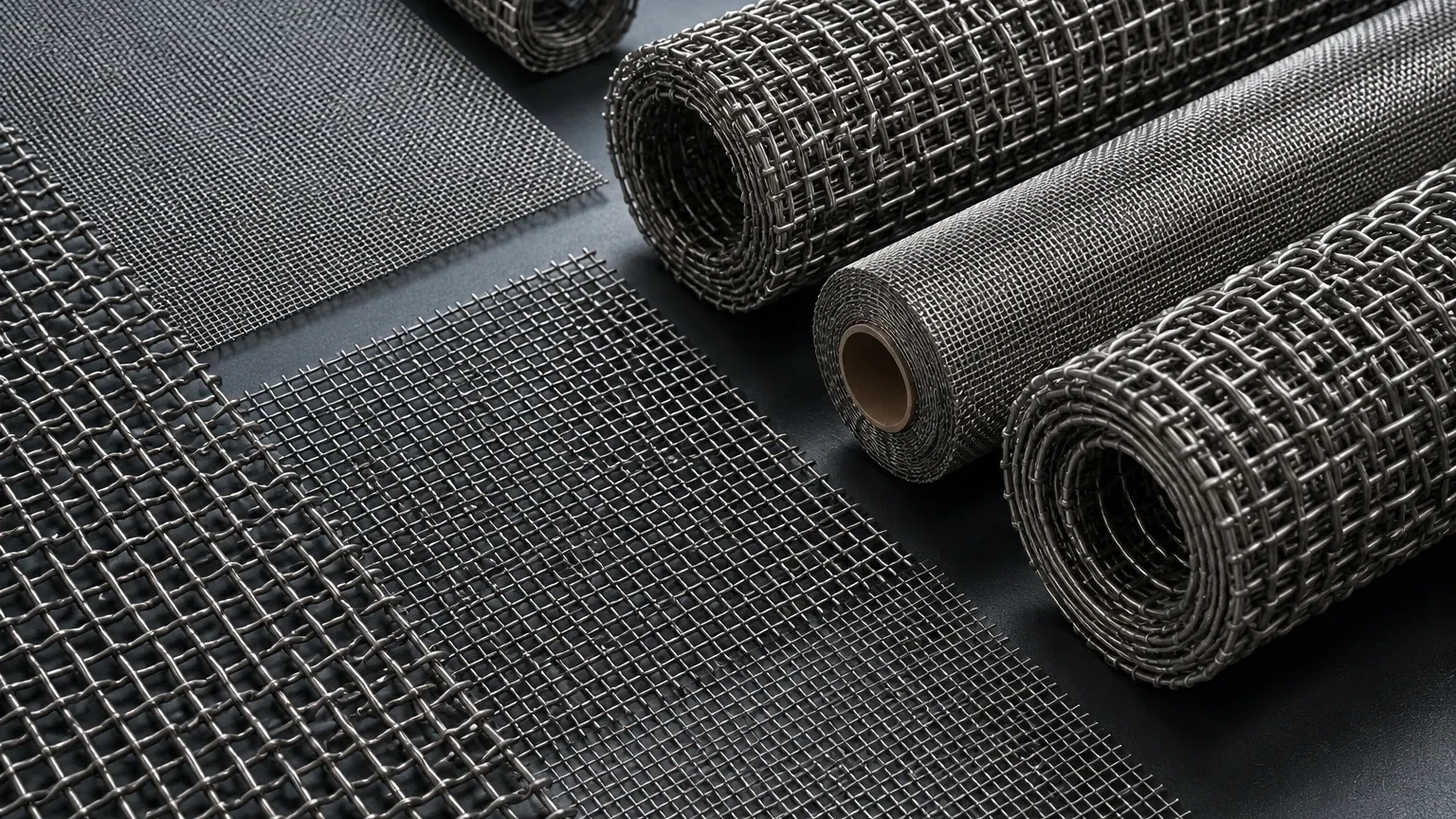
Kaifil specializes in providing tailored solutions, including Plain, twill and dutch woven wire mesh in SS304/316L — rolls, cut mesh and framed panels. Send mesh count or micron target for a technical quote. By working closely with manufacturing partners, engineers can specify exact dimensions, custom edge treatments, and multi-layer sintered structures that provide superior depth filtration and backwashing capabilities.
Customization options include:
- Cut-to-size pieces: Precision-cut circles, rectangles, or complex shapes for integration into existing machinery.
- Framed Mesh Panels: Mesh tensioned and secured within a rigid frame for use in vibrating screens or architectural applications.
- Multi-layer Laminates: Sintering multiple layers of mesh together to combine the filtration accuracy of fine mesh with the structural support of coarse mesh.
Total Cost of Ownership and Maintenance
While the initial purchase price of Woven Wire Mesh is a factor, technical buyers must consider the Total Cost of Ownership (TCO). High-quality stainless steel mesh may have a higher upfront cost than synthetic alternatives or lower-grade metals, but its durability and cleanability significantly reduce long-term expenses.
Replacement Cycles
The lifespan of a metal filter is determined by the abrasive nature of the particles, the corrosivity of the fluid, and the frequency of cleaning. Stainless steel mesh is highly resistant to mechanical wear, allowing for many more cleaning cycles than plastic or paper filters.
Cleaning Methods
Proper maintenance is essential for maintaining flow rates. Common cleaning methods for industrial wire mesh include:
- Backwashing: Reversing the flow of fluid to dislodge particles trapped on the mesh surface.
- Ultrasonic Cleaning: Using high-frequency sound waves in a solvent bath to remove fine contaminants from within the weave.
- Chemical Cleaning: Using compatible solvents or acids to dissolve organic or mineral deposits.
Logistics and Sourcing for the Durban Region
Sourcing woven wire mesh durban requires a partner who understands the logistical and technical requirements of the South African market. For large-scale industrial projects, reliability in supply and adherence to international quality standards (such as ISO 9001) are non-negotiable.
When confirming an order, procurement teams should verify:
- Material Certification: Ensure the supplier provides mill test reports (MTRs) to confirm the chemical composition of the stainless steel.
- Dimensional Accuracy: Confirm that the mesh count and wire diameter meet the specified tolerances.
- Packaging and Shipping: For international shipments to Durban, mesh rolls must be properly packed to prevent deformation or contamination during transit.
By focusing on technical specifications and material integrity, engineers can ensure that their filtration systems operate at peak efficiency, reducing downtime and protecting critical infrastructure. Whether for a new chemical processing plant or the maintenance of maritime hydraulic systems, the correct application of Woven Wire Mesh remains a cornerstone of industrial excellence.
