


Understanding Woven Wire Mesh Galvanized: A Technical Guide for Industrial Applications
In the landscape of industrial filtration and structural separation, selecting the appropriate material and finish is a critical engineering decision. While stainless steel remains the gold standard for high-performance filtration in corrosive environments, woven wire mesh galvanized serves as a versatile, cost-effective solution for various industrial, agricultural, and architectural applications.
For engineers and procurement professionals, understanding the technical nuances of galvanization—ranging from the application method to the timing of the coating process—is essential for ensuring the longevity and efficiency of the mesh. This guide examines the properties of galvanized woven wire mesh, compares it with stainless steel alternatives, and outlines the key criteria for technical selection.
The Fundamentals of Woven Wire Mesh
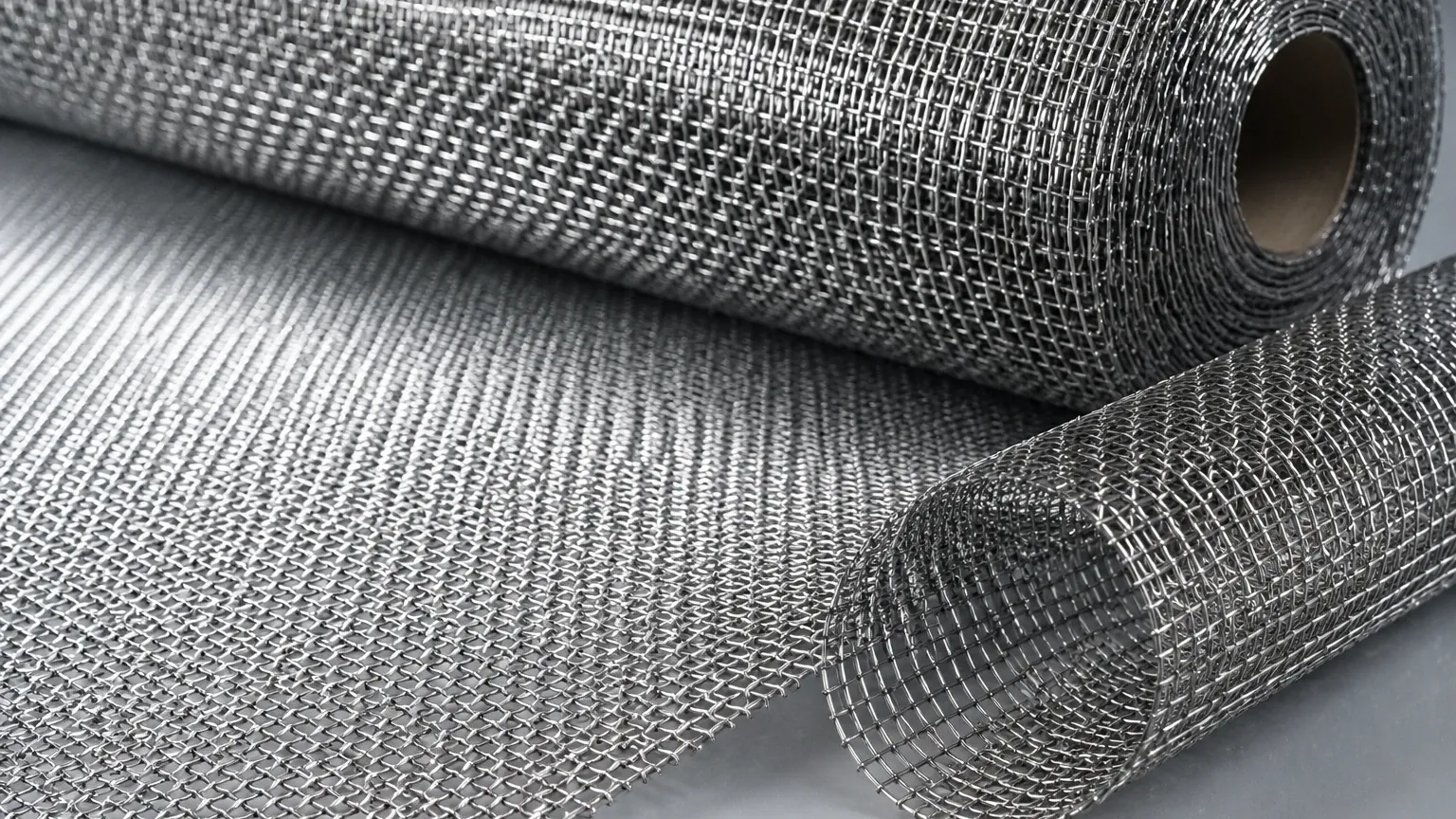
At its core, Woven Wire Mesh is produced by weaving individual metallic wires over and under one another to create a precise grid of openings. The manufacturing process is similar to textile weaving, utilizing advanced looms that can handle various wire diameters and materials. The resulting product is characterized by its mesh count (the number of openings per linear inch), wire diameter, and aperture size (the clear distance between wires).
In industrial settings, the stability of the weave and the precision of the aperture are paramount. Whether used for particle sizing, liquid filtration, or protective screening, the mesh must maintain its structural integrity under mechanical stress. When carbon steel is used as the base material, galvanization is applied to provide a protective zinc coating, which prevents oxidation and extends the service life of the component.
The Galvanization Process: Hot-Dip vs. Electro-Galvanized
Not all galvanized coatings are created equal. The method of applying the zinc layer significantly impacts the mesh's performance in the field. There are two primary methods used in the production of woven wire mesh galvanized products:
1. Hot-Dip Galvanizing
This process involves immersing the steel mesh into a bath of molten zinc at temperatures typically around 450°C (842°F). The heat triggers a metallurgical reaction, creating a series of zinc-iron alloy layers topped with a layer of pure zinc.
* Advantages: Provides a much thicker coating compared to electro-galvanizing, offering superior corrosion resistance. The metallurgical bond is extremely durable and can withstand significant physical abrasion.
* Considerations: The thick coating can sometimes result in slightly irregular aperture sizes, which may be a concern for high-precision filtration applications.
2. Electro-Galvanizing (Zinc Plating)
In this process, a layer of zinc is applied through an electrolytic cell. The mesh acts as the cathode, and a zinc anode is used to deposit a thin, uniform layer of zinc onto the surface.
* Advantages: Results in a very smooth, aesthetically pleasing finish with highly precise aperture dimensions. It is often preferred for fine mesh where maintaining exact tolerances is critical.
* Considerations: The coating is significantly thinner than hot-dip galvanizing, making it less suitable for harsh outdoor environments or high-moisture industrial settings.
GAW vs. GBW: Timing Matters
A critical distinction for engineers is whether the mesh is "Galvanized After Weave" (GAW) or "Galvanized Before Weave" (GBW). This choice impacts the vulnerability of the mesh at its most critical points: the wire intersections.
Galvanized Before Weave (GBW)
In GBW manufacturing, the individual wires are galvanized before they are loaded onto the loom. While this is often more economical, the weaving process involves mechanical friction and bending that can cause microscopic cracks in the zinc coating at the cross-points. These exposed areas are often the first to show signs of rust.
Galvanized After Weave (GAW)
The entire mesh sheet is dipped or plated after the weaving process is complete. This ensures that the intersections—where wires overlap—are completely sealed and bonded by the zinc coating. For industrial filtration or any application involving moisture, GAW is generally the preferred specification because it eliminates potential corrosion points at the junctions.
Comparing Galvanized Mesh to Stainless Steel
While woven wire mesh galvanized is an excellent choice for many general-purpose applications, it is important to recognize its limitations compared to the high-performance stainless steel solutions manufactured by specialists like Kaifil.
Corrosion Resistance
Galvanized steel relies on a sacrificial zinc coating. Once the zinc is depleted or scratched through, the underlying carbon steel will rust. In contrast, stainless steel (such as Grade 304 or 316L) contains chromium, which forms a self-healing passive oxide layer. For chemical processing, pharmaceutical production, or marine environments, stainless steel is the standard requirement.
Temperature Tolerance
Galvanized coatings can begin to degrade or peel at temperatures exceeding 200°C (392°F). Stainless steel alloys are capable of maintaining structural integrity and oxidation resistance at much higher temperatures, making them essential for high-heat industrial filtration.
Longevity and Total Cost of Ownership
While galvanized mesh has a lower initial purchase price, the total cost of ownership (TCO) may be higher in demanding environments due to more frequent replacement cycles. Engineers must weigh the upfront savings against the labor and downtime costs associated with replacing a corroded filter or screen.
Engineering Selection Criteria
When specifying woven wire mesh galvanized for a project, several technical parameters must be defined to ensure the product meets the application requirements:
1. Mesh Count and Aperture: Determine the required filtration rating or particle retention size. For galvanized mesh, ensure that the coating thickness (especially in hot-dip) does not reduce the aperture below the required threshold.
2. Wire Diameter: Thicker wires provide greater mechanical strength and a longer life span but reduce the "open area" percentage, which affects flow rates and pressure drop.
3. Open Area Percentage: This is the ratio of the area of the openings to the total area of the mesh. A higher open area allows for higher flow rates but may compromise the structural rigidity of the mesh.
4. Environmental Factors: Assess the presence of moisture, salt, or chemicals. If the environment is highly acidic or alkaline, galvanized steel may fail rapidly, necessitating a move to stainless steel or specialized alloys.
5. Mechanical Stress: Consider if the mesh will be subject to high pressure, vibration, or abrasive particles. The bond of the zinc coating (GAW vs. GBW) will be a deciding factor here.
Common Applications for Galvanized Woven Mesh
Despite the dominance of stainless steel in high-end filtration, galvanized mesh remains a staple in several sectors:
* HVAC Filtration: Used as a pre-filter or support layer in air handling units where moisture levels are relatively low.
* Agricultural Screening: Providing durable barriers for grain storage, pest control, and livestock enclosures.
* Architectural and Security: Utilized in infill panels, window guards, and partitions where a balance of strength and cost is required.
* Industrial Sifting: Suitable for dry, non-corrosive bulk solids and powders where stainless steel's chemical resistance is not strictly necessary.
Quality Assurance and Sourcing
When sourcing industrial mesh, it is vital to work with manufacturers who provide transparency regarding material grades and coating weights. For galvanized products, the weight of the zinc coating (often expressed in ounces per square foot or grams per square meter) is a primary indicator of expected service life.
For applications requiring higher precision, such as chemical processing or precision hydraulic filtration, transitioning to stainless steel components is often the most reliable path. Kaifil specializes in these high-performance sectors, providing custom-engineered wire mesh solutions that meet the rigorous demands of modern industry. From material selection and filtration accuracy to customized designs, ensuring that the mesh type aligns with the operational environment is the key to optimized performance.
Conclusion
Choosing between woven wire mesh galvanized and stainless steel options involves a careful analysis of environmental conditions, mechanical requirements, and budget constraints. While galvanized mesh offers a functional and economical solution for many standard applications, its performance is finite. For critical industrial processes where durability and precision are non-negotiable, stainless steel remains the preferred material. By understanding the differences in galvanization methods and weave types, engineers can select the most appropriate filtration and separation components to ensure long-term operational success.
