


Woven Wire Mesh Nearby: A Technical Guide to Industrial Sourcing and Selection
In the industrial landscape, the search for "woven wire mesh nearby" is often triggered by an immediate operational need—whether it is a scheduled maintenance shutdown, an unexpected equipment failure, or the rapid prototyping of a new filtration system. However, for engineers and procurement professionals in the chemical, pharmaceutical, and food processing sectors, proximity is only one factor in a complex selection matrix.
Selecting the right Woven Wire Mesh requires a deep understanding of material science, weaving geometry, and mechanical performance. While local hardware distributors may carry standard grades, specialized industrial applications demand high-precision components that meet strict tolerances. This guide explores the technical considerations necessary for sourcing woven wire mesh, comparing the benefits of local availability with the advantages of partnering with a dedicated manufacturer like Kaifil.
1. Understanding the Technical Specifications of Woven Wire Mesh
Before searching for a supplier nearby, it is essential to define the technical parameters required for the application. Woven wire mesh is characterized by several key variables that dictate its filtration efficiency and structural integrity.
Weave Types and Their Functions
The method by which wires are interlaced significantly impacts the mesh's performance:
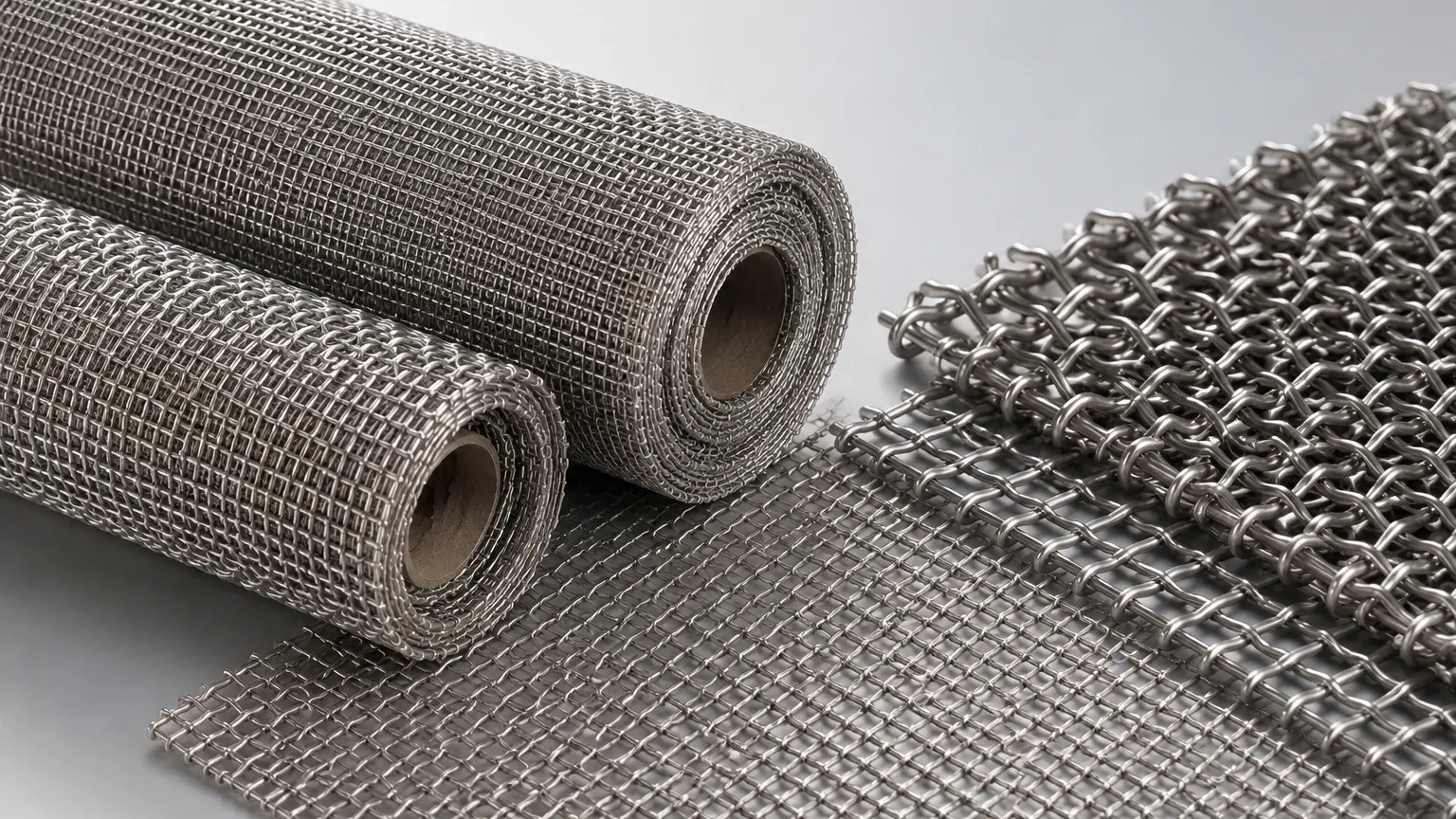
* Plain Weave: The most common industrial weave where each warp wire crosses alternately over and under each shute wire. It offers a stable structure and consistent aperture size, ideal for general screening and low-pressure filtration.
* Twill Weave: Each shute wire passes over and under two warp wires. This allows for the use of heavier wires in a given mesh count, providing increased strength and the ability to produce finer meshes that would be impossible in a plain weave.
* Dutch Weave (Plain and Twill): These weaves utilize different wire diameters for the warp and shute. The result is a dense, firm mesh with small, triangular openings. Dutch weaves are the standard for high-pressure filtration and precision particle retention.
Mesh Count vs. Aperture Size
Engineers must distinguish between mesh count (the number of openings per linear inch) and aperture size (the clear distance between two adjacent wires). For high-precision filtration, the micron rating—representing the diameter of the smallest particle the mesh will retain—is the most critical metric. When evaluating Plain, twill and dutch woven wire mesh in SS304/316L — rolls, cut mesh and framed panels. Send mesh count or micron target for a technical quote., it is vital to confirm that the manufacturer can provide certified aperture tolerances.
2. Sourcing Woven Wire Mesh Nearby: Local Distributors vs. Specialized Manufacturers
When an urgent requirement arises, the instinct is to look for "woven wire mesh nearby." Understanding the trade-offs between local distributors and direct manufacturers is key to long-term cost-efficiency.
The Role of Local Distributors
Local industrial supply houses often stock standard rolls of stainless steel mesh, typically in 304 grade and common mesh counts (e.g., 20, 40, or 80 mesh). The primary advantage is immediate pickup and zero shipping lead time. However, local stock is rarely optimized for specialized chemical resistance or high-precision micron ratings. Furthermore, local distributors seldom offer customization services like ultrasonic cleaning, precision slitting, or custom framing.
The Advantage of Direct Manufacturers
Partnering with a manufacturer like Kaifil provides access to a broader range of alloys and custom configurations. While a manufacturer might not be physically located in your immediate zip code, the technical support and customization they offer often outweigh the shipping time.
Direct manufacturers provide:
* Material Traceability: Essential for pharmaceutical and food-grade applications.
* Custom Geometry: The ability to manufacture non-standard widths, disc shapes, or pleated cartridges.
* Technical Consultation: Assistance in selecting the optimal weave for specific flow rates and pressure drops.
3. Engineering Considerations for Material Selection
Material selection is the foundation of filter longevity. In industrial environments, the mesh is often exposed to corrosive fluids, high temperatures, and mechanical stress.
Stainless Steel Grades: 304 vs. 316L
* SS304: Suitable for most general-purpose applications. It provides good corrosion resistance and is cost-effective for water treatment and basic industrial screening.
* SS316L: The "L" stands for low carbon, which improves weldability and reduces the risk of intergranular corrosion. SS316L contains molybdenum, making it significantly more resistant to chlorides and pitting. This is the industry standard for marine environments, chemical processing, and pharmaceutical manufacturing.
Mechanical Strength and Durability
In hydraulic systems or high-pressure gas filtration, the mesh must withstand significant differential pressure without deforming. Engineers should evaluate the wire diameter in relation to the open area. A higher open area percentage improves flow rates but may compromise the structural rigidity of the mesh. In such cases, multi-layer sintered mesh or reinforced framed panels may be necessary to prevent media migration.
4. Evaluating Supplier Quality and Performance Expectations
When vetting a source for woven wire mesh, whether nearby or global, purchasing teams should look beyond the price per square foot. The total cost of ownership is heavily influenced by the quality of the weave and the reliability of the supplier.
Key Evaluation Criteria:
1. Aperture Consistency: Inconsistent openings lead to "bypass," where oversized particles pass through the filter, potentially damaging downstream equipment.
2. Edge Treatment: For mesh used in moving machinery or manual handling, finished edges (selvage) or precision-cut edges are necessary to prevent fraying and injury.
3. Cleaning Standards: For food and beverage or pharmaceutical applications, the mesh must be free of weaving oils and metallic dust. Suppliers should offer specialized cleaning processes like ultrasonic degreasing.
4. Testing Capabilities: Ask if the supplier can perform PMI (Positive Material Identification) or bubble point testing to verify the integrity of the mesh and its micron rating.
5. Maintenance, Replacement Cycles, and Total Cost Considerations
Industrial filters are consumable components, but their lifespan can be extended through proper selection and maintenance. Understanding the replacement cycle is critical for inventory management.
Signs of Wear and Failure
* Blinding/Plugging: When particles become permanently lodged in the mesh, reducing the effective filtration area and increasing pressure drop.
* Fatigue Cracking: Often caused by vibration or repeated pressure pulses, leading to mechanical failure of the wires.
* Corrosion Pitting: Visible as small dark spots or thinning of the wires, which eventually leads to holes in the mesh.
Optimizing Replacement Cycles
To reduce the frequency of searching for "woven wire mesh nearby" for emergency repairs, facilities should implement a predictive maintenance schedule. By monitoring the pressure differential ($ΔP$) across the filter, engineers can replace the mesh before it reaches a critical failure point. Additionally, investing in higher-grade materials like SS316L or specialized Dutch weaves can often double the service life of the component, significantly reducing the long-term cost per gallon filtered.
6. Customization: Beyond the Standard Roll
Many industrial applications cannot be solved with a standard roll of mesh. This is where the limitations of local "off-the-shelf" sourcing become apparent. Customization is often required to integrate the mesh into existing hardware.
OEM and Custom Solutions
Manufacturers like Kaifil specialize in converting raw Woven Wire Mesh into functional industrial components. This includes:
* Mesh Discs and Gaskets: Precision-stamped shapes for use in extruder screens or laboratory equipment.
* Cylindrical Filters: Welded or seamed tubes used in intake strainers and hydraulic returns.
* Pleated Elements: Increasing the surface area within a fixed footprint to allow for higher flow rates and longer intervals between cleanings.
* Framed Panels: Mesh tensioned and welded into stainless steel frames for use in vibrating separators or architectural panels.
Conclusion: Making an Informed Sourcing Decision
While finding a supplier for "woven wire mesh nearby" can solve an immediate crisis, the long-term efficiency of an industrial process depends on technical precision and material integrity. Engineers must balance the convenience of local sourcing with the necessity of rigorous specifications.
By focusing on the specific weave type, material grade, and customization requirements, procurement teams can ensure they are not just buying a commodity, but an engineered solution. Whether you require a standard roll of plain weave for a water treatment facility or a custom-framed Dutch weave panel for a chemical reactor, understanding these technical boundaries is the first step toward optimized filtration performance.
For those seeking reliable, high-performance filtration components, reviewing the available Woven Wire Mesh options and consulting with technical experts can provide the clarity needed to make a sound investment for your facility's future.
