


Woven Wire Mesh Open Area Calculator: A Technical Guide for Industrial Filtration
In industrial filtration and separation processes, the performance of a system is dictated by the geometry of the media used. For engineers and procurement specialists, understanding the relationship between wire diameter, mesh count, and aperture is critical. One of the most vital metrics in this evaluation is the "Open Area." This article explores the technical foundations of the woven wire mesh open area calculator, the mathematical principles governing mesh selection, and the engineering trade-offs required to optimize filtration efficiency.
Understanding the Significance of Open Area
Open area, often expressed as a percentage, represents the ratio of the total area of the apertures (the holes) to the total area of the mesh surface. It is a primary determinant of two critical performance factors: flow rate and pressure drop.
In B2B applications—ranging from chemical processing to hydraulic systems—the open area directly influences the throughput of the medium. A high open area typically results in a lower pressure drop across the filter, which reduces the energy requirements of pumps and increases the overall efficiency of the system. Conversely, a lower open area often implies a sturdier mesh with thicker wires, providing the mechanical strength necessary for high-pressure environments or heavy-load vibrating screens.
When utilizing a woven wire mesh open area calculator, engineers are not just looking for a number; they are evaluating the "breathability" of the filter media. If the open area is too small for the intended flow, the system may experience premature clogging (blinding) and excessive backpressure, leading to equipment strain or failure.
The Math Behind the Woven Wire Mesh Open Area Calculator
To accurately determine the performance of Woven Wire Mesh, one must understand the variables involved in the calculation. For standard square mesh (plain or twill weave), the open area percentage is derived from the mesh count and the wire diameter.
The Fundamental Formula
The most common formula used in a woven wire mesh open area calculator is:
$$OA = \frac{O^2}{(O + d)^2} \times 100$$
Where:
* OA = Percentage of Open Area
* O = Size of the Opening (Aperture)
* d = Wire Diameter
Alternatively, if the mesh count (the number of wires per linear inch) is known, the formula can be expressed as:
$$OA = (1 – (M \times d))^2 \times 100$$
Where:
* M = Mesh Count (wires per inch)
* d = Wire Diameter (in inches)
Why Precision Matters
In precision manufacturing, even a variation of a few microns in wire diameter can significantly shift the open area percentage. For instance, in fine filtration applications where the aperture is small, a slightly thicker wire significantly reduces the open area, which exponentially increases the resistance to flow. This is why technical professionals must confirm the exact tolerances of the wire used during the procurement phase.
Factors Influencing Open Area and Filtration Efficiency
While the mathematical formula provides a geometric value, several physical factors influence how that open area performs in a real-world industrial environment.
1. Wire Diameter vs. Aperture Ratio
The relationship between the wire diameter and the opening size determines the mesh's stability. A "light" mesh has a high open area but thin wires, making it susceptible to deformation under hydraulic surges. A "heavy" mesh uses thicker wires to provide structural integrity, often used in architectural applications or high-pressure industrial strainers, but at the cost of reduced throughput.
2. Material Selection (SS304 vs. SS316L)
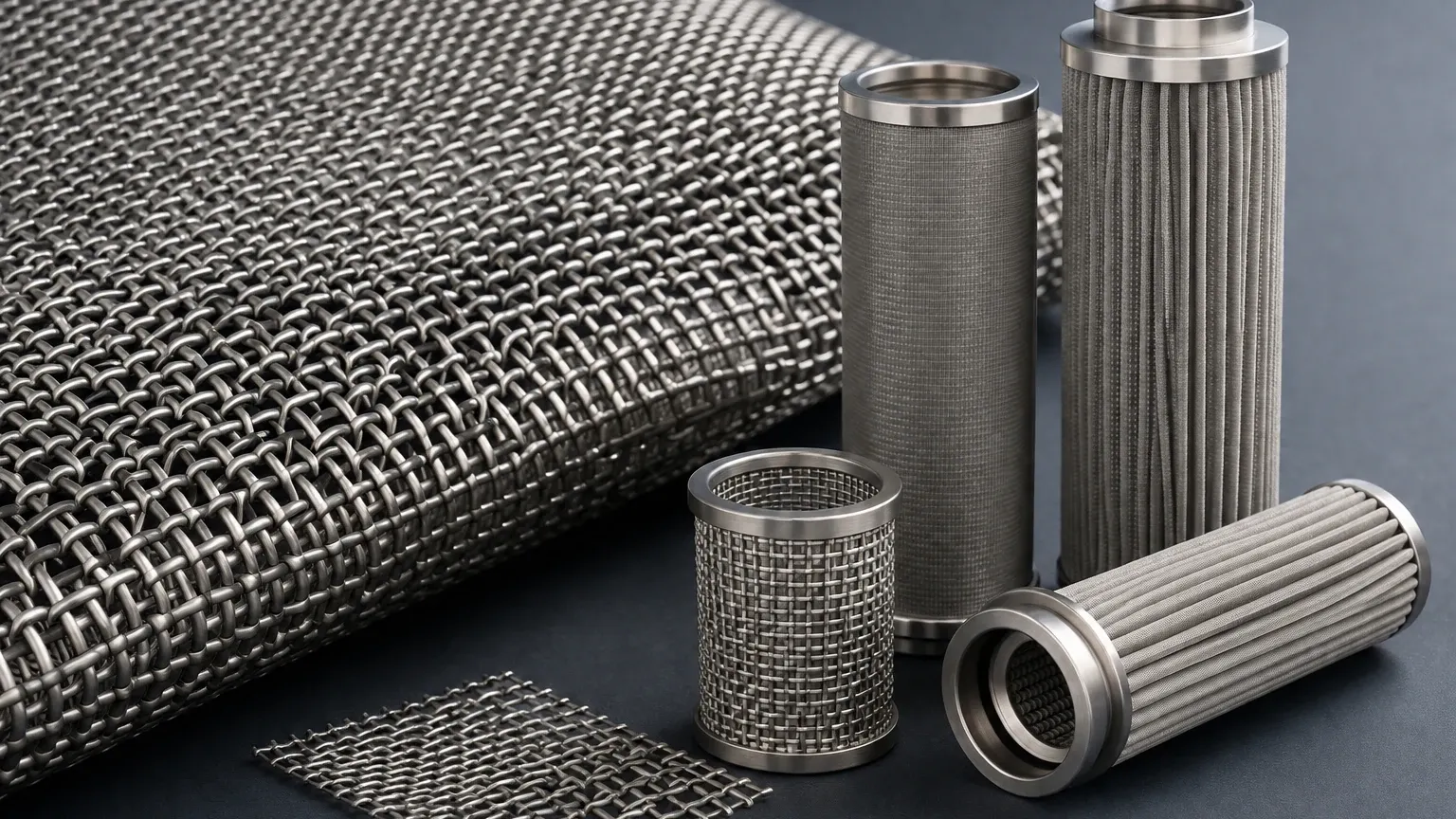
Material choice does not directly change the geometric open area, but it affects the *effective* open area over time. In corrosive chemical environments, the use of Stainless Steel 304 might lead to surface pitting or corrosion buildup, which effectively narrows the apertures. Utilizing Plain, twill and dutch woven wire mesh in SS304/316L — rolls, cut mesh and framed panels. Send mesh count or micron target for a technical quote. ensures that the material properties match the chemical demands of the application, maintaining the calculated open area throughout the filter's service life.
3. Surface Treatments
Processes such as calendering (flattening the mesh) can reduce the thickness of the mesh and slightly alter the aperture shape. While this creates a smoother surface for cake release in filtration, it can slightly modify the results predicted by a standard woven wire mesh open area calculator.
Weave Patterns and Their Geometric Impact
The weave pattern is perhaps the most significant variable when moving beyond simple square mesh. The standard calculator works perfectly for Plain Weave, but specialized weaves require a deeper engineering analysis.
Plain Weave
This is the most common pattern where each shute wire passes alternately over and under each warp wire. It provides the most predictable open area and is the easiest to calculate. It is ideal for general-purpose screening and low-pressure filtration.
Twill Weave
In a twill weave, each shute wire passes alternately over and under two warp wires. This allows for the use of heavier wires in a given mesh count compared to a plain weave. While the woven wire mesh open area calculator formula remains similar, the mechanical properties are enhanced, allowing the mesh to withstand greater loads.
Dutch Weave (Plain and Twill)
Dutch weaves are characterized by having a limited number of warp wires interlaced with a maximum number of shute wires, creating a dense, strong filter cloth. Because the wires are driven together tightly, there is no "straight-through" opening.
For Dutch weaves, a standard geometric open area calculator is often insufficient. Engineers instead refer to "absolute micron ratings" and "flow permeability." The effective open area is much lower than square mesh, but the filtration precision is significantly higher, often reaching down to 5-10 microns. In these cases, the "void volume" within the mesh structure becomes the more relevant metric for flow analysis.
Engineering Trade-offs: Strength vs. Throughput
Selecting the right mesh involves balancing competing technical requirements. An engineer must often decide between a high open area for maximum flow and a lower open area for increased durability.
* Scenario A: High Flow, Low Pressure. In gravity-fed water treatment or air filtration, a high open area (often >50%) is preferred. This minimizes energy loss. However, these meshes are fragile and often require a perforated metal backing or a coarser mesh support layer (pleating) to prevent sagging.
* Scenario B: High Pressure, Heavy Loading. In hydraulic oil filtration or vibrating mineral screens, the mesh is subject to intense mechanical stress. Here, a lower open area (25-35%) with thicker wires is necessary to prevent wire migration or breakage.
Using a woven wire mesh open area calculator allows engineers to run "what-if" simulations: if we increase the wire diameter by 0.05mm to improve strength, how much will our flow rate drop? This data-driven approach is essential for optimizing the total cost of ownership (TCO) of filtration components.
Critical Selection Criteria for Industrial Procurement
When transitioning from calculation to procurement, B2B buyers should confirm several technical specifications with the manufacturer to ensure the mesh performs as calculated.
1. Mesh Count Accuracy: Ensure the manufacturer adheres to international standards (such as ASTM E2011 or ISO 9044) regarding the number of wires per inch. Discrepancies here will invalidate your open area calculations.
2. Wire Gauge Consistency: Standard wire gauges can have slight variations. Requesting the actual millimeter or inch diameter used in production is safer than relying on gauge numbers alone.
3. Aperture Tolerance: For critical separation tasks, the maximum individual aperture size (the largest hole in the mesh) is often more important than the average open area. This ensures no oversized particles pass through the system.
4. Effective vs. Geometric Open Area: In liquid filtration, the boundary layer of the fluid near the wire surface can reduce the effective flow area. Engineers should factor in a safety margin when the calculated open area is near the limit of the system's requirements.
Conclusion: Optimizing Filtration with Precise Data
The woven wire mesh open area calculator is an indispensable tool in the engineer's kit, providing the mathematical foundation for filter design. However, the calculation is only as good as the data and the manufacturing quality behind it.
By understanding the interplay between weave patterns, wire diameters, and material science, technical professionals can select a mesh that provides the perfect balance of throughput and structural integrity. Whether designing a custom stainless steel filter cartridge for a pharmaceutical line or a high-capacity strainer for a chemical plant, the precision of the mesh geometry is the key to operational success. For complex applications, working with a manufacturer that understands these technical nuances ensures that the theoretical calculations translate into reliable, long-term performance in the field.
