


Woven Wire Mesh Perth: A Technical Guide for Industrial Filtration and Separation
In the industrial landscape of Western Australia, the demand for high-performance separation materials is driven by some of the world’s most demanding sectors, including mining, oil and gas, and large-scale water treatment. For engineers and procurement specialists searching for woven wire mesh perth, understanding the technical nuances of material grade, weave geometry, and mechanical durability is essential for optimizing process uptime and filtration efficiency.
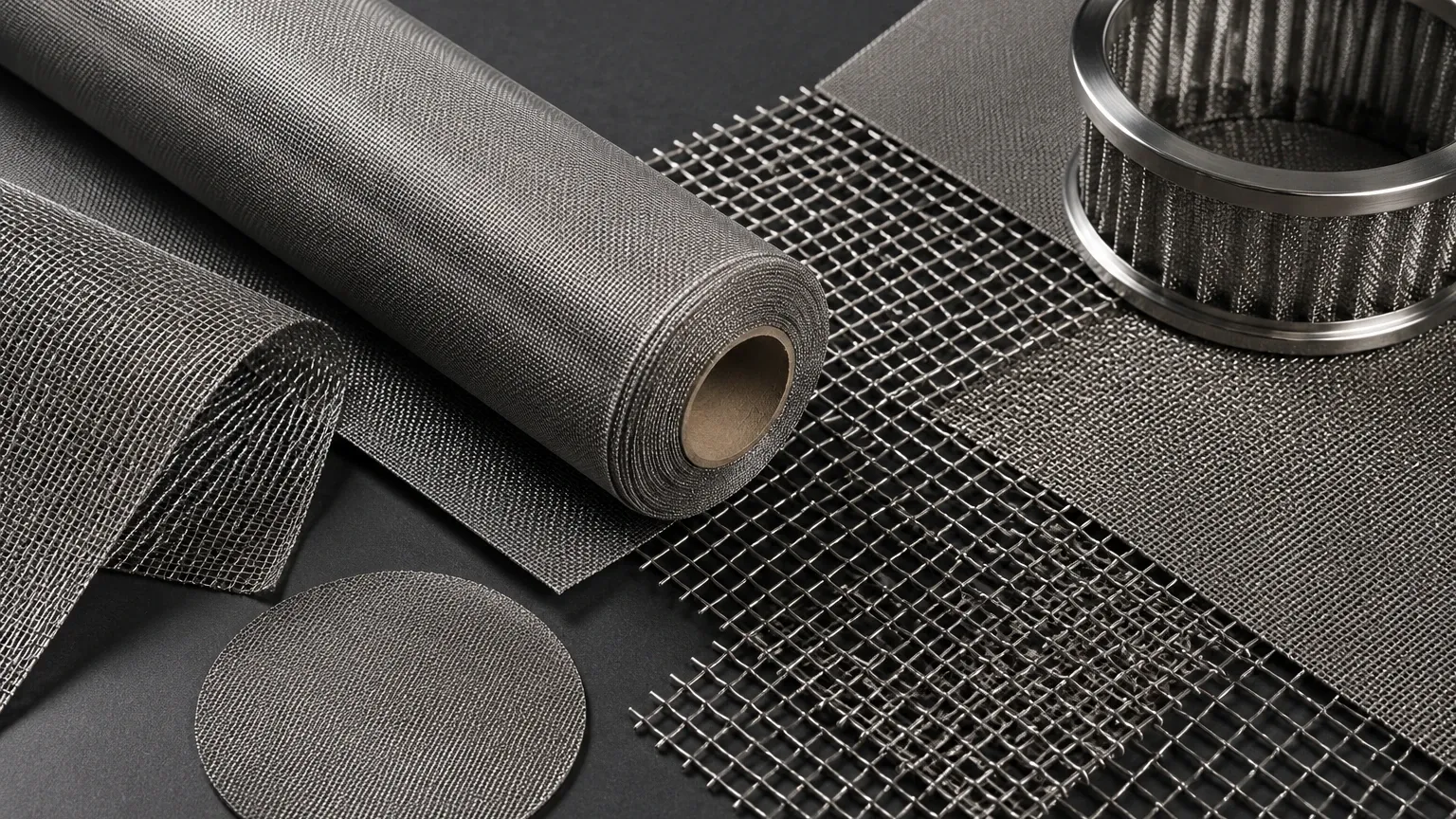
Woven wire mesh is a highly versatile engineered product created by weaving metallic wires on industrial looms. Unlike welded mesh or expanded metal, woven mesh offers superior precision in aperture size, making it the primary choice for fine filtration and particle sizing. This guide examines the critical engineering factors that professionals in the Perth region must consider when selecting mesh for industrial applications.
The Role of Woven Wire Mesh in Western Australia’s Industrial Landscape
Perth serves as the global hub for the resource sector, where filtration challenges are often characterized by high-volume throughput and abrasive environments. The application of Woven Wire Mesh in this region spans several critical functions:
* Mineral Processing: In the Pilbara and Goldfields, mesh is used in vibrating screens and slurry filters to classify ores and recover precious metals. The mesh must withstand significant mechanical stress and abrasive wear.
* Oil and Gas: Offshore operations in the North West Shelf require precision mesh for sand control screens and seawater intake filtration. Here, corrosion resistance is as vital as filtration accuracy.
* Water Treatment: Desalination and wastewater plants in Western Australia utilize stainless steel mesh for pre-filtration and membrane protection, requiring strict adherence to micron ratings to prevent downstream fouling.
* Agriculture and Food Production: From grain silos to wine filtration in the Swan Valley, mesh provides a hygienic, durable solution for separating solids from liquids or air.
Technical Specifications: Beyond the Mesh Count
When specifying woven wire mesh perth for industrial projects, engineers must move beyond the simple concept of "mesh count" (the number of openings per linear inch). A comprehensive specification includes several interconnected variables:
1. Aperture (Opening Size)
The aperture is the clear distance between two adjacent warp or weft wires. This is the most critical factor for filtration, as it determines the maximum particle size that can pass through the mesh. In precision applications, this is often measured in microns (μm).
2. Wire Diameter
The thickness of the wire used in the weave affects both the open area and the mechanical strength of the mesh. A thicker wire increases the weight and durability but reduces the percentage of open area, which can lead to higher pressure drops across the filter element.
3. Percentage of Open Area
Calculated as $(Aperture / (Aperture + Wire Diameter))^2 imes 100$, this value dictates the flow capacity of the mesh. For high-flow applications common in Perth’s water treatment sectors, maximizing the open area while maintaining structural integrity is a key engineering challenge.
Material Selection for Corrosive and Abrasive Environments
The environmental conditions in Western Australia—ranging from highly saline coastal air to acidic mining slurries—necessitate careful metallurgical selection. Most industrial woven wire mesh is manufactured from stainless steel, but the specific grade determines the lifecycle of the component.
* SS304 (Standard Grade): Suitable for general industrial use where moisture exposure is moderate. It offers good mechanical properties but may suffer from pitting in high-chloride environments.
* SS316L (Low Carbon, Molybdenum-Bearing): The industry standard for woven wire mesh perth in marine and chemical processing. The addition of molybdenum provides superior resistance to chloride-induced pitting and crevice corrosion, while the low carbon content prevents sensitization during welding.
* Specialty Alloys: For extreme conditions, materials like 904L, Duplex stainless steels, or Monel may be required to handle highly acidic or high-temperature processes.
Comparing Weave Types: Plain, Twill, and Dutch
The method by which wires are interlaced significantly impacts the mesh’s performance. Selection depends on whether the priority is flow rate, filtration fineness, or mechanical strength.
Plain Weave
This is the most common weave pattern, where each warp wire crosses alternately over and under each weft wire. It provides the most accurate aperture sizes and is ideal for general screening and particle separation.
Twill Weave
In a twill weave, each warp wire passes over and under two weft wires. This allows for the use of heavier wires in a given mesh count, resulting in a stronger mesh that can handle higher pressures. It is often used for fine filtration where a plain weave would be too fragile.
Dutch Weave (Plain and Twill)
Dutch weaves utilize different diameters for warp and weft wires. The weft wires are driven closely together, creating a "zero-aperture" appearance. This results in a tortuous path for particles, providing excellent depth filtration and high mechanical strength. Dutch weaves are the preferred choice for high-pressure hydraulic filters and fuel filtration in the aerospace and defense sectors operating out of Perth.
Critical Engineering Considerations for Perth Industrial Applications
Selecting the correct mesh involves evaluating how the material will behave under operational loads. Engineers should confirm the following before procurement:
Pressure Drop and Flow Rate
Every filter medium introduces resistance to flow. In large-scale industrial systems, an excessive pressure drop can lead to pump cavitation or increased energy consumption. Calculations must account for fluid viscosity, velocity, and the mesh's open area. For those sourcing Plain, twill and dutch woven wire mesh in SS304/316L — rolls, cut mesh and framed panels. Send mesh count or micron target for a technical quote., providing these operational parameters allows for a more accurate technical recommendation.
Mechanical Loading and Support
Woven wire mesh is often flexible. In high-pressure applications, it must be supported by a perforated metal core or a coarser mesh drainage layer (pleating). Failure to provide adequate support can lead to mesh deformation or "blowout" at the weave intersections.
Chemical Compatibility
Beyond corrosion, engineers must consider the chemical interaction between the mesh and the process fluid. In the pharmaceutical and food sectors in Western Australia, the mesh must be inert and easy to sanitize to prevent batch contamination.
Sourcing and Customization: The OEM Advantage
While standard rolls of mesh are available, most industrial applications in Perth require customized components. Working with a manufacturer that offers OEM capabilities allows for the development of filtration solutions tailored to specific equipment housings.
Customization options include:
* Cut-to-Size Panels: Precision laser or plasma cutting to ensure edge integrity.
* Framed Screens: Adding rigid borders for easy installation in vibrating equipment.
* Cylindrical and Conical Filters: Multi-layer mesh sintered or welded into complex shapes for specialized machinery.
* Calendering: Passing the mesh through rollers to flatten the knuckles of the weave, providing a smooth surface and stabilizing the wire positions.
For Perth-based operations, sourcing from a manufacturer with extensive experience in international standards (such as ASTM E2016) ensures that the mesh delivered meets the rigorous safety and performance requirements of the Australian resource industry.
Maintenance and Longevity in Demanding Operations
The total cost of ownership for woven wire mesh perth is determined by its service life and ease of maintenance. Unlike disposable polymer filters, stainless steel mesh can often be cleaned and reused.
Cleaning Protocols
* Backwashing: Reversing the flow to dislodge particles from the mesh surface.
* Ultrasonic Cleaning: Using high-frequency sound waves in a cleaning solvent to remove fine particulates trapped within the weave of Dutch mesh.
* Chemical Cleaning: Using mild acids or bases to dissolve organic or mineral scaling, provided the mesh material is compatible.
Replacement Cycles
Mesh failure usually occurs due to mechanical fatigue, abrasion, or localized corrosion. Regular inspections should look for "blinding" (permanent clogging of apertures) or wire thinning. In the high-throughput mining environments of Western Australia, establishing a predictive maintenance schedule based on pressure differential monitoring is recommended to prevent catastrophic filter failure.
Conclusion
Woven wire mesh remains a fundamental component in the industrial infrastructure of Perth and the wider Western Australian region. Whether it is used for protecting sensitive subsea equipment in the oil and gas sector or for ore classification in the desert, the performance of the mesh is a direct result of informed engineering selection. By focusing on material integrity, weave precision, and mechanical support, technical professionals can ensure their filtration systems deliver reliable, long-term service in even the harshest environments.
