


Woven Wire Mesh Png
In the realm of industrial design and mechanical engineering, the transition from a conceptual model to a physical component requires precision at every stage. When technical professionals search for a "woven wire mesh png," they are often seeking more than just a graphic asset; they are looking for a high-quality visual representation to integrate into CAD overlays, technical manuals, or architectural visualizations. However, for a filtration system to perform reliably in a chemical plant or a food processing line, the digital representation must eventually be reconciled with rigorous physical specifications.
Woven wire mesh is a foundational component in industrial filtration, providing the structural integrity and precise aperture control necessary for separating solids from liquids or gases. This guide explores the technical parameters of woven wire mesh, the role of digital assets in the design process, and the engineering considerations required to move from a visual concept to a high-performance filtration solution.
The Role of Digital Assets in Filtration Design
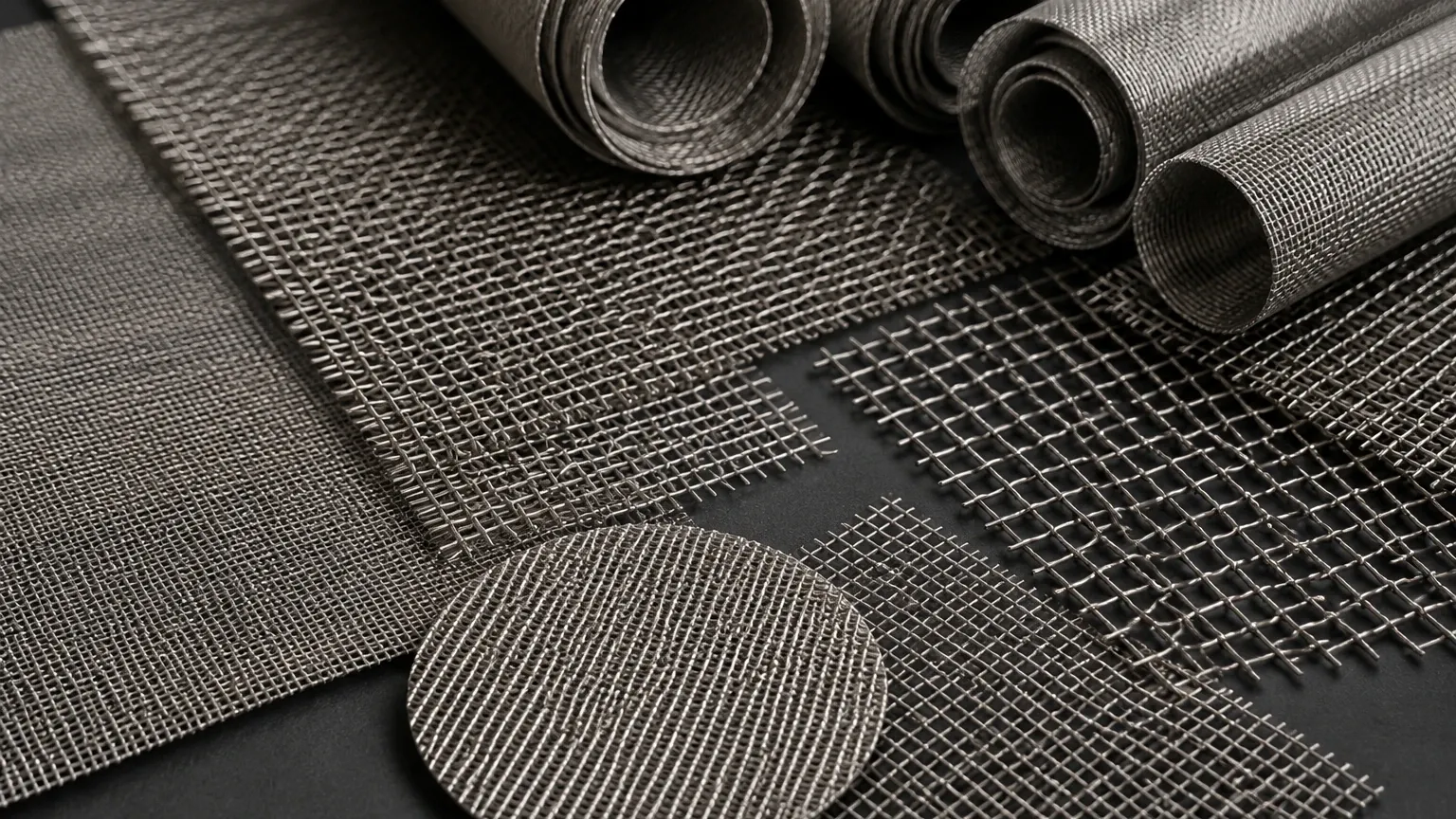
In modern B2B procurement and engineering, the design phase often begins with digital modeling. A woven wire mesh png—specifically one with a transparent background—is a valuable tool for engineers who need to layer mesh patterns over complex equipment schematics. These files allow for the visualization of filter placement within a housing or the aesthetic impact of mesh in architectural cladding.
While a PNG file provides a visual approximation of the weave pattern, it cannot convey the critical mechanical properties that dictate performance. Engineers must look beyond the image to define the mesh count, wire diameter, and material grade. The visual transparency in a digital file represents the "open area" in a physical mesh, which is a primary factor in determining flow rate and pressure drop across a filter element.
Understanding Woven Wire Mesh Construction
At its core, Woven Wire Mesh is produced by weaving individual wires over and under one another on a loom, similar to textile manufacturing. The resulting fabric is characterized by its stability and the uniformity of its openings. To select the correct mesh, one must understand the three primary weave patterns used in industrial applications:
1. Plain Weave
This is the most common and straightforward weave. Each warp wire (running lengthwise) passes alternately over and under each weft wire (running crosswise). Plain weave mesh provides a high degree of transparency and a consistent aperture size, making it ideal for general screening and low-pressure filtration tasks.
2. Twill Weave
In a twill weave, each warp wire passes over and under two successive weft wires. This pattern allows for the use of heavier wires in a given mesh count, resulting in a more robust fabric. Twill weaves are often employed when the mesh must withstand higher mechanical loads or when a finer mesh count is required than what plain weaving can achieve with a specific wire diameter.
3. Dutch Weave (Plain and Twill)
Dutch weaves utilize different wire diameters for the warp and weft. Typically, the warp wires are heavier, while the weft wires are smaller and driven closely together. This creates a dense, "tortuous path" for the fluid, allowing for extremely fine filtration (down to the micron level) while maintaining high mechanical strength. Unlike plain or twill weaves, Dutch weaves do not have straight-through openings, which enhances their ability to capture fine particulates.
Technical Specifications: Beyond the Visual
When evaluating woven wire mesh for an industrial project, several technical parameters must be confirmed to ensure the component meets the application's demands. A digital "woven wire mesh png" may show the pattern, but the following data points define the performance:
Mesh Count vs. Micron Rating
* Mesh Count: Refers to the number of openings per linear inch. A higher mesh count indicates a finer mesh.
* Aperture (Opening Size): The clear distance between two adjacent wires. This is the most critical factor for particle retention.
* Micron Rating: Often used for Dutch weaves, this indicates the particle size the mesh is designed to intercept. It can be expressed as "nominal" (approximate) or "absolute" (the size of the largest particle that can pass through).
Wire Diameter and Open Area
The diameter of the wire directly impacts the strength of the mesh and the percentage of open area. The open area is calculated using the formula:
Open Area % = ((Aperture) / (Aperture + Wire Diameter))² x 100
For engineers, maximizing the open area is essential for reducing pressure drop, but this must be balanced against the need for structural durability, especially in high-pressure hydraulic or chemical processing environments.
Material Selection for Demanding Environments
The longevity of a woven wire mesh filter is largely determined by its material composition. In most industrial B2B applications, stainless steel is the standard due to its corrosion resistance and thermal stability.
* Stainless Steel 304: The most versatile and widely used grade. It offers excellent resistance to atmospheric corrosion and is suitable for many food-grade and general industrial applications.
* Stainless Steel 316L: Contains molybdenum, which provides superior resistance to chlorides and acids. This is the preferred choice for marine environments, pharmaceutical manufacturing, and aggressive chemical processing.
* Specialty Alloys: For extreme conditions, materials like Monel, Inconel, or Hastelloy may be used to resist high temperatures or highly corrosive media.
Engineering Considerations for Filtration Systems
Before finalizing a specification based on a visual model, engineers should address several practical questions regarding the filter's operational lifecycle:
1. Compatibility and Chemical Resistance
Does the mesh material react with the process fluid? In pharmaceutical and food industries, the material must also comply with regulatory standards (such as FDA or EU regulations) to ensure no contaminants are leached into the product.
2. Pressure Drop and Flow Rates
Every filter introduces a restriction to the flow. Engineers must calculate the clean pressure drop to ensure the system's pump capacity is sufficient. As the mesh captures debris, the pressure drop will increase, necessitating a planned cleaning or replacement cycle.
3. Mechanical Stress and Support
Fine wire mesh is often delicate. In high-pressure applications, it may require a coarser "support mesh" or a perforated metal core to prevent the mesh from deforming or bursting under the load of the fluid flow.
4. Cleaning and Maintenance
Is the mesh intended for single use, or is it cleanable? Stainless steel woven wire mesh is often favored because it can be cleaned via backwashing, ultrasonic baths, or chemical cleaning, significantly reducing the total cost of ownership compared to disposable synthetic filters.
Customization and OEM Solutions
In many B2B scenarios, standard off-the-shelf mesh rolls do not meet the specific requirements of a custom-built machine or a proprietary filtration process. This is where manufacturing expertise becomes critical. Customization options typically include:
* Cut-to-Size Pieces: Precision-cut circles, rectangles, or complex shapes using laser or plasma cutting to ensure clean edges and dimensional accuracy.
* Framed Panels: Adding a rigid metal frame to the mesh for easier installation and improved structural integrity.
* Multi-Layer Sintering: Bonding multiple layers of mesh together through a heat-treatment process to create a composite material that combines fine filtration with extreme strength.
* Cylindrical and Conical Filters: Fabricating the mesh into specific geometries for use in strainers, intake filters, or centrifuge baskets.
For those in the procurement phase, it is essential to work with a manufacturer that can provide technical support. Plain, twill and dutch woven wire mesh in SS304/316L — rolls, cut mesh and framed panels. Send mesh count or micron target for a technical quote. This level of customization ensures that the final product aligns perfectly with the initial engineering drawings and the digital models used during the design phase.
Common Risks in Mesh Selection
Choosing the wrong mesh can lead to system failure, product contamination, or frequent downtime. Common pitfalls include:
* Underestimating Corrosion: Using SS304 in a high-chloride environment can lead to pitting and eventual mesh failure.
* Ignoring Fatigue: In systems with pulsating flow, the constant flexing of the wires can lead to work-hardening and breakage if the mesh is not properly supported.
* Inaccurate Micron Ratings: Relying on nominal ratings for critical applications where absolute filtration is required can allow oversized particles to pass through the system.
Conclusion
While a "woven wire mesh png" is a helpful starting point for visual design, the success of an industrial filtration project depends on a deep understanding of material science, weave geometry, and mechanical performance. By specifying the correct mesh count, wire diameter, and material grade, and by considering the operational stresses of the environment, engineers can ensure that their filtration systems provide reliable, cost-effective service over a long lifecycle.
Whether you are designing a new pharmaceutical filtration unit or upgrading a hydraulic system, the transition from a digital pattern to a physical stainless steel component requires a partner with the manufacturing capability to deliver precision-engineered solutions. Confirming technical specs early in the process—moving beyond the visual representation to the factual data—is the key to achieving optimized filtration performance.
