


Engineering Guide to Selecting Woven Wire Mesh for Industrial Applications
In the industrial landscape of South Africa, particularly within the manufacturing and processing hubs of Gauteng, the demand for high-precision filtration components is constant. For engineers and procurement specialists sourcing woven wire mesh pretoria, understanding the technical nuances of wire cloth is essential to ensuring process efficiency, equipment longevity, and product purity.
Woven Wire Mesh serves as a critical component in sectors ranging from chemical processing and mining to food production and water treatment. Selecting the right mesh involves more than just identifying a hole size; it requires a deep dive into metallurgy, weave geometry, and mechanical performance under stress.
Understanding the Fundamentals of Woven Wire Mesh
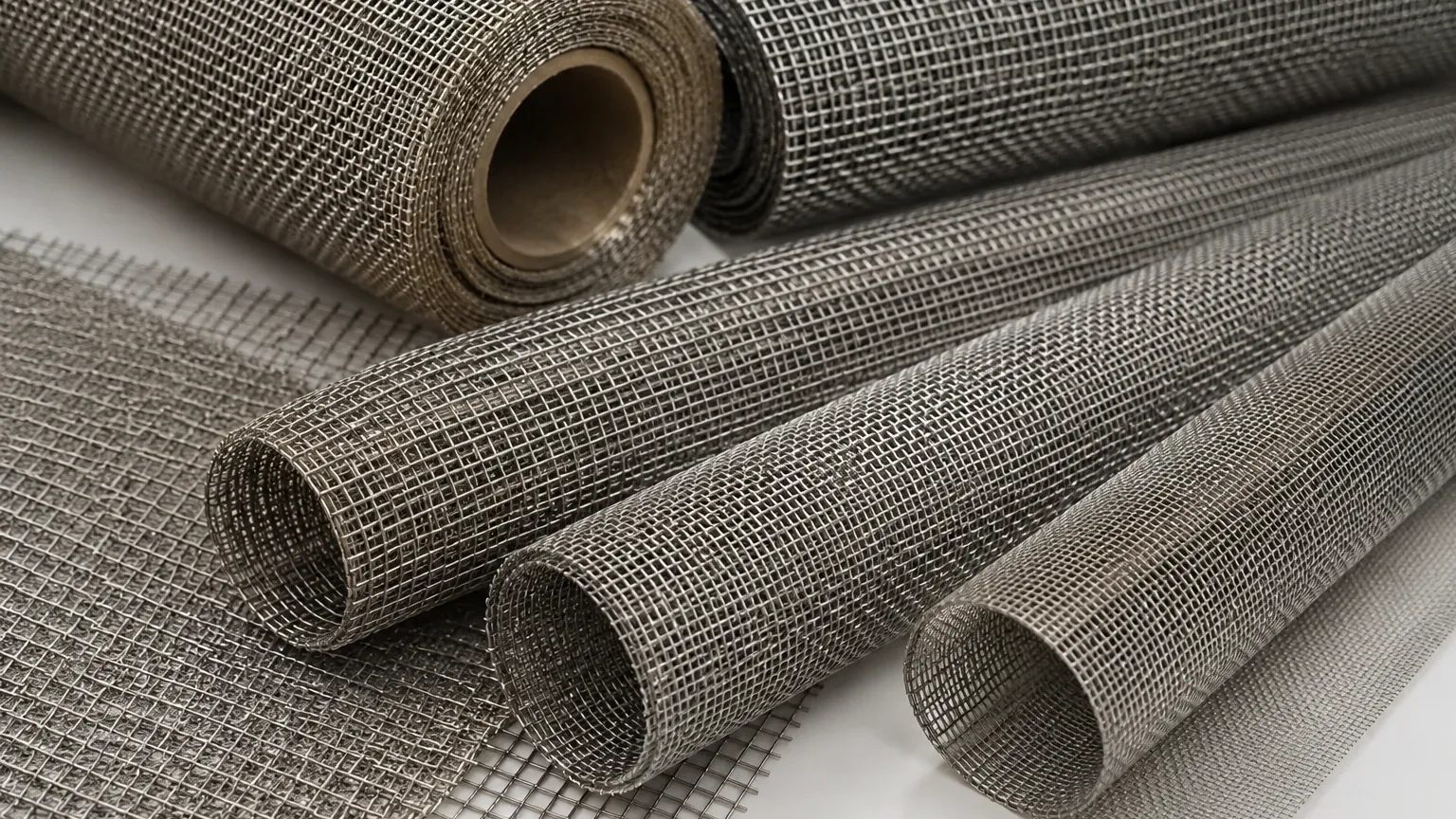
Woven wire mesh is produced by weaving individual metal wires over and under each other on industrial looms. The resulting fabric is characterized by its mesh count (the number of openings per linear inch), wire diameter, and aperture (the clear distance between two adjacent wires).
For technical applications, the precision of these dimensions is paramount. Unlike perforated metal or expanded metal, woven mesh offers a higher percentage of open area and greater flexibility in achieving specific micron ratings. In industrial environments, stainless steel is the preferred material due to its inherent resistance to corrosion and high temperatures.
When evaluating options for industrial projects, engineers must balance the need for fine filtration with the requirement for mechanical strength. A thinner wire increases the open area and flow rate but reduces the mesh's ability to withstand high pressure or abrasive materials.
Material Selection: SS304 vs. SS316L for Harsh Environments
The choice of alloy is perhaps the most critical decision in the procurement process. In the context of industrial operations in Pretoria and surrounding regions, environmental factors such as humidity, chemical exposure, and temperature fluctuations play a significant role.
1. Stainless Steel 304: This is the most common grade used for general industrial applications. It provides excellent corrosion resistance and can withstand temperatures up to approximately 800°C. It is suitable for food processing, architectural applications, and standard liquid filtration.
2. Stainless Steel 316L: For more demanding environments, 316L is the industry standard. The addition of molybdenum enhances its resistance to pitting and crevice corrosion, particularly in chloride-rich environments or acidic chemical processes. The "L" denotes low carbon content, which improves weldability and prevents sensitization during the fabrication of filter cartridges or framed panels.
Beyond these, specialized alloys like Monel, Inconel, or Duplex stainless steel may be required for extreme chemical or thermal conditions. For most B2B buyers seeking woven wire mesh pretoria, starting with a clear assessment of the chemical compatibility of the filtered medium is the first step toward a successful installation.
Weave Patterns and Their Impact on Filtration Efficiency
The method by which wires are interlaced determines the mesh's filtration characteristics and structural integrity. There are three primary weave types utilized in high-performance industrial filtration:
Plain Weave
This is the simplest and most common weave, where each warp wire crosses over and under each shute wire. It produces square openings and is ideal for general screening, sifting, and particle separation where high flow rates are required.
Twill Weave
In a twill weave, each warp wire passes over and under two shute wires. This allows for the use of heavier wires for a given mesh count, resulting in a more robust mesh that can handle higher mechanical loads. It is often used for fine filtration where a plain weave would be too fragile.
Dutch Weave (Plain and Twill)
Dutch weaves utilize different diameters for warp and shute wires. The shute wires are driven closely together, creating a dense, wedge-shaped opening rather than a square one. This configuration is essential for high-pressure applications, such as hydraulic systems or polymer filtration, as it provides superior strength and precise micron ratings down to very fine levels.
Sourcing Considerations for Woven Wire Mesh in Pretoria
For companies operating in the Pretoria industrial zone, sourcing filtration components involves evaluating local availability against the need for specialized, high-precision manufacturing. While local distributors may stock standard sizes, complex industrial projects often require customized solutions that meet specific ASTM or ISO standards.
When sourcing woven wire mesh pretoria, technical teams should confirm the following with their suppliers:
* Material Certification: Ensure the supplier provides mill test reports (MTRs) to verify the chemical composition of the stainless steel.
* Dimensional Accuracy: For high-precision filtration, the tolerance of the aperture size must be strictly controlled to prevent bypass of oversized particles.
* Custom Fabrication: Many industrial applications require the mesh to be cut to size, pleated, or integrated into a framed panel or cartridge. Working with a manufacturer like Kaifil allows for the development of Plain, twill and dutch woven wire mesh in SS304/316L — rolls, cut mesh and framed panels. Send mesh count or micron target for a technical quote.
Critical Performance Metrics: Micron Rating and Flow Rates
Engineers must distinguish between nominal and absolute micron ratings. A nominal rating indicates the ability of the mesh to retain a majority of particles of a certain size, while an absolute rating refers to the diameter of the largest spherical particle that can pass through the mesh under specific test conditions.
Flow rate and pressure drop (Delta P) are also vital. A mesh with a high mesh count but very fine wire may offer the required filtration but could lead to a significant pressure drop across the system, increasing energy costs and requiring more frequent cleaning cycles. Calculating the "Open Area Percentage" is a standard engineering practice to predict the throughput of the filtration system.
Customization and OEM Solutions for Specialized Filtration
Standard off-the-shelf mesh rarely meets the exact requirements of specialized industrial machinery. Customization is often necessary to optimize performance. This includes:
* Multi-layer Sintered Mesh: For extreme pressure environments, multiple layers of woven wire mesh are sintered together to create a single, rigid porous plate that combines fine filtration with high mechanical strength.
* Specific Edge Treatments: To prevent fraying and ensure a secure fit within a housing, mesh panels can be provided with welded edges, U-binders, or specialized gaskets.
* Cylindrical and Conical Shapes: Many chemical and pharmaceutical processes require mesh formed into specific geometries to fit into existing vessel designs.
By collaborating with a manufacturer that understands OEM requirements, businesses in Pretoria can reduce lead times and ensure that the filtration components are perfectly integrated into their proprietary systems.
Maintenance and Lifecycle Management of Stainless Steel Mesh
The total cost of ownership (TCO) for industrial filtration is heavily influenced by the lifespan and cleanability of the mesh. Unlike disposable synthetic filters, stainless steel woven wire mesh is designed for reuse.
Cleaning Methods
Depending on the contaminant, mesh can be cleaned using ultrasonic baths, back-pulsing, high-pressure water jets, or chemical solvents. The durability of SS316L ensures that the mesh can withstand these rigorous cleaning processes without losing its structural integrity or filtration accuracy.
Replacement Indicators
Engineers should monitor the pressure drop across the filter. A permanent increase in the baseline pressure drop after cleaning indicates "blinding" or "plugging," where particles are permanently lodged within the weave. At this point, the mesh should be replaced to maintain system efficiency.
Conclusion
Selecting the appropriate woven wire mesh pretoria requires a technical approach that considers material science, weave geometry, and specific application demands. Whether the goal is to protect downstream equipment in a hydraulic circuit or to ensure the purity of a pharmaceutical batch, the quality of the woven wire mesh is a non-negotiable factor.
By focusing on high-grade materials like SS304 and SS316L and choosing the correct weave pattern for the task, industrial operators can achieve a balance between filtration precision and operational durability. For those requiring technical guidance or customized mesh configurations, engaging with a specialized manufacturer ensures that the final product meets the rigorous standards of modern industry.
