


Woven Wire Mesh Rolls: Engineering and Selection Guide for Industrial Filtration
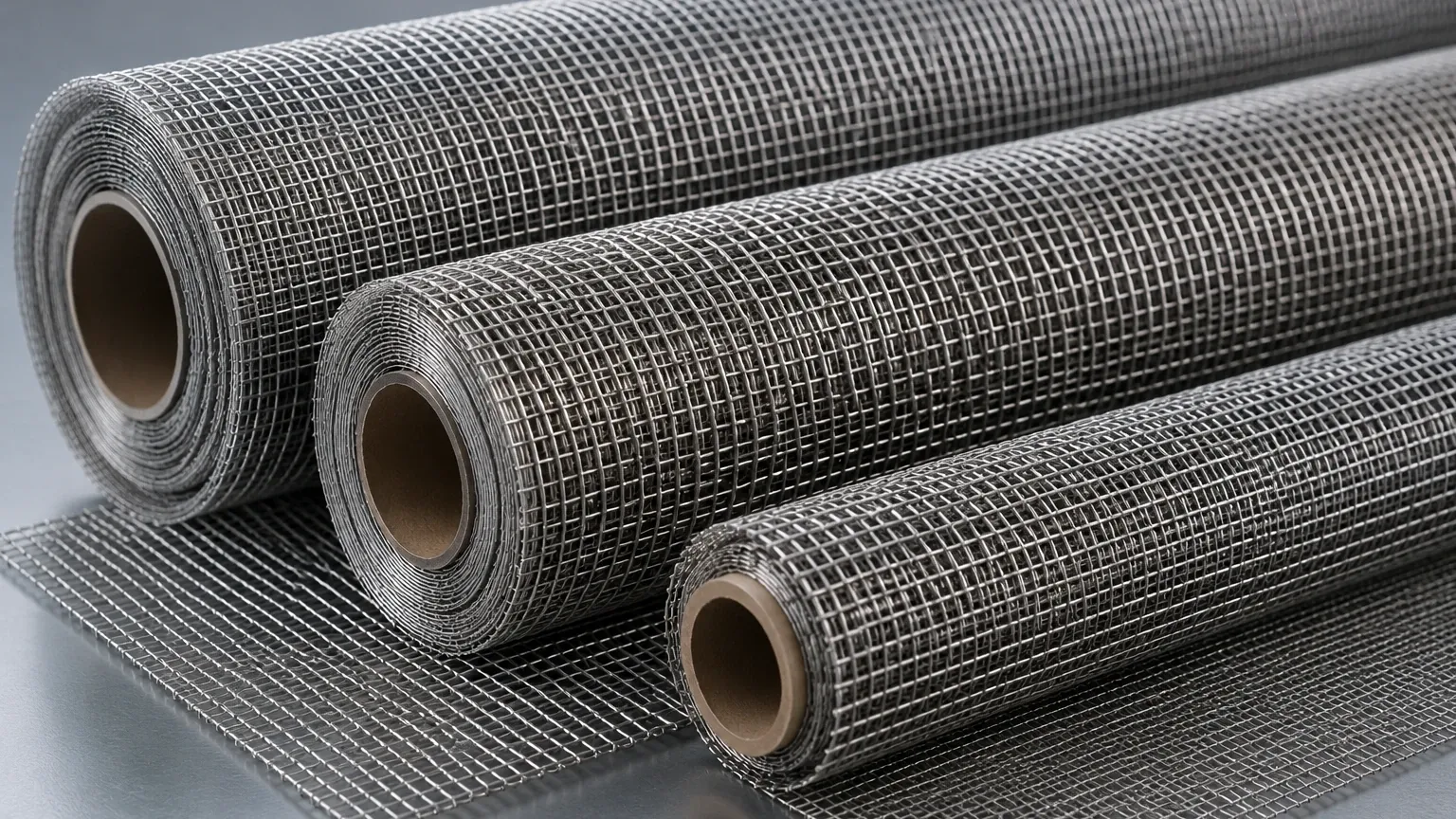
In the landscape of industrial filtration and separation, woven wire mesh rolls serve as the foundational material for a vast array of critical components. From precision laboratory sieves to high-capacity industrial filter cartridges, the versatility of woven wire mesh allows engineers to fine-tune filtration performance based on specific mechanical and chemical requirements. As a specialized manufacturer, Kaifil provides high-performance stainless steel filtration solutions that prioritize durability, precision, and application-specific customization.
Selecting the correct mesh involves more than just identifying an aperture size. It requires a comprehensive understanding of metallurgy, weave geometry, and the fluid dynamics of the intended application. This guide explores the technical parameters of Woven Wire Mesh, the advantages of sourcing in roll form, and the engineering considerations necessary for optimizing filtration systems.
The Fundamentals of Woven Wire Mesh Construction
At its core, Woven Wire Mesh is produced by weaving individual metal wires on industrial looms. The process is similar to textile weaving but utilizes high-tensile stainless steel or specialty alloy wires. The two primary directions of the wires are the "warp" (the wires running the length of the roll) and the "shute" or "weft" (the wires running across the width of the roll).
When sourcing woven wire mesh rolls, the consistency of the weave is the most critical quality indicator. Variations in wire tension or loom calibration can lead to irregular apertures, which directly compromise the filtration rating. For industrial applications where a specific micron cutoff is required, such as in pharmaceutical or chemical processing, ensuring uniform pore distribution across the entire roll is essential for process stability.
Material Grades: SS304 vs. SS316L
Material selection is the first step in ensuring the longevity of a filter. While various alloys are available, stainless steel remains the industry standard due to its mechanical strength and resistance to environmental degradation.
* Stainless Steel 304: This is the most common grade used for general industrial applications. It offers excellent strength and good corrosion resistance for water treatment, food processing, and standard hydraulic systems. However, it may be susceptible to pitting in high-chloride environments.
* Stainless Steel 316L: The "L" stands for low carbon, which improves weldability and prevents sensitization. SS316L contains molybdenum, significantly increasing its resistance to chlorides and acids. This makes it the preferred choice for marine environments, chemical processing plants, and pharmaceutical manufacturing where aggressive cleaning agents are used.
Understanding Weave Patterns and Their Functional Impact
The geometry of the weave determines the mesh's mechanical properties, including its flow capacity, filtration accuracy, and structural rigidity. When evaluating Plain, twill and dutch woven wire mesh in SS304/316L — rolls, cut mesh and framed panels. Send mesh count or micron target for a technical quote., engineers must match the weave pattern to the specific demands of the fluid and the particulate matter being filtered.
Plain Weave
Plain weave is the most straightforward construction, where each shute wire passes over and under one warp wire. This results in square or rectangular openings. It provides a high percentage of open area, making it ideal for high-flow applications where low pressure drop is a priority. However, because the wires are bent at every intersection, there are limits to the wire thickness that can be used for a given mesh count.
Twill Weave
In a twill weave, each shute wire passes over and under two warp wires in a staggered pattern. This allows for the use of heavier wire diameters than a plain weave of the same mesh count. Twill weave is often used for finer meshes that require additional structural integrity to withstand high-pressure differentials without deforming the apertures.
Dutch Weave (Plain and Twill)
Dutch weaves utilize different wire diameters for the warp and shute. Typically, the warp wires are heavier and spaced further apart, while the shute wires are finer and driven closely together. This creates a "tortuous path" for the fluid, resulting in a mesh that has no visible openings when viewed straight on. Dutch weaves are preferred for high-pressure filtration and fine micron ratings (down to 5-10 microns) because they offer superior mechanical strength and a high dirt-holding capacity.
Key Performance Metrics for Engineers
When specifying woven wire mesh rolls for a project, several quantitative metrics must be confirmed to ensure the product meets the operational requirements of the system.
Mesh Count vs. Micron Rating
Mesh count refers to the number of openings per linear inch. While mesh count is a standard industry term, engineers often require a specific "micron rating" (aperture size). The relationship between the two depends on the wire diameter. For example, a 100-mesh screen with a 0.10mm wire will have a different aperture than a 100-mesh screen with a 0.12mm wire. It is vital to specify both the mesh count and the wire diameter to define the filtration accuracy accurately.
Percentage of Open Area
The open area is the ratio of the total area of the apertures to the total area of the mesh. A higher open area results in a lower pressure drop and higher flow rates but may reduce the mechanical strength of the mesh. Calculating the open area is critical for sizing pumps and ensuring the filtration system does not become a bottleneck in the production line.
Mechanical Stability and Tensile Strength
In applications like hydraulic filtration or high-viscosity polymer melt filtration, the mesh is subjected to significant mechanical stress. The tensile strength of the stainless steel wire and the stability of the weave determine whether the mesh will migrate or "blind" (clog) prematurely. Woven wire mesh rolls produced with high-precision tensioning ensure that the mesh remains dimensionally stable even under fluctuating pressure conditions.
Strategic Advantages of Sourcing Woven Wire Mesh Rolls
For B2B buyers and OEMs, purchasing mesh in roll form offers several logistical and manufacturing advantages:
1. Manufacturing Flexibility: Rolls allow for continuous feeding into automated cutting or stamping machines. This is essential for high-volume production of filter discs, pleated cartridges, or custom-shaped strainers.
2. Waste Reduction: By optimizing the layout of parts on a standard roll width (typically 1m, 1.2m, or 1.5m), manufacturers can significantly reduce material scrap, lowering the total cost of the final component.
3. Consistency Across Batches: Sourcing a large quantity of mesh from a single production run (roll) ensures that the filtration performance remains identical across all units produced in that batch, which is critical for maintaining quality control standards.
Industrial Applications of Stainless Steel Mesh
Kaifil’s Woven Wire Mesh solutions are utilized across diverse sectors, each with unique technical challenges:
* Chemical and Petrochemical: Used for catalyst recovery, crude oil filtration, and protecting downstream equipment from particulate damage. The corrosion resistance of SS316L is paramount here.
* Food and Beverage: Mesh rolls are converted into centrifugal screens and strainers for juice, dairy, and syrup processing. Compliance with food safety standards and ease of cleaning (CIP) are key requirements.
* Pharmaceutical and Biotech: Precision Dutch weave mesh is used for active pharmaceutical ingredient (API) filtration and sterile air venting. High filtration accuracy and smooth surface finishes are required to prevent bacterial growth.
* Hydraulic and Lubrication Systems: Fine twill weave mesh protects sensitive valves and pumps from metal shavings and environmental contaminants, ensuring the longevity of heavy machinery.
Technical Checklist for Procurement and Engineering
Before finalizing a purchase of woven wire mesh rolls, technical teams should confirm the following parameters with the manufacturer:
* Material Certification: Ensure the alloy (SS304/316L) meets international standards (ASTM/ISO) to avoid premature corrosion.
* Aperture Tolerance: Define the allowable variance in opening size. For critical filtration, a tight tolerance is necessary to prevent bypass of oversized particles.
* Roll Dimensions: Confirm the width and length. Standard rolls are often 30 meters (100 feet), but custom lengths can be produced to minimize splicing in continuous processes.
* Surface Treatment: Determine if the mesh requires ultrasonic cleaning, degreasing, or passivating to meet cleanliness standards for high-purity applications.
* Edge Configuration: For certain applications, a finished or welded edge may be required to prevent fraying during handling and installation.
Maintenance and Replacement Cycles
While stainless steel Woven Wire Mesh is exceptionally durable, it is not infinite. The replacement cycle depends on the "blinding" rate and the cleaning methods used. In many industrial settings, mesh can be cleaned via backwashing, ultrasonic baths, or chemical soaking. However, if the mesh becomes permanently deformed due to pressure spikes or if the wire diameter thins due to erosion, the filtration efficiency will drop. Monitoring the pressure differential ($\\Delta P$) across the filter is the most effective way to determine when the mesh needs cleaning or replacement.
Conclusion: Selecting a Technical Partner
Choosing the right woven wire mesh rolls involves balancing filtration precision with mechanical durability and cost-effectiveness. As a professional manufacturer, Kaifil understands that every industrial application has unique constraints. By providing high-quality stainless steel mesh in various weaves and grades, we help engineers design systems that are both reliable and efficient.
Whether you are designing a new filtration system or seeking to optimize an existing process, focusing on the technical specifications of the Woven Wire Mesh is the first step toward achieving superior performance. For organizations looking for tailored solutions, working directly with a manufacturer that offers OEM capabilities and engineering support ensures that the final product meets the exact demands of the application, from the initial material selection to the final roll delivery.
