


Engineering Guide to Wire Mesh Filter 100 Micron Solutions
In industrial filtration, the selection of a specific micron rating is a critical decision that balances particulate removal efficiency with system hydraulic performance. A wire mesh filter 100 micron rating represents a versatile threshold often utilized in primary filtration stages or as a protective barrier for sensitive downstream equipment. When integrated into Wire Mesh Filter Cylinders & Tubes, this mesh size provides a robust solution for separating medium-sized contaminants from liquids and gases across various industrial sectors.
Understanding the technical nuances of 100-micron filtration requires a deep dive into mesh geometry, material properties, and the structural design of the filter elements. This guide examines the engineering considerations necessary for optimizing filtration performance in demanding environments.
Understanding the 100 Micron Filtration Threshold
The term "micron" (micrometer) refers to one-millionth of a meter. A 100-micron rating indicates that the filter is designed to capture particles larger than 0.1 millimeters. In the context of stainless steel wire mesh, this typically corresponds to a mesh count of approximately 140 to 150, depending on the wire diameter used during the weaving process.
Mesh Count vs. Micron Rating
For engineers, it is essential to distinguish between nominal and absolute filtration ratings. A wire mesh filter 100 micron element made from plain square weave provides a very predictable and consistent pore size. Unlike depth filters (such as felt or melt-blown cartridges), wire mesh offers a surface filtration mechanism. This means particles are trapped on the surface of the mesh, making the filter easier to clean and providing a more definite "cut-off" point for particle size.
Open Area and Flow Efficiency
The open area percentage is a vital metric for calculating flow rates and initial pressure drops. For a standard 100-micron stainless steel mesh, the open area typically ranges between 30% and 45%. A higher open area reduces the resistance to flow but may require thicker wire diameters or internal support structures to maintain mechanical integrity under high-pressure differentials.
Engineering Characteristics of Wire Mesh Filter Cylinders & Tubes
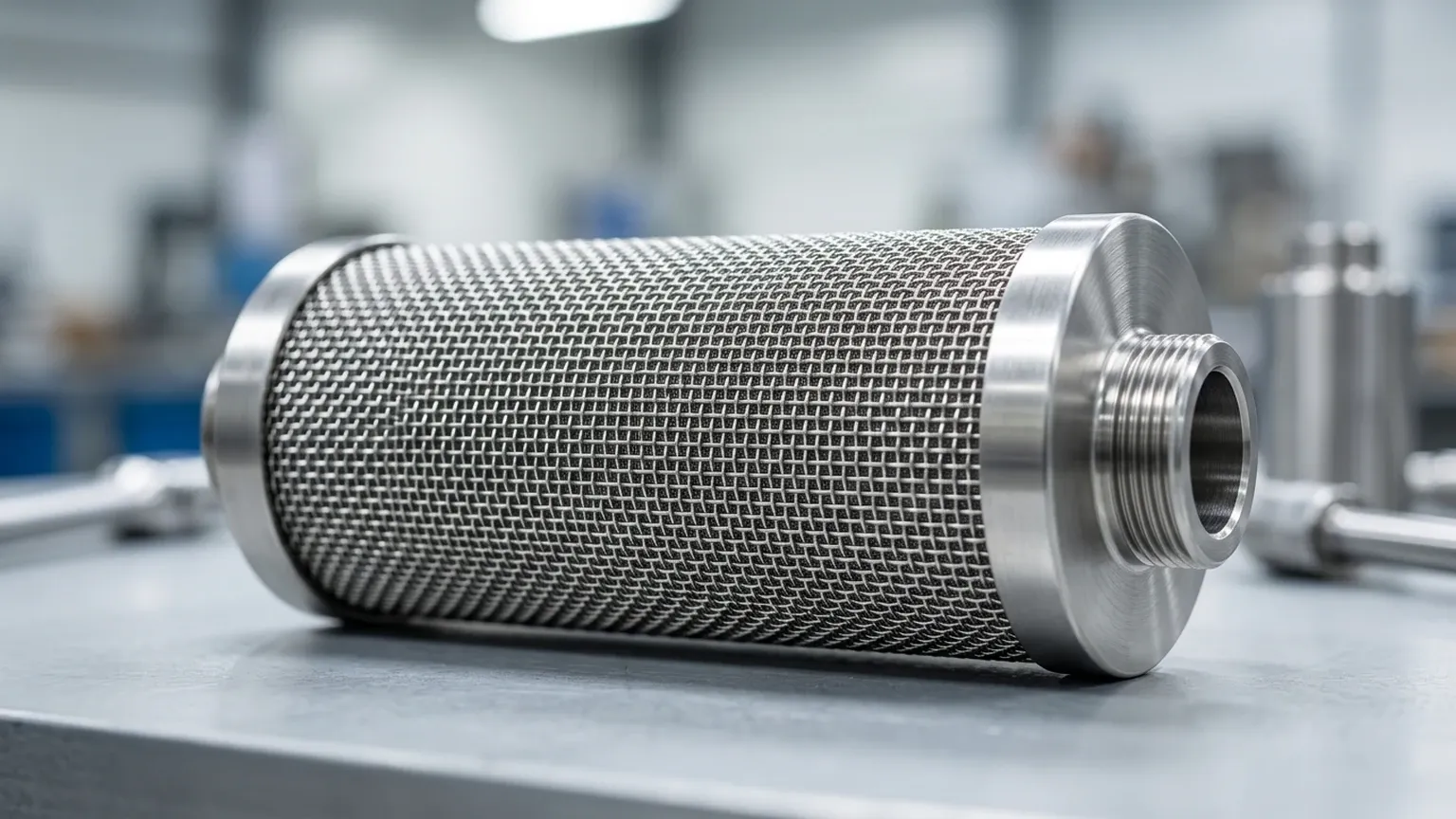
When 100-micron mesh is fabricated into Wire Mesh Filter Cylinders & Tubes, the geometry of the component significantly influences its performance. These structures are engineered to handle radial pressure and provide maximum surface area within a confined housing volume.
Structural Configurations
1. Single-Layer Cylinders: Best suited for low-pressure applications or where frequent manual cleaning is required. The simplicity of the design allows for easy inspection of the mesh surface.
2. Multi-Layer Sintered Mesh: For high-pressure environments, the 100-micron mesh is often sintered (heat-bonded) with coarser support layers. This creates a composite plate that offers the precision of the 100-micron layer with the structural rigidity of heavy-duty mesh.
3. Pleated Designs: To increase the effective filtration area without increasing the outer dimensions of the tube, the mesh can be pleated. This is particularly useful in high-flow applications where a standard cylinder would cause an excessive pressure drop.
Reinforcement and Support
In most industrial settings, a wire mesh filter 100 micron tube requires internal or external support to prevent collapsing or bursting. Perforated metal cores or outer cages, typically made from the same stainless steel grade as the mesh, provide the necessary mechanical strength to withstand high differential pressures (ΔP) during operation or during backwashing cycles.
Material Selection and Chemical Compatibility
Kaifil specializes in manufacturing filtration components from high-grade alloys to ensure longevity in corrosive or high-temperature environments. The choice of material is as important as the micron rating itself.
Stainless Steel 304 vs. 316L
* Grade 304: The standard choice for general industrial use, offering good corrosion resistance and excellent forming properties. It is suitable for water treatment and most organic solvents.
* Grade 316L: Contains molybdenum, which provides superior resistance to chlorides and acids. This is the preferred material for marine environments, chemical processing, and pharmaceutical applications where localized corrosion (pitting) is a concern.
Specialized Alloys
For extreme conditions, such as highly acidic processes or temperatures exceeding 500°C, materials like Hastelloy, Inconel, or Monel may be utilized. These alloys maintain their structural integrity and filtration accuracy where standard stainless steels would fail due to oxidation or chemical attack.
Performance Metrics: Flow Rate and Pressure Differential
Designing a system around a wire mesh filter 100 micron component requires precise calculations of the Clean Pressure Drop (CPD). The CPD is influenced by the fluid viscosity, velocity, and the effective open area of the mesh.
Calculating the Pressure Drop
Engineers must ensure that the initial pressure drop does not exceed the system's operational limits. As the filter accumulates debris, the pressure drop will increase. A common design rule is to size the filter so that the initial pressure drop is less than 2-3 PSI (0.15-0.2 bar). The terminal pressure drop—the point at which the filter must be cleaned or replaced—is usually determined by the structural limits of the mesh or the requirements of the downstream pump.
Dirt-Holding Capacity
While wire mesh is a surface filtration medium, its dirt-holding capacity can be enhanced through pleated designs. In a 100-micron application, the nature of the contaminant (slimy vs. granular) greatly affects how quickly the mesh will blind. Granular particles are easily removed, whereas fibrous or sticky materials may require specialized weave patterns, such as Dutch weaves, to prevent premature clogging.
Customization Options for Industrial Applications
One of the primary advantages of working with a professional manufacturer like Kaifil is the ability to customize Wire Mesh Filter Cylinders & Tubes to exact application requirements. Standard off-the-shelf filters often fail to meet the specific mechanical or hydraulic needs of complex industrial systems.
Connection Types and End Caps
Filter tubes can be designed with various end-cap configurations to ensure a leak-proof seal within the housing. Common options include:
* DOE (Double Open End): Utilizes gaskets on both ends for sealing.
* SOE (Single Open End): Often features a threaded connection (NPT/BSP) or a specialized fitting like a 222 or 226 O-ring plug.
* Flanged Ends: Used for large-scale industrial piping where high mechanical stability is required.
Welding and Fabrication Precision
For a wire mesh filter 100 micron element, the quality of the longitudinal seam weld is paramount. Kaifil utilizes advanced plasma or TIG welding techniques to ensure that the seam does not create a bypass for unfiltered fluid. Furthermore, the welding process must not compromise the pore size of the mesh adjacent to the weld zone.
Maintenance, Cleaning, and Service Life
Unlike disposable polymer filters, stainless steel wire mesh elements are designed for long-term reuse. This significantly reduces the total cost of ownership (TCO) and minimizes industrial waste.
Cleaning Methodologies
1. Backwashing: Reversing the flow of fluid through the filter to dislodge surface contaminants. This is highly effective for 100-micron mesh used in water and oil filtration.
2. Ultrasonic Cleaning: Using high-frequency sound waves in a cleaning solvent to remove fine particles lodged within the mesh apertures. This is the most thorough method for restoring the original pressure drop.
3. Chemical Cleaning: Utilizing acids or alkalis to dissolve organic or mineral scale. Engineers must ensure the cleaning agents are compatible with the stainless steel grade.
Monitoring Filter Health
Continuous monitoring of the differential pressure across the filter is the most reliable way to determine maintenance intervals. Automated systems can trigger a cleaning cycle once a pre-set ΔP threshold is reached, ensuring consistent flow and protecting the system from surges.
Procurement Considerations for Engineering Teams
When specifying a wire mesh filter 100 micron solution for international projects, purchasing teams and engineers should confirm several technical parameters with the manufacturer to ensure the product is fit for purpose.
* Validation of Micron Rating: Request bubble point test data or glass bead challenge test results to verify the absolute filtration rating.
* Material Certification: Ensure Mill Test Reports (MTRs) are provided to confirm the alloy composition (e.g., 316L vs. 304).
* Operating Conditions: Clearly define the maximum operating temperature, peak pressure, and the chemical composition of the fluid.
* Quantity and Lead Times: For OEM applications, understanding the manufacturer's capacity for high-volume production and their quality control processes is essential for maintaining supply chain stability.
By focusing on these technical details, engineers can select Wire Mesh Filter Cylinders & Tubes that provide reliable, long-term performance in even the most demanding industrial environments. Kaifil’s expertise in custom stainless steel filtration ensures that every 100-micron filter is engineered for precision, durability, and optimal flow efficiency.
